A biome is a large region defined by its climate and the plants and animals that have adapted to it. Temperature and rainfall do most of the work: they decide whether you get a forest, a grassland or a desert, and everything else follows from that.
This post gives you 33 facts about biomes, grouped by biome, each with a number or a named place you can check. First, though, the question every other page dodges: how many biomes are there?
Table of Contents
- How Many Biomes Are There?
- Tropical Rainforest Facts
- Savanna Facts
- Desert Facts
- Temperate Forest Facts
- Taiga Facts
- Tundra Facts
- Grassland Facts
- Freshwater Biome Facts
- Marine Biome Facts
- Biomes at a Glance
- Biome Myths, Corrected
- What the Facts Add Up To
How Many Biomes Are There?
It depends on who is counting, and the disagreement is not sloppiness. Each count answers a different question.
- Five is the school version: forest, grassland, desert, tundra and aquatic. It’s easy to teach and it lumps a lot together.
- Nine comes from ecologist Robert Whittaker’s 1975 diagram, which plots land biomes against just two numbers: mean annual temperature and annual precipitation. Where a place falls on that chart predicts its vegetation surprisingly well.
- Fourteen is the WWF’s count of terrestrial biomes, built from field data on ecoregions. It splits forests by climate (tropical moist, tropical dry, temperate broadleaf, boreal) and adds categories such as mangroves, flooded grasslands and Mediterranean scrub. Freshwater and marine systems sit on top of that as separate realms.
So the honest answer is that there’s no single number. This post uses nine broad groups (seven land, two water) because they cover what most people mean by “types of biomes.”
Tropical Rainforest Facts
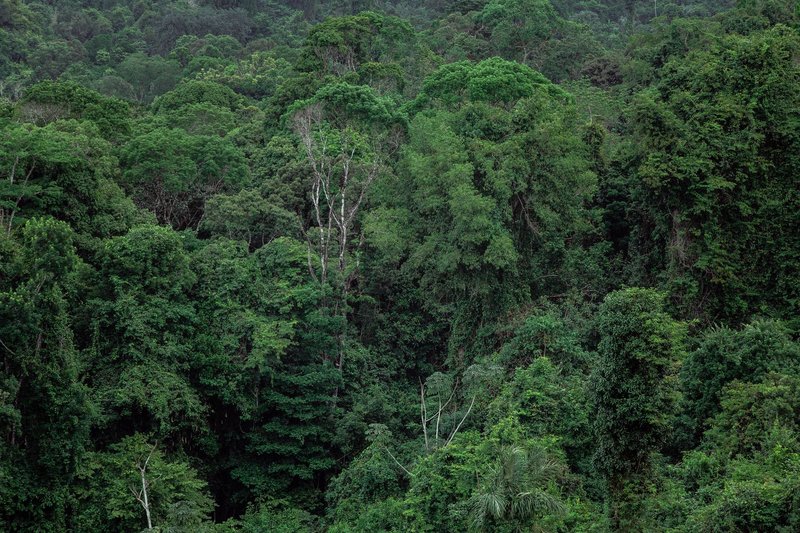
1. Rainforests cover less than 7% of the planet’s land and hold roughly half of its species. That mismatch is the whole story of tropical biodiversity: warmth and moisture all year, with no winter to thin anything out.
2. The Amazon recycles much of its own rain. Trees pull water from the soil and release it as vapor, and researchers estimate that somewhere between a quarter and a half of the basin’s rainfall is water the forest already used once. Cut enough of it and the rain machine weakens, which is why scientists warn that large parts of the Amazon could tip toward savanna.
3. Rainfall starts at about 2,000 mm (80 inches) a year, and temperatures barely move. Most rainforests sit between 20°C and 30°C (68°F and 86°F) every month of the year. The seasons are wetter and slightly less wet, not hot and cold.
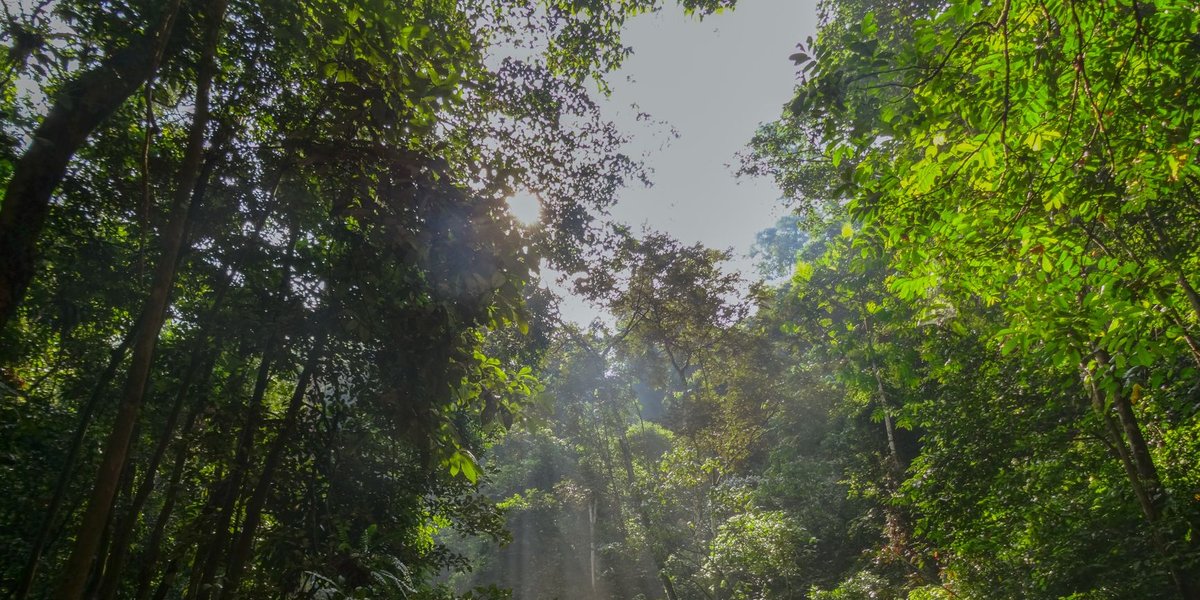
4. Only a few percent of sunlight reaches the forest floor. The canopy intercepts most of it, sometimes leaving as little as 2%. Understory plants respond with enormous leaves, and many seedlings simply wait, stalled, until a falling tree opens a gap.
Savanna Facts
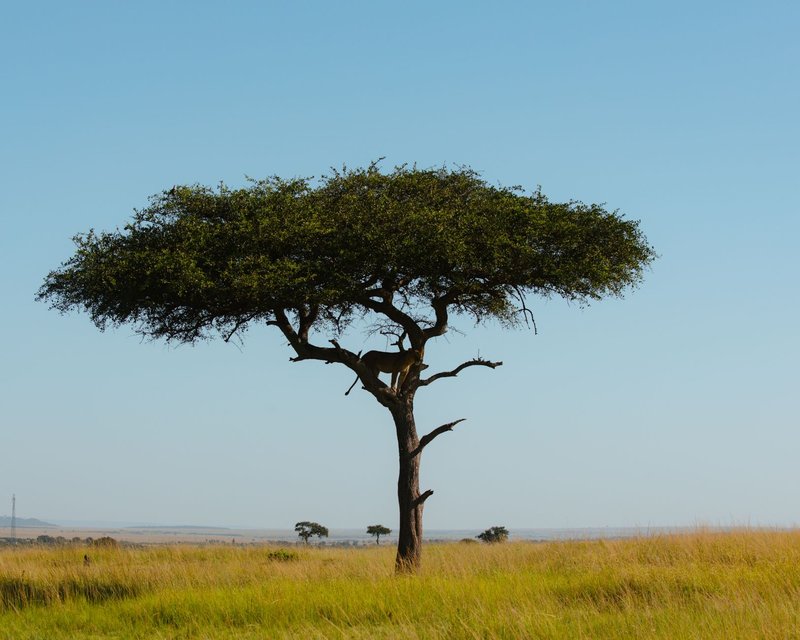
5. Savannas cover about a fifth of Earth’s land surface. They are grasslands dotted with scattered trees, found across Africa, northern Australia, South America’s cerrado and India.
6. Two seasons, not four. Rainfall of roughly 50 to 130 cm (20 to 50 inches) arrives in a wet season, followed by months of drought. Fire is routine, and the grasses survive it because their growing points sit at or below ground level. The baobab, a savanna icon, stores water in a trunk that can hold well over 100,000 liters.
7. The Serengeti hosts the largest land migration on Earth. More than 1.5 million wildebeest, along with hundreds of thousands of zebras and gazelles, travel a loop of around 800 km (500 miles) following the rains and fresh grass.
Desert Facts
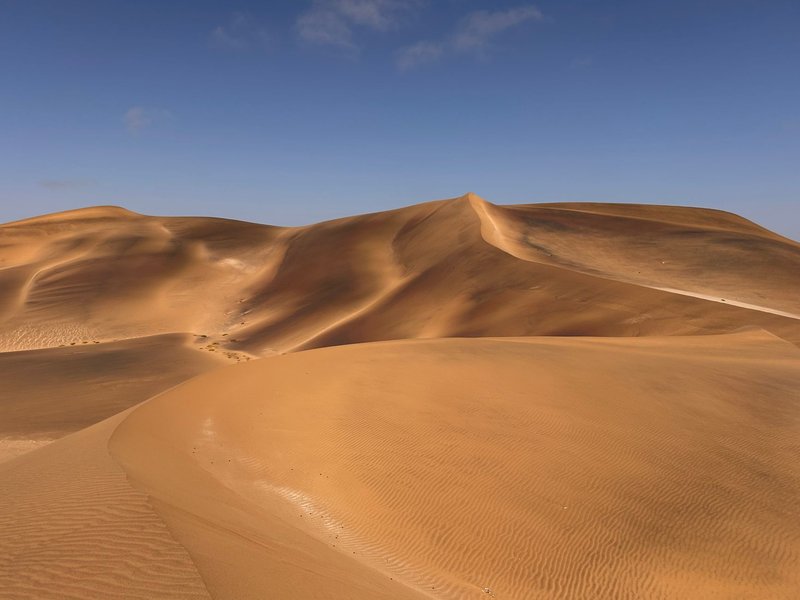
8. A desert is defined by dryness, not heat. Anything receiving under 250 mm (10 inches) of precipitation a year qualifies, and deserts together cover about a third of Earth’s land. The full list of desert biomes shows how much variety that covers, from hot sand seas to cold polar deserts.
9. The largest desert on Earth is Antarctica, at roughly 14 million km². The largest hot desert is the Sahara, at about 9.2 million km², close to the area of the United States. Both fit the definition for the same reason: very little falls from the sky.
10. Death Valley recorded 56.7°C (134°F) on July 10, 1913. The World Meteorological Organization still recognizes it as the highest reliably measured air temperature on record. Desert nights are another story. With no humid air to hold heat, temperatures can plunge by 20°C or more after sunset.
11. Parts of the Atacama in Chile average about 1 mm of rain a year or less. Some weather stations there have gone years without measurable rainfall. The desert also draws moisture from coastal fog, which specialized lichens and cacti harvest directly.
Temperate Forest Facts
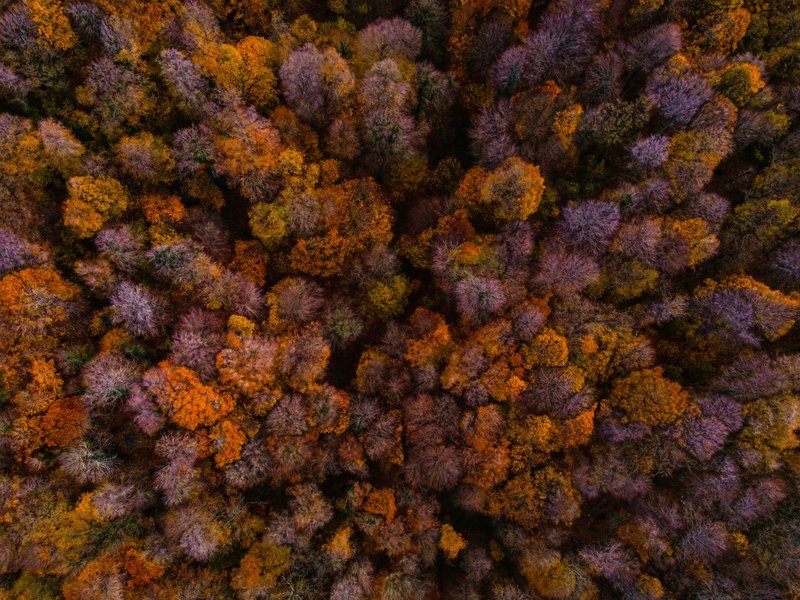
12. Temperate forests have four real seasons. The three big regions are eastern North America, Europe and East Asia, where rainfall of roughly 75 to 150 cm (30 to 60 inches) is spread through the year and winters dip well below freezing. Deciduous trees such as oak, maple and beech drop their leaves to avoid losing water when the ground is frozen.
13. Autumn color is chemistry, not decoration. As chlorophyll breaks down, yellow and orange carotenoids that were there all along show through. The reds are different: trees such as red maple build new anthocyanin pigments in the fall.
14. Temperate rainforests exist, and they hold the tallest trees. The Hoh Rainforest in Washington State gets around 3.5 m (140 inches) of rain a year, and California’s coast redwoods have passed 115 m (380 feet) in height, taller than a 35-story building.
Taiga Facts
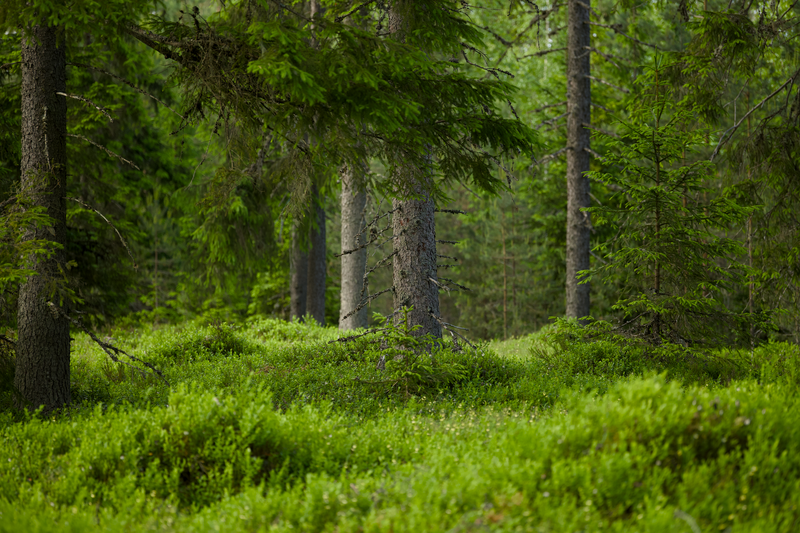
15. The taiga is the largest land biome. Also called boreal forest, it forms a belt across Canada, Alaska, Scandinavia and Russia, and holds nearly a third of the world’s forest cover. Siberia contains the biggest single stretch.
16. The growing season is only about 50 to 100 days. Winters last six months or more, and Siberian lows reach −50°C (−58°F). Summers are short but warm enough, and long daylight pushes plants into fast growth.
17. Conifer shape is an engineering solution. A spruce’s narrow cone sheds heavy snow instead of breaking under it, and its waxy needles lose little water. Because it keeps its needles year-round, it can start photosynthesizing the first warm day of spring without regrowing leaves.
18. Snowshoe hares and Canada lynx rise and fall on a cycle of about 10 years. Hudson’s Bay Company fur records from the 1800s show it clearly: when hares boom, lynx follow a year or two later, then both crash. It remains one of ecology’s textbook predator-prey examples.
Tundra Facts
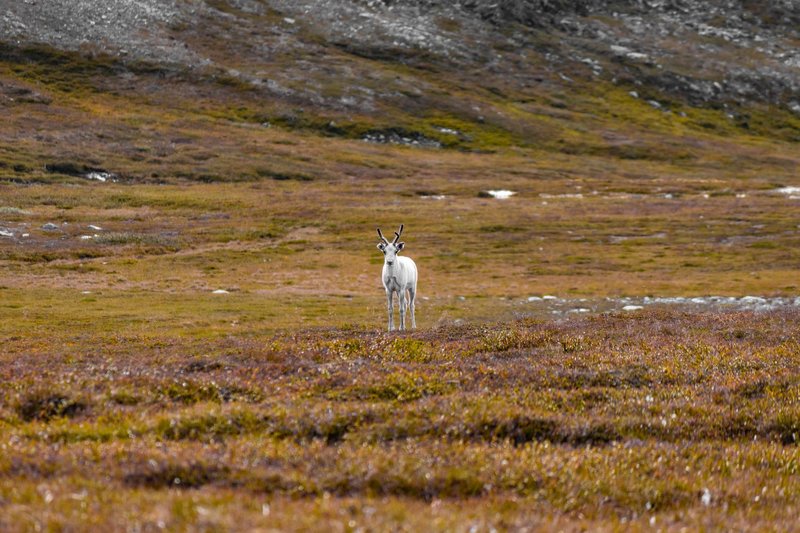
19. Arctic tundra is a cold desert. Annual precipitation is only about 15 to 25 cm (6 to 10 inches), winter averages near −34°C (−30°F), and summer temperatures hover between 3°C and 12°C. The land is wet in summer because the frozen ground underneath blocks drainage.
20. Permafrost holds about twice as much carbon as the atmosphere. Estimates put it at roughly 1,500 billion tonnes of carbon locked in frozen soil, according to the National Snow and Ice Data Center. As the ground thaws, microbes wake up and release some of it as carbon dioxide and methane.
21. Tundra isn’t only at the poles. Alpine tundra sits above the treeline on mountains, including near the equator in the Andes. Plants in both versions stay low, hugging the ground to dodge wind; some Arctic willows are only a few centimeters tall.
22. The Arctic has warmed nearly four times faster than the global average since 1979. A 2022 study in Communications Earth & Environment reported this figure. Shrubs are advancing north into tundra, and thawing ground is slumping and reshaping the landscape.
Grassland Facts
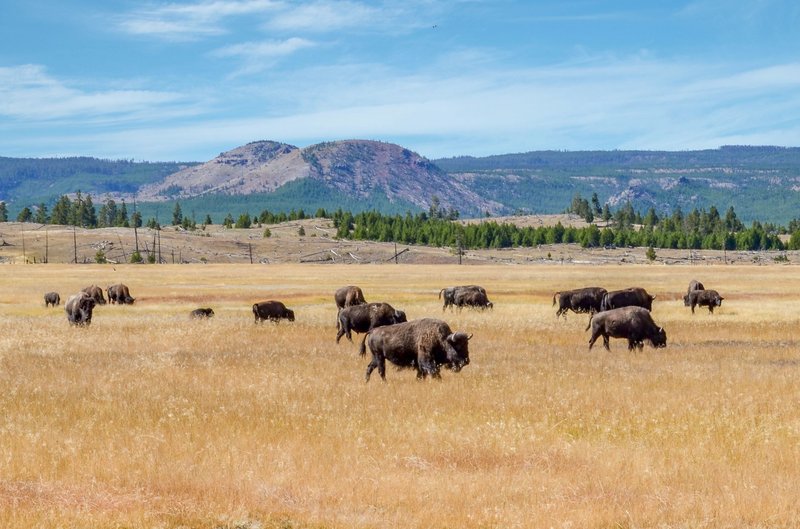
23. Grasslands exist in the middle ground between forest and desert. Prairies, steppes, pampas and veldt all get roughly 25 to 75 cm (10 to 30 inches) of rain, enough for grass but too little for dense trees. Fire and grazing keep seedlings from taking over.
24. Most of a prairie plant is underground. Big bluestem roots can reach 3 m (10 feet) down, and decades of dying roots built the deep, dark, fertile soil that now grows much of the world’s grain. That fertility is also why little of the original tallgrass prairie in North America, well under 5% by common estimates, still stands.
25. American bison numbers fell from tens of millions to fewer than 1,000 by the 1880s. The animals were shot out of the Great Plains in a few decades. Conservation herds have since brought the population back to several hundred thousand, though only a fraction live in conservation herds rather than ranches.
Freshwater Biome Facts
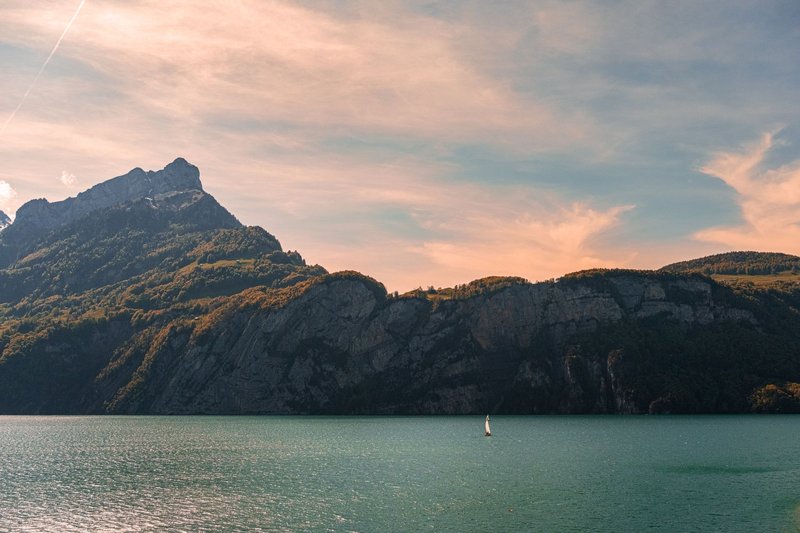
26. Only about 2.5% of Earth’s water is fresh. Most of that is frozen in glaciers and ice caps or tucked underground. Lakes, rivers and swamps together hold well under 1% of the freshwater, which is the fraction most living things actually use. The aquatic biome breakdown covers how these systems differ from marine ones.
27. Freshwater habitats cover under 1% of the planet’s surface but support about 10% of known animal species. That includes roughly a third of all vertebrate species, which is a lot of life packed into a thin film of water.
28. Lake Baikal in Siberia is the deepest lake on Earth. It plunges to 1,642 m (5,387 feet), holds about 20% of the world’s unfrozen surface freshwater, and is probably 25 million years old or more, making it the oldest lake too. Its seals, the nerpa, are the only entirely freshwater seals in the world.
29. The world has lost around 35% of its wetlands since 1970. The figure comes from the Ramsar Convention’s Global Wetland Outlook, which tracked losses to drainage, farming and development. Wetlands filter water and buffer floods, so the loss has costs beyond wildlife.
Marine Biome Facts
30. The ocean covers about 71% of Earth’s surface and holds roughly 97% of its water. Marine is by far the largest biome, and its average depth is about 3,700 m (12,100 feet).
31. Phytoplankton produce at least half of the oxygen we breathe. NOAA puts it that way because the exact share is hard to measure. These microscopic drifters, not rainforests, are the planet’s biggest oxygen source.
32. The deepest point, Challenger Deep in the Mariana Trench, is roughly 10,900 m down. Mount Everest would sit more than 2 km below the surface if dropped in. Despite this, most of the seafloor has never been mapped in detail, and NOAA says more than 80% of the ocean remains unmapped, unobserved and unexplored.
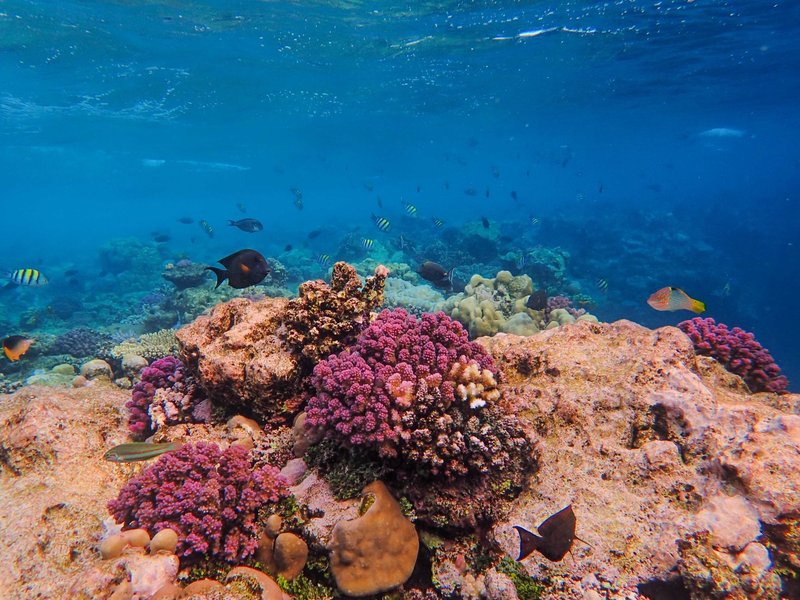
33. Coral reefs cover well under 1% of the seafloor and shelter about a quarter of marine species. The Great Barrier Reef is the largest, and the Great Barrier Reef Marine Park Authority puts it at about 2,300 km (1,400 miles) long, built from roughly 2,900 individual reefs. It’s a chain, not one continuous wall.
Biomes at a Glance
| Biome | Climate | Where | Example animal |
|---|---|---|---|
| Tropical rainforest | Hot, 2,000+ mm rain a year | Amazon, Congo Basin, Southeast Asia | Jaguar |
| Savanna | Warm, wet and dry seasons | East Africa, northern Australia | African elephant |
| Desert | Under 250 mm rain a year | Sahara, Atacama, Antarctica | Dromedary camel |
| Temperate forest | Four seasons, 75 to 150 cm rain | Eastern US, Europe, East Asia | White-tailed deer |
| Taiga | Long, cold winters; short summers | Canada, Scandinavia, Siberia | Moose |
| Tundra | Very cold, 15 to 25 cm precipitation | Arctic, high mountains | Caribou |
| Grassland | Moderate rain, hot summers, cold winters | Great Plains, Eurasian steppe, pampas | Bison |
| Freshwater | Varies with latitude and altitude | Lakes, rivers, wetlands | Beaver |
| Marine | Salt water, stable temperatures at depth | Oceans, coral reefs | Blue whale |
Biome Myths, Corrected
“There are five biomes.” There are five in some classroom schemes, nine in Whittaker’s model and 14 terrestrial biomes in the WWF’s. Pick a source and say which one.
“The Amazon is the lungs of the Earth.” The forest produces a lot of oxygen, but its trees and soil microbes use almost all of it back through respiration. Ocean phytoplankton are the larger net source.
“Deserts are hot, sandy places.” Many are cold, and most are rock, gravel or hard-packed soil. Dunes make up only a small share of desert area.
“Camels store water in their humps.” The hump is fat. Camels survive by losing little water and tolerating dehydration, then drinking huge amounts at once.
“Tundra is barren.” In summer it’s a mosaic of lichens, sedges and flowering plants, and millions of migratory birds arrive to nest.
What the Facts Add Up To
Every fact above traces back to the same two variables: how warm a place is and how much water it gets. Shift either one and the biome changes, which is why climate change is a biome story. Permafrost thaws in the tundra, forests dry out in the Amazon, and warming seas bleach coral reefs.
If you want one thing to remember from these facts about biomes, make it the count: five, nine or fourteen, the number says more about the person counting than about nature.