Most lists of 18th century science give you Franklin’s kite, oxygen, and Uranus, then run out of ideas. This one covers twelve discoveries across chemistry, medicine, geology, biology, astronomy, electricity, and mathematics, ranks them by how much later science depends on each, and settles the credit fights that other lists skip.
One rule for the list: these are discoveries, things found to be true about nature. Inventions like Volta’s battery, the steam engine, and the lightning rod’s hardware are left out unless a discovery sits behind them.
Contents
- TLDR
- Timeline at a glance
- The top scientific discoveries of the 18th century, ranked
- The thread connecting them
- Who the usual lists leave out
- FAQ
TLDR
The most important discovery of the century is oxygen and the chemistry built on it, because it ended the phlogiston theory and gave Lavoisier the tools to prove that matter is conserved. Jenner’s vaccine saved the most lives. Hutton’s deep time changed the most minds. Oxygen is a three-way credit dispute: Scheele found it first, Priestley published first, and Lavoisier explained what it was.
Timeline at a glance
| Year | Discovery | Credited to |
|---|---|---|
| 1735 / 1753 | Classification and binomial naming of species | Carl Linnaeus |
| 1736 | Graph theory (the Königsberg bridges) | Leonhard Euler |
| 1752 | Lightning is electrical | Benjamin Franklin, Thomas-François Dalibard |
| 1754 | Carbon dioxide (“fixed air”) | Joseph Black |
| 1766 | Hydrogen (“inflammable air”) | Henry Cavendish |
| 1774 | Oxygen | Carl Wilhelm Scheele, Joseph Priestley, Antoine Lavoisier |
| 1779 | Photosynthesis needs light | Jan Ingenhousz |
| 1781 | Uranus | William Herschel |
| 1788 | Deep time | James Hutton |
| 1789 | Conservation of mass | Antoine Lavoisier |
| 1791 | Animal electricity | Luigi Galvani |
| 1796 | Vaccination | Edward Jenner |
The top scientific discoveries of the 18th century, ranked
1. Oxygen (1774)
Credit here is split three ways, and all three claims hold up.
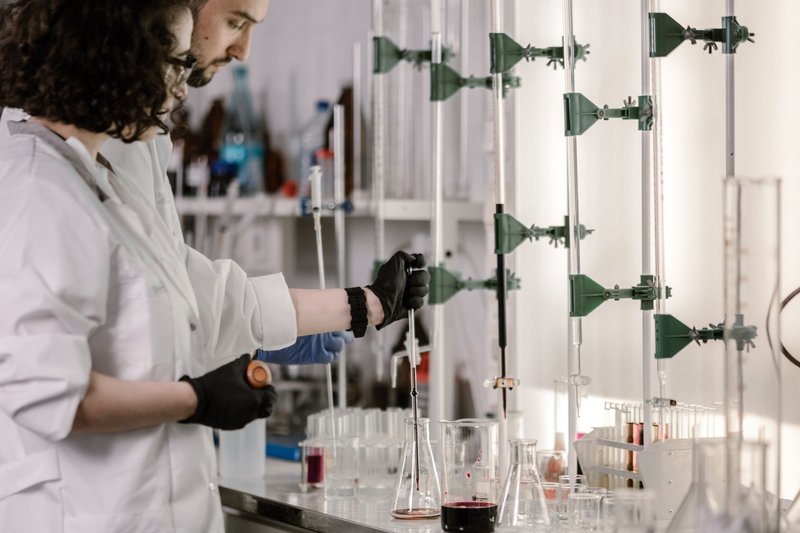
Carl Wilhelm Scheele, a Swedish pharmacist, made what he called “fire air” around 1771 by heating several compounds. He was slow to publish, and his book appeared in 1777. Joseph Priestley, an English minister, got the same gas in August 1774 by focusing sunlight on mercury oxide, and he published quickly. He called it “dephlogisticated air” and never abandoned the phlogiston theory, which held that burning released an invisible substance.
Lavoisier is the one who understood it. After Priestley described his result to him in Paris, Lavoisier showed that the gas is an element, that it combines with substances during burning and rusting, and that breathing is a slow form of the same reaction. He named it oxygène. Scheele found it, Priestley announced it, Lavoisier explained it. The explanation is what changed chemistry.
2. Conservation of mass (1789)
Lavoisier’s second entry on the list. In sealed vessels he weighed tin and mercury before and after heating, and the total never changed. The metal gained weight because it absorbed oxygen from the air, which is exactly where the extra mass came from. His 1789 textbook, Traité élémentaire de chimie, laid the principle out as the basis of chemical bookkeeping.
The Russian scientist Mikhail Lomonosov had stated something similar decades earlier, but his work reached few readers in Western Europe. Lavoisier’s version came with a method anyone could repeat, and with a wife, Marie-Anne Paulze Lavoisier, who translated English chemistry papers, drew the lab’s diagrams, and kept its notes. He was guillotined in 1794. A judge reportedly remarked that the Republic had no need of scientists.
3. Vaccination (1796)
On May 14, 1796, Edward Jenner scratched cowpox material from a dairymaid’s hand into the arm of eight-year-old James Phipps. Weeks later he exposed the boy to smallpox. Phipps did not get sick.
Jenner did not invent inoculation. Variolation, deliberately giving a mild dose of smallpox, was practiced in the Ottoman Empire, Africa, India, and China long before. Lady Mary Wortley Montagu brought it to Britain after seeing it in Constantinople, and Onesimus, an enslaved man in Boston, described it to Cotton Mather in 1721. Jenner’s contribution was a safer substitute and an experiment that tested it. Variolation killed a small percentage of people. Cowpox did not.
The payoff took almost two centuries. The World Health Organization declared smallpox eradicated in 1980, the only human disease wiped out so far.
4. Deep time (1788)
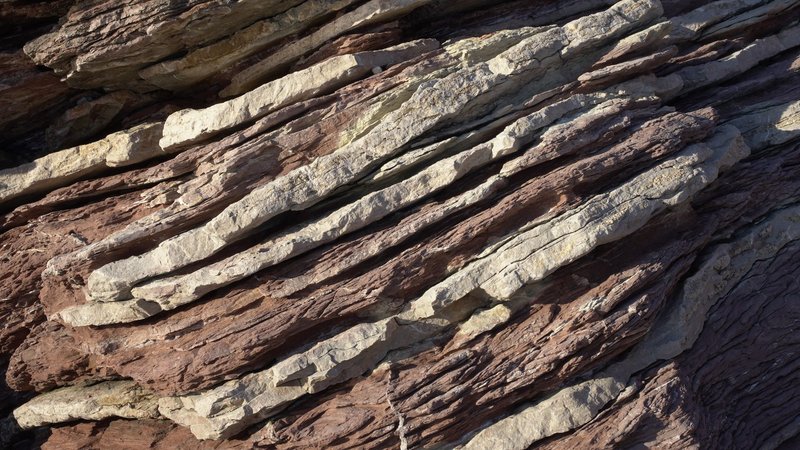
In the 1700s, the standard answer for Earth’s age was about 6,000 years, based on Bishop Ussher’s tally of biblical genealogies. James Hutton, an Edinburgh farmer turned geologist, looked at rock and saw something else: layers laid down by erosion and sediment, lifted, tilted, and eroded again, all by processes still running today.
In 1788 he took his friends John Playfair and James Hall by boat to Siccar Point on the Scottish coast, where near-vertical gray rock sits under gently sloping red sandstone. The gap between them, an unconformity, represents a vast stretch of time in which one landscape vanished and another was built. Playfair later wrote that the mind “grew giddy by looking so far into the abyss of time.” Hutton’s summary of the Earth, “no vestige of a beginning, no prospect of an end,” is the founding idea of geology, and Darwin needed it.
5. Linnaean taxonomy (1735, 1753)
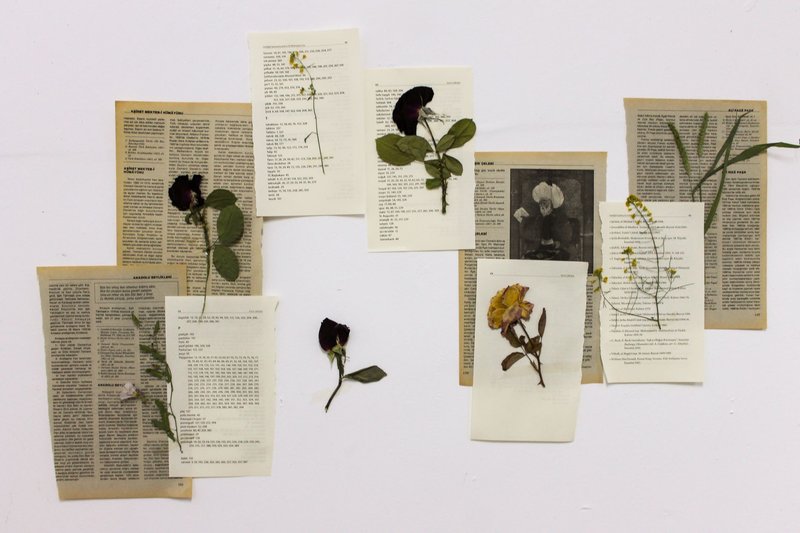
Before Linnaeus, a plant’s name was a short Latin description that might run to a dozen words, and different botanists used different ones. The first edition of his Systema Naturae (1735) laid out a nested hierarchy of kingdoms, classes, orders, genera, and species. His Species Plantarum (1753) then gave each plant a two-word name, genus plus species, and the system stuck.
The nested ranks are still how biologists sort life, and binomial names are still how a researcher in Kyoto and one in Lima know they mean the same plant. Linnaeus also grouped humans with apes in 1758, which was a radical placement for the time. His underlying idea that species were fixed was wrong, but the filing system outlived it.
6. Electricity in lightning (1752)
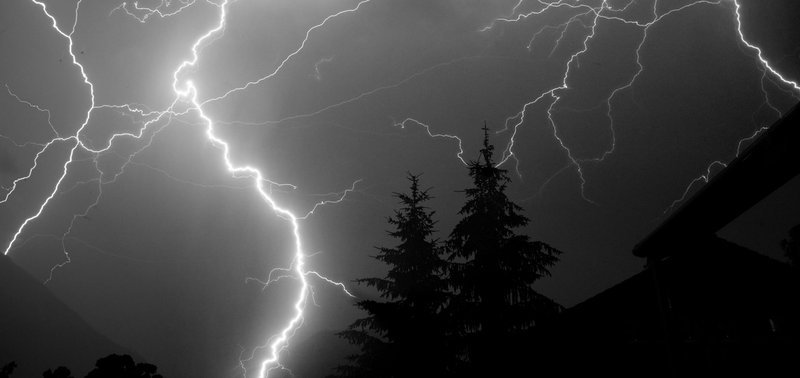
Franklin’s kite is the famous scene, and it is the weakest part of the story. The decisive test came a month earlier, in May 1752, when the French naturalist Thomas-François Dalibard used a tall iron rod at Marly to draw sparks from a storm cloud, following a method Franklin had proposed in writing. Franklin’s own kite experiment came in June. In 1753 Georg Richmann died in St. Petersburg trying to repeat it.
What matters more than the kite is the theory behind it. Franklin proposed that electricity is a single fluid that flows from a surplus to a deficit, which is where the labels positive and negative come from. He also argued that charge is not created but moved around, an early version of conservation of charge. Lightning was suddenly something that could be studied, and protected against.
7. Animal electricity and the battery (1791)
Luigi Galvani, an Italian physician, noticed in the 1780s that a dissected frog’s leg twitched when touched with two different metals. He concluded that animals carry their own electricity and published his case in 1791. Alessandro Volta disagreed: he thought the metals themselves produced the current, and the frog was just a sensitive detector.
Volta was closer to right about the source. His argument led to the voltaic pile in 1800, the first battery, though that device falls just past the century line and counts as an invention. Galvani, however, was right about something he did not fully see. Nerves and muscles really do run on electrical signals.
8. Uranus (1781)
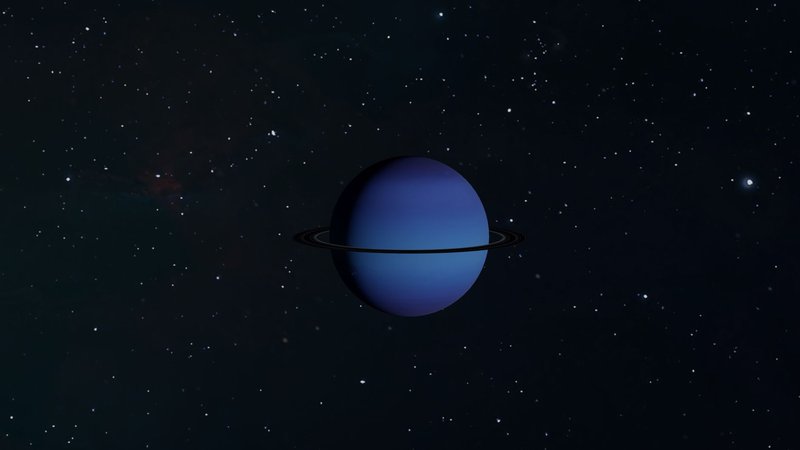
On March 13, 1781, William Herschel was scanning the sky from his garden in Bath when he spotted a disc that was too sharp for a star. He assumed it was a comet. Orbit calculations over the following months showed it moved in a near-circle far beyond Saturn, which made it the first planet discovered with a telescope. People had known the other five since antiquity.
The find doubled the known width of the solar system overnight. NASA’s Uranus page notes it is still the only planet named for a Greek deity instead of a Roman one. Herschel wanted to call it Georgium Sidus, after George III. His sister, Caroline Herschel, went on to discover eight comets herself.
9. Photosynthesis (1779)
Priestley noticed in the 1770s that a sprig of mint could “restore” air in which a candle had burned out. Other chemists could not repeat the result, and for a while it looked like a fluke. Jan Ingenhousz, a Dutch physician working in England, worked out why. In 1779 he showed that plants only purify air in sunlight, and that in the dark they foul it, just as animals do.
He did not know about carbon dioxide’s role or chlorophyll’s, which came later. But he found the central fact: light is the input. The idea of green leaves running on sunlight, and feeding almost every food chain on Earth, starts here.
10. Hydrogen and the makeup of water (1766)
Henry Cavendish, a wealthy and painfully shy English chemist, collected the gas released when metals dissolve in acid and showed in 1766 that it was a distinct substance, light enough to be about fourteen times less dense than air. He called it “inflammable air.” In the early 1780s he burned it with air and found that the product was water, which meant water was not a basic element, as everyone since the Greeks had assumed.
Who got there first is another dispute. James Watt and Lavoisier reached similar conclusions around the same time, and Lavoisier gave hydrogen its name, “water-former.” Cavendish also weighed the Earth in 1797 to 1798, measuring its density at about 5.4 times that of water, which is within a percent or so of today’s number.
11. Carbon dioxide (1754)
Joseph Black, a Scottish chemist, heated limestone and a magnesium compound and found that they lost weight as a gas escaped. The gas, which he called “fixed air,” turned limewater cloudy and put out flames. He then showed it was the same gas produced by fermentation and by human breath.
It sounds modest now. At the time, “air” was assumed to be a single substance, and Black’s balance work showed that gases were distinct chemicals that could be captured, weighed, and identified. Cavendish, Priestley, and Lavoisier all built on that move.
12. Graph theory (1736)
Königsberg, now Kaliningrad, sat on a river with two islands joined to the banks and each other by seven bridges. Residents liked to ask whether you could walk a route that crossed each bridge exactly once. Leonhard Euler proved in 1736 that you could not, and the interesting part is how. He ignored distances and shapes and kept only what connected to what.
That abstraction created graph theory, the mathematics behind network routing, social networks, and circuit design. It also appears in this list for a reason: mathematics in the 1700s did not produce a flashy single discovery like the others, but Euler’s way of thinking about structure is everywhere in modern computing.
The thread connecting them
Several entries share one tool: the balance. Black weighed gases, Lavoisier weighed everything, and Cavendish weighed water and then the planet. When you can measure how much of something there is, you can rule out explanations that only work if matter appears and disappears. Phlogiston could not survive a scale.
A second thread runs through the electricity and chemistry entries. Franklin’s ideas about charge, Galvani and Volta’s argument, and Lavoisier’s reaction chemistry all treated invisible things as quantities that could be tracked. The most useful move of the century was refusing to accept a mystery without a measurement.
And the geology and biology entries share a third habit: reading the present for evidence of the past. Hutton looked at erosion today to explain mountains; Linnaeus’s tidy tree of life invited the question of why species were related in the first place.
So which discovery mattered most? Oxygen and conservation of mass together, because modern chemistry stands on them. Jenner saved the most lives. Hutton gave us the longest timescale.
Who the usual lists leave out
The standard story features European men in wigs. The record is wider. Marie-Anne Paulze Lavoisier shaped her husband’s lab output. Caroline Herschel found comets and nebulae. Émilie du Châtelet translated Newton’s Principia into French, with her own commentary, and argued in the 1740s that an object’s energy depends on the square of its speed. And inoculation, the idea behind Jenner’s work, came from Ottoman, African, Indian, and Chinese medical practice.
FAQ
What was the most important scientific discovery of the 18th century?
Oxygen, along with the conservation of mass that followed from understanding it. They turned alchemy-era chemistry into a quantitative science. If you measure by lives saved, Jenner’s smallpox vaccine ranks first.
Who discovered oxygen?
Scheele first made it, around 1771. Priestley published first, in 1774-75. Lavoisier worked out what it was and named it. Most historians credit all three, and history textbooks often emphasize whichever one fits the nation they’re written in.
Is the 18th century the Enlightenment or the Scientific Revolution?
The Scientific Revolution (roughly 1543 to the late 1600s, ending with Newton) set up the methods. The 18th century, the Age of Enlightenment, applied them broadly to chemistry, medicine, geology, and natural history, and spread results through academies, journals, and societies.
What is the difference between a discovery and an invention?
A discovery reveals something that already existed, like a planet or a gas. An invention creates something new, like a battery or a steam engine. The two feed each other, but this list sticks to discoveries.
Which 18th century discoveries are still used today?
Binomial naming, vaccination, the conservation of mass, positive and negative charge, and the idea of deep geological time are all in everyday use.