Autotrophs are organisms that make their own food from inorganic sources, such as carbon dioxide, water, and minerals, using energy from light or from chemical reactions. They don’t need to eat anything else to get their carbon or their energy.
Table of contents
- TLDR
- Photoautotrophs and chemoautotrophs
- Examples of autotrophs
- Autotrophs in the food chain
- Autotrophs vs heterotrophs
- Why autotrophs matter
- FAQ
TLDR
- An autotroph builds its own organic molecules (sugars) from inorganic carbon, usually CO2.
- Photoautotrophs use sunlight. Chemoautotrophs use energy from chemical reactions, such as oxidizing hydrogen sulfide or iron.
- “Autotroph” and “producer” mean the same thing in an ecosystem.
- Plants, algae, and cyanobacteria are the familiar ones. Bacteria around deep-sea vents are the surprising ones.
- Humans are not autotrophs. We’re heterotrophs.
Photoautotrophs and chemoautotrophs
The word comes from Greek: auto (self) and trophe (nourishment). Every autotroph does the same core job, which is turning inorganic carbon into organic carbon. What separates them is where the energy for that job comes from.
Photoautotrophs capture light. In photosynthesis, chlorophyll absorbs sunlight and uses it to convert carbon dioxide and water into glucose, releasing oxygen as a byproduct.
Chemoautotrophs skip the light. They strip energy from inorganic chemicals and use it to fix carbon in a process called chemosynthesis. This lets them live in places where the sun never reaches: deep ocean floors, caves, and the rock beneath the soil.
| Photoautotrophs | Chemoautotrophs | |
|---|---|---|
| Energy source | Sunlight | Inorganic chemical reactions |
| Carbon source | Carbon dioxide | Carbon dioxide |
| Process | Photosynthesis | Chemosynthesis |
| Typical examples | Plants, algae, cyanobacteria | Sulfur-oxidizing, iron-oxidizing, and nitrifying bacteria; some archaea |
| Typical habitat | Sunlit land and water | Hydrothermal vents, cold seeps, caves, soil |
| Byproduct | Oxygen (in most cases) | Sulfate, oxidized iron, or nitrate, depending on the species |
Here’s the part most textbooks skip: the carbon-fixing machinery is often the same. Many chemoautotrophs use the same Calvin cycle that plants do. Only the power supply differs.
Examples of autotrophs
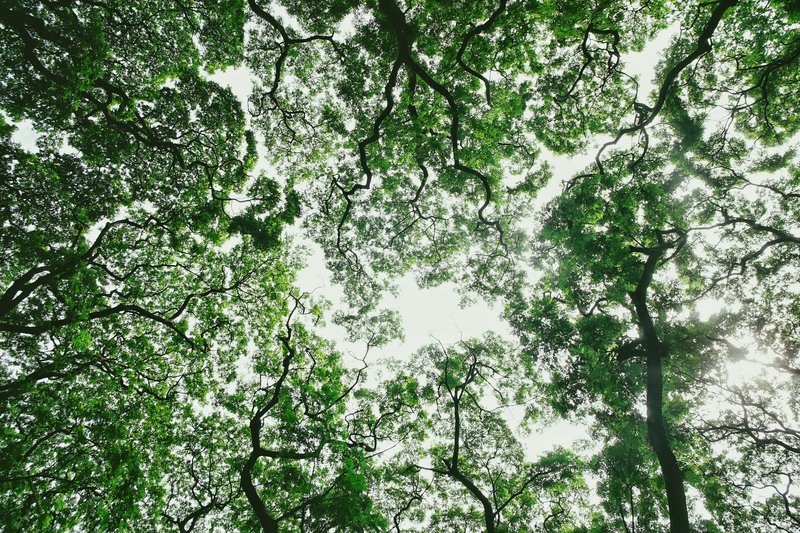
Plants. Grasses, trees, ferns, and mosses—some of the most common examples of producers in biology. On land, nearly everything green is a photoautotroph.
Algae. Seaweeds like kelp, plus microscopic diatoms and dinoflagellates. Phytoplankton, the drifting algae of the open ocean, are some of the most productive autotrophs on Earth. NOAA estimates that the ocean produces at least half of the oxygen in the atmosphere, mostly through photosynthesis by marine plants and plankton.
Cyanobacteria. Sometimes called blue-green algae, though they’re bacteria. They were doing photosynthesis billions of years before the first plant existed, and they’re the reason Earth’s atmosphere has free oxygen at all. Prochlorococcus, a cyanobacterium smaller than a red blood cell, is among the most abundant photosynthesizers in the ocean.
Sulfur-oxidizing bacteria. These are the base of the food web at hydrothermal vents, where superheated, mineral-rich water pours out of the seafloor. The bacteria oxidize hydrogen sulfide for energy. Giant tube worms have no mouth or gut as adults. They house these bacteria inside their bodies and live off the sugars the bacteria make.
Iron-oxidizing bacteria. They get energy by converting dissolved ferrous iron (Fe2+) to ferric iron (Fe3+). You may have seen their rusty-orange slime in a ditch or a stream with iron-rich groundwater.
Nitrifying bacteria. Soil microbes that oxidize ammonia to nitrite and then nitrate. Plants then absorb that nitrate as fertilizer. Chemoautotrophs are quietly feeding the photoautotrophs.
Autotrophs in the food chain
Every food chain starts with an autotroph, because they’re the only organisms that bring new energy and carbon into the living world. Everything else borrows it.
Here’s a simple land example:
- Grass (producer, photoautotroph) captures sunlight and makes sugars.
- Grasshopper (primary consumer) eats the grass.
- Frog (secondary consumer) eats the grasshopper.
- Snake (tertiary consumer) eats the frog.
- Hawk (apex predator) eats the snake.
At each step, most of the energy is lost as heat. A commonly cited rule of thumb is that only about 10 percent passes to the next level. That’s why food chains rarely run past five links, and why there are far more blades of grass than hawks.
At a deep-sea vent, the chain looks the same with different players: sulfur bacteria, then tube worms, snails, or shrimp, then crabs and fish. The sun is absent. The structure isn’t.
Autotrophs vs heterotrophs
Heterotrophs can’t fix inorganic carbon. They have to eat organic matter that something else made. Animals, fungi, and most bacteria are heterotrophs.
| Autotrophs | Heterotrophs | |
|---|---|---|
| Food | Make their own | Consume other organisms or their remains |
| Carbon source | Inorganic (CO2) | Organic compounds |
| Role in food chain | Producers | Consumers and decomposers |
| Examples | Oak tree, kelp, cyanobacteria | Deer, mushroom, human |
The line isn’t perfectly clean. Mixotrophs do both. A Venus flytrap photosynthesizes, but it also digests insects to get nitrogen that its boggy soil lacks. Euglena, a single-celled organism, photosynthesizes in light and absorbs food when it’s dark. Many marine plankton are mixotrophs too, which complicates how scientists model ocean ecosystems.
Why autotrophs matter
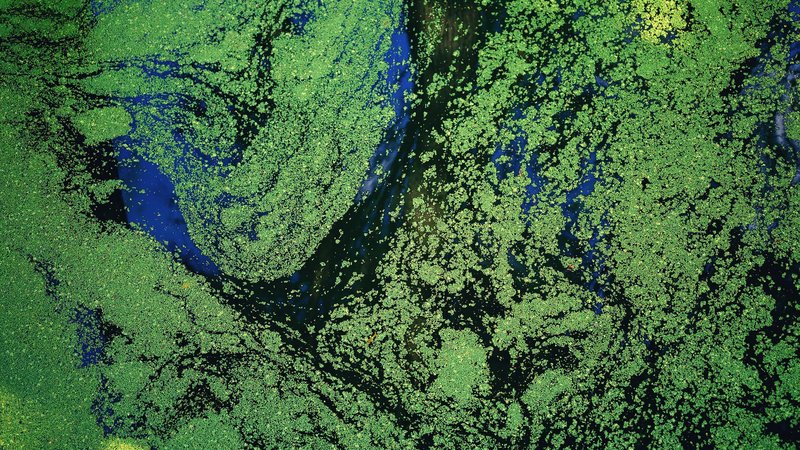
Oxygen. Photosynthesis is the source of nearly all the oxygen you breathe. Cyanobacteria began producing it more than 2 billion years ago in an event called the Great Oxidation Event, which permanently changed the atmosphere and the chemistry of the oceans.
The carbon cycle. Autotrophs pull CO2 out of the air and water and lock it into organic matter. Forests, grasslands, and ocean algae are major carbon sinks, and when they’re lost or degraded, that carbon returns to the atmosphere.
All food. Even a hamburger traces back to grass or grain. Remove the autotrophs, and every ecosystem collapses within a few trophic levels.
Life without sunlight. Chemoautotrophs show that photosynthesis isn’t the only way to build a food web. That has made them central to astrobiology: if life can run on chemistry alone, ocean worlds like Europa or Enceladus become more plausible places to look. For more on how researchers study these ecosystems, see the National Geographic Education overview of autotrophs.
FAQ
What is the difference between an autotroph and a heterotroph? An autotroph makes its own organic food from inorganic carbon. A heterotroph has to eat organic matter made by other organisms.
Are autotrophs the same as producers? Yes. “Producer” is the ecological term for an organism that forms the base of a food chain. Nearly all producers are autotrophs.
Are humans autotrophs? No. Humans are heterotrophs. We can’t make glucose from CO2 and water, so we get our energy and carbon from food.
Are all autotrophs green? No. Chlorophyll is green, but many photoautotrophs carry other pigments that mask it, like the red in seaweed and the purple in some bacteria. Chemoautotrophs have no need for chlorophyll at all.
Do autotrophs need sunlight? Photoautotrophs do. Chemoautotrophs don’t. They run on chemical energy.
What is the difference between photosynthesis and chemosynthesis? Both build sugars from carbon dioxide. Photosynthesis powers the process with light, while chemosynthesis powers it by oxidizing inorganic molecules like hydrogen sulfide, ammonia, or iron.