A metallic compound is a substance in which one or more metal atoms are chemically bonded to nonmetals, as in rust (Fe2O3) or table salt (NaCl). A pure metal is one element, and an alloy is a mixture of metals. A compound has fixed chemical proportions and properties of its own.
TLDR
- Metallic compounds are metals chemically combined with other elements: oxides, halides, carbonates, sulfates, hydroxides and sulfides are the main families.
- Common examples: Fe2O3, ZnO, TiO2, Al2O3, NaCl, CaCO3, CuSO4, BaSO4, NaOH, Mg(OH)2, ZnS, PbS.
- Brass, steel and bronze are not compounds. They’re alloys.
Table of Contents
- Metallic compounds vs. metals and alloys
- Metal oxides
- Halides
- Carbonates
- Sulfates
- Hydroxides
- Sulfides
- Intermetallic and organometallic compounds
- Properties of metallic compounds
- Quick quiz
Metallic compounds vs. metals and alloys
Three things get mixed up here, and exam questions love to exploit it.
- Pure metal: one element, like iron (Fe) or copper (Cu). Atoms share a sea of free electrons.
- Alloy: a mixture of metals, sometimes with a little carbon. Steel is iron plus carbon. Brass is copper plus zinc. No new chemical formula, and the ratio can vary.
- Metallic compound: a metal chemically bonded to another element in a fixed ratio. Iron(III) oxide is always two iron atoms to three oxygens.
Most of the compounds below are also ionic compounds: the metal gives up electrons and the nonmetal takes them. “Metallic compound” is the textbook shorthand for any compound containing a metal, so ionic compounds containing metals are the largest group inside it.
Metal oxides
Metal oxides form when a metal combines with oxygen. They’re the biggest family, and many of them are pigments or ceramics.
| Name | Formula | Everyday use |
|---|---|---|
| Iron(III) oxide | Fe2O3 | Rust; red pigment in paint and bricks |
| Zinc oxide | ZnO | Sunscreen, diaper cream |
| Titanium dioxide | TiO2 | White pigment in paint, paper and toothpaste |
| Aluminum oxide | Al2O3 | Sandpaper abrasive; rubies and sapphires are gem-quality crystals of it |
| Magnesium oxide | MgO | Furnace linings, dietary supplements |
| Calcium oxide | CaO | Quicklime for cement and steelmaking |
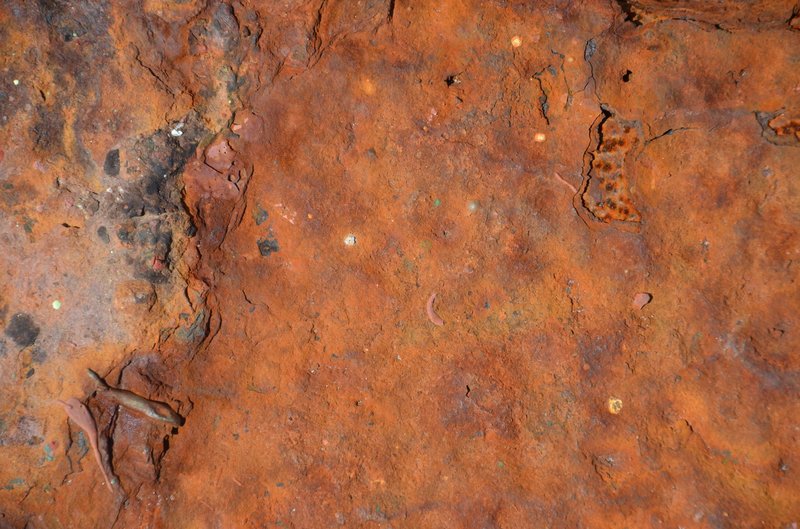
Rust is the example you’ve actually seen. Iron reacts with oxygen and water, and the flaky orange-brown result is mostly hydrated iron(III) oxide.
Halides
Halides combine a metal with fluorine, chlorine, bromine or iodine.
| Name | Formula | Everyday use |
|---|---|---|
| Sodium chloride | NaCl | Table salt, road de-icing |
| Calcium fluoride | CaF2 | Mineral fluorite; lenses and optics |
| Silver chloride | AgCl | Photographic film and paper |
| Potassium iodide | KI | Iodized salt, thyroid protection |
Sodium chloride is the standard classroom example of an ionic lattice: each Na+ is surrounded by six Cl- ions, and vice versa.
Carbonates
Carbonates contain the CO3 group bonded to a metal. They fizz when acid hits them.
| Name | Formula | Everyday use |
|---|---|---|
| Calcium carbonate | CaCO3 | Limestone, chalk, marble, seashells, antacid tablets |
| Sodium carbonate | Na2CO3 | Washing soda, glass making |
| Sodium bicarbonate | NaHCO3 | Baking soda |
| Copper carbonate | CuCO3 | Green patina component, pigments |
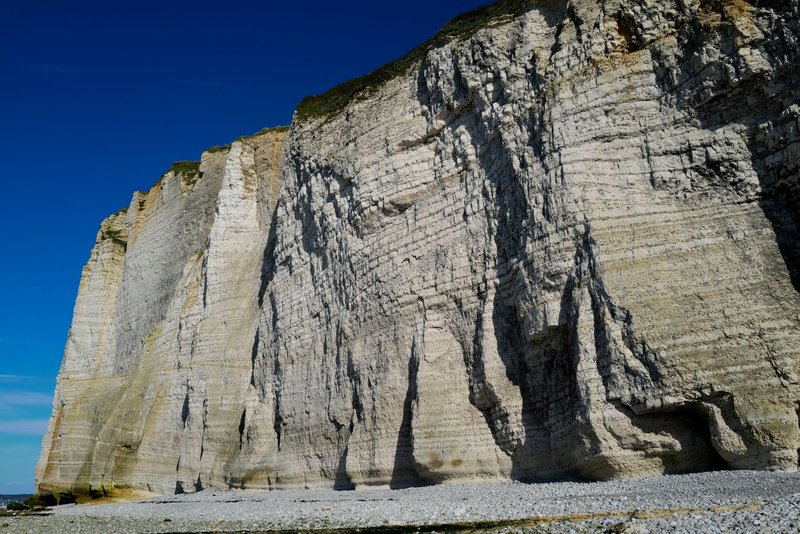
Calcium carbonate shows up in both a cliff face and the tablet you take for heartburn. Same compound, very different scale.
Sulfates
Sulfates pair a metal with the SO4 group.
| Name | Formula | Everyday use |
|---|---|---|
| Copper(II) sulfate | CuSO4 | Blue crystals; garden fungicide, school demonstrations |
| Barium sulfate | BaSO4 | The “barium meal” that makes the digestive tract visible on X-rays |
| Calcium sulfate | CaSO4 | Gypsum, plaster, drywall |
| Magnesium sulfate | MgSO4 | Epsom salt |
Barium ions are toxic, yet barium sulfate is safe to swallow because it barely dissolves. PubChem’s entry on barium sulfate covers its medical use.
Hydroxides
Hydroxides contain the OH group bonded to a metal. Many are bases.
| Name | Formula | Everyday use |
|---|---|---|
| Sodium hydroxide | NaOH | Lye for soap making and drain cleaner |
| Magnesium hydroxide | Mg(OH)2 | Milk of magnesia, antacid |
| Calcium hydroxide | Ca(OH)2 | Slaked lime for mortar and soil treatment |
| Potassium hydroxide | KOH | Alkaline batteries, liquid soaps |
Sulfides
Sulfides combine a metal with sulfur. Many are ores.
| Name | Formula | Everyday use |
|---|---|---|
| Zinc sulfide | ZnS | Glow-in-the-dark coatings, phosphors |
| Lead(II) sulfide | PbS | Galena, the main lead ore; early radio crystal detectors |
| Iron(II) sulfide | FeS | Lab source of hydrogen sulfide |
| Iron disulfide | FeS2 | Pyrite, “fool’s gold” |
Intermetallic and organometallic compounds
Two edge cases are worth knowing because they blur the line.
- Intermetallic compounds combine two or more metals in a fixed ratio with an ordered crystal structure, unlike a random alloy. Ni3Al strengthens jet engine turbine blades, and Nb3Sn is used in superconducting magnets.
- Organometallic compounds have a bond between a metal and carbon. Ferrocene, Fe(C5H5)2, is a metal sandwiched between two carbon rings. Chlorophyll’s magnesium-centered ring is a related biological case.
Lithium cobalt oxide (LiCoO2), common in phone and laptop battery cathodes, is a metal oxide you probably have within arm’s reach.
Properties of metallic compounds
The properties differ sharply from those of the metals inside them.
- Brittle, not malleable. Hit a salt crystal with a hammer and it shatters. Hit copper and it dents.
- High melting points. NaCl melts at about 801 °C, far above where most plastics fail.
- Conduct when molten or dissolved, not as solids, because ions can’t move in the lattice.
- Often colored. Copper sulfate is blue, iron(III) oxide is red, and many transition metal compounds are vivid. Pure metals are mostly silvery.
- Different reactivity. Sodium metal explodes in water; sodium chloride sits happily in a shaker.
Quick quiz
- Is brass a metallic compound? No. It’s an alloy of copper and zinc.
- What is the formula for rust? Fe2O3 (hydrated in practice).
- Which is a metallic compound: Fe, steel or FeS? FeS.
- Name the metal in Epsom salt (MgSO4). Magnesium.
- Is CO2 a metallic compound? No. It has no metal.