Table of Contents
- Ore, Mineral, or Rock? Get This Straight First
- The Full List: Ores by Metal
- The Four Types of Ores
- How an Ore Actually Becomes a Metal
- Quick Answers for Exam Revision
Ore, Mineral, or Rock? Get This Straight First
A mineral is a naturally occurring solid with a fixed chemical formula and a crystal structure — hematite, quartz, halite. A rock is whatever mixture of minerals happens to be stuck together in the ground, no set recipe required. An ore is neither of those things by definition; it’s an economic label. It’s a rock or mineral deposit that contains enough of a valuable metal, at a low enough extraction cost, to be worth digging up. As the U.S. Geological Survey puts it, minerals are the building blocks and rocks are the aggregate — ore status depends on economics layered on top of both.
That’s why the same mineral can be an ore in one deposit and worthless rock in another. A vein of hematite running 60% iron is an ore. A trace of hematite staining a sandstone cliff red is not — there’s nothing there worth mining.
The Full List: Ores by Metal
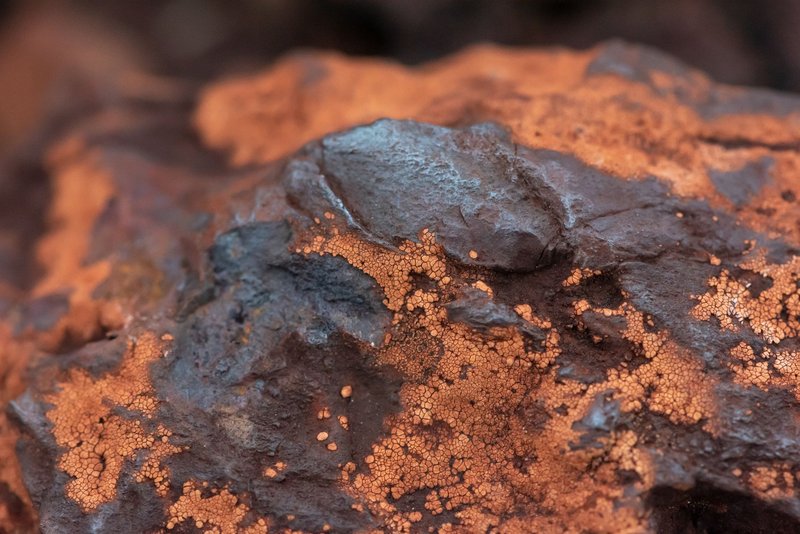
Here are 15 ores that cover the metals you’ll actually see on a syllabus, grouped by what they yield.
| Ore | Metal | Formula | Why It Matters |
|---|---|---|---|
| Hematite | Iron | Fe₂O₃ | Runs up to 70% iron by weight, the workhorse ore behind most steel |
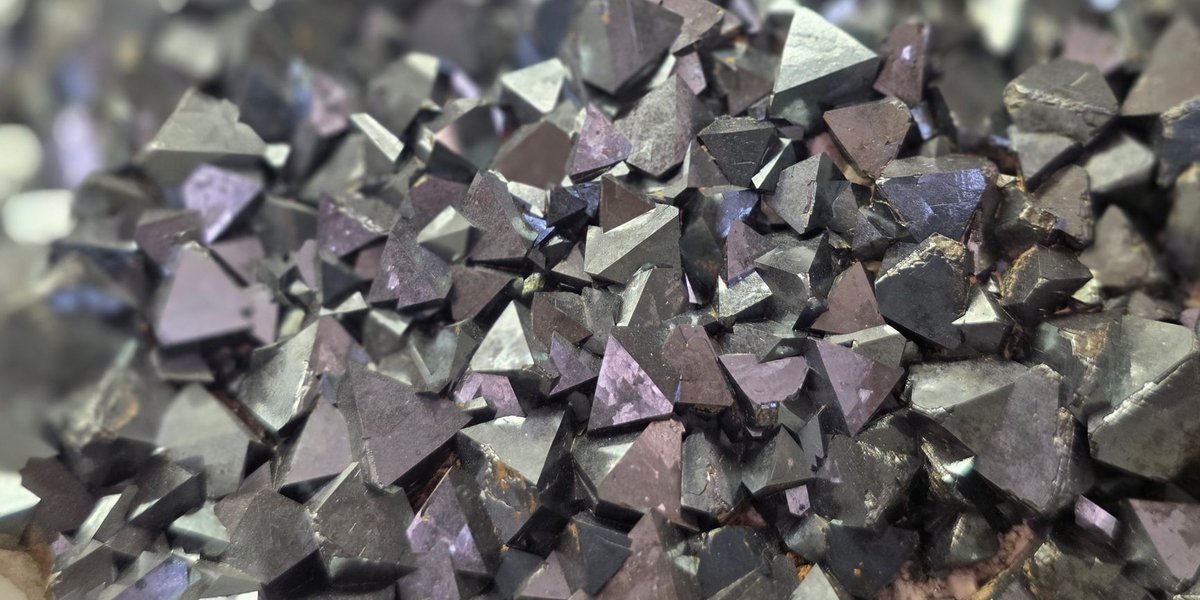
| Magnetite | Iron | Fe₃O₄ | Naturally magnetic — literally attracts a compass needle |
| Bauxite | Aluminum | Mix of Al(OH)₃ and AlO(OH) | Not a single mineral but a weathered rock; source of nearly all aluminum mined today |
| Chalcopyrite | Copper | CuFeS₂ | Brassy and easy to mistake for gold (“fool’s gold” is usually this or pyrite) |
| Malachite | Copper | Cu₂CO₃(OH)₂ | Banded green carbonate, mined for copper and cut as a gemstone |
| Sphalerite | Zinc | ZnS | Main zinc ore, usually carries traces of silver and cadmium worth recovering |
| Galena | Lead | PbS | Heavy, cubic, and metallic-grey; often mined together with silver |
| Cassiterite | Tin | SnO₂ | So dominant a tin source that “tin ore” almost always means this |
| Cinnabar | Mercury | HgS | Blood-red mineral once ground into vermilion pigment before its toxicity was understood |
| Chromite | Chromium | FeCr₂O₄ | The only chromium ore mined commercially anywhere |
| Pyrolusite | Manganese | MnO₂ | Main manganese source; manganese hardens steel and stops it from cracking |
| Rutile | Titanium | TiO₂ | Feeds titanium dioxide pigment as much as titanium metal |
| Argentite | Silver | Ag₂S | Also called acanthite; tarnishes black on exposure to air |
| Pentlandite | Nickel | (Ni,Fe)₉S₈ | Chief nickel ore, usually found intergrown with pyrrhotite |
| Magnesite | Magnesium | MgCO₃ | Source of magnesium metal and the refractory bricks that line steel furnaces |
Notice the pattern: iron and copper both show up more than once, because a single metal is often mined from several different ores depending on the deposit. Copper alone has over a dozen ore minerals worldwide — chalcopyrite and malachite are just the two you’ll meet most often in a classroom.
The Four Types of Ores
Ores get sorted by what the metal is chemically bonded to, not by which metal they contain. That classification matters because it predicts how the ore gets processed.
Oxide ores — the metal bonded to oxygen. Hematite, magnetite, cassiterite, rutile, chromite, and pyrolusite all fall here. Oxide ores tend to form near the Earth’s surface, where weathering and oxygen have had time to work.
Sulfide ores — the metal bonded to sulfur. Galena, sphalerite, chalcopyrite, cinnabar, pentlandite, and argentite are sulfides. These typically form deeper, around hydrothermal veins, and they’re the ores that produce sulfur dioxide fumes during processing — the reason old smelting towns often smelled awful.
Carbonate ores — the metal bonded to a carbonate group. Malachite and magnesite are the two on the list above; siderite (FeCO₃) is a third, a lesser iron ore that shows up where marine sediments have been carbonate-rich.
Halide ores — the metal bonded to a halogen (fluorine, chlorine, bromine, or iodine). These are the odd ones out because most halide minerals aren’t mined for the metal itself. Fluorite (CaF₂) is mined mainly as a flux for steelmaking, not for calcium. Cryolite (Na₃AlF₆) has a more direct role: it’s the molten bath that dissolves alumina during aluminum smelting, a process the USGS documents as the Hall-Héroult process. Halite, plain rock salt, is technically NaCl mined for sodium and chlorine compounds rather than a structural metal.
How an Ore Actually Becomes a Metal
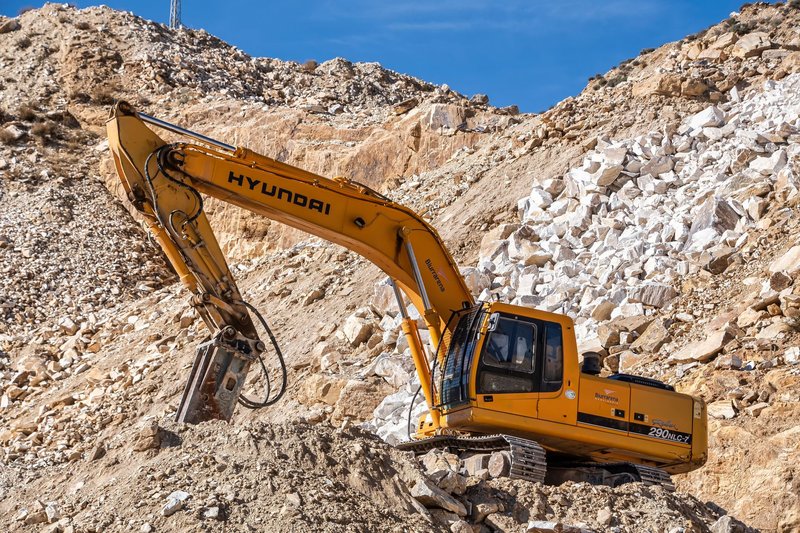
Digging up the ore is the easy part. Getting a usable metal out of it depends on which of the four categories above you’re dealing with.
Oxide ores go through smelting — heating the ore with a reducing agent, usually carbon, that strips the oxygen away. Iron ore fed into a blast furnace with coke is the textbook version: the carbon steals the oxygen from Fe₂O₃ and leaves molten iron behind.
Sulfide ores need an extra step first. They’re roasted in air to convert the sulfide into an oxide (and release sulfur dioxide gas in the process), then smelted the same way an oxide ore would be.
Some ores skip pyrometallurgy entirely. Bauxite goes through the Bayer process — a caustic soda leach that separates alumina from the rock — and the resulting alumina is then split into aluminum metal and oxygen by electrolysis in a cryolite bath, since aluminum is too reactive to reduce with carbon the way iron can be.
None of this is free of consequence. Roasting sulfide ores releases sulfur dioxide, tailings ponds hold the leftover crushed rock and processing chemicals, and both can affect water and air quality around a mine site if they’re not managed — a concern regulators like the EPA track under industrial mineral processing waste rules. It’s the part of the ore story that a formula-and-table list tends to skip, but it’s the reason modern mines are held to environmental standards that older operations weren’t.
Quick Answers for Exam Revision
Is coal an ore? No. Coal is a sedimentary rock formed from ancient plant matter — it’s a fuel, not a metal-bearing mineral. “Ore” specifically means a source of extractable metal.
Can a non-metal have an “ore”? Strictly, no — the term ore is reserved for metal-bearing deposits. What people usually mean by “non-metallic ores” are industrial minerals mined the same way: rock salt (NaCl) for sodium chemicals, fluorite for fluorine and flux use, gypsum for plaster, phosphate rock for fertilizer. Same mining process, different destination.
Why does one metal have several ores? Because the same element can end up bonded to different things depending on the geological conditions where the deposit formed. Iron alone shows up as an oxide (hematite, magnetite) and a carbonate (siderite) because both environments existed somewhere on Earth at some point.
What’s the difference between an ore and gangue? Gangue is the worthless rock and mineral mixed in with the ore — the stuff that gets separated out and discarded (or stockpiled as tailings) during processing. Fluorite, ironically, is often gangue in a lead or silver mine even while being the target ore somewhere else.