TLDR
The natural resources of the United Kingdom are North Sea oil and gas, wind and tidal energy, limestone, chalk, salt, china clay, potash, sand and gravel, slate, farmland, forests and fish. Coal was the foundation of the economy but is no longer mined deep underground or burned for power. Oil and gas are in long decline. Wind is now the country’s biggest homegrown energy source. The table below shows where each resource sits and whether it’s still produced.
| Resource | Main location | Status |
|---|---|---|
| Natural gas | North Sea, Irish Sea | Active, declining |
| Crude oil | North Sea, west of Shetland | Active, declining |
| Coal | South Wales, Yorkshire, Northumberland, Scotland | Deep mining ended 2015; coal power ended 2024 |
| Wind | North Sea, Irish Sea, Scottish uplands | Active, growing |
| Tidal and wave | Pentland Firth, Orkney, Severn Estuary | Early stage |
| Limestone and chalk | Derbyshire, Yorkshire, southern England | Active |
| Salt | Cheshire, Teesside, Northern Ireland | Active |
| China clay | Cornwall (St Austell), Devon | Active |
| Potash and polyhalite | North Yorkshire coast (Boulby) | Active |
| Tin | Cornwall | Mining stopped, restart proposed |
| Lithium | Cornwall | Exploration and pilot stage |
| Slate | North Wales, Cornwall, Cumbria | Small-scale |
| Sand and gravel | Across England, Scotland, Wales | Active |
| Arable and grazing land | Eastern England, Welsh and Scottish uplands | Active |
| Fish and shellfish | North Sea, Atlantic, Irish Sea | Active, regulated |
Contents
- What natural resources does the UK have?
- Energy: oil, gas and coal
- Wind, tidal and solar power
- Minerals and aggregates
- Land, farming and forests
- Water and fisheries
- From coal to oil to offshore wind
- Resources of the four nations
- FAQ
What natural resources does the UK have?
A natural resource is anything useful that comes from the land, sea or sky without being manufactured. For the UK that splits into four groups: energy (fossil fuels and renewables), minerals and rock, land (soil, farmland, timber) and water (rivers, rainfall and the fish in surrounding seas).
The country is small, but it sits on an unusual mix of geology. The old, hard rocks of the north and west hold slate and granite. The soft, young rocks of the south and east hold chalk, clay and fertile soil. Offshore, a sedimentary basin the size of a small country holds the hydrocarbons that powered the 1970s onward.
What the UK lacks is also telling. It has no significant iron ore left, no commercial deposits of copper or gold worth the name, and very little bauxite. Many “UK natural resources” lists, which still include iron ore, lead, zinc and gold, are quoting a past that mostly ended decades ago.
Energy: oil, gas and coal
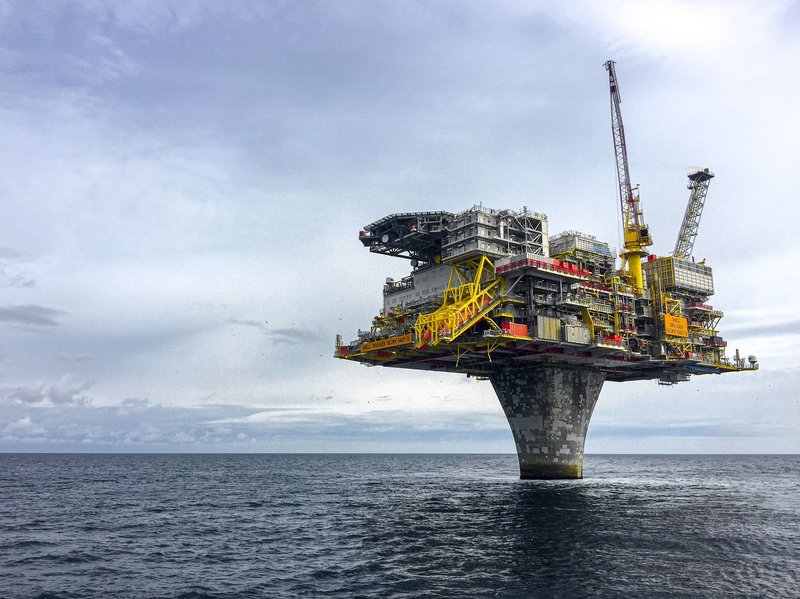
Oil and gas from the North Sea are the UK’s largest fossil resource, and they are shrinking. Production of oil peaked around 1999 at roughly 2.9 million barrels a day. Gas peaked a year later. Today the country produces a fraction of that, and the UK has been a net importer of gas for years. The North Sea Transition Authority regulates what remains, including the licensing of new fields and the decommissioning of old platforms.
Most of the oil comes from fields east of Scotland, off Aberdeen and around Shetland. Gas also comes from the southern North Sea off Norfolk and Lincolnshire, and from the Irish Sea, where Morecambe Bay still produces. The UK also imports large volumes, mainly from Norway by pipeline, plus liquefied natural gas by ship.
Coal is the resource that built modern Britain. Output hit about 292 million tonnes in 1913, and more than a million people worked in the mines. The coalfields ran from South Wales through the Midlands and Yorkshire up to Northumberland, Durham and the Scottish Central Belt. The last big deep mine, Kellingley in North Yorkshire, closed in December 2015. The last coal-fired power station, Ratcliffe-on-Soar in Nottinghamshire, shut on 30 September 2024. That made the UK the first G7 country to end coal power. A small amount of coal is still extracted from surface sites, mostly for steel and industrial use, and the reserves in the ground remain large. They’re just not being burned.
Wind, tidal and solar power
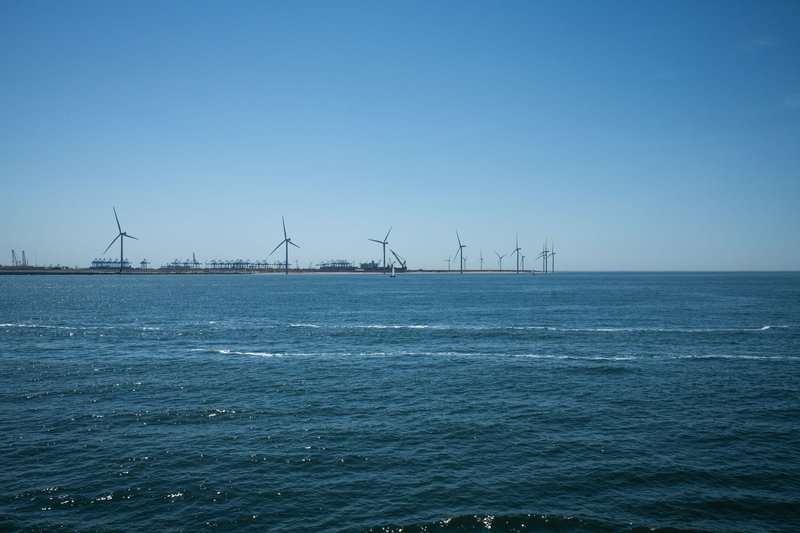
Wind is the UK’s strongest renewable resource, and offshore wind is the headline. Shallow water over the Dogger Bank and along the east coast, combined with consistent westerlies, makes the country one of the best places in the world to put turbines. Hornsea 2, off the Yorkshire coast, is among the largest offshore wind farms ever built, at 1.3 gigawatts. Hywind Scotland, off Peterhead, was the world’s first commercial floating wind farm when it opened in 2017.
The share of electricity from renewables has risen sharply. The government’s energy trends statistics put wind at close to a third of generation in recent years, with renewables overall at nearly half. Gas still covers much of the gap on still, grey days.
Tidal power is smaller and earlier in its development. The Pentland Firth between Orkney and the Scottish mainland has some of the fastest tidal streams in Europe, and the MeyGen array there is the largest tidal stream project in the world. The Severn Estuary has the second-highest tidal range on the planet, and schemes to harness it have been proposed for decades without being built. Solar is useful but modest, given the light, and it’s concentrated in the south of England.
Biomass, hydro and geothermal add small amounts. Hydro is mostly in the Scottish Highlands. Deep geothermal is limited to a few projects, such as the heat network in Southampton.
Minerals and aggregates
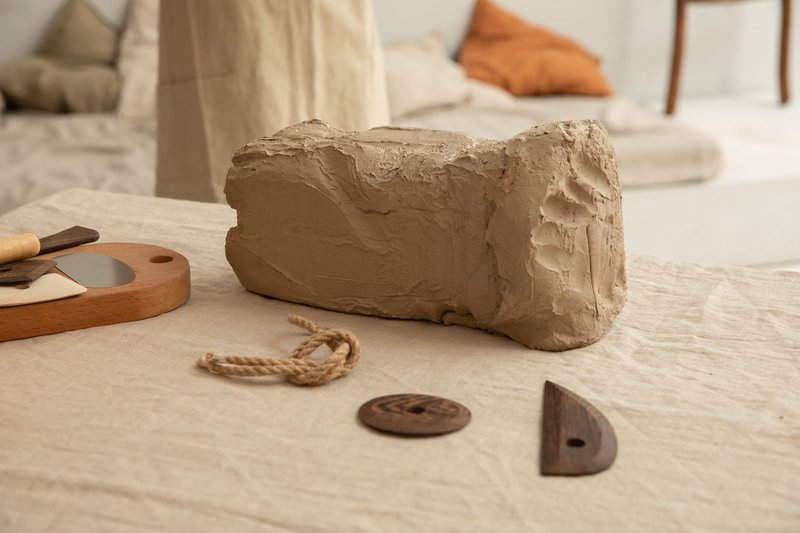
The mineral industry is no longer about metals. It’s about rock, clay and salt, mostly for construction, chemicals and industry. The British Geological Survey tracks what’s produced and where.
Limestone and chalk. Quarried across Derbyshire’s Peak District, the Yorkshire Dales and the southern downs, limestone becomes cement, crushed stone for roads and agricultural lime. Chalk is the raw material for much of the cement made in the south-east.
Salt. Cheshire sits on salt beds laid down by an evaporating sea about 220 million years ago. The towns of Northwich, Nantwich and Middlewich have names ending in “wich” because they were salt towns, and the Winsford mine is still active, supplying road salt for much of the country. Teesside and Northern Ireland also have deposits.
China clay. Cornwall’s St Austell area has produced kaolin, or china clay, since the 18th century, when William Cookworthy found it. It’s used to coat glossy paper, and in ceramics, paint and cosmetics. The pale spoil heaps were once nicknamed the Cornish Alps.
Potash and polyhalite. Boulby Mine on the North Yorkshire coast reaches more than a kilometre below the seabed. It produces potash, a fertilizer ingredient, and polyhalite, a multi-nutrient fertilizer that is mined almost nowhere else. A side project uses the mine’s deep, dark, quiet tunnels for dark matter research.
Tin, copper and lithium. Cornwall and west Devon supplied much of the world’s tin and copper in the 1800s. Geevor closed in 1990 and South Crofty, the last working tin mine in Cornwall, closed in 1998. Plans to reopen South Crofty are underway. Cornwall’s hot granite also contains lithium, dissolved in geothermal brines and bound in rock, and companies are testing whether it can be extracted at a commercial scale for batteries.
Slate. North Wales once roofed much of the industrial world. Penrhyn Quarry near Bethesda still operates, and Dinorwic closed in 1969 and now houses a pumped-storage hydro plant. The slate landscape of north-west Wales became a UNESCO World Heritage Site in 2021.
Sand and gravel. Unglamorous but essential. The UK uses well over 100 million tonnes of aggregates a year, and sand and gravel come from river terraces, glacial deposits and dredging from the seabed.
Land, farming and forests
About 70 percent of UK land is farmed, which is high by European standards. The split is geographic. The flat, dry east of England, especially East Anglia and Lincolnshire, grows wheat, barley, potatoes and sugar beet. The wetter west and the uplands of Wales, Scotland, the Pennines and Northern Ireland are better for grass, so they raise sheep and cattle.
Soil is arguably the biggest resource nobody lists. The Fens, drained from marshland in the 17th century, hold some of the richest peat and silt soil in Britain, and produce a large share of the country’s vegetables. They’re also sinking as the peat dries and wastes.
Forests cover only about 13 percent of the UK, the lowest share of any large European country. Scotland has the most woodland by area. Much of it is commercial conifer, such as Sitka spruce, planted to produce timber. Ancient broadleaf woodland, mostly oak and ash, covers a tiny fraction of the land.
Water and fisheries
Britain is an island with regular rain, so freshwater is abundant in the north and west and tight in the south-east. The driest part of the country, East Anglia and the Thames region, gets less annual rainfall than parts of Mediterranean Europe, which is why reservoirs, groundwater from chalk aquifers and water transfers matter so much there.
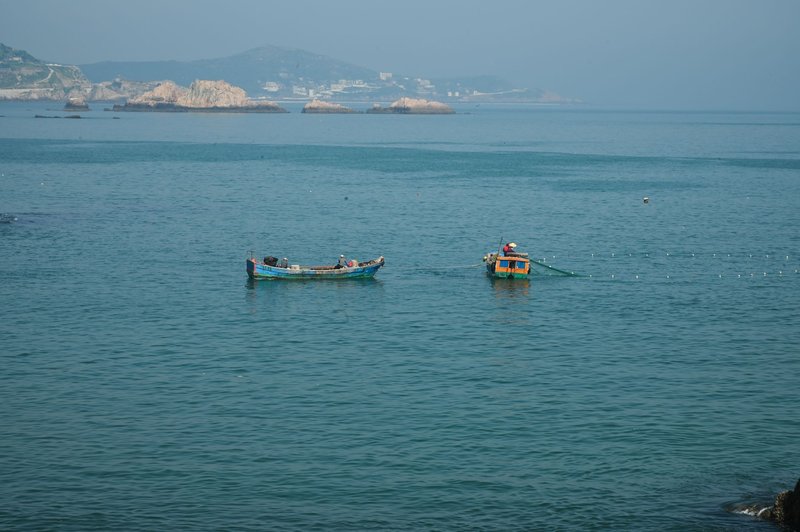
The seas around the UK are among the richest fishing grounds in Europe. Key catches include haddock, cod, mackerel, herring, nephrops (langoustines), scallops and crab. Peterhead in Scotland is the biggest fishing port in Europe by landings of whitefish, while Grimsby is the center of fish processing. Quotas, set annually, limit what boats can take from each stock, and since Brexit the UK negotiates its own shares with the EU and Norway. A number of stocks, notably North Sea cod and some herring and whelk fisheries, are still recovering from overfishing.
From coal to oil to offshore wind
The UK has changed its main energy source twice in living memory.
- Coal era (1800s to the 1970s). Coal drove the steam engine, the railways and the factories. By the 1950s it supplied most of the country’s energy.
- North Sea era (1970s to the 2000s). Gas was first found off the coast in 1965, and the Forties oil field in 1970. Oil and gas revenues, combined with a switch to gas-fired power in the 1990s, ended much of the coal industry.
- Wind era (2010s onward). Offshore wind turned from an experiment into the biggest new source of electricity. Coal power ended in 2024, and the government has set a target of clean power by 2030.
Each shift reshuffled the map of where the energy is. Coal sat in the Midlands and the north. Oil and gas moved the center of gravity to Aberdeen. Wind turns the attention to the east coast, Scotland and the sea itself.
Resources of the four nations
England has the most farmland, the chalk and limestone, Cornwall’s clay and minerals, Cheshire’s salt, Yorkshire’s potash and the Dogger Bank wind farms.
Scotland has most of the North Sea’s oil, large offshore and onshore wind capacity, hydro in the Highlands, tidal energy in the Pentland Firth, fishing ports such as Peterhead, and most of the UK’s forestry.
Wales has slate, coal reserves in the south, upland grazing and some of the UK’s best tidal range. Several large offshore wind and marine energy projects are planned for the Celtic Sea.
Northern Ireland has basalt (the Giant’s Causeway is a basalt formation), salt near Carrickfergus, limestone, and good wind resources. It also has gold and silver prospects in the Sperrins that have been explored but not developed at scale.
FAQ
What are the main natural resources of the UK? Oil, natural gas, coal, limestone, chalk, salt, clay, potash, tin, slate, sand and gravel, farmland, forests, fish, and wind and tidal energy.
What is the UK’s most important natural resource today? By economic and energy value, it’s a toss-up between North Sea gas and offshore wind, with wind now growing while gas declines. By land use, it’s farmland.
Does the UK still mine coal? Not underground. Deep mining ended with Kellingley in 2015, and coal-fired electricity ended in September 2024. Small surface mines still produce coal for industry.
Does the UK have lithium? Yes, in Cornwall. It’s in geothermal waters and granite, and several companies are working on extraction. Commercial production hasn’t started.
Does the UK have any gold? Small amounts. Gold has been found in Wales, Scotland and Northern Ireland, and the Dolaucothi Mine in Wales was worked by the Romans. Commercial production is limited.
Is the UK running out of oil and gas? Production has fallen sharply since its peak around 2000. Fields remain, but they’re smaller and more expensive to operate, and the country imports more than it used to.