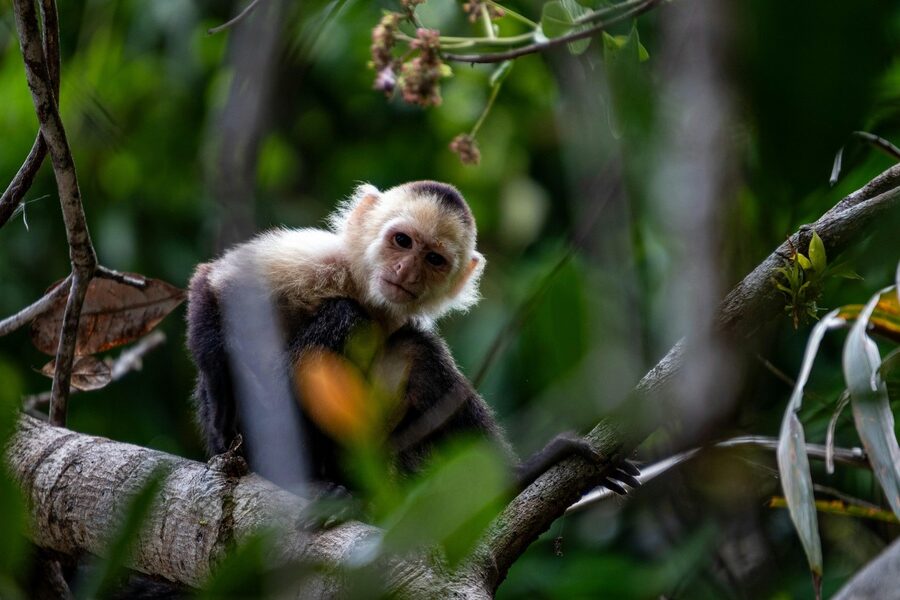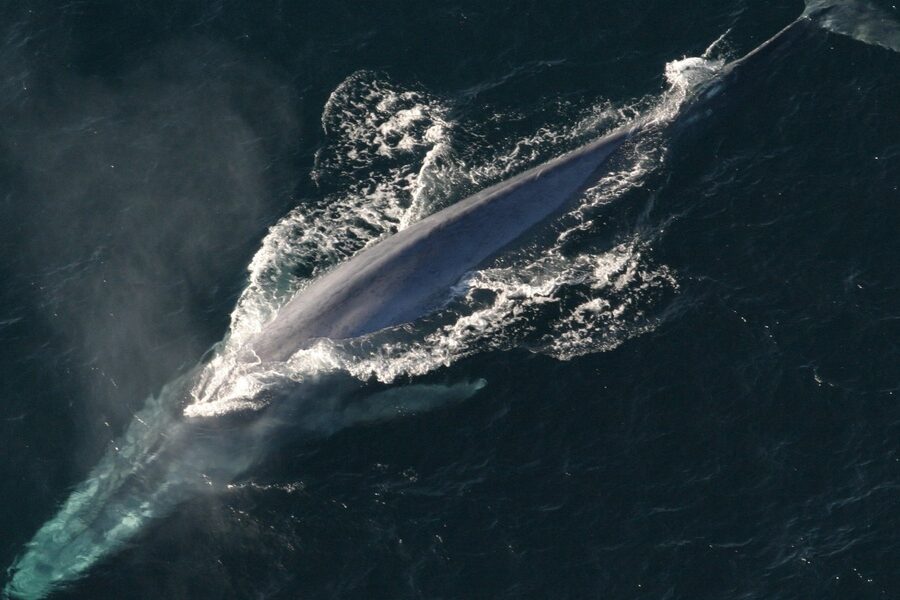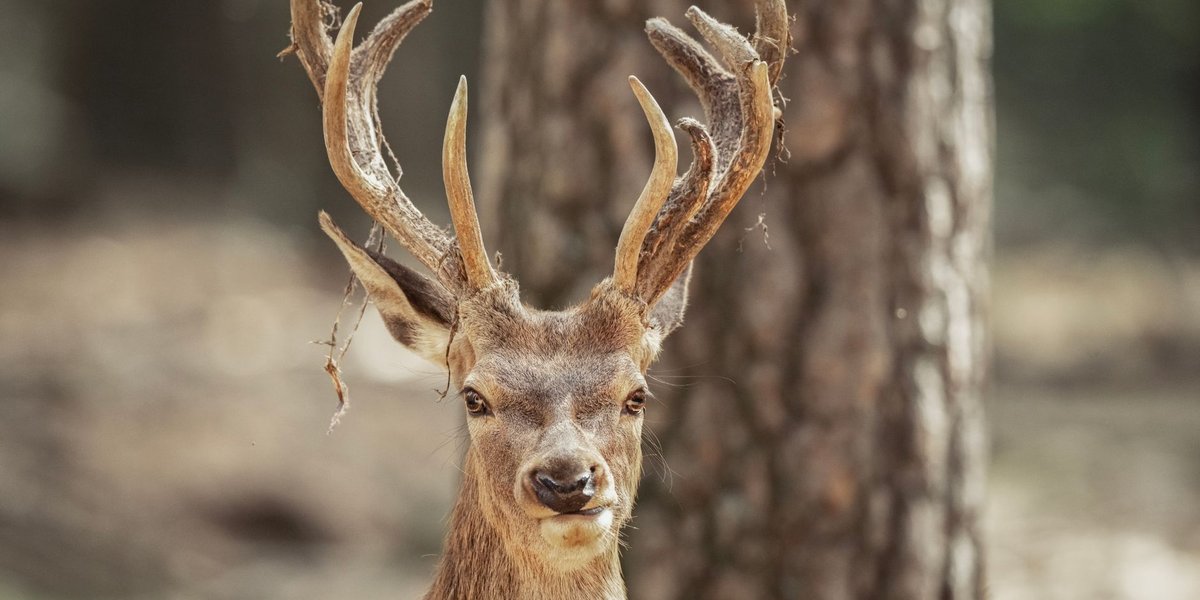
An animal is a multicellular organism that eats other living or once-living things to get its energy, builds its body from cells with no walls, and (for at least part of its life) moves under its own power. That definition covers a blue whale, a house fly, a coral polyp and you.
Yes, you. Humans are animals: mammals, specifically, and primates within that. The rest of this post maps the animal kingdom, from the big divisions down to the numbers, so you can see where any creature fits.
Table of Contents
- What makes something an animal
- The big split: vertebrates and invertebrates
- Types of animals compared
- The five vertebrate groups
- The invertebrates, where most animals live
- How many animal species are there?
- Herbivores, carnivores, omnivores and detritivores
- Where animals live
- Size extremes
- Summary
What makes something an animal
Biologists put every animal in the kingdom Animalia. Four traits do most of the sorting:
- Multicellular. An animal’s body is made of many cells that specialize. Amoebas and other single-celled organisms are out.
- Eukaryotic. The cells have a nucleus and other membrane-bound compartments. Bacteria don’t.
- Heterotrophic. Animals can’t make their own food from sunlight like plants do. They eat something else.
- No cell walls. Plant cells sit in rigid boxes of cellulose. Animal cells are flexible, which is why animals can build muscle, nerves and soft tissue that moves.
“Usually mobile” is the fuzzy part. Most animals crawl, swim, fly or run at some point. But an adult sponge or barnacle stays glued in place for life, and both are animals. Sponges are the odd ones: they have no true tissues, no nerves and no muscles, yet their DNA puts them firmly in the kingdom. Their larvae swim before they settle down.
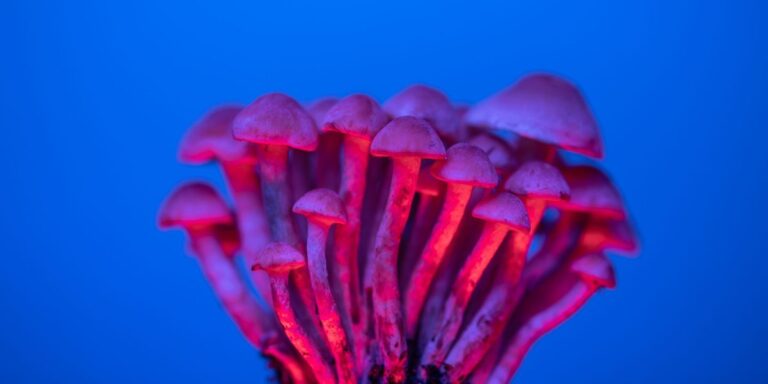
Fungi are the usual mix-up. Mushrooms don’t move and don’t photosynthesize, so they feel like they sit between plants and animals. Genetically, fungi are actually closer cousins to animals than to plants, but they absorb nutrients through their surface rather than eating and digesting food inside a body, and they have cell walls made of chitin. They get their own kingdom.
The big split: vertebrates and invertebrates
The first division most people learn is the backbone test.
Vertebrates have a spine made of bony or cartilage segments, protecting a nerve cord. That group includes mammals, birds, reptiles, amphibians and fish.
Invertebrates have no backbone. This is not a small leftover pile. Invertebrates make up roughly 95 to 97 percent of all described animal species. Vertebrates, the animals that get nearly all the zoo space and documentary time, are a minority.
Biologists sort animals further into about 35 phyla, which are the major body-plan categories. Chordates (the phylum containing vertebrates), arthropods (insects, spiders, crustaceans), molluscs, annelids (segmented worms), cnidarians (jellyfish, corals) and nematodes (roundworms) are the ones you’ll see most often. Vertebrates are one subgroup inside a single phylum, while the other phyla are almost entirely invertebrates.
Types of animals compared
Here’s the whole map in one table. Species counts are approximate, rounded from IUCN Red List summary statistics and other taxonomic databases, and they shift every year as new species are described.
| Group | Approx. described species | Example | Defining trait |
|---|---|---|---|
| Mammals | 6,500 | African elephant | Hair and milk for young |
| Birds | 11,000 | Bald eagle | Feathers, most can fly |
| Reptiles | 12,000 | Green sea turtle | Scaly, dry skin; cold-blooded |
| Amphibians | 8,800 | Red-eyed tree frog | Moist skin; life split between water and land |
| Fish | 36,000 | Clownfish | Gills and fins |
| Insects | 1,000,000 | Monarch butterfly | Six legs, three body segments |
| Arachnids | 110,000 | Garden spider | Eight legs, two body segments |
| Molluscs | 85,000 | Common octopus | Soft body, often with a shell |
| Crustaceans | 80,000 | Blue crab | Hard shell, two pairs of antennae |
| Roundworms | 25,000 | Hookworm | Unsegmented, tube-shaped body |
| Jellyfish, corals and relatives | 11,000 | Moon jelly | Stinging cells, no brain |
Insects alone outnumber every other group on that list combined, and by a wide margin. About one in every two described animal species is a beetle, fly, wasp, butterfly or some other insect. Beetles on their own account for roughly 400,000 of them.
The five vertebrate groups
Mammals are defined by milk and hair. They’re warm-blooded, most give birth to live young, and the group runs from a 2-gram shrew to a 150-tonne whale. Two oddities: the platypus and the echidnas lay eggs, and bats are the only mammals that fly under their own power.
Birds are the only living animals with feathers. Nearly all fly, but ostriches, penguins and kiwis don’t. Birds are also living dinosaurs: they descend from small feathered theropods, so “when did the dinosaurs go extinct?” has a more complicated answer than most people expect.
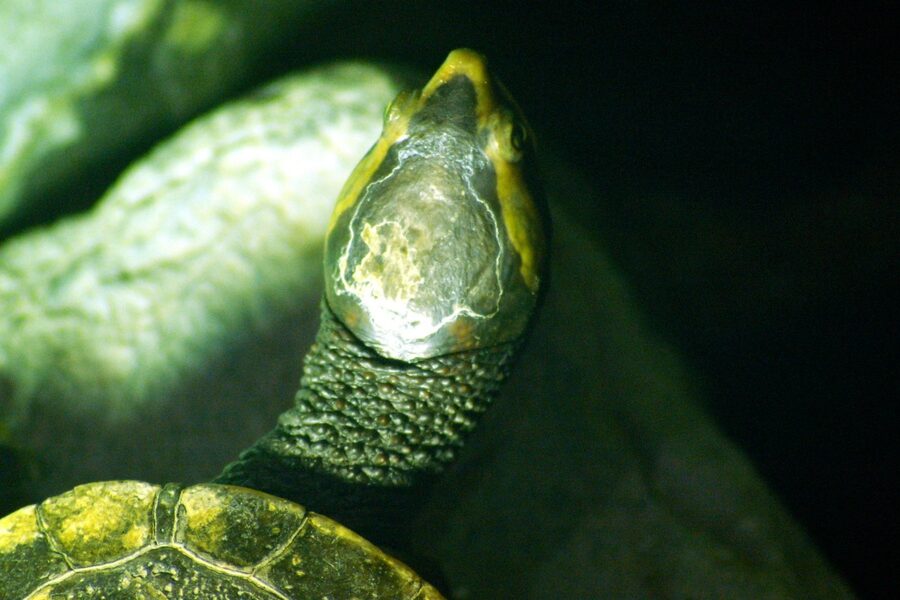
Reptiles include snakes, lizards, turtles, crocodilians and the tuatara. Dry, scaly skin lets them live in deserts where an amphibian would shrivel. They rely on external heat to regulate their body temperature, which is why you find lizards basking on rocks.
Amphibians (frogs, toads, salamanders, caecilians) typically start life in water with gills and move onto land as adults with lungs. The name comes from Greek for “double life.” Their thin, permeable skin makes them sensitive to pollution, and they are among the most threatened vertebrates on Earth.
Fish are the biggest vertebrate group by count, at about 36,000 species. They include three distinct lineages: bony fish (tuna, salmon, goldfish), cartilaginous fish (sharks, rays) and the jawless fish (lampreys, hagfish). “Fish” isn’t a tidy single branch of the family tree. A salmon is more closely related to you than it is to a shark.
The invertebrates, where most animals live
Insects dominate. Six legs, a body split into head, thorax and abdomen, and usually two pairs of wings. They pollinate most flowering crops, recycle dead matter and feed a huge share of the world’s birds, fish and amphibians. Readers who want to go further can start with a sorted list of entomology books, which covers popular reading, field guides and textbooks.
Arachnids (spiders, scorpions, ticks, mites) have eight legs and no antennae. They’re often confused with insects, but a spider is no more an insect than you are a fish.
Molluscs are soft-bodied animals, many with hard shells. Snails, clams and mussels are the familiar ones. Octopuses and squid are molluscs too, and an octopus has about 500 million neurons, a figure closer to a dog’s than to a typical invertebrate’s.
Crustaceans (crabs, lobsters, shrimp, barnacles, krill) are mostly aquatic arthropods with a hard outer skeleton. Antarctic krill alone have a combined mass that rivals or exceeds the human population’s.
Worms are not one group. Roundworms (nematodes), flatworms and segmented worms like earthworms are separate phyla. Nematodes are some of the most numerous animals on Earth by individual count.
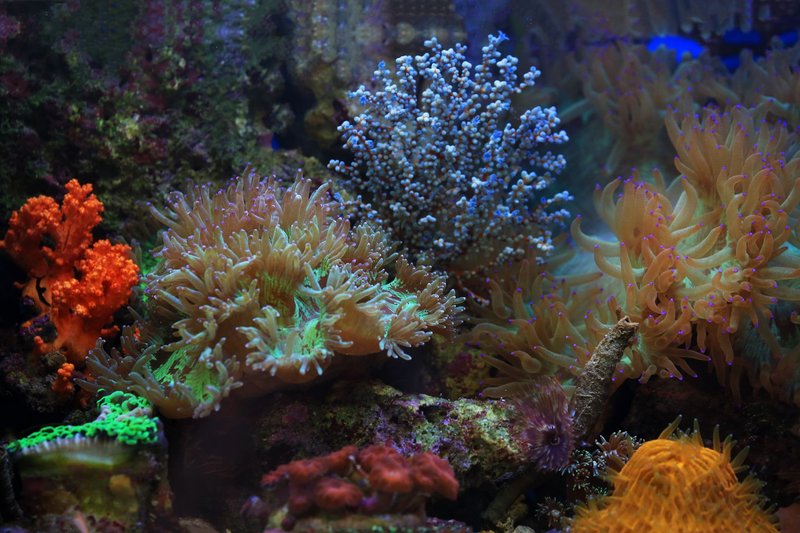
Jellyfish, corals and sea anemones are cnidarians. They have no brain or heart and capture prey with stinging cells. A coral reef is a colony of thousands of tiny polyps, and reefs cover less than 1 percent of the ocean floor while supporting roughly a quarter of marine species.
How many animal species are there?
Scientists have formally described about 1.5 to 2 million animal species, with the exact figure depending on whose database you trust and how you handle disputed names.
The real total is much higher. A widely cited 2011 study in PLOS Biology estimated about 7.77 million animal species on Earth, with roughly 8.7 million species across all eukaryotes. At the time, only around 950,000 animal species had been catalogued, which means most of the animal kingdom was undescribed. Other estimates range widely, mostly because insects and deep-sea invertebrates are so poorly surveyed.
The gaps are uneven. Nearly every bird and mammal species has been named, and new ones turn up mostly from genetic studies that split a “single” species into several. Insects, nematodes and marine invertebrates are where thousands of unknown species sit, waiting in tropical canopies and ocean sediment.
Herbivores, carnivores, omnivores and detritivores
Every animal eats, and what it eats sorts it into a feeding group:
- Herbivores eat plants only. Cows, deer, rabbits, caterpillars and parrotfish all qualify. Plant material is hard to digest, so herbivores tend to have long guts, grinding teeth, or in the case of cows, a four-chambered stomach with microbes doing a lot of the work.
- Carnivores eat other animals. Lions, sharks, owls and spiders sit here. Strict carnivores such as cats can’t digest plants well and depend on nutrients only found in meat, including the amino acid taurine.
- Omnivores eat both. Bears, pigs, crows, raccoons and humans fall in this group, and being flexible helps them survive when one food source fails.
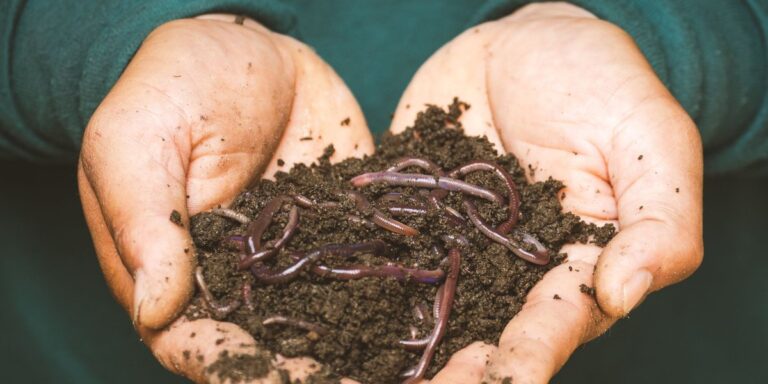
- Detritivores eat dead plant and animal matter and waste. Earthworms, millipedes, woodlice and dung beetles do the recycling that stops forests from burying themselves in leaf litter.
Some animals fit smaller categories inside those four. Insectivores eat insects (anteaters, bats), scavengers eat carrion that other animals killed (vultures, hyenas), and filter feeders strain tiny food from water (baleen whales, clams, flamingos). The labels are about what an animal mostly does, not an absolute rule. A cow will eat a nestling bird if it finds one, and wolves eat berries.
Where animals live
Animals have colonized nearly every environment on the planet:
- Land. Forests, grasslands, deserts, mountains and tundra. Arthropods, reptiles, birds and mammals are the main land groups.
- Freshwater. Rivers, lakes and wetlands hold only a tiny share of Earth’s water but a large share of its fish species, plus most amphibians’ early life stages.
- Oceans. The sea holds nearly every animal phylum, and several phyla (like echinoderms, which include starfish and sea urchins) have no land or freshwater members at all.
- Air. Insects, birds and bats. Flight evolved separately at least four times in animals: insects, pterosaurs, birds and bats.
- Extreme places. Tube worms live around deep-sea hydrothermal vents at temperatures that would kill most life, and Antarctic icefish carry antifreeze-like proteins in their blood. Tardigrades, microscopic “water bears” under a millimeter long, survive being dried out for years and revive when wet.
Habitat shapes body form. The fish, ichthyosaurs (extinct marine reptiles) and dolphins all ended up with streamlined bodies and fins despite starting from very different ancestors, a pattern called convergent evolution.
Size extremes
Animal sizes span about eight orders of magnitude in length.
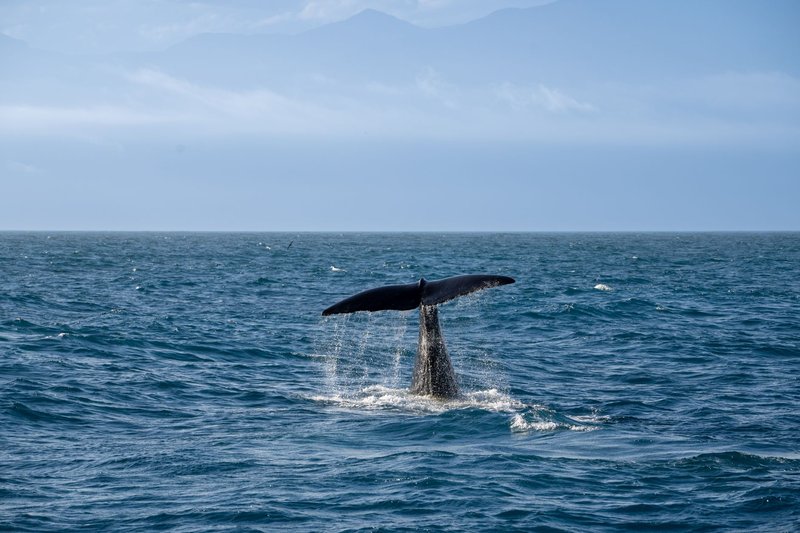
- Largest animal ever: the blue whale, up to about 30 meters long and 150 tonnes or more, according to National Geographic. Its heart is roughly the size of a small car, and its calls can travel hundreds of kilometers underwater.
- Largest land animal: the African bush elephant, which can weigh 6 tonnes or more.
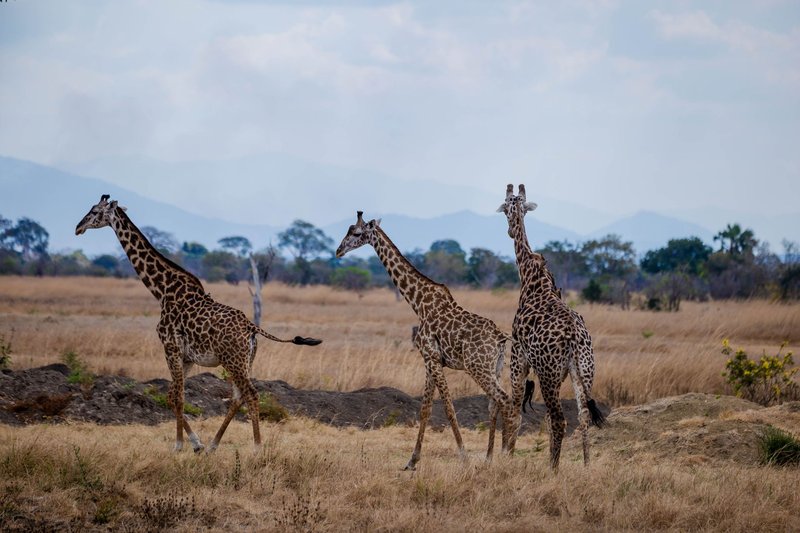
- Tallest: the giraffe, up to about 5.5 meters.
- Smallest vertebrate: Paedophryne amauensis, a frog from Papua New Guinea that is about 7.7 millimeters long as an adult, smaller than a pea.
- Smallest mammal: the Etruscan shrew or the bumblebee bat, depending on whether you measure by mass or by skull size. Both weigh about 2 grams.
- Smallest bird: the bee hummingbird of Cuba, about 2 grams and 5 to 6 centimeters long.
Among invertebrates, a colossal squid can reach roughly 10 meters or more, while the smallest parasitic wasps are shorter than a single-celled paramecium.
Summary
Animals are multicellular, eukaryotic organisms that get their energy by eating other things, and the animal kingdom is far larger and weirder than the zoo version suggests. Vertebrates (mammals, birds, reptiles, amphibians and fish) get most of the attention, but invertebrates account for around 95 percent of the species we’ve named, and insects alone make up about half.
About 1.5 to 2 million animal species have been described and roughly 7.8 million are estimated to exist, so the majority are still unnamed. Diets sort them into herbivores, carnivores, omnivores and detritivores, and habitats stretch from mountain peaks to hydrothermal vents.
If you’ve been asking “are humans animals,” the answer is yes. We’re a mammal species on a branch of the tree that’s about 6,500 species wide, in a kingdom of millions.