Colombia has about 62,819 known species, and 8,803 of them live nowhere else on Earth. That’s roughly 14 percent, according to the Humboldt Institute, the country’s national biodiversity research body. The endemic species of Colombia range from a frog toxic enough to kill several adults to an orchid that blooms in time for Christmas.
This guide covers the headline numbers, why sources disagree on them, and twelve standout species grouped by taxon. Each one gets the same mini-profile: scientific name, range, conservation status and one detail worth remembering.
Table of contents
- How many endemic species of Colombia are there?
- Amphibians
- Birds
- Mammals
- Reptiles and fish
- Plants
- Species at a glance
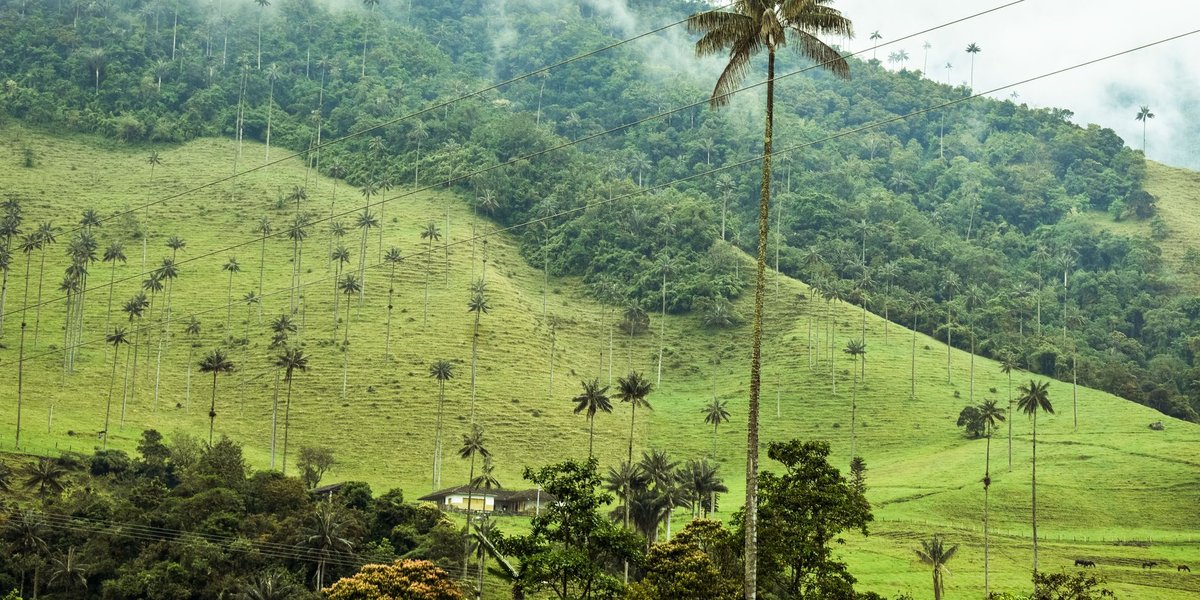
- Where endemics cluster: the hotspots
- What threatens them
- Summary
How many endemic species of Colombia are there?
The most reliable single figure is the Humboldt Institute’s: 8,803 endemic species out of 62,819 recorded in the country. Plants make up most of that endemic total. Animals, the group everyone searches for, are a smaller slice.
Look up any group on its own and you’ll find numbers that don’t match. Four things cause it.
- Endemic versus total. Colombia has around 1,900 bird species in all. Only about 80 are endemic (79 in the most commonly cited list). Pages that mix the two produce figures that look contradictory.
- Checklist dates. New species are described every year, mostly frogs, plants and small mammals, so a 2015 count and a 2024 count differ.
- Taxonomy. Splitting one species into two, or merging two into one, changes the endemic tally overnight.
- Borders. Many animals live mostly in Colombia with a foothold in Ecuador, Venezuela or Panama. Some sources count them as endemic and others don’t.
For small mammals alone, a project funded by the Rufford Foundation counted 57 endemic species, mostly bats and rodents. Treat any figure as a snapshot with a date on it.
Amphibians
Colombia is home to more amphibian species than almost any other country, and a large share live in a single valley or on a single mountainside. That’s what makes them endemic, and what makes them fragile.
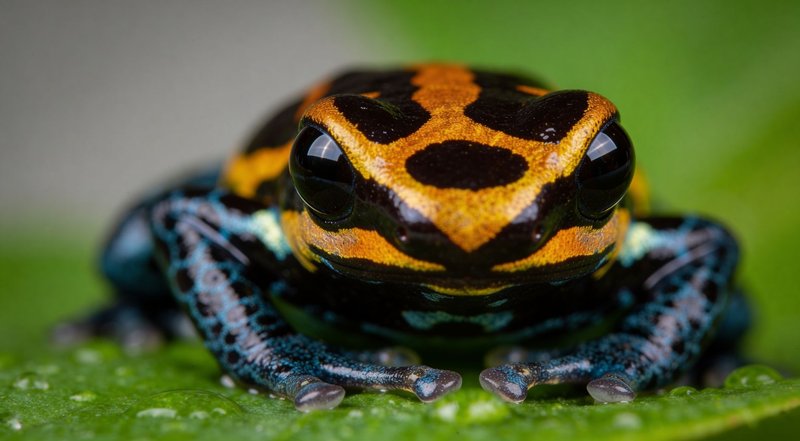
Golden poison frog
- Scientific name: Phyllobates terribilis
- Where it lives: A small stretch of Pacific lowland rainforest in Cauca department
- IUCN status: Endangered
- Memorable fact: Its skin carries batrachotoxin, among the most potent natural poisons known, and one frog holds enough to kill several adults. Emberá hunters rubbed their blowgun darts on its back.
The frog doesn’t make the toxin itself. It accumulates it from the insects it eats, which is why captive-bred golden poison frogs fed on fruit flies are harmless.
Lehmann’s poison frog
- Scientific name: Oophaga lehmanni
- Where it lives: Pacific slope forests of Valle del Cauca, around the Anchicayá valley
- IUCN status: Critically Endangered
- Memorable fact: It comes in a red-and-black form and a red-and-yellow form, and the bright bands are a warning to predators.
Its looks are also its problem. Collectors for the exotic pet trade targeted it heavily, and zoos now run captive-breeding programs to keep a backup population alive.
Harlequin toads (genus Atelopus) deserve a mention here too. Colombia holds many species, several found on one mountain range only, and the chytrid fungus has pushed numerous populations toward extinction.
Birds
Colombia has more bird species than any other country on Earth. The endemic subset is small by comparison, and it concentrates on isolated mountains and shrinking lowland forest. Anyone building an endemic-birds list for a trip to Colombia should plan around three regions: the Santa Marta massif, the Western Andes and the Caribbean lowlands.
Santa Marta parakeet
- Scientific name: Pyrrhura viridicata
- Where it lives: Sierra Nevada de Santa Marta, northern Colombia
- IUCN status: Endangered
- Memorable fact: For decades it was almost never seen, and it was only relocated in the 2000s. It’s green with an orange-red belly patch and a very small global range.
Blue-billed curassow
- Scientific name: Crax alberti
- Where it lives: Caribbean lowland forests of northern Colombia
- IUCN status: Critically Endangered
- Memorable fact: Males have a bright blue cere at the base of the bill, a turkey-sized body, and a curly black crest. Most of the lowland forest they depend on has been cleared for cattle ranching.
Colorful puffleg
- Scientific name: Eriocnemis mirabilis
- Where it lives: Western Andes of Cauca, with Munchique National Park as its stronghold
- IUCN status: Critically Endangered
- Memorable fact: Hummingbirds in the Eriocnemis genus wear feathered “puffs” on their legs, and this one has some of the most vivid in the group. It survives in a tiny patch of cloud forest.
Mammals
Colombian mammals are mostly small, nocturnal or both. The primates are the exceptions.
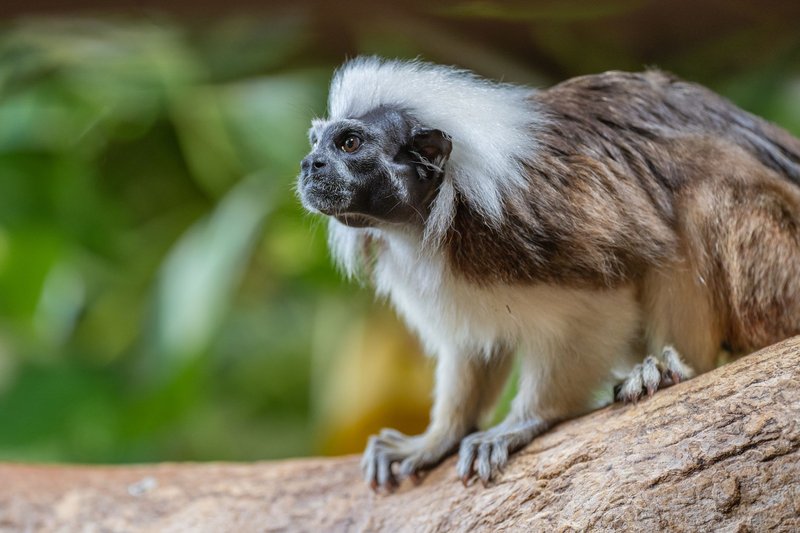
Cotton-top tamarin
- Scientific name: Saguinus oedipus
- Where it lives: Forests of northwestern Colombia, in the Caribbean region
- IUCN status: Critically Endangered
- Memorable fact: A crest of long white hair sweeps back from its head like a punk haircut. It weighs under half a kilogram.
Its decline has two causes. Tens of thousands were exported in the 1960s and 1970s for biomedical research before export was banned, and most of its forest has since been cleared. The Smithsonian’s National Zoo runs conservation work on the species.
Colombian woolly monkey
- Scientific name: Lagothrix lugens
- Where it lives: Andean montane forests of Colombia, with a marginal presence over the Venezuelan border
- IUCN status: Critically Endangered
- Memorable fact: It’s large and slow to reproduce, with one infant at a time and a gap of two to three years between births. It also has a prehensile tail with a bare, grippy tip that works like a fifth hand.
Those slow breeding rates mean even modest hunting for meat can push a local population into collapse.
Beyond the primates, the bulk of Colombia’s endemic mammals are bats and rodents, such as spiny rats and small montane mice. They’re hard to photograph and harder to count, so every new survey tends to add names to the list.
Reptiles and fish
Dahl’s toad-headed turtle
- Scientific name: Mesoclemmys dahli
- Where it lives: Seasonally dry forests and wetlands of northern Colombia
- IUCN status: Critically Endangered
- Memorable fact: It’s a side-necked turtle with a broad, flat head, and it ranks among the rarest turtles in the Americas. It has been recorded at only a few scattered sites.
Colombia’s tropical dry forest has been reduced to a small fraction of its original extent, and this turtle’s range overlaps the worst-hit areas.
Magdalena river turtle
- Scientific name: Podocnemis lewyana
- Where it lives: The Magdalena, Sinú and San Jorge river basins
- IUCN status: Critically Endangered
- Memorable fact: Females lay their eggs on exposed river sandbanks, where people collect them to eat. Dams and dredging remove the sandbanks themselves.
Freshwater fish
The Magdalena-Cauca basin holds many fish found in no other country. The best known is the bocachico (Prochilodus magdalenae), a staple of river fisheries that has declined with overfishing and pollution. Fish are the least-surveyed endemic group in this guide, and new species are still being described.
Plants
Plants dominate the endemic count, yet they get the least attention. Colombia’s mix of Andean ranges, Pacific rainforest and high-altitude páramo grasslands is a factory for narrow-range species.

Cattleya trianae
- Common name: Christmas orchid
- Where it lives: Andean montane forests of Colombia
- Status: CITES Appendix II, which regulates trade in wild orchids
- Memorable fact: It blooms around December, hence the nickname, and it was named Colombia’s national flower in 1936. The species honors José Jerónimo Triana, a Colombian botanist.
Wild populations have been stripped by collectors for more than a century. Most plants sold today come from cultivation.
Frailejones
- Scientific name: Espeletia and related genera
- Where they live: Páramos of the Colombian Andes and nearby Venezuela
- Status: Varies by species; several are threatened
- Memorable fact: The leaves are covered in thick silvery hairs that trap fog and funnel it to the soil, and the plants grow only about a centimeter a year.
Many frailejones are confined to a single mountain range. They also matter for people: páramos like Chingaza supply much of Bogotá’s drinking water, and frailejones are a big part of why those ecosystems hold water.
Macarenia clavigera
- Common name: River weed of Caño Cristales
- Where it lives: Caño Cristales, in Serranía de la Macarena National Park
- Status: Restricted to a single river system, inside a protected area
- Memorable fact: The plant turns vivid red in the dry season, roughly June to November, when low water lets sunlight reach it. It’s the reason the river is nicknamed the “river of five colors.”
Species at a glance
| Species | Group | Range | Status |
|---|---|---|---|
| Golden poison frog (Phyllobates terribilis) | Amphibian | Pacific lowlands, Cauca | Endangered |
| Lehmann’s poison frog (Oophaga lehmanni) | Amphibian | Valle del Cauca | Critically Endangered |
| Santa Marta parakeet (Pyrrhura viridicata) | Bird | Sierra Nevada de Santa Marta | Endangered |
| Blue-billed curassow (Crax alberti) | Bird | Caribbean lowlands | Critically Endangered |
| Colorful puffleg (Eriocnemis mirabilis) | Bird | Western Andes, Cauca | Critically Endangered |
| Cotton-top tamarin (Saguinus oedipus) | Mammal | Northwestern Colombia | Critically Endangered |
| Colombian woolly monkey (Lagothrix lugens) | Mammal | Andean forests | Critically Endangered |
| Dahl’s toad-headed turtle (Mesoclemmys dahli) | Reptile | Northern dry forests | Critically Endangered |
| Magdalena river turtle (Podocnemis lewyana) | Reptile | Magdalena, Sinú, San Jorge basins | Critically Endangered |
| Cattleya trianae | Plant | Andean forests | CITES Appendix II |
| Frailejones (Espeletia) | Plant | Andean páramos | Varies |
| Macarenia clavigera | Plant | Caño Cristales | Single-river range |
IUCN statuses come from the IUCN Red List and change as assessments are updated, so check the current listing before citing one.
Where endemics cluster: the hotspots
Endemism follows isolation. Species end up unique to Colombia where mountains, rivers or forest fragments cut populations off from their neighbors.
- Sierra Nevada de Santa Marta. This coastal massif rises from the Caribbean shoreline to roughly 5,700 meters, and it holds 23 endemic bird species. It’s the single best place in the country to add endemic birds to a list.
- Western and Central Andes. Narrow cloud-forest belts on the slopes hold many of the frogs, hummingbirds and primates in this guide. Munchique National Park in Cauca is a good example.
- Chocó and Pacific coast. One of the wettest places on Earth, and the home of the golden poison frog and Lehmann’s poison frog.
- Magdalena and Cauca valleys. The river basins carry the endemic turtles and freshwater fish, and the dry forests alongside them hold species like Dahl’s toad-headed turtle.
- Páramos and Serranía de la Macarena. High-altitude grasslands for the frailejones, and a mountain range on the Amazon-Orinoco edge for the plants of Caño Cristales.
What threatens them
The same few pressures show up in almost every profile above.
- Habitat loss. Cattle ranching, farming and logging have cleared most Caribbean lowland and dry forest. Narrow-range species have nowhere else to go.
- Illegal trade. Poison frogs, tamarins and orchids have all been collected for sale, and a species with a tiny range can be emptied out by a few collectors.
- Disease. The chytrid fungus has devastated harlequin toads and other amphibians.
- Infrastructure and mining. Dams, dredging and gold mining damage river habitats and the sandbanks turtles need.
- Climate change. Páramo and cloud-forest species can only move uphill, and the summit is the end of the road.
Several of these species live inside national parks, which helps. The parakeet’s reserves in the Sierra Nevada and the protection around Caño Cristales show that small, targeted protection works when it exists.
Summary
The endemic species of Colombia number about 8,803 by the Humboldt Institute’s count, close to 14 percent of the country’s known biodiversity. Group-level numbers disagree because sources mix endemic and total species, use different checklist dates, and handle taxonomy and borders differently.
The twelve species above cover amphibians, birds, mammals, reptiles and plants. Nine of the twelve are rated Endangered or Critically Endangered, and most live in only one region. If you want to see them, start with the Sierra Nevada de Santa Marta for birds, Caño Cristales for its plants, and the Andean cloud forests for most of the rest.