Table of Contents
- The Short Answer
- Orhan Pamuk: Literature, 2006
- Aziz Sancar: Chemistry, 2015
- Daron Acemoglu: Economics, 2024
- The Ones Who Almost Made It
- Nobel Nominees From Before the Republic
- Why Only Three, in a Country of 85 Million
Turkey has produced exactly three Nobel laureates. Not three this decade, not three in one category — three, total, spread across sixty years and three completely different fields. A novelist in 2006, a biochemist in 2015, an economist in 2024. That’s the whole list, and it’s shorter than most people guess for a G20 country with a population of 85 million and dozens of research universities.
The Short Answer
- Orhan Pamuk — Nobel Prize in Literature, 2006, for novels including My Name Is Red and Snow
- Aziz Sancar — Nobel Prize in Chemistry, 2015, for discovering how cells repair UV-damaged DNA
- Daron Acemoglu — Nobel Memorial Prize in Economic Sciences, 2024, shared with Simon Johnson and James A. Robinson, for showing how political institutions shape which countries get rich
| Laureate | Year | Category | Cited For |
|---|---|---|---|
| Orhan Pamuk | 2006 | Literature | Discovering “new symbols for the clash and interlacing of cultures” in the melancholic soul of Istanbul |
| Aziz Sancar | 2015 | Chemistry | Mapping the molecular mechanisms of nucleotide excision repair — how cells cut out and fix UV-damaged DNA |
| Daron Acemoglu | 2024 | Economic Sciences | Studies on how inclusive vs. extractive institutions determine national prosperity, with Simon Johnson and James Robinson |
All three left Turkey to build their careers — Pamuk stayed rooted in Istanbul as a subject even while living abroad for stretches, Sancar has taught in North Carolina since 1982, Acemoglu has been at MIT since the early 1990s. That pattern matters more than it looks like it should, and we’ll get to why near the end.
Orhan Pamuk: Literature, 2006
Pamuk is Turkey’s first Nobel laureate in any category, and the Swedish Academy gave him the prize for novels that treat Istanbul less as a setting than as a character with a specific mood: hüzün, a melancholy the city wears the way other places wear weather. The citation praised him for finding, “in the quest for the melancholic soul of his native city, new symbols for the clash and interlacing of cultures” — which is a fair description of books like My Name Is Red, narrated in part by a corpse and a coin, and Snow, which follows a poet into a snowed-in Anatolian town caught between secularism and political Islam.
The award came a year after Pamuk was formally charged in Turkey under Article 301, a law making it a crime to “insult Turkishness.” The charge stemmed from a 2005 interview in which he told a Swiss magazine that a million Armenians and thirty thousand Kurds had been killed in Turkey and that almost nobody would talk about it. The case was thrown out on a technicality, but not before his books were burned at nationalist rallies and prosecutors turned him into a symbol of the country’s free-speech fight. He kept receiving threats seriously enough that Turkish police put him under protection for years afterward.
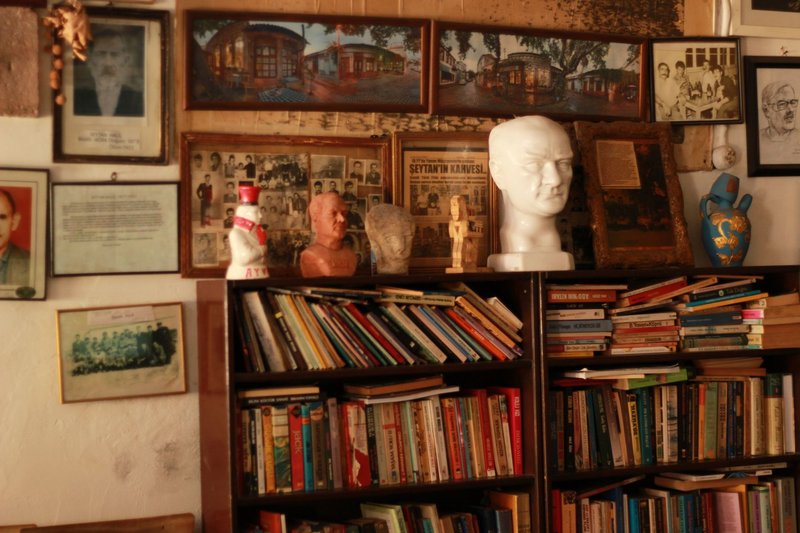
So the Nobel didn’t arrive as a quiet literary honor. A nationalist lawyer who had helped bring the Article 301 case against him claimed publicly that the prize was political payback for the Armenia comments, not recognition of the books. Pamuk has mostly declined to engage with that framing and kept writing — his most recent novels still return to Istanbul, still work through the tension between a Westernizing elite and everyone else.
Aziz Sancar: Chemistry, 2015
Sancar grew up in Savur, a small town in Mardin province in southeastern Turkey, one of eight children of parents with no formal schooling who nonetheless pushed every one of their kids toward education. He trained as a physician at Istanbul University, then switched into basic research, earning a PhD at the University of Texas at Dallas in 1977. That’s the same university that would later name a building after him.
His Nobel-winning work is unglamorous to describe and enormous in consequence: he mapped how bacterial cells find and cut out DNA damaged by ultraviolet light, using an enzyme system called nucleotide excision repair. Every cell in your body runs some version of this same repair machinery constantly, patching the damage that sunlight, chemicals, and ordinary metabolism inflict on your genome all day. Understanding how the repair system works — and how it fails — underpins a lot of current research into why certain cancers resist chemotherapy. He shared the 2015 Chemistry Prize with Sweden’s Tomas Lindahl and the American Paul Modrich, all three honored for separately mapping different DNA repair pathways.
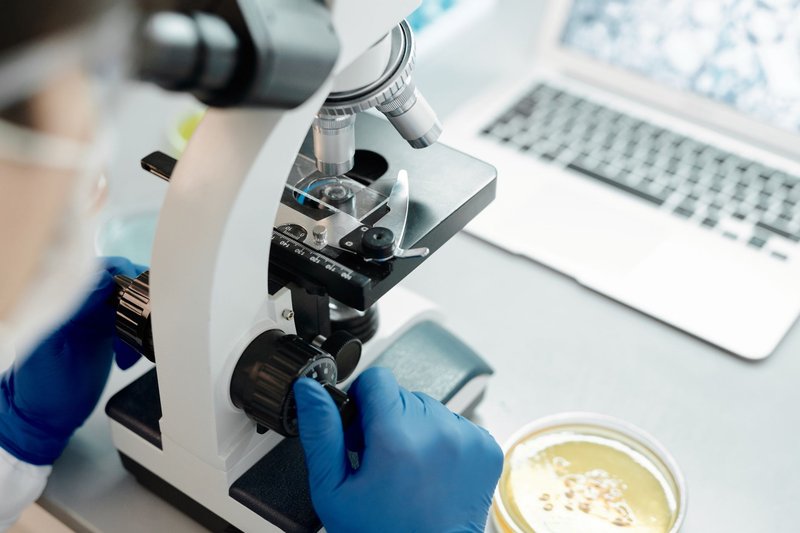
Sancar has taught at the University of North Carolina at Chapel Hill since 1982 and is still active there — UNC’s own reporting has him, at 79, still teaching molecular biology to undergraduates and still running a cancer research lab. He’s also put real money behind Carolina Türk Evi, a community house at UNC for Turkish graduate students and visiting scholars — a fairly direct way of trying to make sure the next Sancar doesn’t have to make the same one-way trip he did.
Daron Acemoglu: Economics, 2024
Acemoglu was born in Istanbul in 1967 to an Armenian-Turkish family, and by his own account the defining moment for his career happened in middle school: the 1980 military coup, soldiers stationed inside his school, a country that had stopped being a democracy overnight. That’s not incidental biography — it’s close to the exact question his research spent the next four decades answering. Why do some countries build political institutions that let ordinary people participate and hold power accountable, while others build institutions designed to extract wealth for a narrow elite? And why does that choice, made sometimes centuries ago through colonization or conquest, keep determining which countries are rich today?
He shared the 2024 Nobel Memorial Prize in Economic Sciences with Simon Johnson and James A. Robinson, his frequent co-author on the argument laid out in their book Why Nations Fail. Acemoglu is an Institute Professor at MIT, where he’s been on the faculty since 1993, and one of the most-cited economists alive — the Nobel was less a surprise announcement than a formality that had been expected in economics circles for years.
Turkish media covered his win as a national moment, which is a little ironic given that his research is, among other things, a fairly pointed argument about what happens to prosperity when a country’s institutions stop being inclusive. He hasn’t been shy about applying that framework to his country of birth in interviews since.
The Ones Who Almost Made It
Three winners doesn’t mean three contenders in Turkey’s entire history — the near-miss list is longer and arguably more interesting, because it’s where the country’s ongoing tension between talent and politics shows up most clearly.
Nazım Hikmet, the poet who spent over a decade in Turkish prisons for his communist politics and died in exile in Moscow in 1963, was put forward for the Nobel Peace Prize in the early 1950s by an international group of writers protesting his imprisonment. He never won it, but he’s arguably the most internationally translated Turkish poet in history, decades before Pamuk made it fashionable to read Turkish fiction in English.
Elif Shafak, whose novels routinely land on Booker Prize shortlists and who writes in both Turkish and English, has been named a Nobel contender by literary odds-makers for years running without a win. Garo Paylan, an Armenian-Turkish former member of parliament, was nominated for the Peace Prize in 2018 and 2020 for his work on minority rights and reconciliation — nomination alone doesn’t mean much, since thousands of people get nominated every year, but it puts him in company with the country’s other near-misses.
Nobel Nominees From Before the Republic
The nomination records go back further than most people expect, into the last years of the Ottoman Empire and the early Republic. Kemal Cenap Berksoy, a physician, was nominated for the Physiology or Medicine prize in 1932. Mustafa Kemal Atatürk, founder of the Republic, picked up a Peace Prize nomination in 1934. Turkey’s second president, İsmet İnönü, was nominated for Peace in 1967, and the poet Fazıl Hüsnü Dağlarca collected Literature nominations across the early 1970s. None of them won, but the paper trail shows Turkey has been in the conversation for close to a century — the wins just took a long time to arrive, and arrived one at a time, decades apart.
Why Only Three, in a Country of 85 Million
Here’s the part that doesn’t get said out loud much in the celebratory coverage: all three of Turkey’s laureates did their prize-winning work while living outside Turkey. Pamuk wrote about Istanbul but was educated partly abroad and has spent significant stretches living in the US. Sancar left for a PhD in Texas in the 1970s and never moved his lab back. Acemoglu left for graduate school in London and never returned to a Turkish university faculty. That’s not a coincidence of three individual biographies — it’s a pattern with a name, and Turkish economists call it beyin göçü, brain drain.
The underlying numbers back it up. Turkey spends roughly 1.3% of its GDP on research and development, well under half of what the strongest research economies spend, and government data on graduate emigration shows some of the highest departure rates concentrated exactly where you’d expect Nobel-track researchers to sit: molecular biology and genetics graduates leave the country at a notably higher rate than almost any other field. A scientist with Sancar’s talent, trained today in Turkey, faces the same calculation he faced in the 1970s — better-funded labs, more secure academic freedom, and a bigger research community are still mostly somewhere else.
None of which makes the three wins less real. It just means the more accurate way to read Turkey’s Nobel record isn’t “a country of 85 million people that has produced three laureates,” but “a country that keeps producing laureate-caliber people and then, for reasons that have very little to do with talent, mostly doesn’t get to keep them.”