Table of Contents
- TLDR: the 1983 winners at a glance
- Physics: Chandrasekhar and Fowler
- Chemistry: Henry Taube
- Physiology or Medicine: Barbara McClintock
- Literature: William Golding
- Peace: Lech Wałęsa
- Economic Sciences: Gérard Debreu
- What made 1983 a distinctive year
TLDR: the 1983 winners at a glance
The 1983 Nobel Prize winners were Subrahmanyan Chandrasekhar and William A. Fowler (Physics), Henry Taube (Chemistry), Barbara McClintock (Physiology or Medicine), William Golding (Literature), Lech Wałęsa (Peace) and Gérard Debreu (Economic Sciences). Each full award carried about $192,000, split between the two physicists.
| Prize | Laureate | Country | Cited for |
|---|---|---|---|
| Physics (half) | Subrahmanyan Chandrasekhar | United States (born in British India) | Theory of the structure and evolution of stars |
| Physics (half) | William A. Fowler | United States | Nuclear reactions that formed the chemical elements |
| Chemistry | Henry Taube | United States (born in Canada) | Mechanisms of electron transfer in metal complexes |
| Physiology or Medicine | Barbara McClintock | United States | Discovery of mobile genetic elements |
| Literature | William Golding | United Kingdom | Novels that illuminate the human condition through realistic narrative and myth |
| Peace | Lech Wałęsa | Poland | Non-violent struggle for free trade unions and human rights |
| Economic Sciences | Gérard Debreu | United States (born in France) | Reformulating general equilibrium theory |
Physics: Chandrasekhar and Fowler
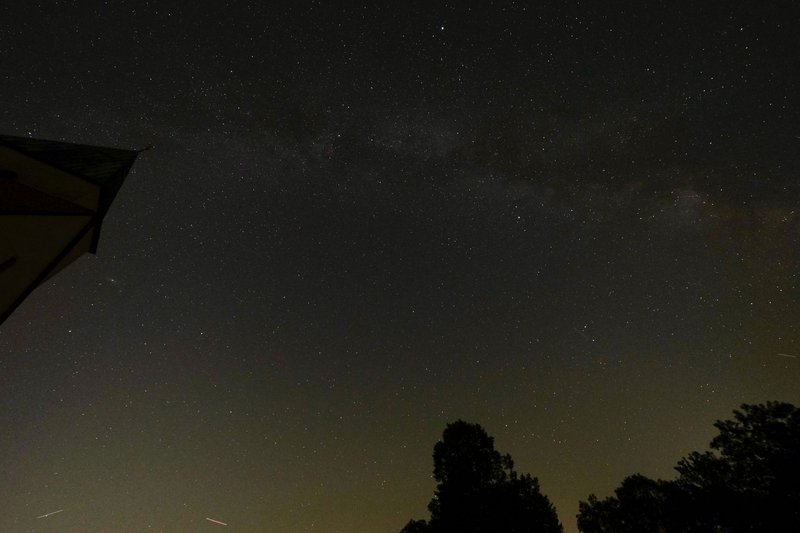
The 1983 Nobel Prize in Physics went to two men who studied the same objects from opposite ends: how stars hold together, and what they build.
Subrahmanyan Chandrasekhar, in his early seventies and a professor at the University of Chicago, was cited for his theoretical work on the structure and evolution of stars. His most famous result came when he was 19. On a ship from India to Cambridge in 1930, he worked out that a white dwarf heavier than about 1.4 times the mass of the Sun can’t support itself against gravity. That figure is now the Chandrasekhar limit. Stars above it end as neutron stars or black holes, and the same threshold governs the Type Ia supernovae astronomers use to measure cosmic distances.
The idea wasn’t welcomed at first. Arthur Eddington, the era’s most prominent astrophysicist, ridiculed it publicly at a Royal Astronomical Society meeting in 1935. Chandrasekhar moved on to other problems and waited 48 years for the prize. He was also the nephew of C.V. Raman, who won the 1930 Physics prize, so two Nobel physicists came from one family. NASA later named its Chandra X-ray Observatory after him.
William A. Fowler of Caltech shared the prize for theoretical and experimental studies of the nuclear reactions that formed the chemical elements. In plain terms: where the carbon, oxygen and iron in your body came from. His lab at Caltech’s Kellogg Radiation Laboratory confirmed in 1953 an energy state in carbon-12 that Fred Hoyle had predicted had to exist, or stars couldn’t make carbon at all. In 1957 Fowler co-authored the “B2FH” paper with Margaret and Geoffrey Burbidge and Hoyle, which laid out how stars forge nearly every element heavier than helium.
Hoyle wasn’t named in 1983, and his omission is still one of the better-known snubs in physics. The Nobel Foundation’s 1983 physics summary lists only the two laureates. For the rest of the decade’s science prizes, see Every Nobel Prize Winner From the 1980s, Year by Year.
Chemistry: Henry Taube
Henry Taube, 67 that autumn and a professor at Stanford, won the Chemistry prize on his own. The citation: his work on the mechanisms of electron transfer reactions, especially in metal complexes.
Here is what that means. Many chemical reactions amount to one atom or ion handing an electron to another. Taube worked out how that handoff happens in solution, using metal ions such as chromium and cobalt surrounded by ligands (molecules clinging to the metal). His key finding was that electrons can travel across a bridging ligand shared by two metal ions, a route he called the inner-sphere mechanism. The experiments were precise enough to show which atoms moved and when.
The payoff reaches well beyond the beaker. Electron transfer sits under batteries, corrosion, catalysis, and the biochemistry of photosynthesis and respiration. Taube was born on a farm in Neudorf, Saskatchewan, and became a U.S. citizen in 1942. By the 1983 announcement he’d spent decades on the problem.
Physiology or Medicine: Barbara McClintock

Barbara McClintock was 81 and working at Cold Spring Harbor Laboratory on Long Island when she won the Physiology or Medicine prize alone, the first woman to receive an unshared prize in that category. The citation: her discovery of mobile genetic elements.
The story starts in the 1940s with maize. McClintock noticed that the patterns of colored spots on corn kernels didn’t follow the textbook rules of inheritance. Her explanation was radical for the time: some pieces of DNA move. They jump from one position on a chromosome to another, and where they land can switch a neighboring gene on or off. She called them controlling elements, named two of them Ac (Activator) and Ds (Dissociation), and tracked them for years using nothing more than a microscope and careful breeding of corn plants.
Her 1951 presentation at Cold Spring Harbor met polite confusion. A genome that rearranged itself seemed untidy to most geneticists, and she largely stopped publishing on the topic. Then researchers found movable elements in bacteria and other organisms in the 1960s and 1970s, and the “jumping genes” idea turned out to apply almost everywhere. Transposons make up roughly half of the human genome. The wait between her key experiments and Stockholm was more than 30 years. The Nobel Foundation’s medicine summary for 1983 credits her alone.
Literature: William Golding
William Golding, 72, was honored for novels that, in the Swedish Academy’s words, combine “the perspicuity of realistic narrative art and the diversity and universality of myth” to illuminate the human condition.
The book everyone knows is Lord of the Flies (1954), in which a group of schoolboys stranded on an island slide into tribal violence. Golding taught English and philosophy at a school in Salisbury before it succeeded, and he’d served in the Royal Navy in World War II, including the Normandy landings. He said the war convinced him that people are capable of far worse than polite society admits. Publishers turned the manuscript down repeatedly before Faber took it.
The choice was not unanimous. The Swedish Academy argued over Golding internally, and some members considered his body of work too narrow for the prize. The vote went his way anyway. The Foundation’s page on the 1983 Literature prize has the full citation.
Peace: Lech Wałęsa
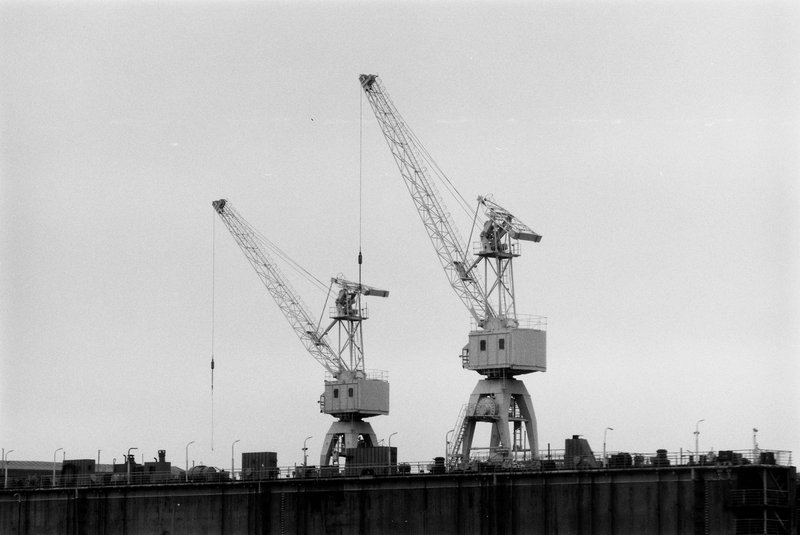
The Nobel Peace Prize went to a 40-year-old electrician from the Gdańsk shipyard. Lech Wałęsa had led the 1980 strike that produced Solidarity, the first independent trade union in the Soviet bloc. The Norwegian Nobel Committee cited his non-violent struggle for free trade unions and human rights in Poland.
By October 1983, Solidarity had been banned for a year. Poland’s government declared martial law in December 1981, interned Wałęsa for 11 months, and released him in November 1982. Warsaw’s reaction to the award was hostile. State media treated it as foreign interference, and Wałęsa, who feared the authorities would not let him back into Poland if he left, didn’t travel to Oslo. His wife, Danuta, collected the medal and diploma on his behalf at the ceremony on December 10. The Nobel Committee’s Peace Prize 1983 page records the award.
The prize became part of the pressure that eventually broke the system. Poland held semi-free elections in 1989, and Wałęsa was elected president in 1990.
Economic Sciences: Gérard Debreu
Gérard Debreu, 62, a professor at the University of California, Berkeley, took the Economic Sciences prize alone for incorporating new analytical methods into economic theory and for his rigorous reformulation of general equilibrium theory. A technical note: this isn’t one of the five prizes in Alfred Nobel’s will. It’s the Sveriges Riksbank Prize in Economic Sciences in Memory of Alfred Nobel, first awarded in 1969, though it’s announced and presented alongside the others.
General equilibrium theory asks a big question: can prices exist at which every market in an economy clears at once, so that supply equals demand for everything? Debreu, who trained as a mathematician at the École Normale Supérieure in Paris before turning to economics, answered it with set theory and topology. His 1954 paper with Kenneth Arrow proved that such prices exist under stated conditions. His 1959 book Theory of Value laid the model out in about 100 pages of axioms, with no diagrams and little prose.
Debreu was born in Calais, France, and became a U.S. citizen in 1975. His critics say the model is too abstract to describe real economies. His defenders say that’s the point: it tells you exactly which assumptions have to hold for markets to work.
What made 1983 a distinctive year
Five of the seven laureates held American citizenship, including everyone in the science and economics categories. The science prizes were a U.S. sweep, the first since 1976, according to TIME’s 1983 coverage. Only two were born there. Chandrasekhar came from Lahore, Taube from Saskatchewan, Debreu from Calais.
Three of the awards also rewarded work that was decades old by the time of the call. Chandrasekhar’s limit dated to 1930 and McClintock’s maize experiments to the 1940s. Both had to outlast skepticism from senior colleagues before the field caught up. Chandrasekhar waited 48 years, McClintock more than 30.
The year’s two non-science prizes came with politics attached. Golding’s selection split the Swedish Academy, and Wałęsa’s award exposed how far Poland’s government would go to punish dissent. If you’re researching any single laureate, each of the Nobel Foundation pages linked above has the official citation and the lecture.