Search “famous people from Oman” and you’ll get the same rotation: sultans, footballers, the occasional actor. Scroll past all of it and the scientists are nowhere. Not because Oman doesn’t have any — because nobody bothered to list them.
That’s a gap worth closing. Oman’s scientific community is small by population math alone, but it’s produced a chemist who became the country’s first female TWAS Fellow, a biologist whose microplastic-eating invention won the top prize in Geneva, and a geneticist chasing down the DNA behind childhood glaucoma. None of them show up on the celebrity-trivia sites. All of them are worth knowing.
Table of Contents
- Rashid bin Omaira Al Rustaqi
- Salma Al-Kindy
- Mansour Al-Moundhri
- Abdulaziz Al Farsi
- Rayhanah Al Mjeni
- Sumaiya Al Siyabi
- Mohammed Al Kindi
- Majid Al Muqbali
- Rumaitha Al Busaidi
- Razan Al Kalbani
Rashid bin Omaira Al Rustaqi
Born in the 16th century in the village of Aini, in the Wilayat of A’Rustaq, Rashid bin Omaira came from three generations of physicians — his father and grandfather both practiced medicine before him. He didn’t stay put to inherit the trade. He traveled to Bahrain, Baghdad, and Al Qatif to study under other physicians, then brought that knowledge home and practiced for the rest of an unusually long life, reportedly past 80.
His medical writings are still referenced in Omani historical scholarship. In 2013, UNESCO named him among the world’s most influential historical figures at its 37th General Conference session — the only Omani scientist to receive that specific designation. If Oman has a founding figure in medicine, this is him.
Salma Al-Kindy
Salma Al-Kindy is a professor of analytical chemistry and dean of the College of Science at Sultan Qaboos University. In April 2010 she became the first Omani national elected to TWAS, the World Academy of Sciences for Sustainable Development — a fellowship reserved for scientists from the developing world doing internationally competitive research.
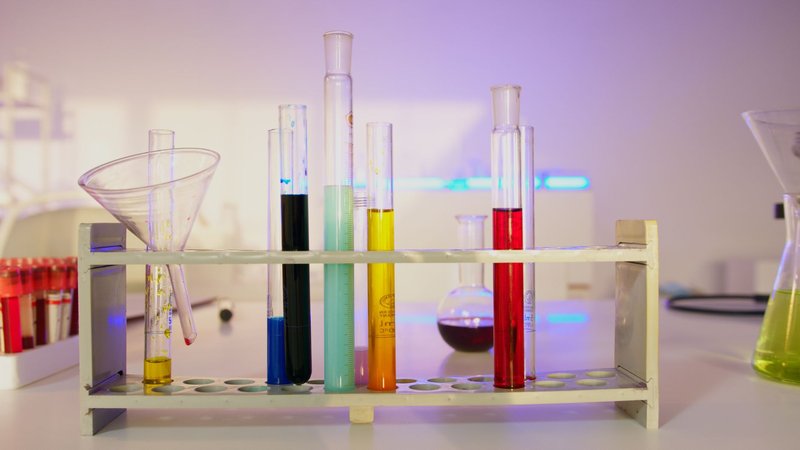
Her lab work isn’t abstract chemistry-for-chemistry’s-sake. She develops sequential injection analysis methods to detect pharmaceutical residues, environmental pollutants, and toxic metal ions in water using luminescence techniques, and more recently has been building green-chemistry methods to strip hazardous byproducts out of wastewater. The U.S. State Department named her Oman’s outstanding female scientist in 2013 and later inducted her into its MENA Women in Science Hall of Fame.
Mansour Al-Moundhri
Al-Moundhri is a professor of medicine and head of the oncology unit at the Sultan Qaboos Comprehensive Cancer Care and Research Center, where much of Oman’s cancer research actually happens. His published work spans gastric cancer risk genetics — including a case-control study on VEGF gene polymorphisms in Omani patients — through to real-world safety trials of newer immunotherapy drugs like atezolizumab.
What makes his research distinct from a generic oncology CV: he’s building the evidence base for cancers as they present specifically in the Omani population, not just importing findings from larger Western trial cohorts and hoping they translate.
Abdulaziz Al Farsi
Al Farsi trained in medicine at Sultan Qaboos University and became senior consultant and head of adult oncology at the Royal Hospital in Muscat, later working at the National Oncology Centre. He treated cancer patients by day. By night, starting in 1998, he wrote — six short story collections and novels including “Earth Cries, Saturn Laughs” and “The Bear Finally Wakes.”
The dual career is the point here. Al Farsi never framed his medical work and his fiction as separate lives; both drew from the same close attention to how people process suffering. He died in 2022, and Oman’s medical and literary communities mourned him in the same breath — a rare thing for either field.
Rayhanah Al Mjeni
Al Mjeni works as a senior biomedical scientist in the Genetics Department at Sultan Qaboos University’s College of Medicine and Health Sciences, where her research focuses on the genetics of glaucoma — both the adult-onset and pediatric forms. Her goal is straightforward but not small: map the genetic markers well enough that doctors can diagnose the disease earlier and predict how it will progress in a given patient.
She became the first Omani woman to win the UNESCO-L’Oréal Regional Fellowship for Young Women in Life Sciences, a program built specifically to spotlight Arab women scientists whose work tends to go unrecognized outside their own institutions.
Sumaiya Al Siyabi
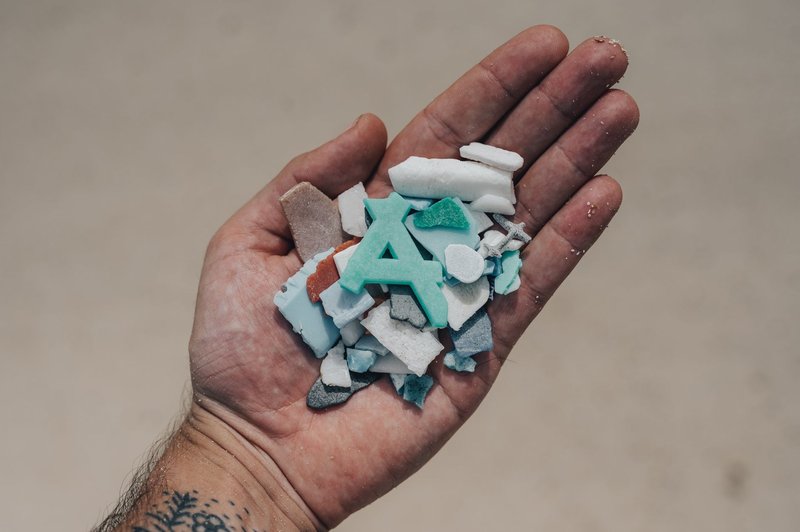
Al Siyabi is a biologist whose invention, ECOSPHERE, tackles one of the uglier problems in marine science: microplastic pollution. Her device combines microbial mats with nanomaterials that, under light exposure, break plastic fragments down into carbon dioxide and water within hours rather than the centuries plastic normally takes to degrade. It’s designed to float and operate directly in oceanic garbage patches.
In 2024, the invention won the Grand Prix — the highest distinction awarded — at the 49th International Exhibition of Inventions in Geneva, one of the world’s largest gatherings for new scientific inventions. She’d already picked up recognition on the Qatari science competition show Stars of Science before that.
Mohammed Al Kindi
Al Kindi spent eight years, from 2006 to 2014, as a petroleum development geologist with Petroleum Development Oman before founding the Earth Sciences Consultancy Centre. He’s also a caver and fossil-hunter, and his fieldwork sits at the intersection of those interests — he’s published on oil seepage sites in the Oman Mountains and their links to the region’s petroleum systems.
He now lectures as a visiting professor at institutions including the German University of Technology in Oman, where he supervises students studying the geology that put Oman’s mountains on the map for international earth scientists in the first place — the Semail Ophiolite, one of the best-exposed slices of oceanic crust anywhere on land.
Majid Al Muqbali
A geography teacher at Naeem Bin Masoud School in Suhar by profession, Al Muqbali has built one of Oman’s most complete private fossil collections — more than 3,000 specimens, some dating back over 600 million years. His Suhar home functions as an informal museum, filled with trilobite footprints, shark teeth, ancient oysters, and petrified wood.
In 2016, he found a marine reptile tooth from the Mosasaur era — reportedly the only specimen of its kind ever discovered in Oman or the wider Arabian Gulf. He’s since donated part of his collection to Oman’s Natural History Museum, and he’s a member of the Geological Society of Oman, working to give the country’s fossil record a public home.
Rumaitha Al Busaidi
Al Busaidi grew up on Oman’s coast with what she describes as a formative attachment to the country’s green sea turtles, and that early fascination shaped a career built around marine science and climate advocacy. She holds master’s degrees in environmental science and aquaculture, earned across institutions including Sultan Qaboos University, Utrecht University, and a Master of Public Administration from Harvard’s Kennedy School.
She currently works in business development at Hydrom, the entity orchestrating Oman’s green hydrogen strategy, and serves as vice president of the Environment Society of Oman — the country’s only environmental NGO. In 2023, the BBC named her to its 100 Women list, and she’s also known as the first female football analyst in the Arab world, which tells you something about the range of a single career.
Razan Al Kalbani
An electrical engineering graduate of the University of Technology and Applied Sciences in Ibri, Al Kalbani won the Grand Prize at the Korea International Women’s Innovation Exhibition and Competition for a material science breakthrough: an X-ray-absorbing coating made from lycopene, the red pigment naturally found in tomatoes and watermelon.
The coating absorbs roughly 97% of incoming radiation, according to competition results, using a plant-derived ingredient instead of the lead-based shielding still standard in most radiology settings. It’s the kind of applied materials research that starts in a university lab in Ibri and ends up relevant to hospital radiology departments anywhere.
Oman’s scientific bench is thinner than its political or cultural one — that much is true, and no list should pretend otherwise. But thin isn’t the same as empty. Between a 16th-century physician still cited in Omani medical history and a 2024 Geneva Grand Prix winner tackling ocean plastic, the throughline is consistent: specific problems, tackled at home, with training that increasingly runs through Sultan Qaboos University rather than around it. That’s a research culture with momentum, even if the “famous Omanis” lists haven’t caught up yet.