TLDR
Britain has around 600 recorded bird species, but you’ll realistically cross paths with a few dozen. This guide covers 25 of them, grouped by where you’ll actually find them — garden, farmland and woodland, coast and wetland, and birds of prey — with the field marks that separate look-alikes, when each one shows up, and (where it matters) how to pull them into your own garden. Skip to the comparison table if you just want the cheat sheet.
Table of Contents
- Comparison Table
- Garden Birds
- Farmland and Woodland Birds
- Coast and Wetland Birds
- Birds of Prey
- A Note on Timing
Most “British birds” lists are either exhaustive taxonomic databases — useful if you already know what you’re looking at — or thin listicles of the same ten garden regulars. Neither helps when you’re standing in a hedge trying to work out if that’s a chaffinch or a house sparrow, or wondering why the birds in your garden change every October.
This list is sorted the way you’ll actually encounter birds: by habitat, not alphabet. Each entry gives you the field marks that matter (not every marking, just the ones that separate it from its most common look-alike), a fact that’s specific to that species, and — for garden birds — what actually gets them to visit.
Comparison Table
| Bird | Size | Colour | Habitat | Best time to see |
|---|---|---|---|---|
| Robin | Small (14cm) | Orange-red breast, brown back | Garden, woodland edge | Year-round |
| Blue Tit | Small (12cm) | Blue cap, yellow underside | Garden, woodland | Year-round |
| House Sparrow | Small (15cm) | Grey-brown, black bib (male) | Garden, urban | Year-round |
| Blackbird | Medium (24cm) | Black, orange bill (male) | Garden, hedgerow | Year-round |
| Woodpigeon | Large (40cm) | Grey, white neck patch | Garden, farmland | Year-round |
| Great Tit | Small (14cm) | Black head, yellow breast | Garden, woodland | Year-round |
| Goldfinch | Small (13cm) | Red face, gold wing bar | Garden, farmland | Year-round |
| Wren | Very small (10cm) | Brown, cocked tail | Garden, hedgerow | Year-round |
| Chaffinch | Small (15cm) | Pink breast, blue-grey cap (male) | Farmland, woodland | Year-round |
| Nuthatch | Small (14cm) | Blue-grey back, orange flank | Woodland | Year-round |
| Great Spotted Woodpecker | Medium (23cm) | Black and white, red patch | Woodland | Year-round |
| Skylark | Small (18cm) | Streaky brown, crest | Farmland | Year-round, sings Mar–Jul |
| Yellowhammer | Small (16cm) | Yellow head, chestnut rump | Farmland hedgerow | Year-round |
| Song Thrush | Medium (23cm) | Brown, spotted breast | Woodland, garden | Year-round |
| Herring Gull | Large (60cm) | Grey and white, pink legs | Coast, urban | Year-round |
| Oystercatcher | Large (43cm) | Black and white, orange bill | Coast, estuary | Year-round |
| Grey Heron | Very large (95cm) | Grey, long neck | Wetland, riverbank | Year-round |
| Mute Swan | Very large (150cm) | White, orange bill | Wetland, park lakes | Year-round |
| Kingfisher | Small (16cm) | Iridescent blue-orange | Rivers, wetland | Year-round |
| Curlew | Large (55cm) | Mottled brown, curved bill | Coast, moorland | Winter coast, summer moorland |
| Kestrel | Medium (34cm) | Chestnut back, hovers | Farmland, roadside verge | Year-round |
| Red Kite | Large (65cm) | Reddish, forked tail | Woodland, farmland | Year-round |
| Common Buzzard | Large (54cm) | Brown, broad wings | Woodland, farmland | Year-round |
| Sparrowhawk | Medium (33cm) | Grey-brown, barred underside | Garden, woodland | Year-round |
| Barn Owl | Medium (34cm) | White heart-shaped face | Farmland, grassland | Dusk, year-round |
Garden Birds
Robin
The robin’s orange-red bib runs down onto the face, not just the throat — a decent way to rule out other reddish garden birds at a glance. Both sexes look identical, which surprises people who assume the brighter bird must be the male.
Robins hold territories year-round and will attack their own reflection in a window, mistaking it for a rival. The RSPB gets more calls about robins fighting mirrors than almost any other garden bird behaviour. Mealworms and sunflower hearts on a ground feeder work better than a hanging feeder — robins prefer to feed low.
Blue Tit
Blue cap, yellow-green back, white cheeks with a thin black eye-stripe. Acrobatic on feeders in a way great tits aren’t quite as committed to — you’ll see them hanging upside down from a fat ball with no apparent effort.
A blue tit pair can raise a brood of ten to twelve chicks and needs roughly 100 caterpillars a day per chick to do it, according to BTO nest record data. A nest box with a 25mm entrance hole (too small for house sparrows) is the single best way to get them breeding in your garden.
House Sparrow
Chunky, grey-brown, with the male carrying a black throat bib that expands with age and dominance rank. UK numbers dropped by around 70% between the 1970s and the 2000s — nobody has a single confirmed cause, though loss of nesting eaves in renovated houses and a decline in garden insects are the leading theories.
They’re colonial nesters — you rarely see just one. If your garden has sparrows, it likely has a dozen.
Blackbird
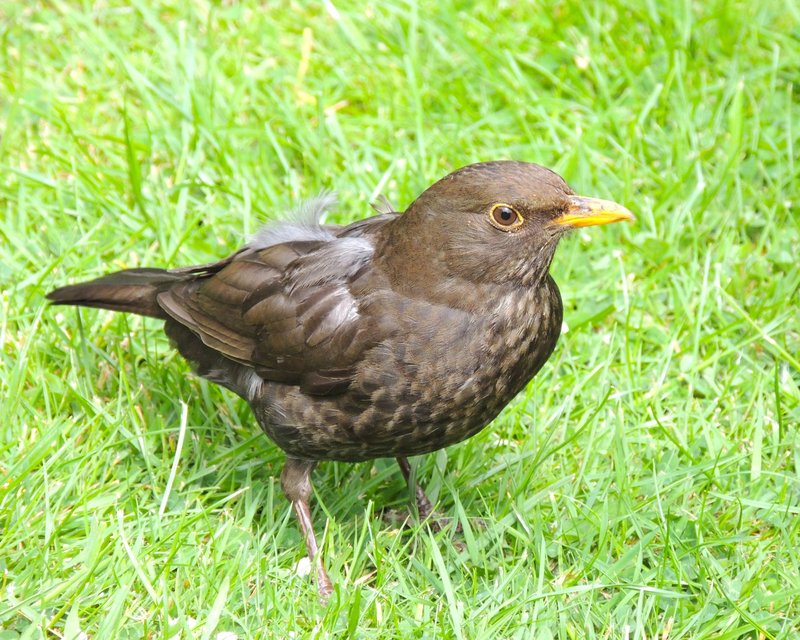
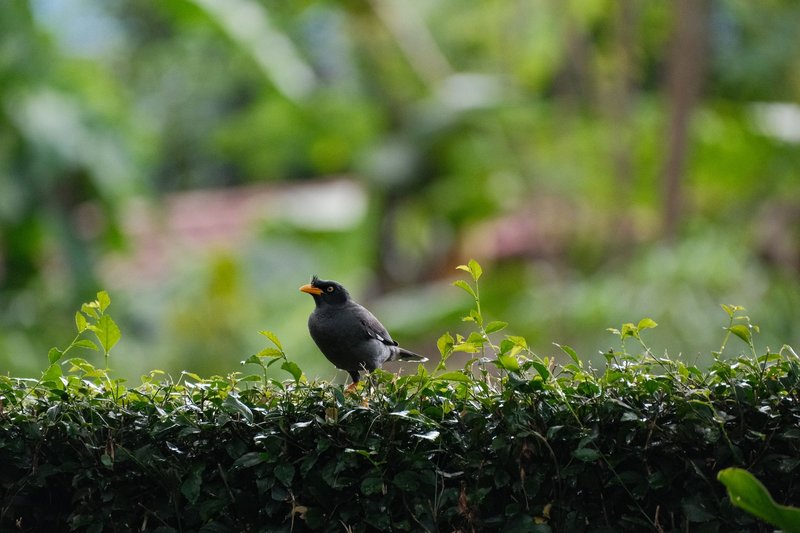
Males are glossy black with a yellow-orange bill and eye-ring; females are dark brown and often mistaken for a different species entirely by people who’ve only ever clocked the male. One of the first birds singing at dawn and the last at dusk — that liquid, unhurried song from a rooftop or aerial is almost always a blackbird.
Woodpigeon
Britain’s largest and most common pigeon, distinguished from the feral pigeon by its size, pinkish breast, and the white crescent on the neck. Farmers consider it a pest for the damage it does to oilseed rape and cereal crops; gardeners mostly just find it clumsy and a bit loud on the fence.
Great Tit
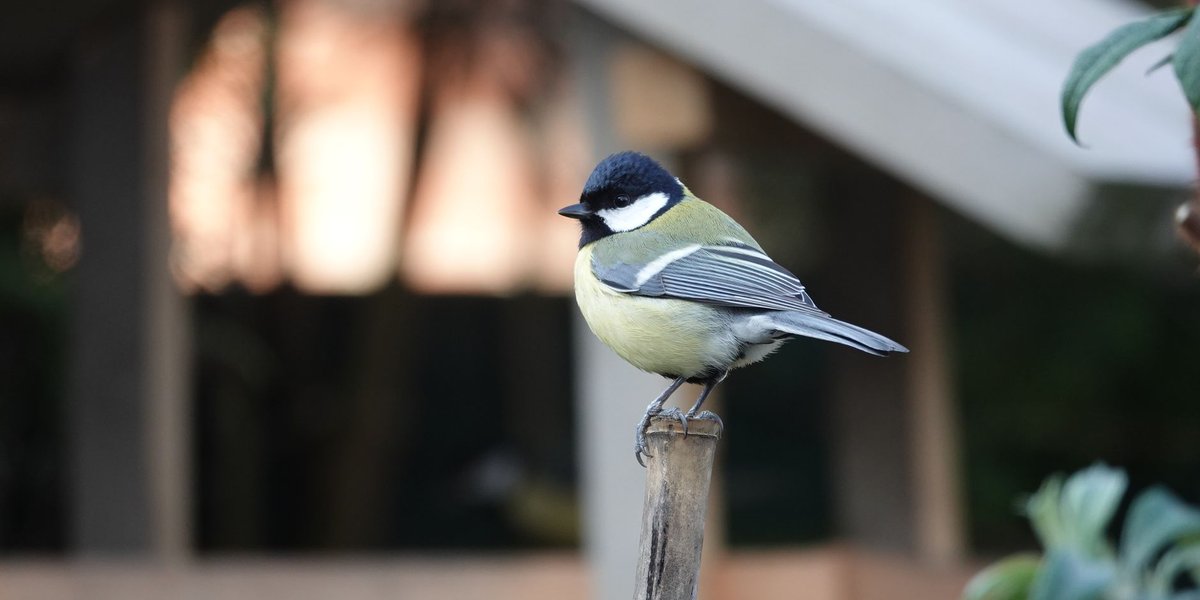
Bigger and bolder than the blue tit, with a black head, white cheeks, and a black stripe running down a yellow belly — the stripe is wider on males and can indicate dominance status within a flock. Its song is often described as sounding like a squeaky bicycle pump: two-note, repeated, insistent.
Goldfinch
A red face, black-and-white head pattern, and a gold flash across black wings make this one of the easiest UK finches to identify at speed. They favor niger seed feeders with small ports — a dedicated goldfinch feeder will often outperform a general mix if you’re trying to attract them specifically.
Wren
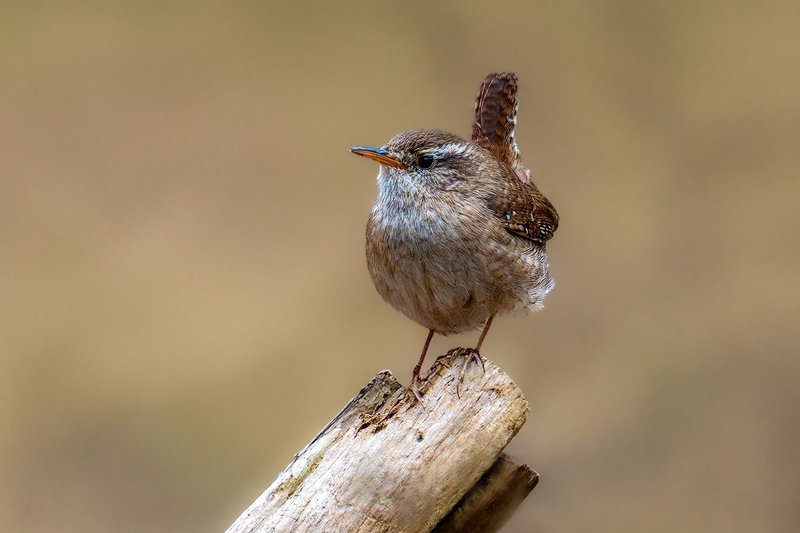
Tiny, round, brown, with a tail cocked almost vertically. Pound for pound, the wren’s song is disproportionately loud for a bird that weighs about as much as a one-pound coin — you’ll hear it well before you spot the source in a hedge.
Farmland and Woodland Birds
Chaffinch
Males show a blue-grey cap and pinkish breast; females are duller olive-brown. Both sexes flash a white wing bar in flight that’s often the fastest way to confirm the ID before the bird lands. Common at woodland edges and farmland hedgerows, and increasingly in gardens too.
Nuthatch
The only UK bird that reliably walks down tree trunks head-first, which is a genuinely useful field mark — woodpeckers and treecreepers only go up. Blue-grey above, orange-buff below, with a black eye-stripe like a tiny bandit mask.
Great Spotted Woodpecker
Black and white plumage with a bright red patch under the tail; males also have a red patch on the back of the head that females lack. The drumming — a rapid mechanical rattle against a hollow branch — is a territorial and mating signal, not foraging; that happens separately, with a slower, more deliberate pecking action.
Skylark
Streaky brown and easy to overlook on the ground, but unmistakable once it launches into its vertical song flight, climbing and singing continuously for minutes at a time, sometimes from over 100 metres up. Farmland intensification has driven a serious population decline, and the skylark is now on the UK’s Red List for birds of conservation concern.
Yellowhammer
The male’s bright yellow head over a chestnut-streaked back makes it one of the more striking farmland birds, and its song has a rhythm British birders have long rendered as “a little bit of bread and no cheese.” Found along hedgerows and field margins, particularly where farms have left uncut strips.
Song Thrush
Brown above with a cream, dark-spotted breast — distinct from the similar mistle thrush by size (smaller) and habitat (more garden-associated). Song thrushes are one of the few British birds known to use tools: they smash snail shells against a chosen “anvil” stone to get at the meat inside.
Coast and Wetland Birds
Herring Gull
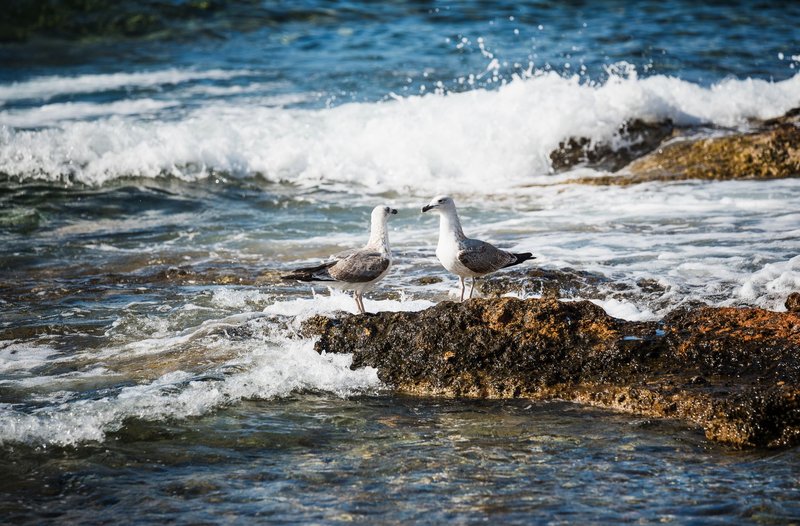
Grey-backed with pink legs and a red spot on the yellow bill (chicks peck at this spot to trigger feeding). What most people call a “seagull” chasing chips on a promenade is usually this species. Herring gull numbers are actually declining nationally even as urban sightings feel more frequent — coastal cliff nesting has dropped while urban rooftop nesting has risen.
Oystercatcher
Bold black-and-white with a long, straight orange-red bill built for prising open mussels and cockles, not oysters despite the name. Loud, piping calls carry a long way across mudflats, often before you actually spot the bird.
Grey Heron
Tall, grey, and motionless for long stretches while hunting — then a strike fast enough to spear a fish before it reacts. Often mistaken from a distance for a stork, but the heron flies with its neck folded back in an S-shape, while storks fly with the neck extended.
Mute Swan
The UK’s largest waterbird, white with an orange bill topped by a black knob (larger in males). Despite the name, it’s not silent — it hisses when threatened and makes a distinctive wing-throb sound in flight, audible well before the bird is visible.
Kingfisher
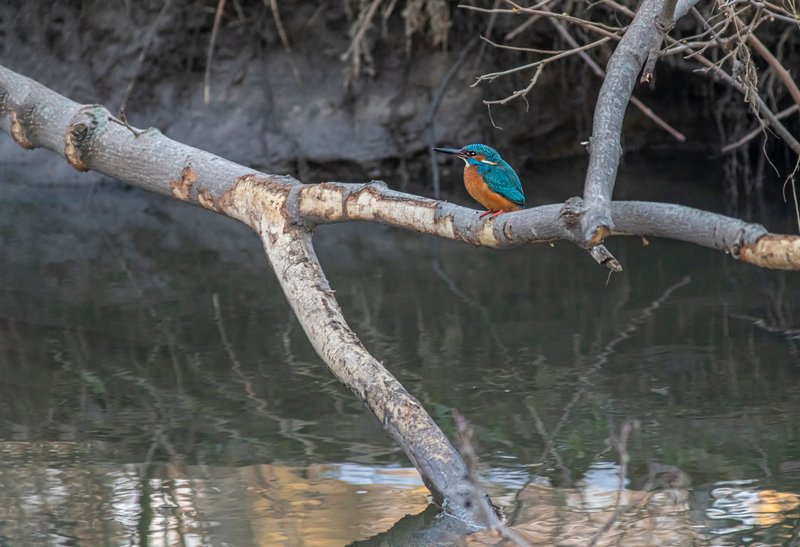
Electric blue above, orange below — genuinely one of the most vivid birds in Britain, and usually seen as a blue streak along a riverbank before the bird itself registers. They need clean water with visible small fish and a vertical riverbank to burrow a nest tunnel into.
Curlew
Europe’s largest wading bird, with a long, downward-curved bill and a mournful, bubbling call that’s become a kind of shorthand for wild British coastline and moorland. Curlews breed on upland moors in summer and move to estuaries in winter — a genuine seasonal split that means you’re looking in the wrong place if you search the coast in June.
Birds of Prey
Kestrel
The hovering silhouette over a motorway verge, wings beating rapidly while the head stays perfectly still, is almost always a kestrel scanning for voles. Chestnut-brown back with a grey head (male) or all-over barred brown (female). Common enough that most regular motorway drivers in Britain have seen one without registering it.
Red Kite
A reddish body, grey head, and a deeply forked tail that twists constantly in flight — the single easiest raptor silhouette to learn in the UK. Hunted to near-extinction by the early 20th century, reduced to a handful of pairs in Wales, then rebuilt through reintroduction programs from the 1990s onward; the IUCN and conservation bodies now count it as a genuine recovery story, with kites now common over the Chilterns and reintroduction sites across England and Scotland.
Common Buzzard
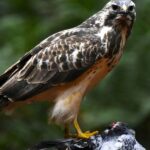
Britain’s most numerous large raptor, soaring on broad wings held in a shallow V, mewing loudly overhead. Brown plumage varies enormously between individuals, which trips up a lot of new birders expecting a fixed pattern.
Sparrowhawk
A garden bird feeder ambush specialist — females are notably larger than males, enough that the two sexes were historically misidentified as separate species. Grey-blue above with fine barring below (male) or brown above with heavier barring (female). If your garden birds scatter in a sudden panic, check the hedge line first.
Barn Owl
A pale, heart-shaped facial disc and near-silent flight, thanks to serrated flight feathers that break up turbulence. Hunts at dusk and dawn over rough grassland and farmland margins, listening for voles rather than relying on sight alone in low light.
A Note on Timing
Not every bird on this list behaves the same way in January as it does in July. Curlews split their year between moorland and coast. Skylarks are far easier to detect by song between March and July, when males are displaying, than in the quieter winter months. Herring gulls concentrate on cliffs and coastal towns in the breeding season and spread further inland to scavenge once that pressure lifts.
If you’re trying to build a birdwatching habit rather than tick a single sighting, spring gives you the most active behaviour — song, display flights, nest building — while winter rewards patience at coastal sites where numbers swell with birds arriving from colder parts of Europe.
None of that requires specialist gear. A cheap pair of binoculars, a garden feeder stocked with sunflower hearts and niger seed, and roughly twenty minutes of standing still will get you most of this list within a single UK spring.