Table of Contents
- The Short Answer
- Why Barbados Has No Volcanoes
- The Caribbean Volcanic Arc: Barbados’s Fiery Neighbors
- What Volcanic Hazards Do Affect Barbados?
- The 2021 La Soufrière Eruption
- Is Barbados Safe from Volcanic Eruptions?
- FAQ
The Short Answer {#the-short-answer}
No. Barbados has no volcanoes, no volcanic rock formations, and no history of volcanic activity of its own. It’s geologically unique in the Eastern Caribbean — an island that formed not from a hotspot or subduction arc, but from a slow accumulation of sediment scraped off the ocean floor. You could search the entire island and find no basalt, no lava flows, no ancient calderas.
That said, volcanic events absolutely reach Barbados. Ash from eruptions on other islands has blanketed the island more than once. So the full answer is: no volcanoes, but not entirely off the hook.
Why Barbados Has No Volcanoes {#why-barbados-has-no-volcanoes}
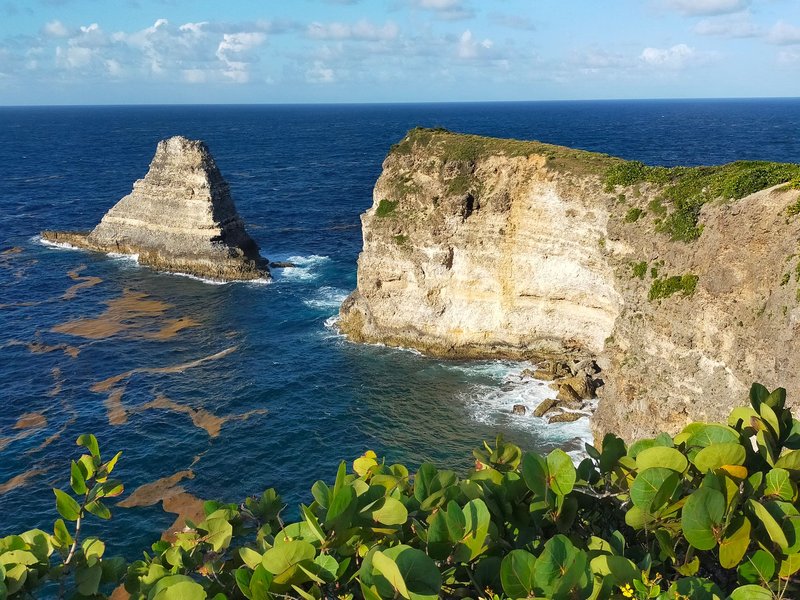
To understand why Barbados is volcano-free, you need to know a bit about how islands form in the first place.
Most Caribbean islands are volcanic. They sit along the Lesser Antilles arc, a curved chain of islands where the Atlantic plate is sliding beneath the Caribbean plate. That process — subduction — generates immense heat and pressure, melting rock that then rises to the surface as volcanoes. That’s where Martinique, St. Lucia, St. Vincent, and many others come from.
Barbados is 160 kilometers east of that arc. It’s not sitting on the subduction zone at all. Instead, it was built from what geologists call an accretionary prism: sediment and oceanic crust scraped off the Atlantic plate as it slides under the Caribbean, piling up over millions of years until it broke the surface. The island sits on top of coral limestone that sits on top of that sediment pile.
No subduction directly beneath it. No magma. No volcanoes.
This makes Barbados one of the very few non-volcanic islands in the Eastern Caribbean — the only one in the Lesser Antilles with this type of geological origin. Every other island in the chain has volcanic rock somewhere. Barbados has chalk and coral.
The Caribbean Volcanic Arc: Barbados’s Fiery Neighbors {#the-caribbean-volcanic-arc}
The islands that do have volcanoes are clustered along that subduction arc to the west. Some of the most active:
Soufrière Hills, Montserrat — An ongoing eruption that began in 1995 buried the capital city, Plymouth, under pyroclastic flows and ash. The southern half of the island remains in an exclusion zone.
La Soufrière, St. Vincent — Not to be confused with the Montserrat volcano, this is a separate peak on a separate island. It has erupted multiple times, most recently and dramatically in April 2021.
Kick ’em Jenny — An active submarine volcano north of Grenada. Submerged but regularly monitored; it has produced eruptions that caused temporary exclusion zones around its summit.
Mount Pelée, Martinique — Dormant since 1932, but historically responsible for one of the deadliest volcanic disasters in the 20th century. The 1902 eruption killed roughly 30,000 people.
Barbados watches all of this from the east. Close enough to feel the effects. Far enough to have no volcanoes of its own.
What Volcanic Hazards Do Affect Barbados? {#volcanic-hazards}
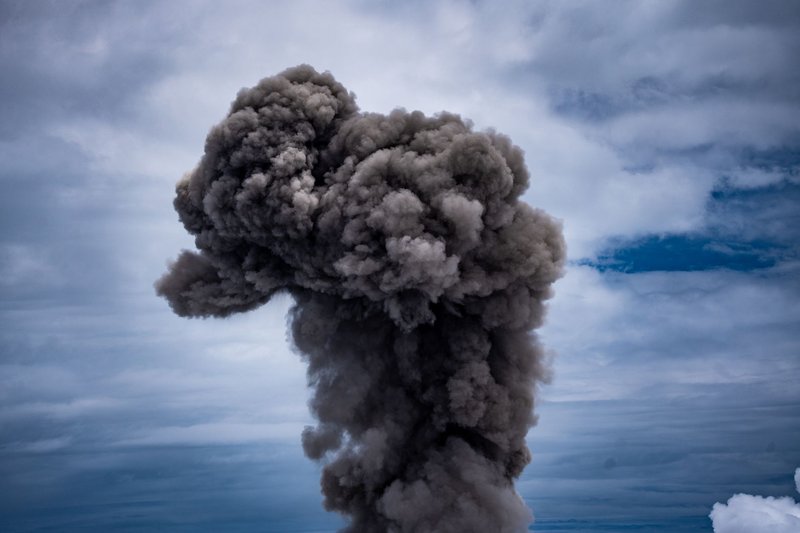
Being non-volcanic doesn’t mean being geologically isolated. Barbados faces three real hazards connected to its volcanic neighbors.
Ashfall
The most immediate and visible hazard. When volcanoes on the arc erupt explosively, they send ash clouds into the upper atmosphere. Prevailing trade winds in the Eastern Caribbean blow predominantly from east to west — but during major eruptions, ash can drift far downwind in all directions. Barbados has experienced significant ashfall at least twice: in 1979 and in 2021, both from La Soufrière on St. Vincent.
Volcanic ash isn’t soft. Under a microscope, it’s jagged silicate glass. It irritates lungs, clogs engines, contaminates water supplies, and collapses weak roofs when it accumulates.
Tsunamis
Volcanic islands can trigger tsunamis when they collapse or when submarine eruptions displace large volumes of water. Kick ’em Jenny, the underwater volcano north of Grenada, is the regional concern here. A significant eruption or flank collapse could generate waves that would reach Barbados’s west coast within minutes to an hour. The University of the West Indies Seismic Research Centre monitors this hazard and maintains public warning systems.
Seismic Activity
The same tectonic forces that build volcanoes along the arc generate earthquakes throughout the region. Barbados isn’t immune to seismic shaking from events on the arc, though it sits far enough away that major structural damage directly from volcanic earthquakes is rare.
The 2021 La Soufrière Eruption {#la-soufriere-2021}
April 9, 2021. La Soufrière on St. Vincent erupted with its largest explosive event in over 40 years, sending an ash column 10 kilometers into the atmosphere. Within hours, the plume was drifting east. Barbados, roughly 200 kilometers downwind, started seeing ash fall by the following day.
Schools closed. The government issued air quality warnings and distributed masks. Residents were advised to stay indoors, cover water tanks, and avoid driving. Some areas received a visible layer of grey ash — not the thick blanket that buried parts of St. Vincent, but enough to cause disruption and concern.
It was a reminder that Barbados’s safety from volcanic eruptions is about proximity and geology, not total isolation from volcanic effects. The ash didn’t come from beneath Barbados. It came from 200 kilometers away, via the jet stream.
The 1979 eruption of the same volcano produced a nearly identical scenario. Same island source. Same ash drift to Barbados. Same public health response. The pattern is well-established.
Is Barbados Safe from Volcanic Eruptions? {#is-barbados-safe}
For travelers and residents: yes, with a clear-eyed asterisk.
There is no volcanic threat beneath Barbados itself. No eruption will come from the island’s geology — there’s nothing there to erupt. The structural volcanic risk that exists for residents of St. Vincent, Montserrat, or Martinique simply doesn’t apply to Barbados.
What does exist:
- A real, recurring risk of ashfall during major arc eruptions — significant enough to affect air quality, water supply, and infrastructure temporarily
- A low-probability but non-zero tsunami risk tied to submarine volcanic activity
- Seismic activity as background noise of living in a tectonically active region
For most visitors, none of this changes a travel decision. Ashfall events are rare and typically last a few days; the 2021 event was disruptive but not dangerous to people not already medically vulnerable. Barbados has emergency plans in place.
The island’s volcanic-free geology is actually what makes it so distinct and historically prosperous in the Caribbean — its flat, fertile terrain is a direct product of that accretionary limestone origin rather than the rugged, mountainous landscape that volcanic islands tend to produce.
FAQ {#faq}
Does Barbados have any volcanic rock? No. Barbados’s bedrock is coral limestone and marine sediment, not volcanic basalt. You won’t find lava rock anywhere on the island.
Was Barbados affected by the 2021 La Soufrière eruption? Yes. Ash from the St. Vincent eruption drifted 200 kilometers east and fell on Barbados, leading to temporary school closures and air quality advisories. There was no direct volcanic activity on or near the island.
Why are Barbados’s neighbors volcanic but Barbados isn’t? The Lesser Antilles volcanic arc sits to the west of Barbados, where the Atlantic plate subducts beneath the Caribbean plate. Barbados lies east of that zone, built from sediment scraped off the ocean floor rather than volcanic activity.
Has Barbados ever been affected by a tsunami? No major tsunami has struck Barbados in recorded history, but the risk exists due to active submarine volcanism in the region, particularly from Kick ’em Jenny north of Grenada.
Is Barbados a safe place to live or visit regarding volcanic hazards? Yes. The island has no volcanic risk from beneath and faces only secondary effects (ashfall, distant seismic activity) from arc volcanoes on neighboring islands. Ashfall events have occurred but are temporary and manageable.