Senegal packs an outrageous amount of birdlife into a country the size of South Dakota. Over 660 species have been recorded here, and you don’t need to be an ornithologist to find them. Sit near any wetland at dawn between November and March and the sky does the work for you: pelicans in squadrons, flamingos wading in pink lines, an osprey dropping out of nowhere onto a mullet.
This isn’t the full 698-species checklist. That list is useful for ticking boxes and useless for actually knowing what you’re looking at. What follows is 20 birds you have a real chance of seeing, each with the field marks that separate it from its neighbors, plus where and when to point your binoculars.
Table of Contents
Quick-reference table
| Bird | Scientific name | Size | Best site |
|---|---|---|---|
| Osprey | Pandion haliaetus | 55–60 cm | Langue de Barbarie |
| African Fish Eagle | Icthyophaga vocifer | 63–75 cm | Djoudj |
| Egyptian Plover | Pluvianus aegyptius | 19–21 cm | Senegal River sandbars |
| Sudan Golden Sparrow | Passer luteus | 12–13 cm | Northern Sahel |
| Blue-bellied Roller | Coracias cyanogaster | 28–30 cm | Niokolo-Koba |
| Abyssinian Roller | Coracias abyssinicus | 28–30 cm | Open savanna |
| Greater Flamingo | Phoenicopterus roseus | 110–150 cm | Djoudj, Saloum Delta |
| Great White Pelican | Pelecanus onocrotalus | 140–175 cm | Djoudj pelican colony |
| Pink-backed Pelican | Pelecanus rufescens | 125–155 cm | Saloum Delta |
| African Spoonbill | Platalea alba | 90 cm | Djoudj lagoons |
| Yellow-billed Stork | Mycteria ibis | 95–105 cm | Wetland margins |
| Western Reef Heron | Egretta gularis | 55–65 cm | Coastal mudflats |
| Pied Kingfisher | Ceryle rudis | 25–29 cm | Any open water |
| Senegal Coucal | Centropus senegalensis | 39–42 cm | Dense scrub |
| Senegal Parrot | Poicephalus senegalus | 22–25 cm | Woodland, gardens |
| Village Weaver | Ploceus cucullatus | 15–17 cm | Villages, palms |
| Northern Red Bishop | Euplectes franciscanus | 11 cm | Reedbeds, rice fields |
| Beautiful Sunbird | Cinnyris pulchellus | 15 cm (male, with tail) | Gardens, acacia |
| Hamerkop | Scopus umbretta | 50–56 cm | Shallow freshwater |
| Sacred Ibis | Threskiornis aethiopicus | 65–75 cm | Marsh, wet grassland |
The 20 birds
1. Osprey — the national bird
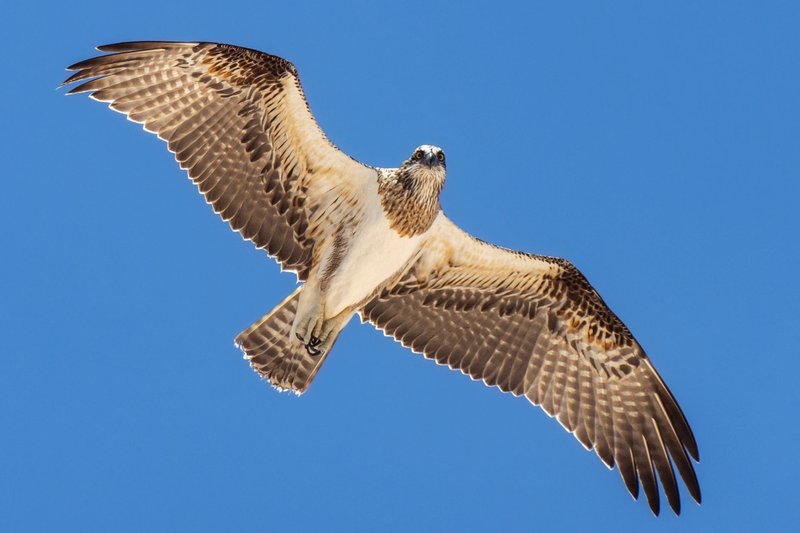
Senegal’s national bird, and the one you’re most likely to see doing something dramatic. The Osprey is a fish specialist with a white head crossed by a dark eye-stripe, chocolate-brown back, and long angled wings that give it a distinctive “M” shape in flight. Watch one hover 20 meters up over the Langue de Barbarie estuary, then fold and hit the water feet-first with a spray you can hear.
Most Ospreys in Senegal are European breeders wintering here from September to April, which is exactly why the country adopted it — a shared bird between continents. Look for them along the coast, the Senegal River, and around Djoudj.
2. African Fish Eagle
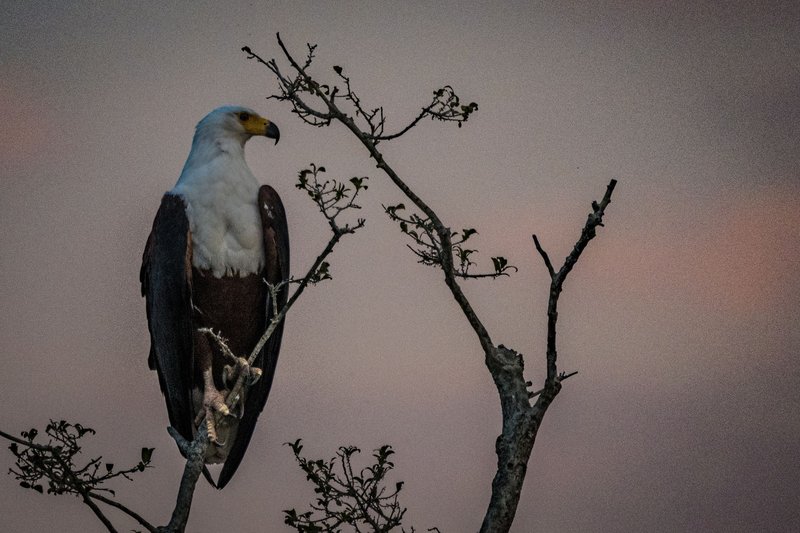
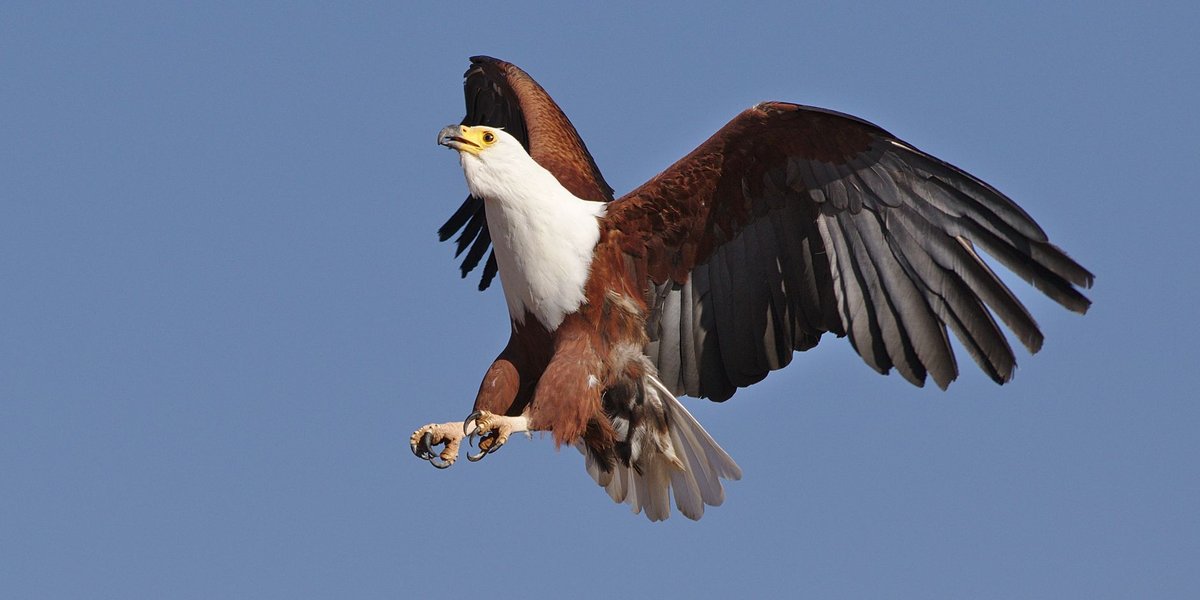
If you hear a wild, yelping cry ringing across a lagoon before you see the bird, that’s this one. The African Fish Eagle has a snow-white head, chest, and tail set against a chestnut belly and black wings — unmistakable when perched in a dead tree over water. Its call is so iconic across the continent it’s often labeled “the voice of Africa.”
Pairs hold territories along the Senegal River and throughout Djoudj. They’ll snatch fish from the surface, but they’re also happy to pirate a catch from a heron that did the work.
3. Egyptian Plover
A bird worth planning a trip around. The Egyptian Plover is a small, boldly patterned wader — blue-grey wings, black crown and eye-band, apricot-orange underparts, and a black breast band that looks painted on. It’s tied to sandbars and gravel banks along larger rivers, so the middle and upper Senegal River is your zone.
It carries an old myth: Herodotus described a bird that picks leeches from the teeth of crocodiles, and this plover is the usual suspect. There’s no solid evidence it actually does dental work, but it does feed fearlessly right at the water’s edge alongside big reptiles.
4. Sudan Golden Sparrow
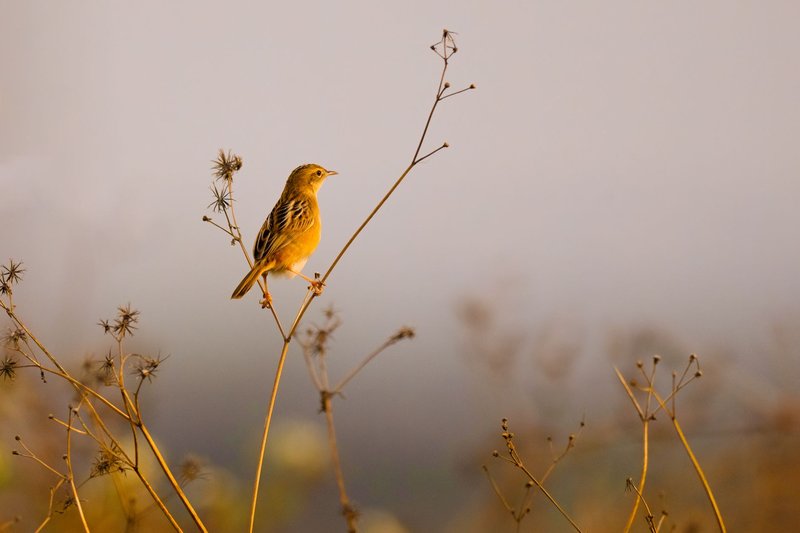
The male in breeding plumage is almost absurd: a sparrow dipped in bright egg-yolk yellow with a chestnut back. They move in large, tight flocks across the dry Sahel of northern Senegal, and when a flock lifts off an acacia the whole tree seems to turn gold and scatter.
Females are a plain sandy-buff, so it’s the males that stop you. Look for them in the arid north around Podor and the Ferlo, especially near water in the dry season.
5. Blue-bellied Roller
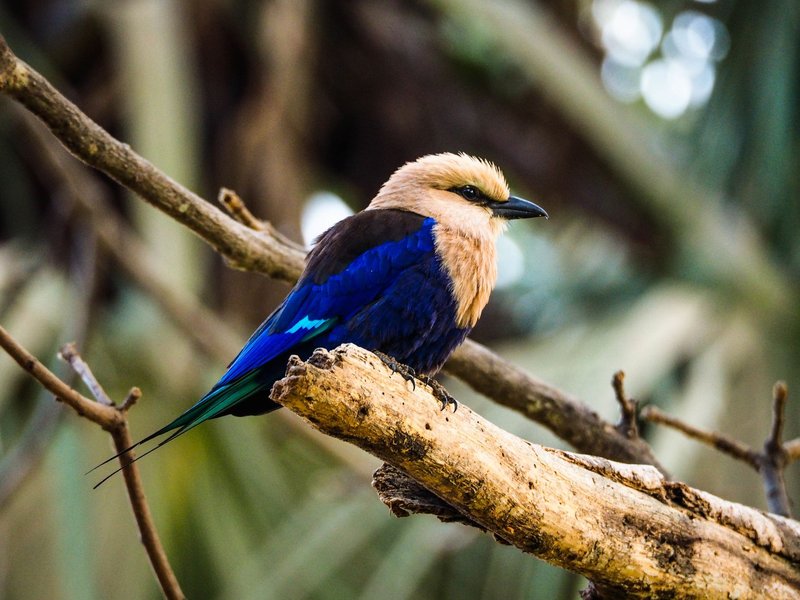
A big, loud, cream-and-blue roller of the southern woodlands. The Blue-bellied Roller has a pale creamy head and chest that contrasts hard with deep blue underparts and wings that flash electric turquoise in flight. It perches high on bare branches and telephone wires, dropping to grab grasshoppers and beetles.
Niokolo-Koba National Park in the southeast is the reliable spot, and the roller ranges on south through the woodlands of the Upper Guinea belt — it turns up again among the birds of Liberia. The name “roller” comes from the tumbling, rolling display flight the males throw during breeding season.
6. Abyssinian Roller
The Sahel’s answer to the Blue-bellied Roller, and often easier to see because it favors open country and roadsides. The Abyssinian Roller is turquoise and lilac all over with a darker back and — the clincher — two long tail streamers that trail behind it like ribbons. In flight the wings blaze cobalt.
Common across central and northern savanna. Pair one perched on a fence post with the light behind you and it barely looks real.
7. Greater Flamingo
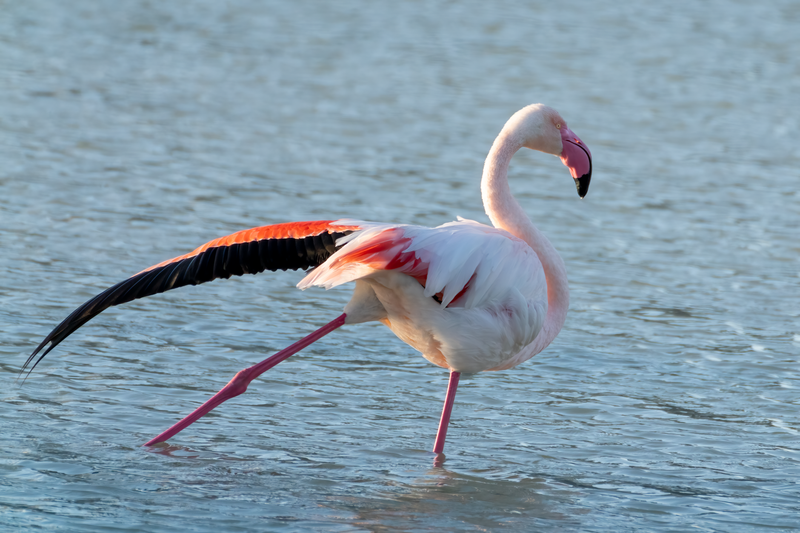
The classic wetland showstopper, and Senegal hosts thousands. Greater Flamingos are pale pink with deeper rose in the wings and a pink bill tipped in black, standing over a meter tall on absurdly long legs. They feed head-down, sweeping their bills upside-down through shallow brine to filter out algae and tiny crustaceans — the same diet that turns them pink.
Djoudj National Bird Sanctuary and the Saloum Delta hold big concentrations, especially in the northern winter. A distant flock reads as a shimmering pink band across the flats.
8. Great White Pelican
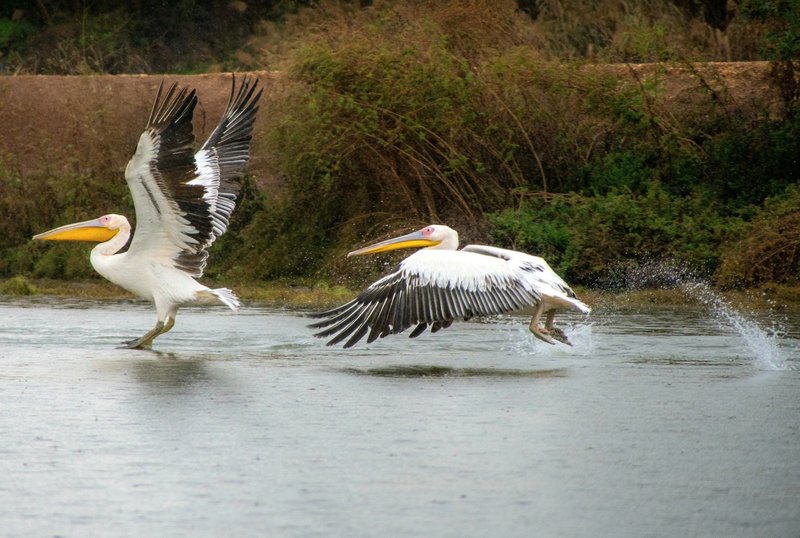
Djoudj is home to one of West Africa’s largest breeding colonies of Great White Pelicans — tens of thousands of birds on an island you can approach by boat. Up close they’re enormous: white bodies washed faintly pink, a yellow throat pouch, and black flight feathers that only show when the wings open.
They fish cooperatively, several birds forming a horseshoe to herd fish into the shallows before scooping in unison. Watching a squadron glide in low over the water in single file is one of the best free shows in the country. Djoudj is a UNESCO World Heritage site largely because of these pelicans and the millions of migratory birds that share the wetland.
9. Pink-backed Pelican
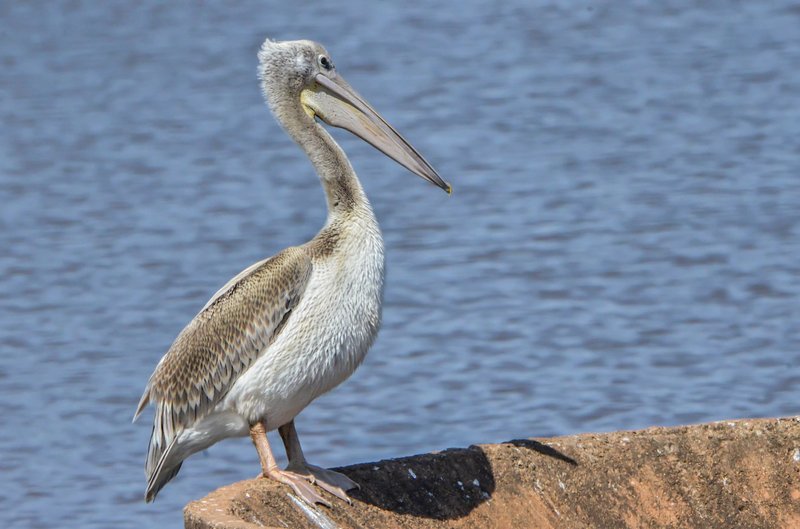
Smaller and greyer than its Great White cousin, and more of a loner. The Pink-backed Pelican is dingy grey-white with a faintly pink rump (hard to see in the field) and a duller, fleshy bill. Where Great Whites mob together, this one tends to fish alone or in small groups.
Look for them in the Saloum Delta mangroves and quieter freshwater pools. If you see a solitary, scruffy-grey pelican, this is usually it.
10. African Spoonbill
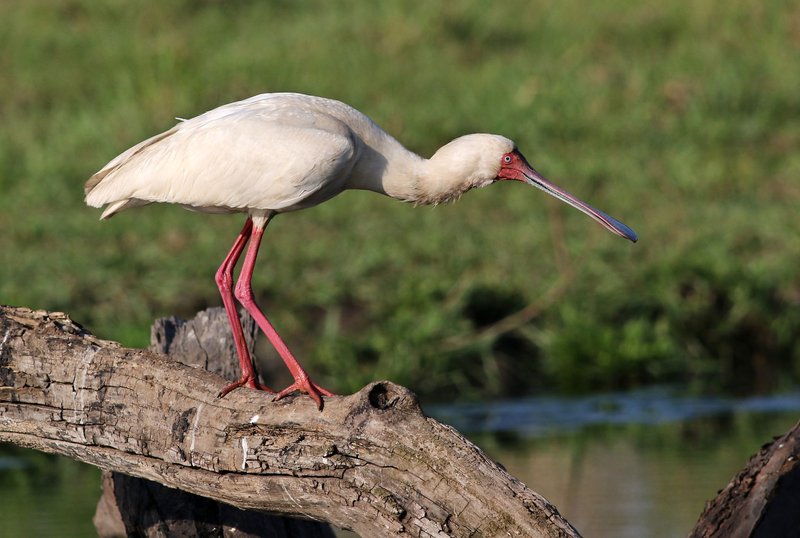
Named for the obvious. The African Spoonbill is all white with red legs, a bare red face, and a long grey bill flattened into a spatula at the tip. It feeds by wading slowly and sweeping that bill side to side through the shallows, snapping shut on anything that touches it.
Common in Djoudj’s lagoons and other open wetlands. In flight it holds its neck straight out, which separates it instantly from the S-curved necks of the herons and egrets around it.
11. Yellow-billed Stork
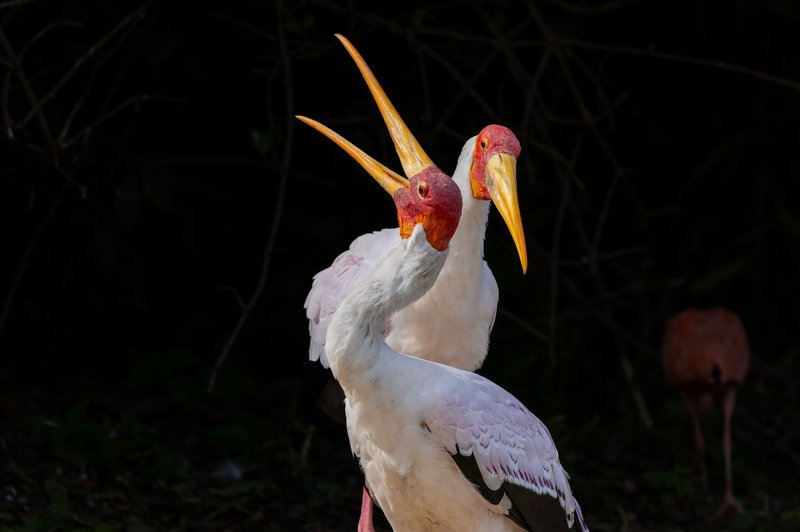
A handsome wading stork, white with a black tail and, in breeding condition, a rosy flush across the wings. The bare face is deep red and the heavy, slightly down-curved bill is bright yellow — an easy combination to lock onto from a distance.
It feeds like the spoonbill, sweeping a partly open bill through muddy water for fish and frogs. You’ll find it standing along the margins of the Senegal River wetlands and Djoudj’s shallow pans.
12. Western Reef Heron
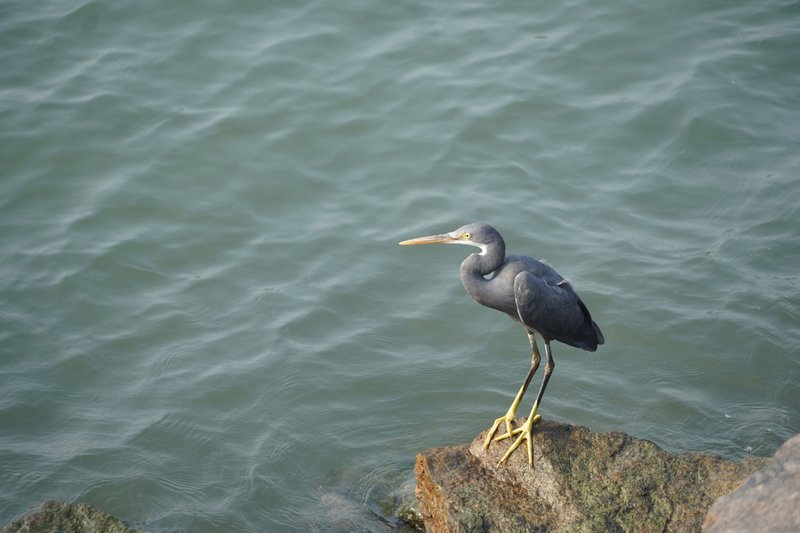
A coastal specialist that comes in two flavors and can genuinely confuse you. The Western Reef Heron has a dark grey morph and a pure white morph, both with yellow feet and a stouter bill than the similar egrets. It works tidal mudflats and rocky shores, sometimes running and stabbing after fish in the surf.
The Petite Côte and the mudflats around Saint-Louis are good bets, though the heron patrols tidal shores right down the West African coast and shows up on the birds of Sierra Leone as well. When you spot a “white egret” with a heavier bill on a saltwater flat, check it twice — it’s often this.
13. Pied Kingfisher
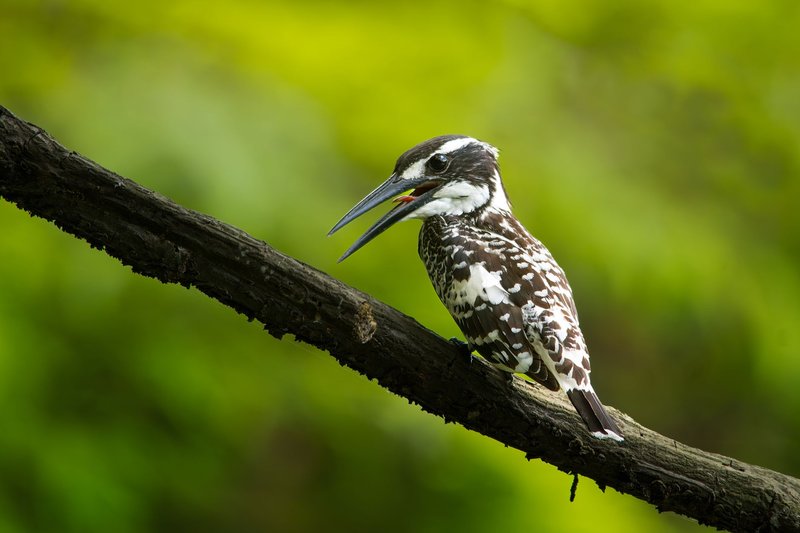
The most watchable kingfisher in Senegal because it hunts in the open and hovers. Crisp black-and-white — no blue anywhere — with a shaggy crest and a dagger bill. Males wear a double black breast-band, females a single broken one.
It hangs in the air on fast-beating wings above open water, then plunges straight down after small fish. Any river, lagoon, or reservoir with clear water will have them, often several on the same stretch. According to the Cornell Lab of Ornithology, it’s one of the few birds capable of eating prey in flight without returning to a perch.
14. Senegal Coucal
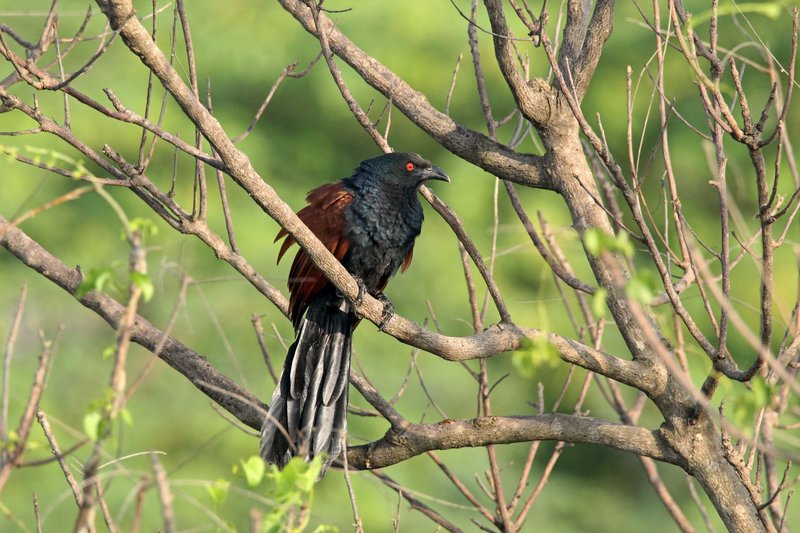
A large, skulking member of the cuckoo family that carries the country’s name — though, like most of the birds here, it ranges widely across Africa rather than counting among the wildlife found only in Senegal. The Senegal Coucal has a black cap, chestnut wings, and a creamy belly, with a long floppy tail and a heavy build that makes its flight look clumsy. You’ll more often hear its bubbling, descending call — like water glugging out of a bottle — from deep in a thicket.
It creeps through dense scrub and reedbeds hunting insects, lizards, and small snakes. Patient watching near a calling bird usually pays off.
15. Senegal Parrot
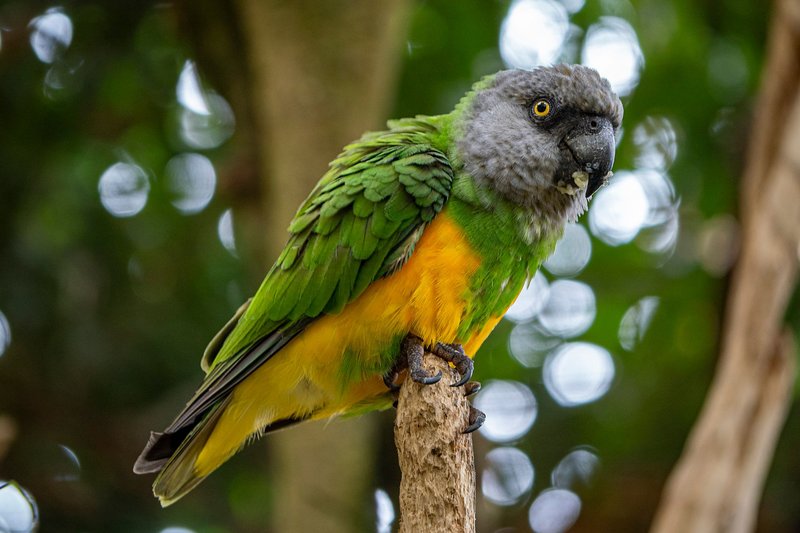
The other bird flying the flag. The Senegal Parrot has a grey head, green back and chest, and a bright yellow-and-orange vest across the belly. It’s a familiar cage bird worldwide, but seeing a wild flock rocket screeching through dry woodland is a different thing entirely.
They favor savanna woodland and forest edges, often near fruiting trees. Central and southern Senegal, including the Niokolo-Koba region, is where to look. Fast, noisy, and usually in pairs or small groups.
16. Village Weaver
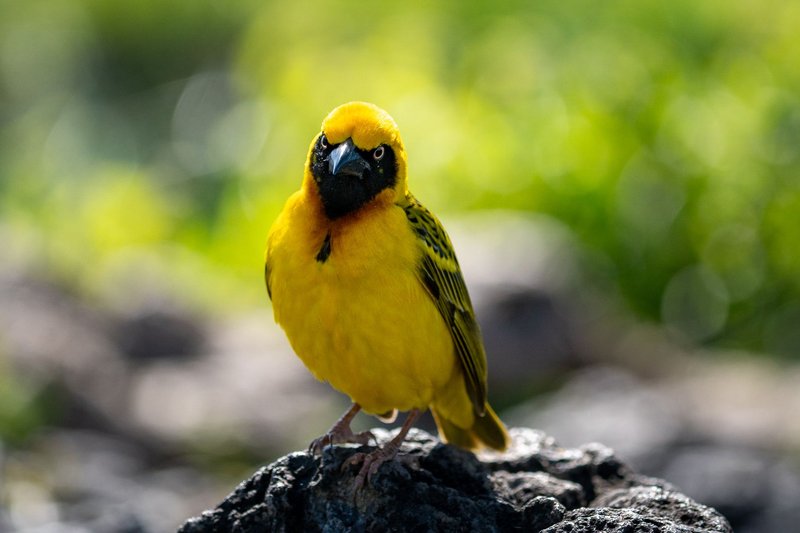
Impossible to miss and probably nesting over your lunch. The male Village Weaver is bright yellow with a black face and a chestnut-washed nape, red eyes, and a heavy conical bill. Colonies festoon a single tree — often a palm in the middle of a village — with dozens of woven, basket-shaped nests hanging from the tips of branches.
The male builds each nest from strips of grass and palm leaf, then hangs beneath it flapping to advertise. If the female inspects it and isn’t impressed, she tears it apart and he starts over. Present nearly everywhere people are.
17. Northern Red Bishop
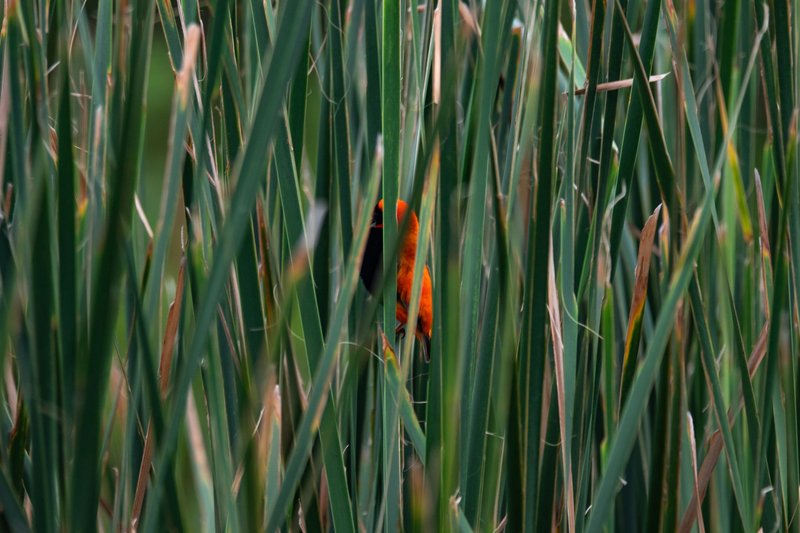
For a few months a year the male is one of the reddest birds you’ll ever see: flame-orange to scarlet with a black face and belly, puffed up into a fuzzy ball as he displays over the reeds. Out of breeding season he moults into a drab streaky brown and disappears into the crowd of “little brown jobs.”
Look in reedbeds, marshes, and the rice fields of the Senegal River valley during the wet season and after, roughly July through October, when the males are in color.
18. Beautiful Sunbird
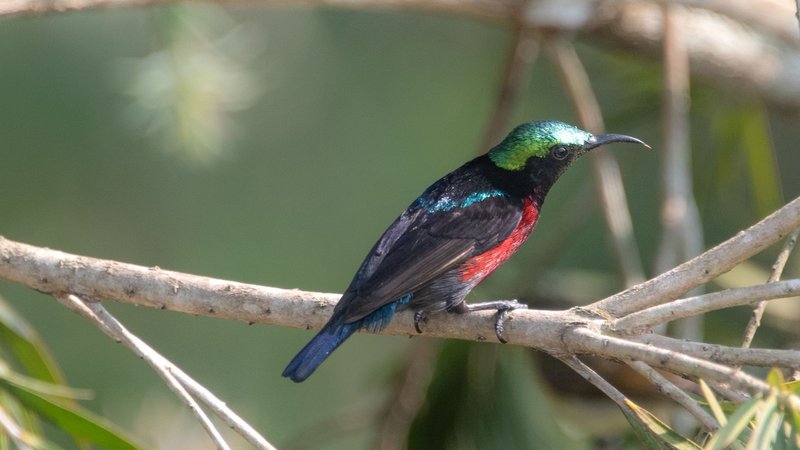
Senegal’s answer to a hummingbird, though it’s not related. The male Beautiful Sunbird is metallic green with a scarlet breast band bordered in yellow, plus two long central tail feathers that double its apparent length. It flits between flowers probing for nectar with a fine down-curved bill, catching the light in flashes of green and red.
Gardens, flowering acacias, and scrub across the country. The females, as usual, are plain olive-grey — it’s the males that earn the name.
19. Hamerkop
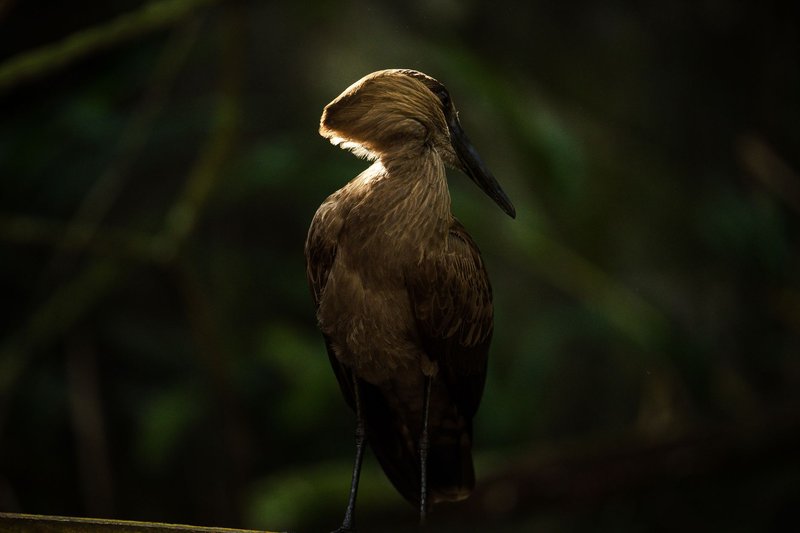
One of Africa’s oddest birds. The Hamerkop is a uniform muddy brown, medium-sized, with a thick crest sticking out the back of its head that — together with its heavy bill — gives the silhouette of a hammer. That’s where the Afrikaans name comes from.
But the real spectacle is the nest: an enormous domed structure of sticks, mud, and whatever else it can find, often over a meter across and strong enough to hold a person’s weight. A single pair may build several in a season. Watch for the birds hunting frogs and tadpoles at the edges of shallow freshwater.
20. Sacred Ibis
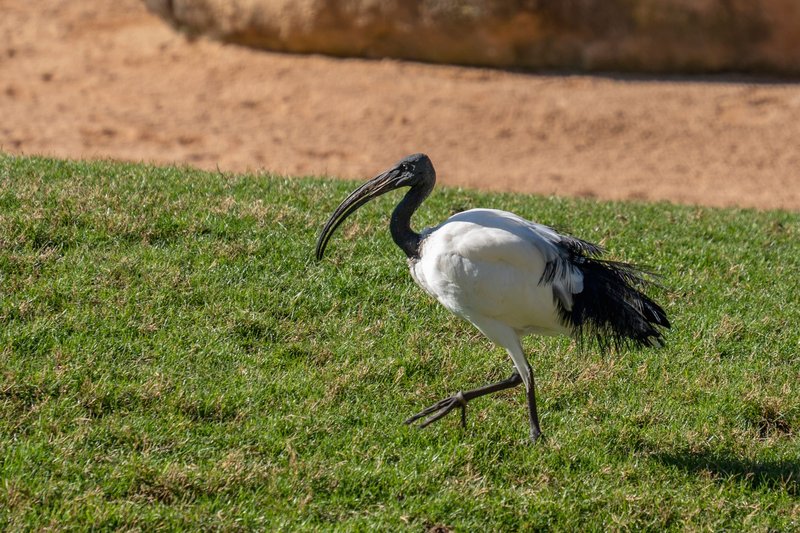
A fitting bird to close on. The Sacred Ibis is white with a bald black head and neck, black bill, and black plumes drooping over the tail. The ancient Egyptians mummified it by the million as an emblem of the god Thoth — the British Museum holds ibis mummies from that period — yet it no longer breeds in Egypt and thrives here in the West African wetlands.
It probes mud and short grass for insects, frogs, and carrion, often in loose flocks. Common around Djoudj and the Senegal delta.
Best time and best places to go birding
When: The prime window is November through March, the dry season. Palearctic migrants (ospreys, waders, ducks, warblers) have arrived from Europe, water levels concentrate birds into shrinking pools, and the heat is bearable. Some resident specialties like the Northern Red Bishop peak later, in the wet-season aftermath around September–October, so serious listers sometimes plan a second trip.
Where:
- Djoudj National Bird Sanctuary — the crown jewel, in the northwest near Saint-Louis. A Ramsar-listed wetland that hosts up to three million birds and the giant pelican colony. Go by boat at dawn.
- Langue de Barbarie — a thin sand spit south of Saint-Louis where the Senegal River meets the Atlantic. Terns, gulls, ospreys, and shorebirds.
- Saloum Delta — a vast mangrove system south of Dakar, a UNESCO site, strong for flamingos, pelicans, and coastal species.
- Niokolo-Koba National Park — the southeast’s dry woodland and river gallery forest, best for the rollers, Senegal Parrot, and savanna birds you won’t find up north.
A local guide is worth every franc. They know which sandbar the Egyptian Plover has been using and can pick a calling coucal out of a wall of green in seconds.
What to pack
Binoculars in the 8×42 range are the sweet spot — enough magnification for distant flats, enough field of view to track a flying roller. Bring a field guide to the birds of West Africa (the region-specific ones beat the pan-African tomes for weight and relevance), sun protection for open wetlands with zero shade, and a scope if you’re serious about the pelican colony and distant flamingo lines.
Twenty birds is barely scratching the surface of what Senegal holds, but knowing these on sight turns a wall of unfamiliar shapes into a landscape you can actually read. Start at Djoudj, get there at first light, and let the country show off.