Equatorial Guinea is a small country with an outsized balance sheet. Fewer than two million people live across a mainland chunk and a scatter of islands, yet for two decades it pumped enough crude to rank among the richest nations in Africa by per-capita GDP. The catch is that most citizens never saw the money. That gap — between what the ground holds and what the average person has — is the real story of this country’s resources.
Below is the full inventory: the oil that built the modern state, the gas that’s replacing it, the forests and farms that came first, and the minerals nobody has properly dug up yet.
Table of Contents
- The Quick Version
- Crude Oil: The Engine
- Natural Gas: The Successor
- Timber and Tropical Hardwoods
- Cocoa, Cassava, and Bananas
- Fisheries
- Untapped Minerals: Gold, Bauxite, and Critical Metals
- The Resource Curse: Why the Oil Money Didn’t Trickle Down
- What Comes After Oil
- FAQ
The Quick Version
If you need the headline facts fast:
| Resource | Status | Key figure |
|---|---|---|
| Crude oil | Declining, still dominant | Peaked ~370,000 barrels/day (2004); ~1.1 billion barrels reserves at the Zafiro field |
| Natural gas | Growing, the future | ~1.3 trillion cubic feet proven reserves; major LNG exporter |
| Timber | Long-standing export | Okoumé and other hardwoods; second-oldest export sector |
| Cocoa | Historic, faded | Once the colonial cash crop on Bioko Island |
| Fisheries | Underexploited | Rich Atlantic waters, minimal domestic fleet |
| Minerals | Largely untapped | Gold, bauxite, iron ore; emerging coltan and rare earth interest |
Oil and gas are roughly 90% of exports and the vast majority of government revenue. Everything else on this list is either a relic of the pre-oil economy or a bet on the post-oil one.
Crude Oil: The Engine
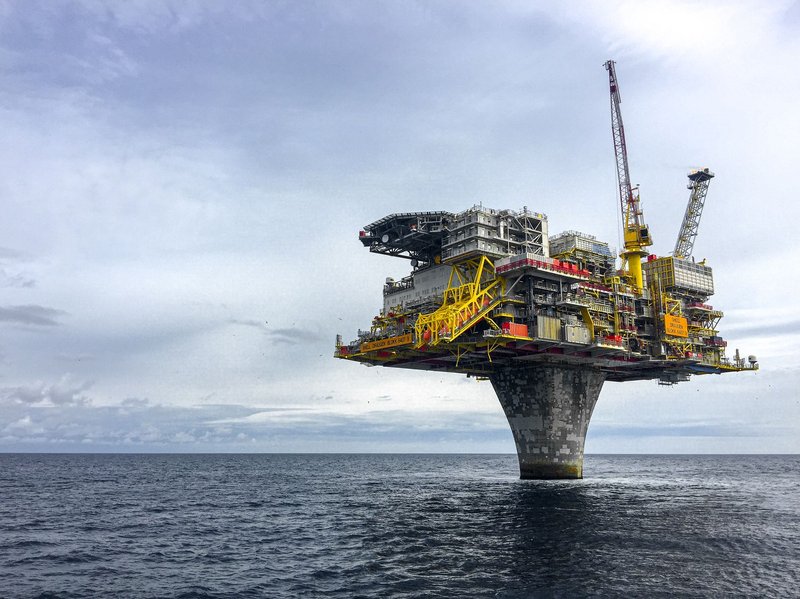
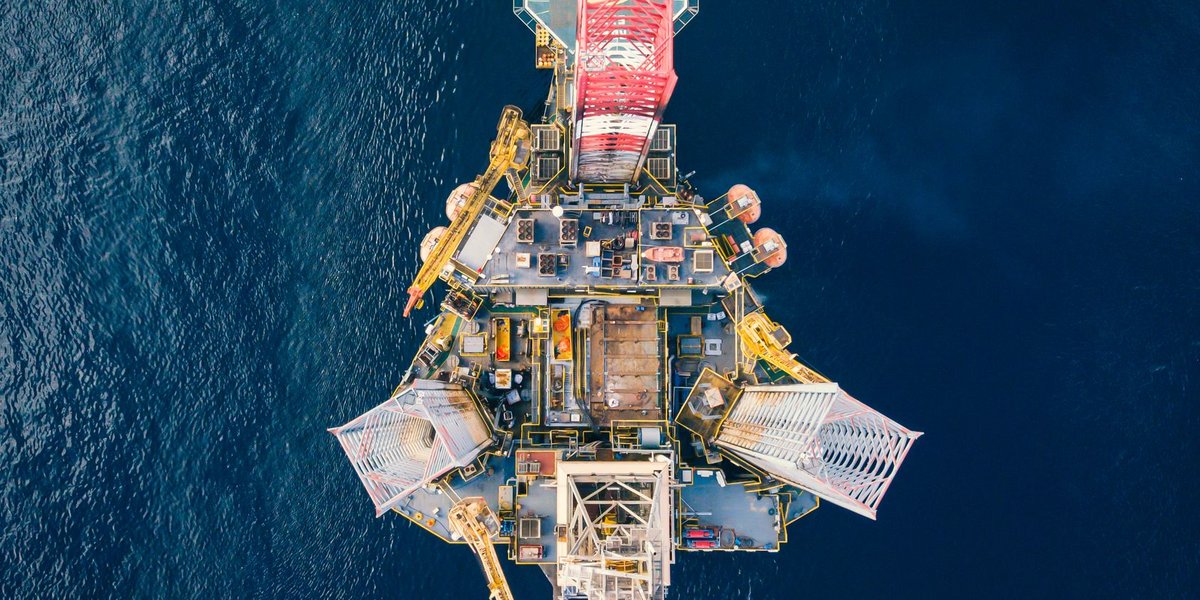
Everything changed in 1995. That’s when the Zafiro field, offshore in the Gulf of Guinea, came online under Mobil (now ExxonMobil). Before that, Equatorial Guinea was one of the poorest countries on the continent, running on cocoa and coffee. After that, it became a petro-state almost overnight.
Zafiro is the giant. It has held on the order of 1.1 billion barrels of recoverable reserves, and at its 2004 peak the country as a whole was producing around 370,000 barrels per day. That’s a staggering figure for a nation this size — it worked out to more crude per citizen than almost anywhere on Earth.
The oil sits offshore, which matters. It meant foreign majors — ExxonMobil, Marathon, Hess — could operate in relative isolation from the country’s threadbare infrastructure, and it meant the revenue flowed straight to the state and its inner circle rather than through a broad domestic economy.
Here’s the part the boom-era coverage glossed over: production has been falling for years. Output has roughly halved from the peak, drifting down toward the 60,000–100,000 barrels-per-day range as the mature fields deplete. The country is now firmly on the back slope of its oil curve, and most projections put meaningful depletion of current reserves somewhere around the mid-2030s without major new discoveries. That deadline shapes every other decision the government makes.
Natural Gas: The Successor
If oil is the past, gas is the pitch for the future. Equatorial Guinea holds roughly 1.3 trillion cubic feet of proven natural gas reserves, and it turned that into a genuine industry rather than just flaring it off.
The centerpiece is the Punta Europa complex on Bioko Island: a liquefied natural gas (LNG) plant, a methanol plant, and associated processing. This made the country one of sub-Saharan Africa’s notable LNG exporters, shipping to markets in Europe and Asia. The government’s flagship strategy — branded the “Gas Mega Hub” — aims to pull gas from its own fields and from neighboring blocks (including cross-border reservoirs shared with Cameroon and Nigeria) and process it all through that existing Bioko infrastructure.
The logic is sound. The plants are already built and partly idle as the fields that originally fed them decline. Backfilling them with gas from elsewhere keeps the most valuable industrial asset in the country running. Whether the cross-border deals materialize at the scale promised is the open question, but gas is clearly where the smart money in the government is looking.
Timber and Tropical Hardwoods
Before oil, timber was king — and it’s still standing. Equatorial Guinea is heavily forested, with tropical rainforest covering a large majority of the mainland region of Río Muni. The prize species is okoumé, a light hardwood prized for plywood, alongside various other tropical hardwoods logged for export, much of it heading to Asian markets.
Forestry is one of the oldest continuous export sectors here, predating the petroleum era by decades. It’s also the one with the clearest environmental tension. The Congo Basin forests that reach into the country are among the planet’s most important carbon sinks and biodiversity reservoirs, and unregulated logging chips away at both. As the country hunts for non-oil revenue, timber is an obvious lever — but pulling it hard has a cost that doesn’t show up on the export ledger.
Cocoa, Cassava, and Bananas
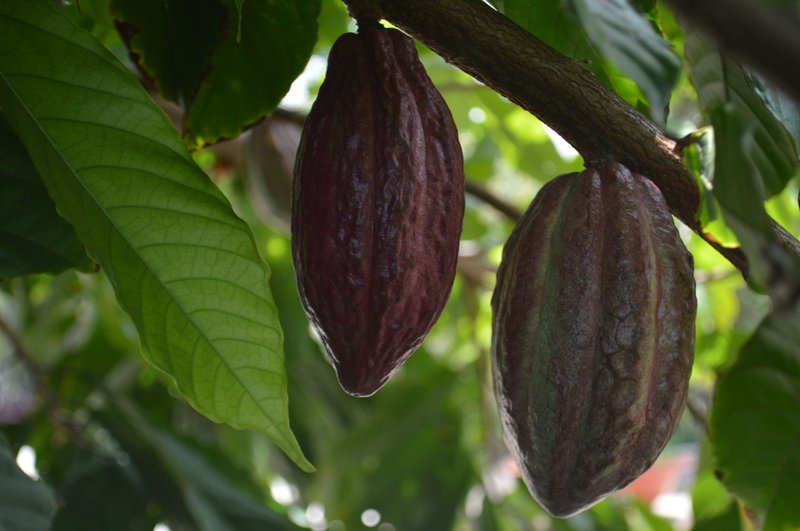
There’s a version of Equatorial Guinea’s economy where cocoa is the star, and it existed as recently as the 1960s. Under Spanish colonial rule, Bioko Island’s volcanic soil produced high-grade cocoa that was the territory’s signature export. Coffee grew on the mainland. This was the whole economy, and it wasn’t nothing.
Then independence, political turmoil, and eventually oil hollowed it out. Plantations were abandoned or nationalized into ruin, and when petrodollars arrived there was no incentive to rebuild low-margin farming. Today agriculture is a small slice of GDP, and the country imports much of its food despite having the land and climate to grow it.
What’s still here: cocoa (a shadow of its former output), cassava and sweet potato as staple root crops, bananas and plantains, and palm oil. Agriculture employs a meaningful share of the population even though it earns a tiny share of the money — a mismatch that tells you a lot about how lopsided the oil economy became.
Fisheries
The country sits on rich Atlantic waters in the Gulf of Guinea, with a substantial exclusive economic zone. On paper, fisheries should be a real resource. In practice, they’re barely developed by the country itself.
Domestic fishing is mostly artisanal — small boats supplying local markets. The industrial-scale value in the waters is largely captured through licensing agreements with foreign fleets, which means the fish leave and a fraction of the value stays. Illegal and unregulated fishing by foreign vessels is a chronic problem across the Gulf of Guinea, eroding a resource the country has never fully monetized. It’s a classic case of an asset that’s rich in the abstract and thin in the accounts.
Untapped Minerals: Gold, Bauxite, and Critical Metals
This is the section the older explainers skip, and it’s the one worth watching. Equatorial Guinea has known mineral occurrences that have never been developed at scale: gold, bauxite (the ore for aluminum), iron ore, and titanium-bearing deposits. Diamonds have been mentioned in geological surveys. None of it has translated into a real mining industry, largely because oil made the effort seem pointless.
The interesting twist is the critical-minerals angle. As global demand climbs for the metals that go into batteries, magnets, and electronics, there’s growing interest in whether the region holds economically viable coltan (the source of tantalum), rare earth elements, and other strategic metals. Exploration is early and much of the promising geology is unproven, so treat the excitement with caution — a survey showing an occurrence is not the same as a mine.
But the strategic case is easy to see. A government staring down oil depletion has every reason to find out what else is in the ground, and critical minerals are exactly the kind of resource the rest of the world is scrambling to secure.
The Resource Curse: Why the Oil Money Didn’t Trickle Down
Here’s the uncomfortable center of the whole subject. By the numbers, Equatorial Guinea should be wealthy. For years its GDP per capita rivaled or exceeded that of some European countries. Yet the majority of the population has lived without reliable access to clean water, healthcare, or education, and a large share falls below the poverty line.
Economists call this the resource curse, and this country is close to a textbook case. When a state’s income comes from a single offshore commodity controlled by a small elite, a few things tend to follow. The revenue doesn’t require a productive population, so there’s little pressure to build schools, hospitals, or a diversified economy. Wealth concentrates. Other sectors wither because the currency and the political attention all bend toward oil.
Watchdog and human-rights organizations have documented for years how oil revenue has been concentrated among a narrow circle rather than invested broadly in public welfare. The result is a country that is rich as a balance sheet and poor as a place to live — the exact gap the intro started with.
This isn’t a moral aside tacked onto a geography lesson. It’s the single most important fact about how these resources have actually functioned. The oil was real. The wealth was real. The distribution is where the story turns.
What Comes After Oil
The government knows the clock is running. Its long-term plan, “Horizon 2035,” explicitly targets economic diversification before the crude runs low. The pillars are the ones on this list: pivot from declining oil to growing gas via the Mega Hub, revive agriculture and fisheries, and finally survey and develop the mineral base — with critical minerals as the speculative upside.
Whether any of it works is genuinely uncertain. Diversifying away from oil is one of the hardest things a petro-state can attempt, and most fail at it. The gas strategy is the most credible piece because the infrastructure already exists. Minerals are the wild card. Agriculture and fisheries are the slow, unglamorous rebuilds that would actually broaden the economy if the state committed to them.
The natural resources of Equatorial Guinea, then, aren’t just a list of what’s in the ground. They’re a timeline: the farms that came first, the oil that came and is going, the gas meant to bridge the gap, and the minerals that may or may not define what’s left when the wells run dry.
FAQ
What is the main natural resource of Equatorial Guinea? Crude oil. It has driven the economy since the mid-1990s and, together with natural gas, still accounts for roughly 90% of exports — though production has fallen sharply from its 2004 peak.
What is the largest oil field in Equatorial Guinea? The Zafiro field, offshore in the Gulf of Guinea, developed by ExxonMobil. It has held on the order of 1.1 billion barrels of recoverable reserves and anchored the country’s oil boom.
What are Equatorial Guinea’s main exports? Petroleum (crude oil), liquefied natural gas, and methanol dominate. Timber is the main non-hydrocarbon export, followed by small volumes of cocoa.
Does Equatorial Guinea have minerals like gold and bauxite? Yes, but largely undeveloped. Gold, bauxite, iron ore, and titanium deposits are known to exist, and there’s early interest in critical minerals like coltan and rare earths, but there is no significant mining industry yet.
Why is Equatorial Guinea poor despite its oil wealth? It’s a leading example of the “resource curse.” Oil revenue has concentrated among a small elite rather than being invested broadly in public services, leaving much of the population in poverty despite one of Africa’s highest GDP-per-capita figures.
When will Equatorial Guinea’s oil run out? Estimates vary, but with production already in decline and no major new discoveries, current reserves are widely projected to approach depletion around the mid-2030s — which is why the government’s diversification plan is framed around 2035.