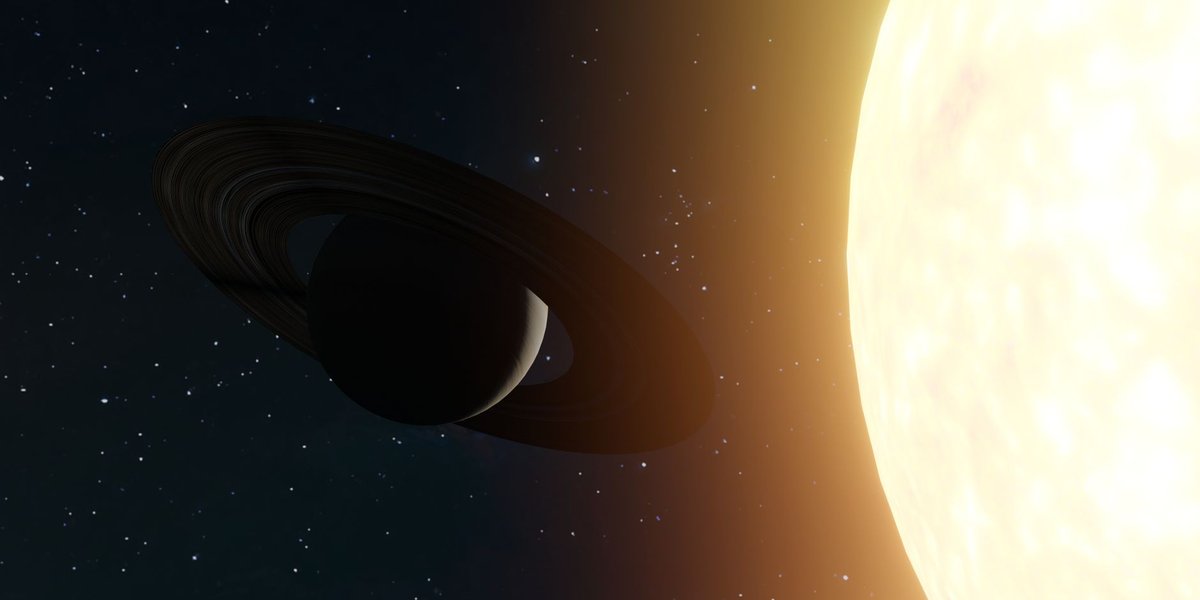
Our Sun is roughly 865,000 miles across. That sounds enormous until you meet a star like UY Scuti, which is so wide that if you dropped it where the Sun sits, its surface would swallow the orbit of Jupiter. Same category of object. Wildly different scale. That gap is the whole story of giant stars.
A giant star isn’t just “a big star.” It’s a specific stage a star reaches near the end of its life, when its core runs out of hydrogen and the whole thing balloons outward. Understanding that one transition explains almost everything else: why Betelgeuse is red, why Arcturus outshines the Sun a hundredfold, and what will happen to Earth in about five billion years.
Table of Contents
- What actually makes a star a “giant”
- How a giant star forms
- The size-and-brightness comparison
- Reading the Hertzsprung-Russell diagram
- The full giant star family
- The biggest giant stars we know
- When the Sun becomes a red giant
- Why giants live fast and die young
- Common questions
What actually makes a star a “giant”
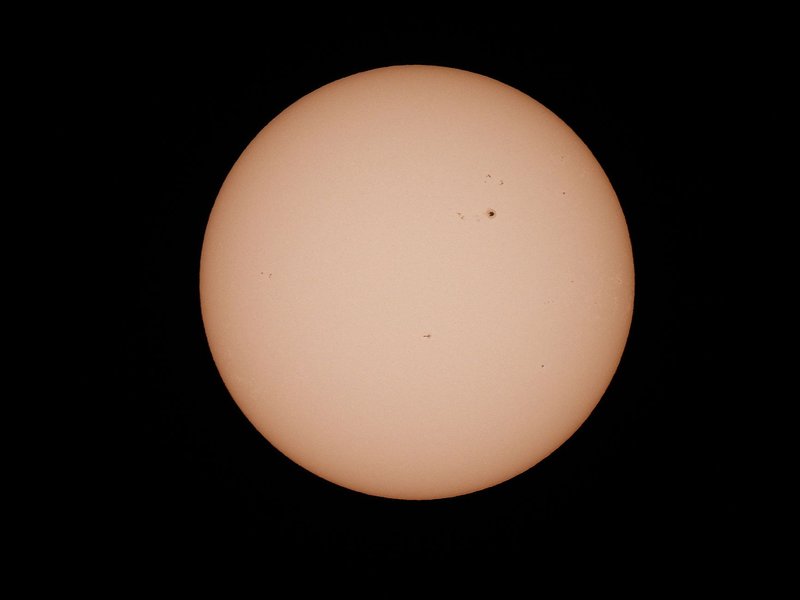
Here’s the definition astronomers actually use, and it’s more precise than the word suggests. A giant star has a much larger radius and higher luminosity than a main-sequence star of the same surface temperature. That last part matters. You can’t just point at a hot, bright star and call it a giant. You compare it to a “normal” star of identical color and ask: is it far brighter than it should be? If yes, it’s swollen up, which means it’s a giant.
Astronomers formalize this with luminosity classes, assigned by Roman numerals. Main-sequence stars like the Sun are class V. Giants are class III. Bright giants sit at class II, and supergiants get class I. So Betelgeuse, a red supergiant, carries the full designation M2 Iab, while our Sun is a humble G2 V.
The reason a giant can be so luminous comes down to surface area. Brightness scales with the square of the radius. Puff a star up to 50 times its old size and, temperature being equal, its total light output jumps by a factor of 2,500. That’s why a cool, dim-per-square-inch red giant can still flood a solar system with light: it simply has an absurd amount of square inches.
How a giant star forms
Every giant starts as an ordinary main-sequence star fusing hydrogen into helium in its core. This phase lasts a long time and it’s stable, because the outward pressure of fusion perfectly balances the inward crush of gravity. The Sun has been doing this for 4.6 billion years without much drama.
The drama starts when the core runs out of hydrogen fuel.
With no fusion to hold it up, the helium core contracts under its own gravity and heats up. That heat ignites a shell of hydrogen around the dead core. This shell burns furiously, far hotter than the old core ever did, and it dumps so much energy into the star’s outer layers that they expand outward by tens or hundreds of times. As those layers spread across a bigger surface, they cool and redden. The star has become a red giant.
That’s the low-and-intermediate-mass path, the one the Sun will take. Heavier stars follow a more violent version of the same script. A star more than about eight times the Sun’s mass burns through its fuel so fast, and expands so enormously, that it becomes a supergiant instead, eventually collapsing into a supernova that leaves behind a superdense remnant such as a neutron star or a black hole. The European Space Agency has tracked several nearby supergiants precisely because they’re candidates to explode on an astronomically short timescale.
The size-and-brightness comparison
Numbers make the scale click better than adjectives ever will. Here’s how a few well-known stars stack up against the Sun, using solar radii (the Sun = 1) and solar luminosities.
| Star | Type | Radius (Sun = 1) | Luminosity (Sun = 1) | Surface temp |
|---|---|---|---|---|
| The Sun | Main sequence (V) | 1 | 1 | 5,800 K |
| Arcturus | Red giant (III) | ~25 | ~170 | 4,300 K |
| Aldebaran | Red giant (III) | ~44 | ~440 | 3,900 K |
| Canopus | Bright giant (II) | ~71 | ~10,700 | 7,400 K |
| Rigel | Blue supergiant (Ia) | ~78 | ~120,000 | 12,100 K |
| Betelgeuse | Red supergiant (Iab) | ~760 | ~100,000 | 3,600 K |
| UY Scuti | Red supergiant (Ia) | ~1,700 | ~340,000 | 3,400 K |
Notice something in that table: temperature and size don’t track together. Rigel is scorching hot and blindingly bright at a “modest” 78 solar radii. Betelgeuse is nearly ten times wider but cooler on its surface than the Sun. Bigger doesn’t mean hotter. It means more surface, spread thinner.
Reading the Hertzsprung-Russell diagram
If you want one picture that organizes every star in the sky, it’s the Hertzsprung-Russell diagram. Plot temperature on the horizontal axis (hot on the left, cool on the right, by convention) and luminosity on the vertical axis (dim at the bottom, bright at the top). Every star lands somewhere on that grid.
Most stars fall along a diagonal band running from top-left to bottom-right. That’s the main sequence, and it’s where stars spend most of their lives. The Sun sits about in the middle of it.
Giants break the pattern. They pile up in the upper-right region: cool (so, on the right) but very luminous (so, high up). The only way to be both cool and bright is to be huge, which is exactly what a giant is. Supergiants sit even higher, in a band across the very top. When NASA describes a star’s evolution, it’s essentially describing a path that star traces across this diagram, off the main sequence and up into giant territory as it ages.
The full giant star family
“Giant” is an umbrella. Underneath it sits a whole taxonomy, roughly ordered from smallest to most extreme. Here’s the family, each anchored to a star you can actually find in the night sky.
Subgiants (class IV). The in-between stage. A subgiant has just exhausted its core hydrogen and started expanding, but hasn’t fully bloated into a giant yet. Procyon, one of the brightest stars in the sky, is a subgiant on its way up.
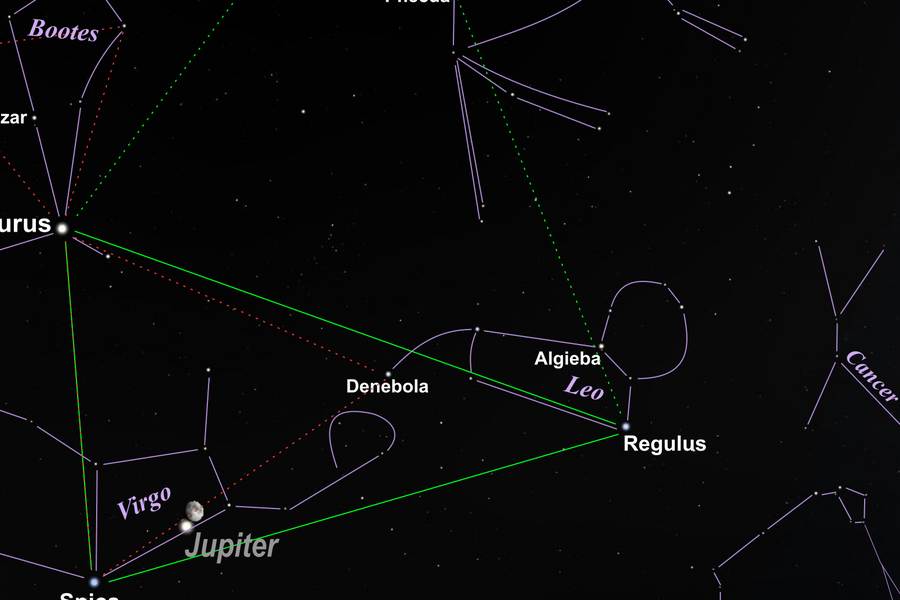
Giants (class III). The main event. Arcturus, the fourth-brightest star in the night sky and the brightest in the northern hemisphere, is a red giant about 25 times the Sun’s width. Aldebaran, the orange eye of Taurus the bull, is another textbook example.
Bright giants (class II). A rung above ordinary giants in luminosity. Canopus, the second-brightest star overall, sits here, throwing out over 10,000 times the Sun’s light.
Red giants. Not a separate class so much as a color category. These are cool, evolved stars that have expanded and reddened. Most class III giants you’ll hear about are red giants.
Yellow giants. Rarer, and often caught in a brief transitional phase where the star is passing through a moderate temperature. Many of them are pulsating variable stars, including the Cepheids astronomers use to measure cosmic distances, often by calibrating those Cepheids against examples found inside nearby star clusters.
Blue and white giants. Hot, massive, luminous, and short-lived. Because they burn so hard, they’re comparatively rare. Rigel-class objects blur the line between blue giant and blue supergiant.
Supergiants (class I). The heavyweights. Betelgeuse, the red shoulder of Orion, is the famous one, wide enough to engulf the orbit of Mars if placed at the Sun’s position. Antares, the red heart of Scorpius, is its southern-sky counterpart.
Hypergiants. The absolute ceiling. These are the most luminous, most massive, and most unstable stars known, shedding mass so violently they’re wrapped in shells of their own expelled gas. Eta Carinae is the poster child, a system that nearly blew itself apart in a false-alarm eruption in the 1840s that briefly made it the second-brightest star in the sky.
The biggest giant stars we know
If you rank giants purely by physical diameter, red supergiants and hypergiants dominate. Measuring them is genuinely hard, because their outer atmospheres are diffuse and pulsating, so the “surface” is fuzzy and different methods give different answers. With that caveat, here’s a rough ranking of the largest known stars by radius.
- Stephenson 2-18 — Estimates put it around 2,150 solar radii, which would make it one of the largest stars ever measured. At that size it would nearly reach Saturn’s orbit.
- UY Scuti — Long the reigning champion at roughly 1,700 solar radii, and still the classic example when people talk about the biggest stars.
- WOH G64 — A red supergiant in a neighboring galaxy, notable because in 2024 astronomers captured the first close-up image of a star outside the Milky Way, revealing a cocoon of gas around it.
- Westerlund 1-26 — A red supergiant or hypergiant estimated near 1,500 solar radii.
- VY Canis Majoris — Once thought to be the largest star of all, now estimated around 1,400 solar radii, and famous for the enormous clouds of material it’s throwing off as it dies.
The honest scientific footnote: these rankings shift as measurements improve, and the error bars are large. Detailed observations by facilities like the European Southern Observatory keep revising the numbers. Treat any “biggest star” list as a best-current-estimate, not a settled scoreboard.
When the Sun becomes a red giant
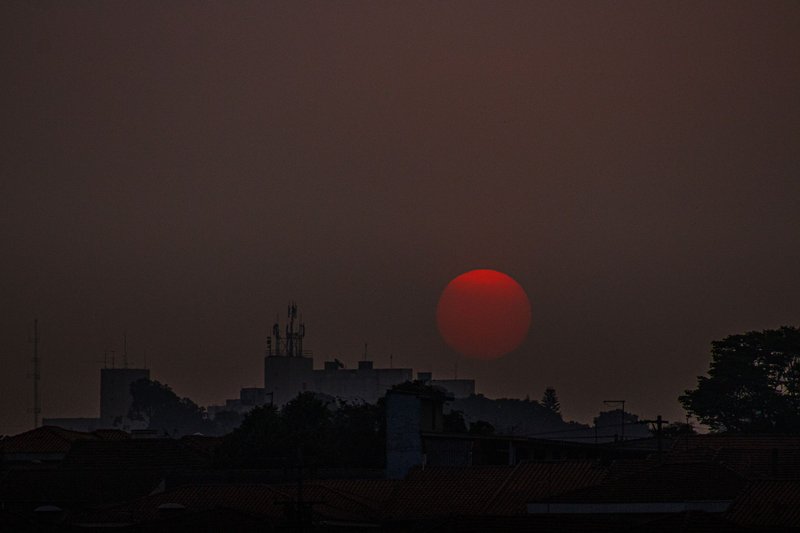
This is the part that makes giant stars personal, because our own star is going to become one.
In roughly five billion years, the Sun will exhaust the hydrogen in its core. The same process that made Arcturus and Aldebaran will play out here. The core will contract, a hydrogen shell will ignite around it, and the Sun’s outer layers will swell outward. It will grow to somewhere around 200 times its current radius and brighten by a factor of over a thousand.
What does that mean for the neighborhood? Mercury and Venus get vaporized, no contest. Earth’s fate is closer to a coin flip. The Sun will lose mass as it expands, which loosens its gravitational grip and lets the planets drift into wider orbits. But the swelling solar surface may reach out far enough to catch Earth anyway, or at least drag it in through friction. Either way, the surface will be sterilized long before that. Rising luminosity is expected to boil off Earth’s oceans within about a billion years, according to modeling summarized by NASA researchers, long before the red giant phase even begins.
After the giant phase, the Sun won’t explode. It lacks the mass for a supernova. Instead it will shrug off its outer layers into a glowing planetary nebula and leave behind a white dwarf, an Earth-sized cinder that slowly cools over billions of years. That’s the quiet ending most stars get.
Why giants live fast and die young
There’s a brutal logic to stellar lifespans, and it’s one of the central puzzles that stellar evolution — a major branch of astrophysics — sets out to explain: the more massive the star, the shorter its life. It feels backwards. More fuel should mean a longer burn. But massive stars burn that fuel so extravagantly fast that they exhaust themselves in a fraction of the time.
The Sun’s total main-sequence life runs about 10 billion years. A blue giant ten times its mass might last only 20 to 30 million years, less than one percent as long. And the giant phase itself, for any star, is fleeting. A star spends perhaps 90 percent of its life on the main sequence and only a brief final chapter as a giant.
That has a strange consequence for the night sky. The bright, hot, blue-white giants and supergiants you can see are, by cosmic standards, brand new and doomed. Betelgeuse is only around 10 million years old, a stellar infant, yet it’s already near death and could go supernova anytime in the next hundred thousand years. When you look at it, you’re watching a countdown.
Common questions
Is a giant star hotter than the Sun? Not necessarily. Red giants and red supergiants are actually cooler on their surfaces than the Sun, around 3,000 to 4,000 K versus the Sun’s 5,800 K. They’re brighter only because they’re so much larger. Blue giants, on the other hand, are far hotter.
What’s the difference between a giant and a supergiant? Mass and scale. Giants form from low-to-intermediate-mass stars and end quietly as white dwarfs. Supergiants come from stars over about eight solar masses, grow far larger, and end in supernova explosions.
Is the Sun a giant star? No. The Sun is a main-sequence (dwarf) star, luminosity class V. It will become a red giant in about five billion years, but for now it’s an ordinary middle-aged star.
What is the biggest known giant star? By current estimates, red supergiants like Stephenson 2-18 and UY Scuti top the list at over 1,700 times the Sun’s radius, though measurements carry large uncertainties and the rankings shift as techniques improve.
Will a giant star ever collide with Earth? No. Stars are separated by trillions of miles. The nearest giant to us, Aldebaran, is about 65 light-years away and poses no threat. The only star that will directly affect Earth is our own, when it enters its giant phase.