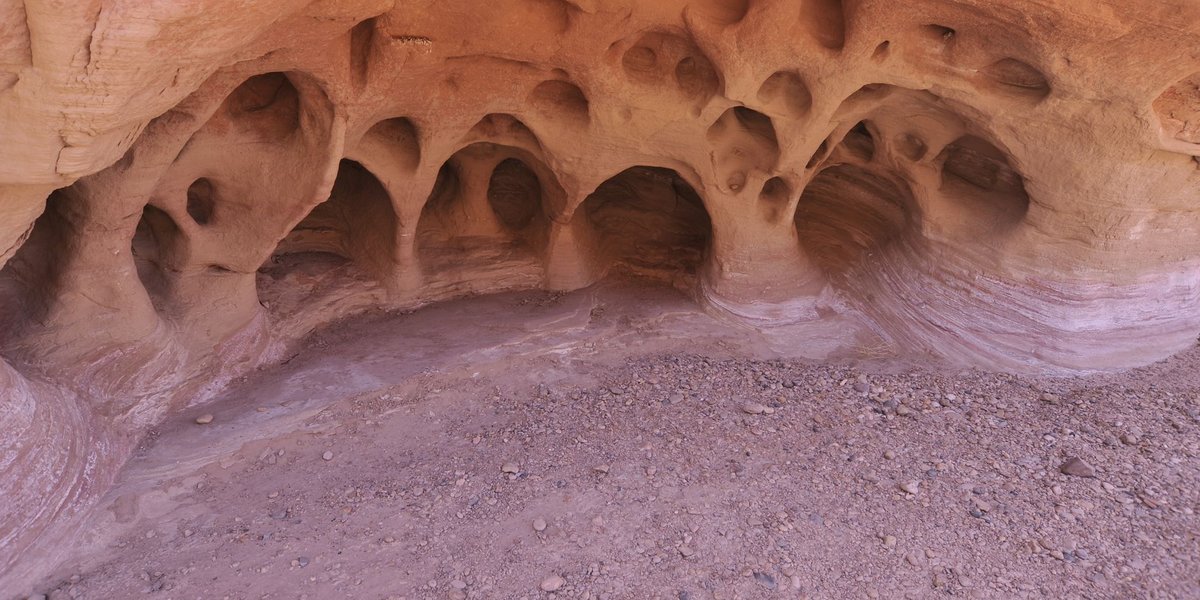
Libya barely registers on anyone’s cave map, and that’s a mistake. This is a country where a single limestone cavern holds one of the longest records of human occupation anywhere on Earth, and where families still sleep in rooms carved down into the rock the way their great-grandparents did. Two very different stories, one country.
Most of what you’ll find online splits them apart. The archaeology sites talk about stone tools and radiocarbon dates. The travel pieces talk about the charm of underground living. Nobody puts the deep-time caves and the lived-in caves side by side, which is a shame, because together they tell you something about why people keep coming back to the same holes in the ground for a couple hundred thousand years.
Here’s the full picture.
Table of Contents
- Quick Comparison
- Haua Fteah: 200,000 Years in One Cave
- The Gharyan Troglodyte Houses
- The Jewish Cave Villages of the Nafusa Mountains
- Berber Underground Homes and How They Work
- Can You Actually Visit?
Quick Comparison {#quick-comparison}
If you only skim one thing, skim this.
| Cave / Site | Location | Type | Age | Why it matters |
|---|---|---|---|---|
| Haua Fteah | Cyrenaica coast, near Susa | Natural limestone cavern | Occupied ~200,000+ years | One of the longest human occupation records in North Africa |
| Gharyan houses | Gharyan, Nafusa Mountains | Carved pit dwellings | Centuries old, some still used | Living troglodyte architecture in the Sahara’s edge |
| Nafusa Jewish villages | Nafusa Mountains | Carved cave dwellings | Inhabited into the 20th century | Vanished community’s underground homes |
The split is simple: one natural cave that people dug into for the deep past, and a whole tradition of caves people dug out of the rock to live in. Different engineering, different stories.
Haua Fteah: 200,000 Years in One Cave {#haua-fteah}
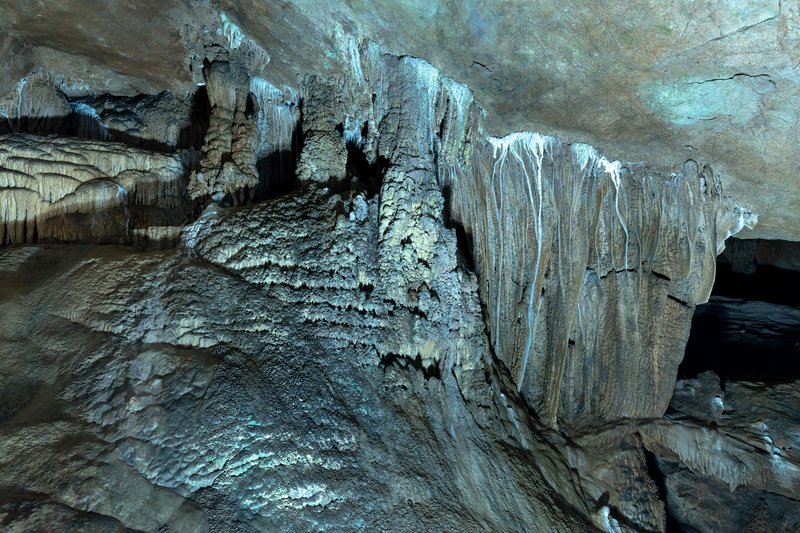
Haua Fteah is a giant limestone chamber in the Gebel Akhdar, the “Green Mountain” region on Libya’s Cyrenaican coast. The mouth of the cave is enormous, roughly 60 meters wide, opening toward the Mediterranean. Stand inside and you’re under a natural dome that has sheltered people since before our species had spread across the planet.
The British archaeologist Charles McBurney dug here in the 1950s and hit a sequence of occupation layers stacked more than 14 meters deep. That vertical stack is the whole point. Each band of sediment is a slice of time, and the slices run from the Middle Stone Age all the way up through the Neolithic and into classical antiquity. According to the site’s entry on UNESCO’s tentative World Heritage list, the deposits record human presence stretching back beyond 100,000 years, with recent work pushing the earliest occupation toward 200,000.
The famous find is a pair of human jawbones McBurney pulled from the lower layers. For decades these were among the oldest anatomically modern human remains known from North Africa, tangible evidence of early Homo sapiens living on this coast tens of thousands of years ago. A fresh round of excavation by a Cambridge-led team, the Cyrenaican Prehistory Project, reopened the trench in the 2000s to re-date the sequence with modern methods and sample the sediments for climate data.
What makes Haua Fteah rare isn’t any single artifact. It’s continuity. Most sites give you a snapshot: one culture, one window of time. This cave gives you an unbroken tape of people adapting through ice ages, shifting coastlines, and the arrival of farming, all in the same room. You can read the transition from hunting to herding in the animal bones as you climb the layers.
The Gharyan Troglodyte Houses {#gharyan}
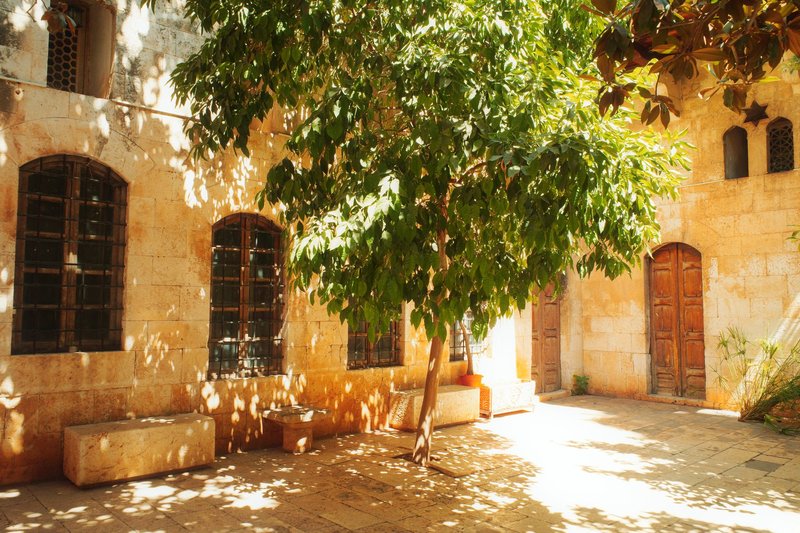
Head to the town of Gharyan in the Nafusa Mountains, about 80 km south of Tripoli, and the architecture goes underground. The traditional Gharyan house is a pit dwelling: a large circular or rectangular courtyard dug straight down into the soft rock, maybe seven or eight meters deep, with rooms tunneled horizontally off the sides at the bottom.
From the surface you’d walk right past one. There’s no building to see, just an opening in the ground and a sloped tunnel that leads down into the courtyard. Once you’re at the bottom, you’re standing in an open-air pit with doorways ringing the walls, each leading to a storeroom, a kitchen, a sleeping room, or a stable. Some homes connect to their neighbors through underground passages.
The logic is climate. The Nafusa region bakes in summer and gets genuinely cold in winter, and the surrounding plateau offers no shade and little building stone. Digging solves both problems at once. A few meters down, the rock holds a steady temperature year-round, so the rooms stay cool through the July heat and hold warmth through the winter nights. The design also hid households from raiders and the worst of the desert wind. This is the same principle behind the better-known pit homes at Matmata across the border in Tunisia, the ones that stood in for Luke Skywalker’s boyhood home.
Some of these Gharyan houses are centuries old. A number were still lived in within living memory, and a few have been kept up or reopened, one of them run as a small guesthouse where you can spend a night below ground. The features you notice down there are specific: soot-blackened kitchen alcoves, grain silos cut into the courtyard floor, and hand-carved niches for oil lamps. The rooms are cut, not built, so the walls curve the way a knife left them.
The Jewish Cave Villages of the Nafusa Mountains {#nafusa}
The Nafusa Mountains hold a chapter most people have never heard. For centuries, Jewish communities lived here alongside their Berber neighbors, and many of them lived the same way: in cave dwellings carved into the hillsides and the soft mountain rock.
Villages like Tigrinna, Beni Abbes, and the area around Gharyan had underground synagogues, cave homes, and workshops. Jewish families in these mountains worked as silversmiths, dyers, and traders, and the community’s roots ran deep, with some traditions claiming a presence stretching back to antiquity. The account preserved by Aish describes a network of these mountain settlements where daily life, worship, and craft all happened inside the rock.
The population thinned through the 20th century. Waves of emigration, the pressures of the 1940s, and finally the mass departure of Libyan Jews after 1948 and again in the 1960s emptied the villages. By the time Libya’s remaining Jewish community left entirely, the cave homes were abandoned. What’s left is architecture without its people: carved rooms, the outlines of a synagogue, the physical shell of a community that no longer exists in the country. It’s the human counterpoint to Haua Fteah. One cave records the beginning of a people on this coast; these caves record the end of one.
Berber Underground Homes and How They Work {#berber-homes}
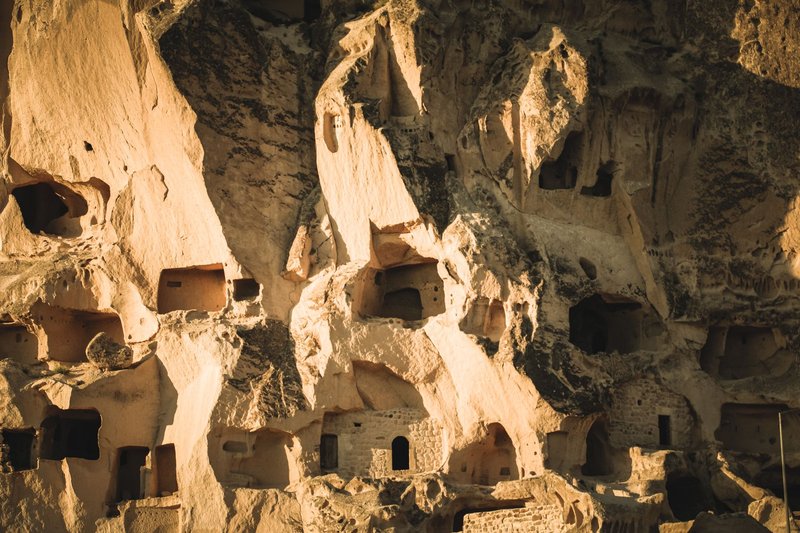
Step back from any single site and there’s a shared engineering tradition across the Nafusa range, driven by the same constraints the Berber (Amazigh) inhabitants faced for generations. It’s worth understanding the two basic types, because “cave house” gets used loosely.
Pit dwellings are the Gharyan model: dug down from flat ground into a sunken courtyard, rooms radiating from the bottom. You need soft, workable rock that’s also stable enough not to collapse, which the region’s marl and limestone provide.
Cliff or slope dwellings are cut sideways into a hillside instead of down from the top. These are common where the terrain already gives you a rock face to work with, and they’re what you’ll find in many of the mountain villages, including the Jewish ones. The entrances face outward, so they get more light than a pit home.
Both types trade construction labor for thermal payoff. There’s no need to quarry stone, haul timber, or fire bricks in a landscape short on all three. You dig once, and the rock does the insulating forever. The Ancient Origins feature on Libyan troglodyte homes points out that these dwellings stayed practical enough that people chose them over surface housing well into the modern era, not out of poverty but because they simply worked better in the climate.
The specific detail that sells it: on a 40-degree Celsius afternoon, the interior of one of these homes can sit 15 to 20 degrees cooler, no electricity involved. Anyone who’s walked down into one in summer describes the same thing, the drop in temperature you feel on the tunnel ramp before you even reach the courtyard.
Can You Actually Visit? {#visiting}
Straight answer: mostly not right now, and you should check current advisories before planning anything. Libya has been unstable since 2011, and most governments, including the US State Department, advise against travel there. That’s the honest constraint on all of this.
If and when the situation allows, here’s the geography. Gharyan is the accessible one, close to Tripoli and the site of the restored troglodyte houses that have hosted visitors in calmer years. The Nafusa Mountains villages are spread across the same range and reachable by road from the capital. Haua Fteah sits far to the east on the Cyrenaican coast near the ruins of Cyrene and Apollonia, a different region entirely and a longer haul.
For now, the caves of Libya are mostly a story you read rather than a place you go. But it’s a story worth knowing: the same country, the same soft mountain rock, holding both the oldest chapters of our species and the quiet last rooms of a community that carved its home out of the earth and then walked away.