Table of Contents
- What “Endemic” Actually Means
- Why Spain Has So Many
- The Canary Islands: Spain’s Endemism Capital
- The Balearic Islands
- Sierra Nevada
- The Pyrenees
- Iberian Mainland Standouts
- What’s Actually Threatening These Plants
- Seeing Them for Yourself
Spain’s flora includes more than 1,400 vascular plant species that grow wild nowhere else on the planet — not in neighboring Portugal, not across the Mediterranean, nowhere. That’s roughly 21% of the country’s entire plant catalog, a proportion most European nations can’t touch. The reason comes down to geographic isolation stacked on geographic isolation: volcanic islands 1,000 kilometers from the mainland, mountain ranges that trap species on cold summits, and a peninsula wedged between two continents with its own microclimates in every valley.
What “Endemic” Actually Means
A species is endemic to a place when its entire natural range is confined to that one area — it didn’t just show up there, it can’t be found growing wild anywhere else on Earth. That’s different from “native,” which just means a plant belongs somewhere without being exclusive to it. Rosemary is native to Spain and half the Mediterranean. The Canary Island dragon tree is endemic — step outside its home archipelago and you won’t find a single wild specimen.
Endemism happens when a population gets cut off from the rest of its species long enough to evolve its own identity, or when a plant is so finely tuned to one specific set of conditions — a particular soil chemistry, altitude, or rainfall pattern — that it simply can’t survive anywhere else. Islands and mountain peaks are endemism factories for exactly this reason: they isolate populations physically, and extreme environments do the rest.
Why Spain Has So Many
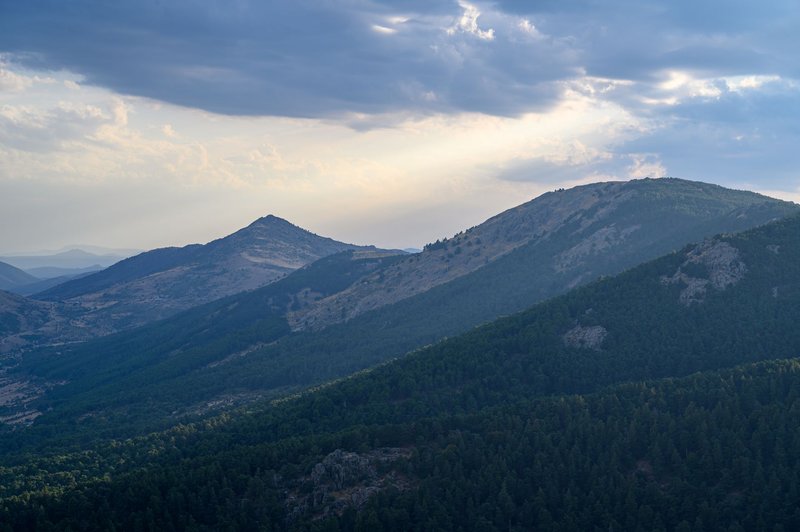
Spain’s geography reads like a checklist for generating endemic species. The Canary Islands sit in the Atlantic, volcanic and ancient, evolving in isolation for millions of years. The Pyrenees and Sierra Nevada create sky islands — cold, high-altitude habitats surrounded by warmer lowlands that plants can’t cross. The Balearics split off and rejoined the mainland repeatedly as sea levels shifted over geological time, scrambling and re-isolating populations.
Add a Mediterranean climate with hot, dry summers and wet winters, plus the peninsula’s role as a glacial refuge — a place where plants retreated and survived during Ice Age freezes that wiped out populations further north — and you get a layered, uneven landscape where isolated pockets of vegetation had millions of years to become their own thing. According to research published by the International Union for Conservation of Nature (IUCN), Mediterranean Basin hotspots like Spain rank among the most botanically diverse regions on the planet relative to their size. This pattern of geographic and climatic isolation explains why Spain accounts for such an outsized share of endemic plants of Europe.
The Canary Islands: Spain’s Endemism Capital
The Canaries carry the heaviest endemism load of any Spanish territory — around 25.9% of the archipelago’s flora exists nowhere else, a rate driven by volcanic isolation and a wild range of microclimates packed onto a handful of islands.
Canary Island dragon tree (Dracaena draco) is the icon. It doesn’t grow like a normal tree — no annual rings, a trunk that branches into an umbrella-shaped crown after its first flowering, and sap that oxidizes to a deep red once prized as “dragon’s blood” for varnish and folk medicine. Wild populations are now scattered and small enough that the IUCN lists the species as Vulnerable.
Canary Island date palm (Phoenix canariensis) looks similar to the date palms planted across Mediterranean cities worldwide, but the wild version is genuinely endemic to the archipelago, with a thicker trunk and denser crown than its cultivated cousin. You’ll find remnant wild groves in La Orotava valley on Tenerife.
Blue Tenerife bugloss (Echium wildpretii), better known locally as tajinaste rojo despite the name mix-up with a red variant, sends up a flower spike over two meters tall from a rosette of silvery leaves — a plant so specific to the high-altitude Teide volcanic zone that it grows almost nowhere else on the island, let alone the world.
Canary Island foxglove (Isoplexis canariensis) produces dense spikes of orange-red tubular flowers in laurel forest understory, a habitat type — laurisilva, a relic of forests that once covered much of southern Europe before the Ice Age — that itself survives almost nowhere else.
Best time to see the high-altitude bloomers: late spring through early summer, when Teide National Park’s volcanic slopes turn genuinely colorful for a few weeks.
The Balearic Islands
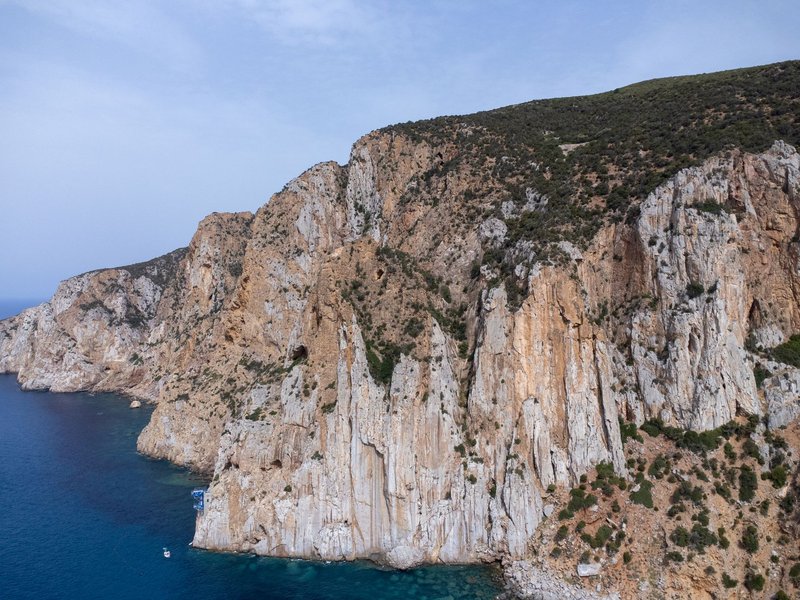
Smaller in land area than the Canaries, the Balearics still punch above their weight in endemic flora, largely thanks to their cliff-and-scrubland habitats and a history of repeated isolation from the mainland.
Balearic St John’s wort (Hypericum balearicum) grows as a low, aromatic shrub with resin-dotted leaves and yellow flowers, confined to rocky terrain across Mallorca and Menorca.
Ramond’s featherbells relative, Naufraga balearica, is one of the rarest plants in Europe — a tiny coastal herb known from a single clifftop location on Mallorca’s Formentor peninsula, discovered as recently as 1968. There’s essentially one wild population on Earth.
Balearic cyclamen (Cyclamen balearicum), paler and smaller-flowered than mainland cyclamen species, carpets shaded limestone woodland in late winter and early spring.
Sierra Nevada
Southern Spain’s Sierra Nevada range functions as a sky island — its highest peaks, above 3,000 meters, host alpine plant communities that have nowhere to migrate to as the climate shifts, since the nearest comparable cold habitat is hundreds of kilometers away.
Sierra Nevada wormwood (Artemisia granatensis), known locally as manzanilla de la Sierra Nevada or “royal chamomile,” grows only on the range’s highest scree slopes above roughly 3,000 meters. Traditional use as a folk remedy drove overharvesting for decades, and today it’s one of Spain’s most strictly protected plants, with wild collection banned.
Sierra Nevada saxifrage (Saxifraga nevadensis) wedges itself into rock crevices at similar altitudes, forming dense cushions that flower for a brief window once the snowpack clears — typically June into early July.
Nevada violet (Viola crassiuscula) grows as a dwarfed alpine cushion plant, another species restricted to the range’s summit zone and nowhere else in the Iberian mountain system.
The Pyrenees
Spain’s northern border range holds its own set of high-altitude specialists, isolated by both elevation and the range’s east-west orientation, which creates sharply different conditions on north- and south-facing slopes. The same geographic isolation shapes the endemic plants of Andorra, which occupies the same mountain range.
Borderea chouardii might be the single rarest plant covered here — a climbing vine relative discovered in 1981, known from only one or two limestone cliff populations in the Pyrenees’ Huesca province. Fewer than a couple thousand individuals are estimated to exist in the wild, and it’s classified as Critically Endangered by the IUCN.
Pyrenean saxifrage (Saxifraga longifolia) produces a spectacular single flower spike covered in hundreds of small white blooms — then the entire rosette dies after flowering, a strategy called monocarpy. It grows wedged into vertical limestone cliffs, often visible from hiking trails without ever being reachable.
Pyrenean buttercup (Ranunculus pyrenaeus) carpets high alpine meadows with simple white flowers each summer, tolerating the short growing season between snowmelt and the next frost.
Iberian Mainland Standouts
Away from the islands and high peaks, the Iberian Peninsula’s interior and coastal ranges hold their own endemic pockets, usually tied to unusual geology.
Rothmaler’s columbine (Aquilegia cazorlensis) is restricted to the Cazorla mountain range in Jaén province, growing in shaded limestone crevices and flowering with distinctive nodding, spurred blue-violet blooms in late spring.
Gaditan zamarrilla (Teucrium fruticans subspecies variants) and several other Teucrium species cluster around the limestone ranges of Cádiz and Málaga, adapted to the region’s specific mix of coastal humidity and mineral-poor soil.
Boissier’s toadflax (Linaria clementei), endemic to the Sierra de Grazalema in Cádiz province, grows from rock crevices with pale lilac snapdragon-like flowers, restricted to a range so localized that its entire global population fits within one protected natural park.
What’s Actually Threatening These Plants
Habitat loss from development and agriculture tops the list, especially in coastal and lowland areas where endemic pockets compete directly with tourism infrastructure and farmland expansion. Climate change compounds it for the alpine species specifically — plants like the Sierra Nevada wormwood or the Pyrenean saxifrage are already living at the coldest, highest ground available to them. As temperatures climb, there’s no higher ground left to retreat to.
Invasive species add a third pressure. Introduced goats, rabbits, and grazing livestock on islands with no evolutionary history of large herbivores can strip a rare endemic population in a single grazing season, since these plants never evolved defenses against sustained browsing. Invasive plant species compete directly for the same narrow niches, sometimes out-competing slower-growing natives for light and root space.
Spain’s response has been a network of protected areas and species-specific conservation plans — Sierra Nevada and Teide both carry national park status specifically because of their plant communities, not just their scenery. Seed banks, including collaborations with international conservation seed vaults, now hold backup material for the most critically endangered species like Borderea chouardii, a hedge against losing a species to a single landslide or bad grazing season.
Seeing Them for Yourself
If you want a realistic shot at seeing several endemic species in one trip, Teide National Park on Tenerife delivers the widest range in the smallest area — dragon trees, tajinaste flower spikes, and Canary pine forest within a single day’s drive. Late May through June catches the high-altitude bloomers at their peak without the summer heat that shuts many of them down.
Sierra Nevada National Park works on a similar timeline but a few weeks later, since snowmelt at 3,000 meters lags behind the Canaries’ volcanic slopes — expect the alpine specialists to be flowering from mid-June into July. For the Pyrenees, target the Ordesa and Monte Perdido area in July, when the high cliffs are accessible and Saxifraga longifolia‘s flower spikes are at full height.
None of these plants need a guide to spot if you know roughly where to look and what season you’re in — but going with a local botanical group, several of which run seasonal outings through the national park visitor centers, dramatically improves your odds of finding the genuinely rare ones like Borderea chouardii, which are easy to walk right past on a cliff face you’re not specifically scanning.