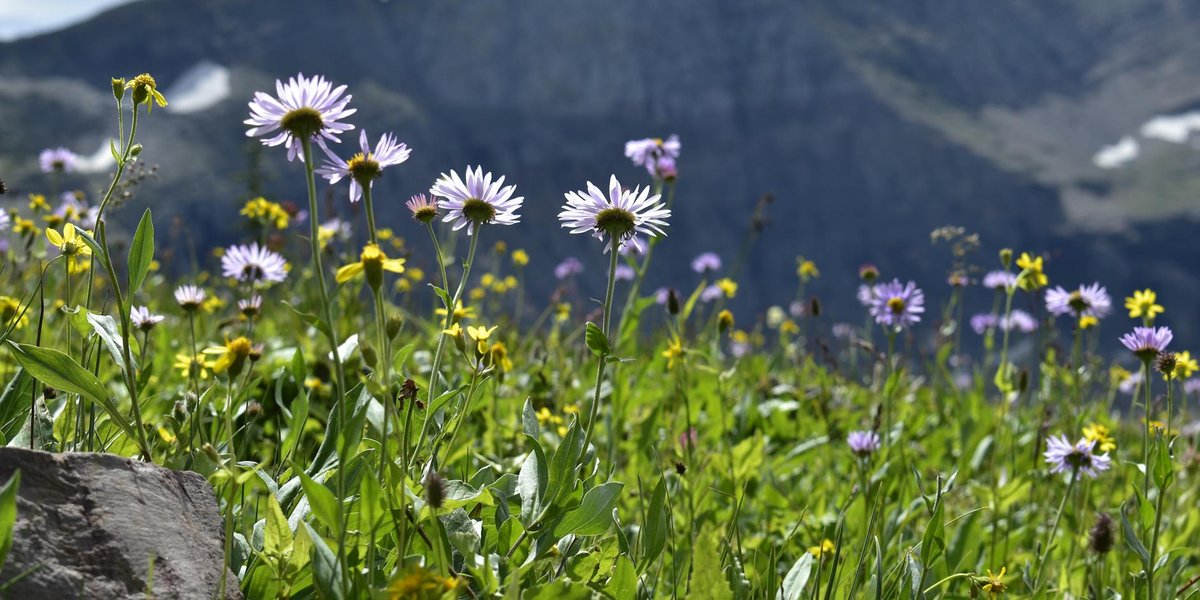
Most lists of Andorra’s “endemic plants” are wrong. They hand you edelweiss, the Andorran violet, a rhododendron or two, and call it a day. None of those are endemic to Andorra. They’re alpine or Pyrenean species that happen to grow there alongside half the high mountains of Europe.
Endemic means found nowhere else on Earth. By that strict definition, Andorra — a country smaller than New York City — has exactly three endemic vascular plants. Three. And they’re not the showy ones you’d expect.
This guide separates the genuine Andorran endemics from the Pyrenean specialties and the famous alpine flowers everyone confuses them with. Because the difference actually matters, and almost nobody gets it right.
Table of Contents
- The TLDR: How Many Endemics Does Andorra Actually Have?
- Quick-Reference Table
- The Three True Endemics
- Erigeron cabelloi: The Andorran Fleabane
- The Two Endemic Hawkweeds
- Pyrenean Endemics: Close, But Not Andorra-Only
- The Grandalla: Andorra’s National Flower
- Where to See Andorra’s Wild Flora
- Why “Endemic” Gets Misused Here
The TLDR: How Many Endemics Does Andorra Actually Have?
Three. Erigeron cabelloi (a fleabane) and two hawkweeds, Hieracium rosselloanum and Hieracium pessonianum, are the only vascular plants currently recognized as growing in Andorra and nowhere else. Everything else you’ve seen on a “plants unique to Andorra” list is either a Pyrenean endemic (found across the mountain range, shared with France and Spain) or a widespread alpine species like edelweiss.
The national flower, the Grandalla (Narcissus poeticus), is a cultural symbol — but it grows all over Europe. It’s not endemic either.
Quick-Reference Table
| Species | Type | Common name | Habitat | Endemic to |
|---|---|---|---|---|
| Erigeron cabelloi | True endemic | Fleabane | High-altitude rocky slopes | Andorra only |
| Hieracium rosselloanum | True endemic | Hawkweed | Mountain rock & grassland | Andorra only |
| Hieracium pessonianum | True endemic | Hawkweed | Mountain rock & grassland | Andorra only |
| Leontopodium alpinum (edelweiss) | Alpine | Edelweiss | Alpine rock ledges | Alps & Pyrenees |
| Narcissus poeticus (Grandalla) | Widespread | Poet’s daffodil | Mountain meadows | Across Europe |
The Three True Endemics
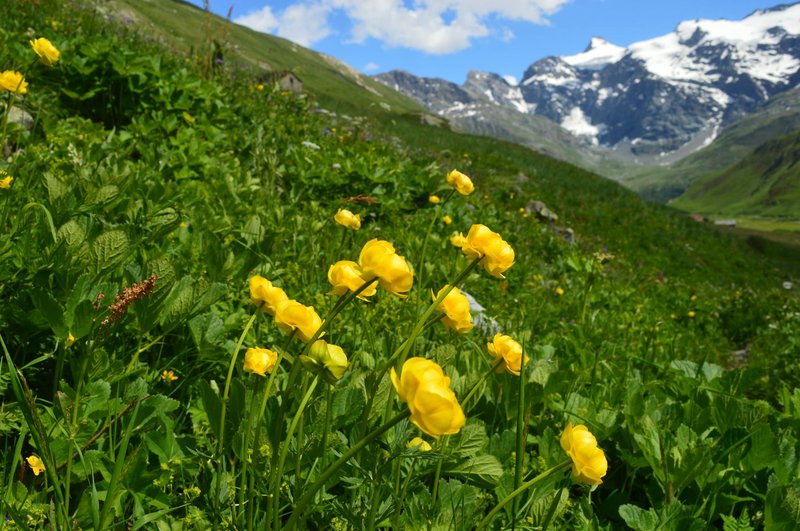
Here’s the part the database pages get right and the travel blogs get wrong. Andorra sits inside the Pyrenees terrestrial ecoregion, which botanists rank among Europe’s most important centers of endemism. That endemism is concentrated in the high, isolated rock habitats — exactly the kind of terrain that lets a population split off and become its own thing over thousands of years.
But ecoregion-level endemism and country-level endemism are different scales. The Pyrenees have dozens of endemic plants. Andorra, as a political slice of those mountains, has only the handful that have so far been found within its borders and nowhere else. The checklists that botanists maintain for Andorra’s vascular flora — the kind published in regional botanical journals rather than tourism sites — land on three. If you want the plants alongside the animals, our broader field guide to the endemic species of Andorra covers the country’s full roster of native life.
What unites all three: they’re small, they’re high, and they’re easy to walk past. No tourist is photographing them for Instagram. They’re the plants that matter to a taxonomist with a hand lens, not to a hiker looking for a pretty meadow.
Erigeron cabelloi: The Andorran Fleabane
Erigeron cabelloi is a fleabane — a member of the daisy family (Asteraceae), which means the “flower” you see is actually a composite head of tiny ray and disc florets. Fleabanes are the unglamorous cousins of asters. They tend toward modest, slightly ragged-looking blooms, and E. cabelloi fits the family profile.
It clings to high-altitude rocky ground, the harsh upper slopes where most plants give up. That habitat is the whole reason it’s endemic: isolated rock populations don’t mix easily with neighbors across the next ridge, so over time they diverge into distinct species. The plant was described from Andorran material and has been documented in the additions to the country’s vascular flora checklist, which is about as authoritative a confirmation of endemism as you’ll get for a microstate this small.
If you want the technical literature, the Real Jardín Botánico’s digital library holds the Flora vascular del Principado de Andorra, the reference work cataloguing exactly these species.
The Two Endemic Hawkweeds
Hieracium rosselloanum and Hieracium pessonianum are both hawkweeds, and hawkweeds are a taxonomic minefield.
Here’s why. Hieracium is one of those genera that reproduces apomictically — it can set seed without fertilization, essentially cloning itself. The result is that tiny, stable variations get locked in and “become” their own microspecies. Botanists have described thousands of Hieracium forms across Europe, and specialists argue endlessly about which are real species and which are just local variants. The genus is notorious; even seasoned field botanists tend to hand hawkweeds off to the one specialist who actually enjoys them.
So when a checklist says Andorra has two endemic Hieracium, that’s a meaningful claim made by people who’ve done the painstaking comparison work. Both occupy mountain rock and grassland habitats. To the naked eye they’d read as generic yellow dandelion-ish flowers — which is precisely why they get overlooked, and precisely why their endemic status is a quiet point of botanical pride rather than a tourist draw. The two species names trace back to Andorran botanical surveys, documented in regional flora updates like those archived at the Biodiversity Heritage Library.
Pyrenean Endemics: Close, But Not Andorra-Only
This is where the confusion starts, because Pyrenean endemics are genuinely special — just not in the Andorra-only way.
The Pyrenees host a long list of plants found across the range and nowhere else on the planet: the Pyrenean saxifrage, various Pyrenean buttercups and ramondas, and a suite of high-altitude cushion plants adapted to the mountains’ particular climate. Many of these grow in Andorra. Some of the “Andorran violet” and Pyrenean-specialty references you’ll see on biodiversity blogs point at exactly these.
But “endemic to the Pyrenees” and “endemic to Andorra” are not the same statement. A Pyrenean endemic is shared between Andorra, the French Pyrenees, and the Spanish Pyrenees. It can’t be unique to a country that occupies only a small central wedge of the range. Many of these range-wide plants count among the endemic species of Spain, since the Spanish flank of the Pyrenees carries the bulk of the same populations. Calling these “endemic plants of Andorra” is the single most common error in the existing content — and it’s an understandable one, because at the ecoregion scale they really are endemics. The scale is just wrong.
The Grandalla: Andorra’s National Flower
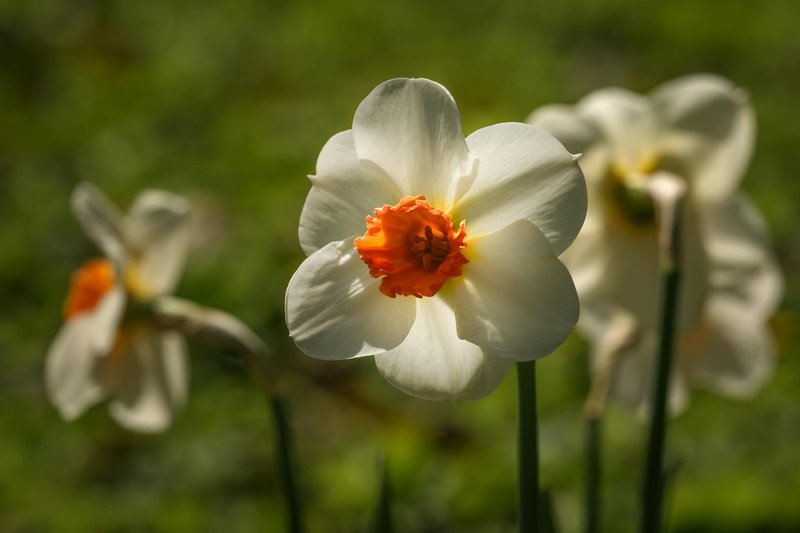
The Grandalla is the plant Andorrans actually care about, and it deserves its own section precisely because it is not endemic.
Botanically it’s Narcissus poeticus, the poet’s daffodil: six white petals around a small yellow-and-red crown, with a sharp, persistent fragrance. It blooms in the mountain meadows roughly April through June, and it’s one of the most widely dispersed wild flowers in the country. According to the World Sensorium / Conservancy project, which catalogues national flowers, the Grandalla earned its status through sheer abundance across Andorran territory and its cultural weight.
That cultural weight runs deep. The flower appears in the Andorran anthem and on currency, and it carries the poetic-mythological baggage of its Latin name — the Narcissus of Greek legend. There’s even a pharmacological footnote: Narcissus poeticus contains galantamine, an alkaloid used in medications to treat the symptoms of Alzheimer’s disease, as documented in research indexed on PubMed.
But the poet’s daffodil grows wild from Spain to the Balkans. It’s the national flower of Andorra; it is in no sense unique to it. Calling it an endemic — which some lists do — is a category error dressed up as patriotism.
Where to See Andorra’s Wild Flora
You won’t easily find the three true endemics without a botanist and a target site — they’re small and they’re high. But the habitats that produce Andorra’s endemism are open to anyone willing to climb.
Comapedrosa Valleys Nature Park. This park surrounds Coma Pedrosa, Andorra’s highest peak at 2,942 meters. The upper rocky slopes and high meadows here are exactly the isolated alpine terrain where fleabanes and hawkweeds carve out their niches. The grass communities up top — Festuca eskia and Nardus stricta meadows — are textbook Pyrenean alpine zone.
Madriu-Perafita-Claror Valley. Andorra’s UNESCO World Heritage site and its best single window into the country’s vegetation. The valley stacks three zones by altitude: a montane bottom (1,000–1,600 m) of Scots pine, birch, ash, and aspen; a subalpine belt of mountain pine (Pinus mugo) and silver fir (Abies alba) laced with alpenrose scrub; and the sparse alpine zone above. Its meadows hold both the poet’s daffodil and the wild daffodil, and the valley’s managers have mapped 38 distinct habitat types within it.
This is also where you’ll meet the famous impostors — edelweiss (Leontopodium alpinum) on the rock ledges, rhododendrons (alpenrose) flushing the slopes in early summer, and the wild orchids of the lower meadows. Beautiful, worth the hike, and not endemic to Andorra in the slightest.
Why “Endemic” Gets Misused Here
The pattern is consistent across the web: a writer searches “endemic plants of Andorra,” finds the genuinely striking alpine and Pyrenean flora, and assumes “grows in these mountains” means “found only here.” The edelweiss is dramatic. The Grandalla is the national symbol. They make a better photo and a better story than two yellow hawkweeds and a fleabane.
But endemism is a precise word, and precision is the whole point. Andorra’s real contribution to global plant diversity isn’t the edelweiss it shares with the Alps. It’s Erigeron cabelloi and its two hawkweed companions — three modest plants that exist in this one small wedge of the Pyrenees and absolutely nowhere else on Earth.
Next time you see a list promising the “unique plants of Andorra” topped with edelweiss, you’ll know it’s borrowing glamour from species that belong to a whole mountain range. The truly unique ones are quieter, harder to find, and far more interesting for it.
Sources
- Animals and Plants Unique to Andorra — In the Treasures
- Flora vascular del Principado de Andorra — Real Jardín Botánico (CSIC)
- Flora vascular del Principado de Andorra — Biodiversity Heritage Library
- Andorra — World Sensorium / Conservancy
- Plant life — Vall del Madriu-Perafita-Claror
- Madriu-Perafita-Claror Valley — UNESCO World Heritage Centre