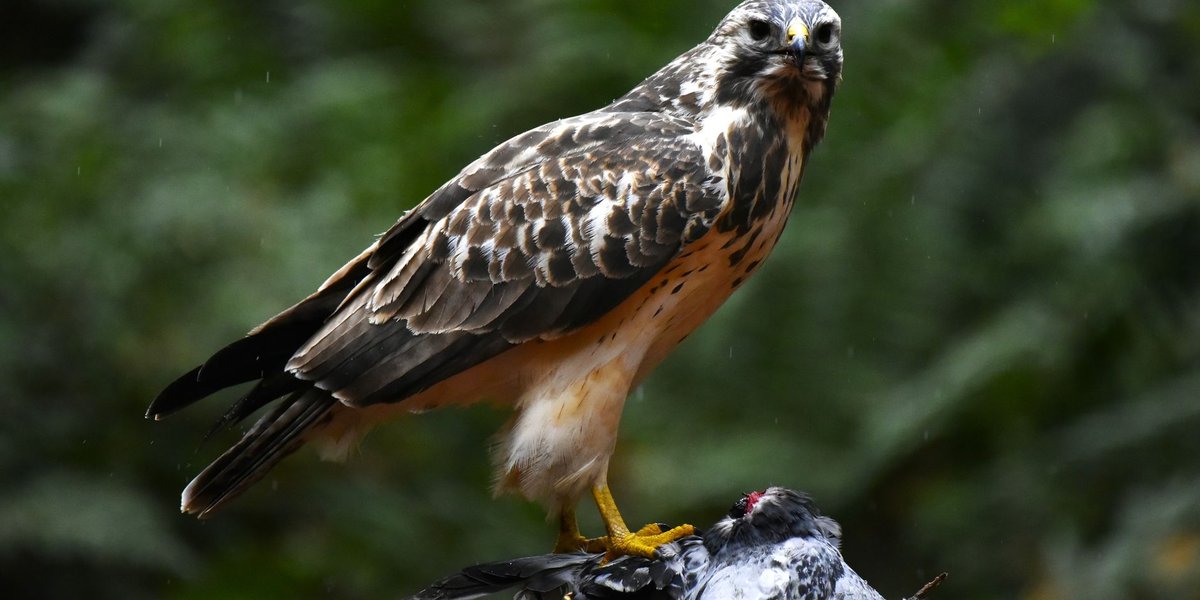
A red-tailed hawk doesn’t look like it’s working when it circles a highway median. Neither does a peregrine falcon perched on a bridge cable, or a turkey vulture riding a thermal with its wings in a shallow V. But every one of them is built around the same four-part toolkit: a hooked beak for tearing flesh, talons strong enough to kill on contact, eyesight sharp enough to spot a vole from three hundred feet up, and a diet that’s exclusively meat. That combination is what makes a bird a raptor — not size, not habitat, not how fierce it looks on a nature documentary.
Roughly 557 species worldwide fit the definition, and they split into groups that hunt in genuinely different ways: some outrun their prey, some ambush it, some scavenge it after something else does the killing. This guide walks through the major categories, gives you a way to tell them apart when one’s just a shape against the sky, and covers why more than half of them are losing ground.
Table of Contents
- What Actually Makes a Bird a Raptor
- Diurnal vs. Nocturnal: The Day Shift and the Night Shift
- Eagles
- Hawks
- Falcons
- Owls
- Vultures
- Kites and Harriers
- Osprey
- How to Identify a Raptor in Flight
- Raptors Around the World: A Quick Regional Note
- Conservation: Why Half of Them Are in Trouble
- Wrapping Up
What Actually Makes a Bird a Raptor
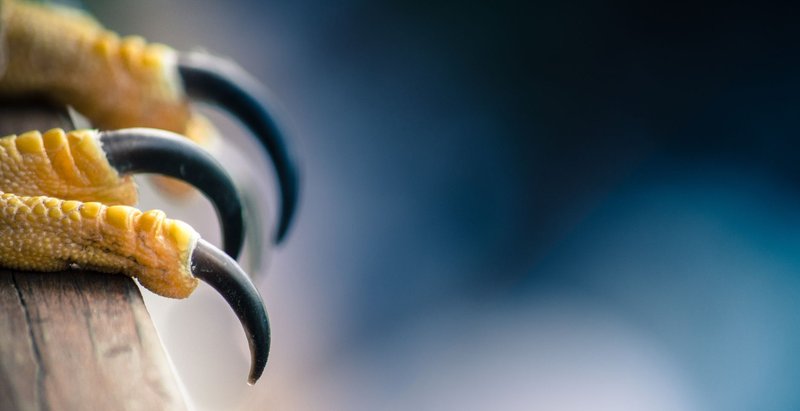
“Raptor” comes from the Latin rapere — to seize — and that’s the giveaway. The talons do the killing, not the beak. A red-tailed hawk’s grip strength has been measured at roughly 200 pounds per square inch, enough to crush the spine of a rabbit on impact. The hooked beak comes in after, for tearing the carcass apart, which is why it’s shaped so differently from a songbird’s straight, seed-cracking bill.
Add binocular, forward-facing eyes — most raptors have vision several times sharper than a human’s, built for spotting movement from altitude — and you’ve got the whole kit. Everything else, from wingspan to hunting style, is a variation on that base design, shaped by what each species chases and how.
One thing that trips people up: not every bird that eats meat counts. Herons spear fish but don’t have talons built for gripping prey. Shrikes are songbirds that impale insects on thorns — brutal, but not raptors in the taxonomic sense. The talon-and-hook combination is the line.
Diurnal vs. Nocturnal: The Day Shift and the Night Shift
Owls work the night shift; nearly everything else — eagles, hawks, falcons, vultures — works days. That split isn’t incidental. Owls have asymmetrically placed ears (one set slightly higher than the other on the skull), which lets them triangulate a mouse rustling under snow using sound alone, no visual contact required. Their flight feathers have a comb-like serrated leading edge that breaks up turbulence and makes their wingbeats essentially silent — prey doesn’t hear them coming.
It’s not an absolute rule. Short-eared owls hunt in broad daylight over open grassland, and Swainson’s hawks will sometimes feed at dusk when insects are swarming. But as a rule of thumb, if you’re seeing a raptor at noon, it’s not an owl; if you’re hearing one at 2 a.m., it almost certainly is.
Eagles
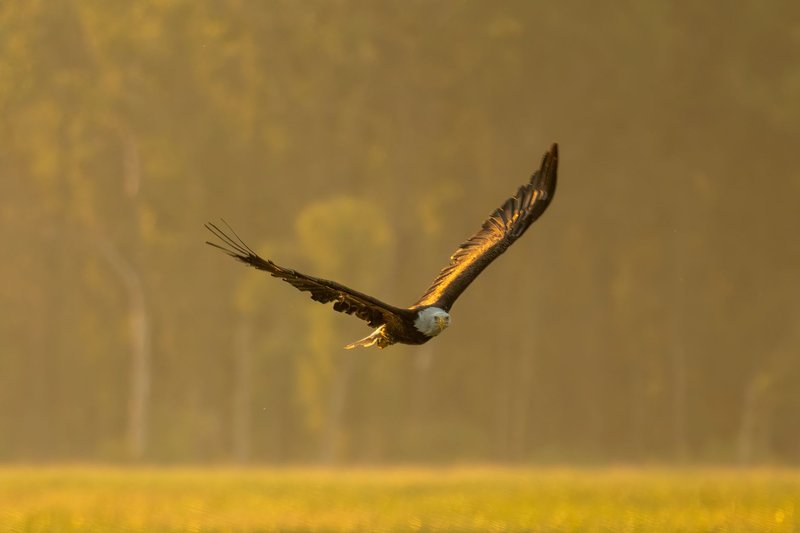
Eagles are the raptors most people can name on sight, and the group breaks into two rough builds: “true eagles” like the golden eagle, built for open country and powerful enough to take down small deer fawns, and fish-and-carrion eagles like the bald eagle, which spends as much time stealing fish from ospreys as catching its own.
A bald eagle’s nest — called an eyrie — can weigh over a ton after years of reuse and additions, the largest tree nest of any North American bird. Golden eagles, meanwhile, are clocked diving at over 150 mph and have been documented taking prey as large as young pronghorn. Neither species is picky about carrion when the hunting is bad, which is part of why the “majestic” reputation is a little inflated — eagles are opportunists first.
Hawks
Broad wings, rounded fingered tips, a build for soaring rather than sprinting — that’s the hawk template, though it splits into two hunting styles worth knowing. Buteos (the red-tailed hawk is the classic example) circle high on thermals and stoop down on prey from above. Accipiters — Cooper’s hawks, sharp-shinned hawks — are built the opposite way: shorter, rounder wings and a long tail for slaloming through forest at speed, ambushing songbirds mid-flight rather than diving from altitude.
The red-tailed hawk is the one doing highway patrol from a lamppost or fence post across most of North America; its rasping scream is the sound movies dub over every eagle shot, because it reads as more dramatic than an actual eagle’s chirp.
Falcons
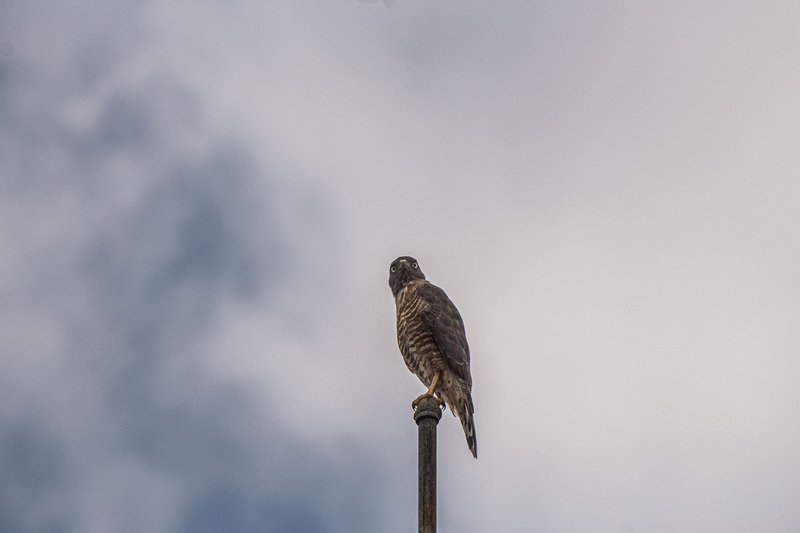
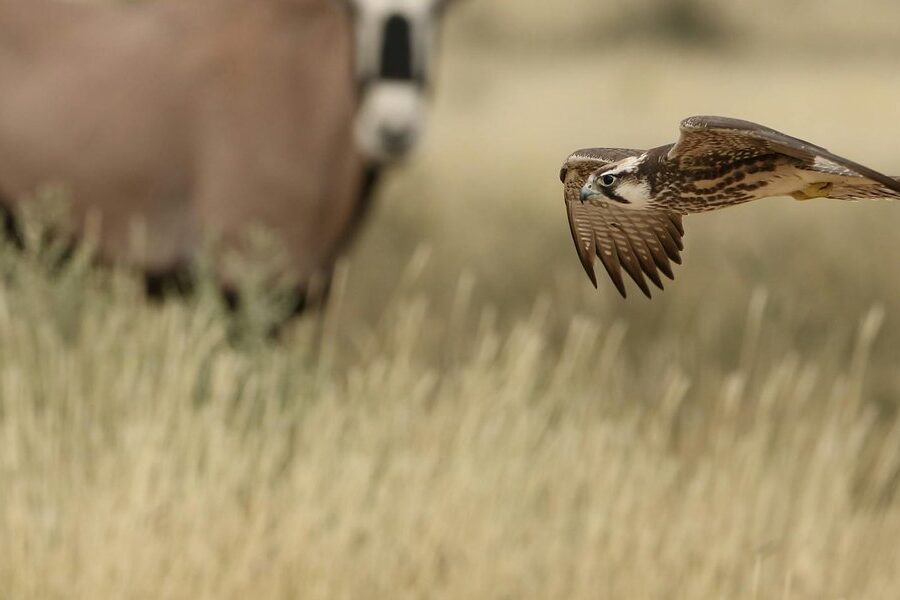
Falcons don’t soar much — they’re built for speed, with long, pointed, swept-back wings and a narrow tail, closer in silhouette to a fighter jet than to a hawk. The peregrine falcon is the standout: in a hunting stoop, it’s been recorded exceeding 240 mph, making it not just the fastest bird but the fastest animal on the planet, full stop. It kills by impact, striking prey mid-air with a closed foot rather than grabbing and wrestling.
At the small end, the American kestrel — North America’s smallest falcon, roughly the size of a mourning dove — hunts grasshoppers and mice from wires along rural roads, hovering in place against the wind with rapid wingbeats, a technique called “kiting” that looks almost like it’s pinned to the sky.
Owls
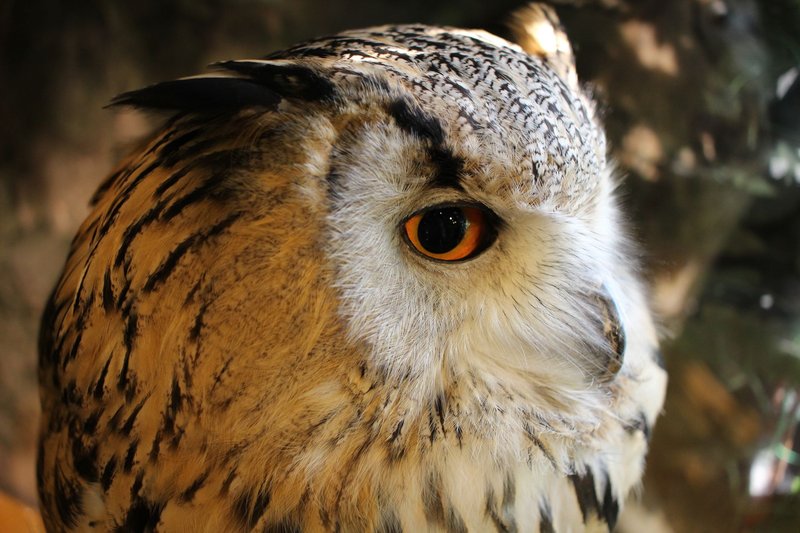
Take the raptor toolkit and add total silence and a night-vision system, and you’ve got an owl. A barn owl’s heart-shaped facial disc isn’t decorative — it funnels sound to those asymmetrical ears the same way a satellite dish funnels a signal, and studies have shown barn owls can catch prey in complete darkness using hearing alone.
Great horned owls are the generalists, powerful enough to take skunks and other raptors, including smaller owls. Snowy owls flip the nocturnal script entirely — they hunt in daylight across the Arctic tundra, where summer doesn’t offer much night to work with. Size in owls is deceptive too: most of that bulk is feathers. A great horned owl looks twice the size of the actual bird underneath.
Vultures
Vultures get the least flattering press of any raptor group, which is unfair given what they’re actually doing: removing carcasses before disease spreads. A turkey vulture’s sense of smell is unusually strong for a bird — most species rely almost entirely on sight — and it can detect the ethyl mercaptan gas released by decaying flesh from over a mile up, which is how they find carrion hidden under forest canopy that soaring alone would never reveal.
The bald head isn’t cosmetic neglect; feathers on a head that’s routinely buried in a carcass would become a bacterial liability, so evolution removed them. Vultures also lack strong talons compared to hunting raptors — their feet are built for walking and standing on a carcass, not for killing, which is a meaningful structural difference from eagles and hawks.
Kites and Harriers
Kites are the raptor world’s aerial acrobats. The swallow-tailed kite catches dragonflies mid-air and eats them on the wing without ever landing, while the Mississippi kite forages in loose flocks over open country, something almost no other raptor does socially.
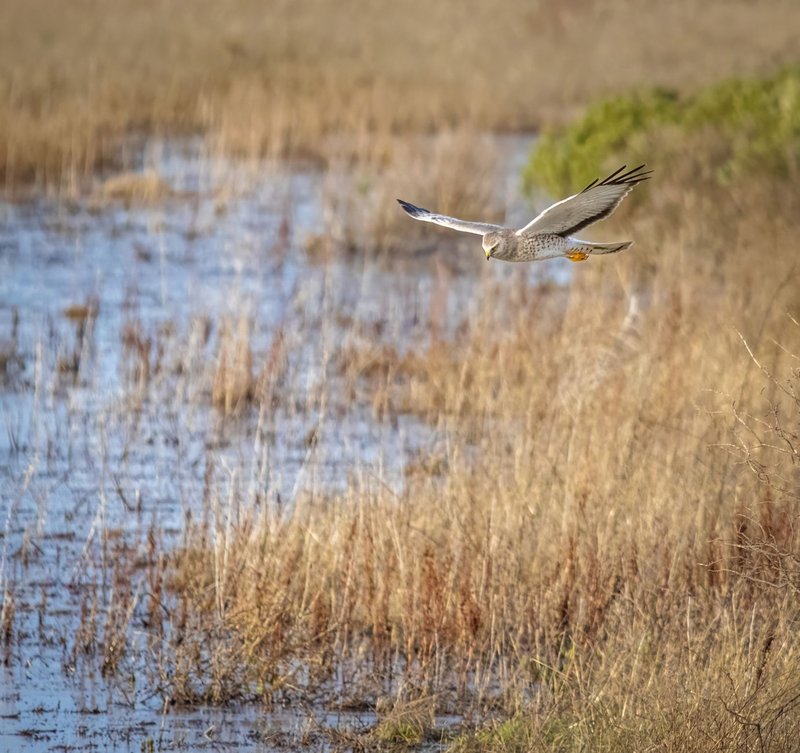
Harriers hunt differently from everything else on this list: low, slow, quartering flight a few feet over marshes and grassland, wings held in a shallow V, using an owl-like facial disc to hear rodents moving through vegetation they can’t see into. The northern harrier is the one you’ll spot gliding over a hayfield at dusk, looking more like it’s searching for something it lost than hunting.
Osprey
The osprey is a category of one — a single species, found on every continent except Antarctica, that eats almost nothing but live fish. It hovers over water, then drops feet-first in a full plunge, sometimes going fully underwater. A reversible outer toe lets it grip a fish with two toes forward and two back, and backward-facing spines on its footpads called spicules keep a slippery, twisting fish from working loose mid-flight. No hawk or eagle has that combination.
How to Identify a Raptor in Flight
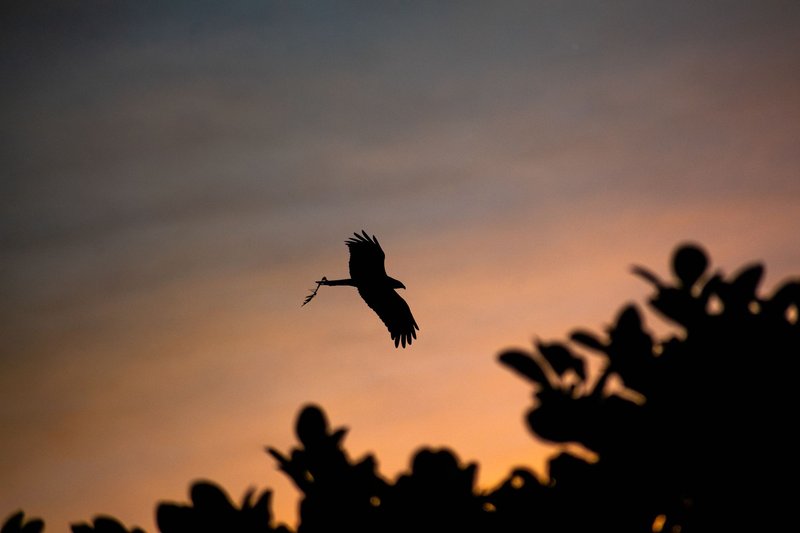
This is the part most guides skip, and it’s the most useful skill for anyone actually looking up at a shape circling overhead. Four things to check, in order of usefulness:
Wing shape. Falcons have long, pointed, swept-back wings with no visible “fingers” at the tip. Hawks, eagles, and vultures have broader wings that spread into distinct fingered feathers when soaring — the Cornell Lab of Ornithology uses this as the single fastest way to rule falcons in or out at a distance.
Flight behavior. Falcons flap rapidly and fly with purpose, rarely circling lazily. Buteos (red-tailed hawks and relatives) soar in wide circles on flat or slightly raised wings. Vultures soar with wings held in a visible V (a dihedral) and rock unsteadily, almost drunkenly, in the wind — a buteo holds a much steadier line. Harriers fly low and slow in a straight-ish quartering pattern, rarely above treetop height.
Tail shape. Buteos have short, fanned tails. Accipiters and falcons have long, narrow tails. A forked tail narrows the field to just two North American species — the swallow-tailed kite and, rarely, some frigatebirds that aren’t raptors at all.
Size and setting. An eagle over open water or a reservoir is worth a second look for bald eagle; a small, kestrel-sized falcon hovering over a roadside ditch is almost certainly a kestrel. Context does a lot of the identification work before feathers do.
None of these are foolproof alone — wind, molt, and individual variation all muddy the picture — but stacking two or three of them gets you a confident ID far more often than guessing from size alone.
Raptors Around the World: A Quick Regional Note
Species lists shift a lot by region, and most guides assume you’re in one place without saying so. North America has roughly 34 breeding raptor species, including the bald eagle, red-tailed hawk, and turkey vulture — three birds you genuinely won’t see natively in the UK or continental Europe. Britain and Europe get the common buzzard filling a similar ecological role to the red-tailed hawk, plus a conservation story worth knowing on its own: the red kite was reduced to a handful of pairs in Wales by the mid-20th century through poisoning and persecution, and a reintroduction program brought it back to thousands of breeding pairs across the UK, one of the clearer wins in European conservation.
Vultures split geographically too — Old World vultures (found across Europe, Africa, and Asia) and New World vultures (the Americas) aren’t even closely related; they evolved the scavenging lifestyle independently, which is why a turkey vulture and a griffon vulture look similar but sit in different branches of the bird family tree entirely.
Conservation: Why Half of Them Are in Trouble
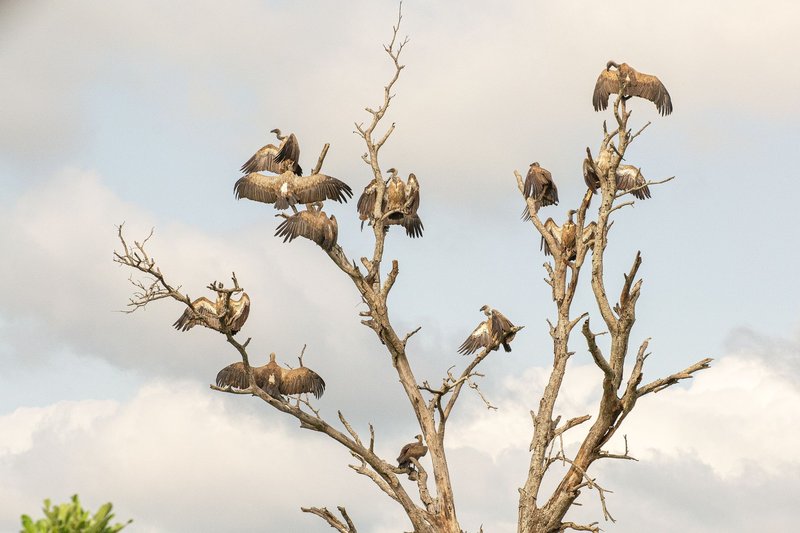
The numbers aren’t good. A global assessment covering all 557 raptor species found that 52% have declining populations and 18% are threatened with extinction outright. Vultures have it worst by a wide margin — populations across South Asia collapsed by more than 95% starting in the 1990s after the birds ingested diclofenac, a livestock anti-inflammatory drug, from cattle carcasses. It’s one of the fastest wildlife collapses ever documented in a bird group, and the ripple effects were significant: fewer vultures meant carcasses lingered longer, which fed a spike in feral dog populations and, with it, rabies risk in the affected regions.
Lead poisoning from spent ammunition in gut piles and unretrieved carcasses is a chronic, ongoing threat to eagles and vultures across North America and Europe. Habitat loss and illegal killing — shooting, poisoning bait set for other predators — round out the major pressures. Against that, there are real recovery stories: the bald eagle’s population collapse from DDT was reversed after the 1972 US ban on the pesticide, and the species was removed from the US endangered species list in 2007. The red kite’s UK recovery, mentioned above, is the same pattern — remove the specific pressure, and raptors tend to bounce back faster than slower-breeding mammals.
Wrapping Up
The four-trait definition — hooked beak, talons, sharp eyes, carnivorous diet — covers everything from a five-pound golden eagle taking a fawn to a two-ounce kestrel hovering over a ditch for grasshoppers. What separates the groups isn’t the toolkit; it’s how each one deploys it. Falcons trade soaring ability for raw speed. Owls trade daylight vision for silence and hearing. Vultures trade killing power for a nose that can find a carcass a mile downwind. Once you’re looking for wing shape and flight pattern instead of just size, most of what circles overhead stops being a mystery and starts being a species.