Table of Contents
- TLDR
- The War Years: Why 1940–1942 Have No Winners
- 1943: The Prizes Come Back, Partway
- 1944: Every Category Active Again
- 1945: Peace, Penicillin, and a First for Latin America
- 1946: Rebuilding the Institutions
- 1947: A Married Couple, Twice
- 1948: The Year Nobody Won the Peace Prize
- 1949: Closing Out the Decade
- Notable Firsts of the 1940s Nobel Prize Winners
TLDR
The 1940s produced some of the most consequential Nobel Prizes ever awarded — penicillin, nuclear fission, DDT — but the decade also has a hole in it. 1940, 1941, and 1942 have no Nobel Prize winners in any category. Zero. The Swedish Academy and the Nobel Committee simply stopped meeting as German-occupied Norway made the Peace Prize ceremony in Oslo impossible and travel across a warring continent unworkable for everyone else. Prizes trickled back starting in 1943, category by category, and the decade closed with two firsts worth knowing: Gabriela Mistral became the first Latin American writer to win the Literature prize (1945), and Hideki Yukawa became the first Japanese Nobel laureate in any field (1949). Below is every winner, year by year, with the one-line reason they won.
The War Years: Why 1940–1942 Have No Winners
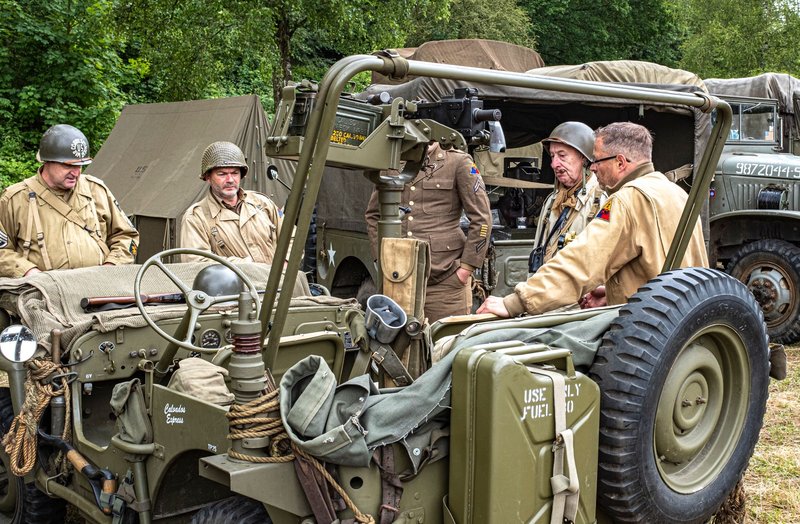
Search “Nobel Prize winners 1941” and you’ll come up empty, and that’s not a gap in the record — it’s the record. No Physics, Chemistry, Medicine, Literature, or Peace prize was handed out in 1940, 1941, or 1942. The Peace Prize had actually already gone dark the year before that, in 1939, so by the time Germany invaded Poland the Norwegian Nobel Committee had five straight years of silence ahead of it.
The mechanics were straightforward and brutal. Germany occupied Norway from April 1940 onward, and the Peace Prize ceremony has always been held in Oslo rather than Stockholm — a quirk of Alfred Nobel’s will that suddenly made the prize impossible to administer under occupation. The Stockholm-based prizes (Physics, Chemistry, Medicine, Literature) technically could have continued, but the Royal Swedish Academy of Sciences and the Karolinska Institute chose not to convene selection committees during the worst years of the war, when laureates in enemy or occupied countries couldn’t travel, university records were disrupted, and international nominations — the lifeblood of the selection process — had largely stopped arriving.
1943: The Prizes Come Back, Partway
Three of the five categories resumed in 1943. Literature and Peace stayed dark for one more year.
Physics: Otto Stern, for developing the molecular beam method and using it to discover the magnetic moment of the proton — a measurement that helped confirm the proton isn’t the simple point particle early quantum theory assumed.
Chemistry: George de Hevesy, for pioneering the use of radioactive isotopes as tracers, letting chemists follow the path of individual atoms through a living organism for the first time.
Physiology or Medicine: Henrik Dam and Edward Doisy, split for identifying vitamin K and working out its chemical structure — Dam found the substance, Doisy isolated and synthesized it.
1944: Every Category Active Again
By 1944, the full five-category slate was back, including Peace for the first time since 1938.
Physics: Isidor Isaac Rabi, for the resonance method of measuring the magnetic properties of atomic nuclei — a technique that later became the physical basis of MRI scanning.
Chemistry: Otto Hahn, for discovering nuclear fission in uranium. The award is still one of the most argued-over decisions in Nobel history, because Hahn’s longtime collaborator Lise Meitner did the physical interpretation of his experimental results — the theory that explained why the uranium had split — and never received a share of the prize.
Physiology or Medicine: Joseph Erlanger and Herbert Gasser, for showing that individual nerve fibers have distinct, differentiated functions rather than acting as one uniform signal-carrying bundle.
Literature: Johannes V. Jensen, the Danish novelist and poet, cited for the imaginative range and stylistic boldness of a body of work that includes the six-volume novel cycle The Long Journey.
Peace: The International Committee of the Red Cross, for its wartime work tracing prisoners of war, inspecting camps, and running relief operations across a continent that had, for four years, given it almost nothing to work with but obstruction.
1945: Peace, Penicillin, and a First for Latin America
The war in Europe ended in May, the war in the Pacific in August, and the 1945 prizes reflect a world already looking past the fighting.
Physics: Wolfgang Pauli, for the exclusion principle — the rule that no two electrons in an atom can occupy the same quantum state, which underpins the entire structure of the periodic table.
Chemistry: Artturi Ilmari Virtanen, for the AIV method of preserving animal fodder using acid, a Finnish wartime innovation that kept livestock fed when imported feed had dried up.
Physiology or Medicine: Alexander Fleming, Ernst Boris Chain, and Howard Florey, for the discovery of penicillin and, just as important, for proving it could actually cure infections in humans. Fleming found the mold in 1928; Chain and Florey spent the war years turning it into a mass-producible drug, which is why it took until 1945 for the prize to catch up with the discovery.
Literature: Gabriela Mistral, the Chilean poet, cited for lyric poetry that turned her into a symbol of Latin American cultural identity across the region — the first time the Literature prize went to a writer from Latin America.
Peace: Cordell Hull, the U.S. Secretary of State, recognized largely for his role laying the groundwork for the United Nations, which would hold its first session in London that same year.
1946: Rebuilding the Institutions
Physics: Percy Bridgman, for inventing equipment that could generate extremely high pressures and for the discoveries about matter that came out of using it — work that opened up an entire subfield of experimental physics.
Chemistry: Split three ways. James B. Sumner for showing enzymes could be crystallized, a technique many chemists had assumed was impossible; John Northrop and Wendell Meredith Stanley for extending that method to prepare pure enzyme and virus proteins.
Physiology or Medicine: Hermann Joseph Muller, for demonstrating that X-ray exposure causes genetic mutations — a finding with obvious and unsettling implications just one year after Hiroshima and Nagasaki.
Literature: Hermann Hesse, for a body of work — including Siddhartha and Steppenwolf — that the committee praised for its humanist ideals and classical stylistic discipline.
Peace: Split between Emily Greene Balch, co-founder of the Women’s International League for Peace and Freedom, and John Mott, who spent four decades building the YMCA’s international network and chaired the International Missionary Council.
1947: A Married Couple, Twice
Physics: Edward Appleton, for discovering the ionosphere layer that bears his name — the atmospheric layer that reflects radio waves back to Earth and makes long-distance radio transmission possible.
Chemistry: Robert Robinson, for decades of research into plant alkaloids, the nitrogen-based compounds behind everything from morphine to quinine.
Physiology or Medicine: Carl and Gerty Cori, for working out the cycle by which the body converts glycogen to glucose and back — still taught in biochemistry courses as the Cori cycle. Gerty Cori became the first American woman to win a Nobel Prize in a science category. They shared the prize with Bernardo Houssay, recognized separately for identifying the pituitary gland’s role in regulating blood sugar.
Literature: André Gide, cited for writings that the committee described as confronting human problems with fearless honesty and psychological precision.
Peace: Split between the Friends Service Council (British Quakers) and the American Friends Service Committee, for relief work that, by 1947, had been running continuously through two world wars.
1948: The Year Nobody Won the Peace Prize
Every category was active in 1948 except one, and the missing one has a specific, well-documented reason.
Physics: Patrick Blackett, for developing the Wilson cloud chamber method further and using it to make discoveries in nuclear physics and cosmic ray research.
Chemistry: Arne Tiselius, for developing electrophoresis and adsorption analysis techniques that revealed blood serum proteins were a far more complex mixture than anyone had realized.
Physiology or Medicine: Paul Hermann Müller, for discovering DDT’s effectiveness as a contact poison against insects — a chemical the CDC now classifies as a probable human carcinogen and banned for agricultural use in most of the world decades after this prize, though it was credited at the time with saving millions of lives from malaria and typhus.
Literature: T.S. Eliot, honored for his pioneering contribution to modern poetry, including The Waste Land and Four Quartets.
Peace: Not awarded. The Norwegian Nobel Committee’s official reasoning was that there was “no suitable living candidate” that year — a decision inseparable from the fact that Mahatma Gandhi, who had been nominated multiple times, was assassinated in January 1948, months before the prize would have been decided.
1949: Closing Out the Decade
Physics: Hideki Yukawa, for predicting the existence of the meson — a subatomic particle that carries the force holding an atomic nucleus together — more than a decade before it was found in cosmic ray experiments. Yukawa was the first Japanese Nobel laureate in any category.
Chemistry: William Giauque, for research into how substances behave at temperatures approaching absolute zero, work that made ultra-low-temperature refrigeration techniques possible.
Physiology or Medicine: Split between Walter Rudolf Hess, for mapping how the interbrain coordinates the body’s internal organs, and António Egas Moniz, for developing the prefrontal leucotomy — the surgical procedure better known as the lobotomy. It remains one of the most criticized selections in the prize’s history; the procedure was later discredited and largely abandoned once the severity of its side effects became clear.
Literature: William Faulkner, for a body of work the committee called a “powerful and artistically unique contribution to the modern American novel.” The announcement was technically delayed — the Academy couldn’t reach a decision in 1949 and reserved the prize, then awarded it retroactively alongside the 1950 prize the following November.
Peace: Lord Boyd Orr (John Boyd Orr), the first director-general of the UN’s Food and Agriculture Organization, recognized for pushing global food policy toward the idea that hunger was a solvable problem rather than an inevitable one.
Notable Firsts of the 1940s Nobel Prize Winners
A few records set during this decade of 1940s Nobel Prize winners are still cited today:
- First Latin American Literature laureate: Gabriela Mistral, 1945 — also the first woman from Latin America to win a Nobel Prize in any category.
- First Japanese Nobel laureate in any field: Hideki Yukawa, Physics, 1949.
- First American woman to win a science Nobel: Gerty Cori, Physiology or Medicine, 1947, shared with her husband Carl Cori.
- Three consecutive blank years: 1940, 1941, and 1942 remain the only stretch since the prizes began in 1901 where not a single Nobel Prize was awarded in any category.
- A prize with no recipient at all: 1948’s Peace Prize is one of the rare years the committee declined to award it to anyone, rather than simply postponing it.
Line them up end to end and the 1940s look less like a normal decade of science and literature and more like a decade the prize committees had to fight to keep running at all — and, for three years running, didn’t.