Most “birds of Andaman and Nicobar” lists do the same thing: they fold two island chains that sit 150 kilometers apart into one combined checklist, credit the Nicobars for species that are really Andaman birds, and move on. That’s fine if you want a spreadsheet. It’s useless if you’re trying to understand what’s actually unique to the Nicobars — or if you want to know why conservationists have spent the last two years fighting over a chunk of forest most people have never heard of.
Eight bird species exist only on the Nicobar Islands and nowhere else on Earth. Not “mostly Nicobar with a few stragglers elsewhere” — nowhere else. Here’s who they are, how threatened they actually are, and what it takes to see one.
Table of Contents
- Why the Nicobars get lumped in with the Andamans
- The 8 endemic birds of the Nicobar Islands
- How hard is it to actually see these birds
- Getting there: permits, ferries, and what’s actually open
- The Great Nicobar project is the real story here
- Common questions
Why the Nicobars get lumped in with the Andamans
The Andaman and Nicobar Islands share a union territory, an administrative capital in Port Blair, and, for most travel and reference content, a single Wikipedia entry. Geographically and biologically, they’re not the same place. The Nicobars sit south of the Andamans across the 10-degree channel, closer to Sumatra than to mainland India, and their bird life reflects that: stronger Southeast Asian affinities, different forest structure, and a set of species that evolved in isolation on islands most Indians have never set foot on.
That isolation is exactly why the endemics matter. When a species exists on one small island group and nowhere else, its entire global population can be wiped out by a single bad development decision, cyclone, or invasive predator. Several of the birds below have global populations that would fit inside a large stadium.
The 8 endemic birds of the Nicobar Islands
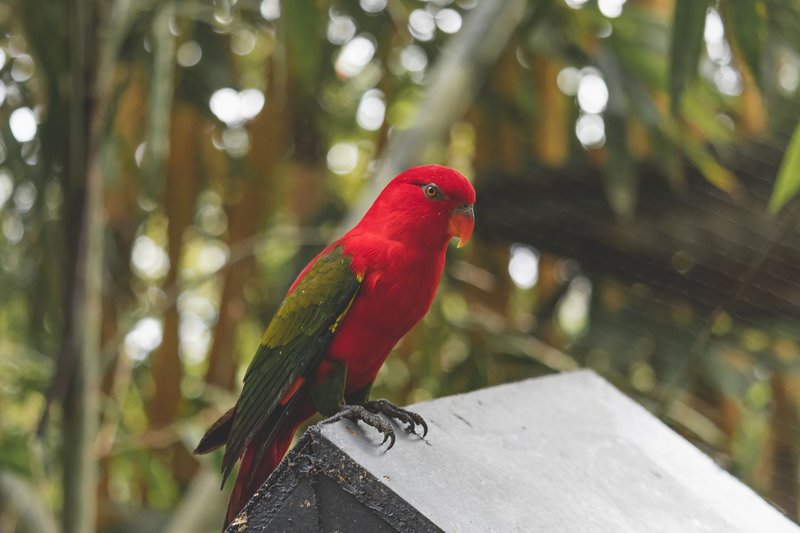
These are the species found only within the Nicobar group — not the combined Andaman-Nicobar checklist you’ll see elsewhere.
1. Nicobar megapode (Megapodius nicobariensis)
The megapode doesn’t sit on its eggs. It buries them in a mound of sand, leaf litter, and volcanic soil on the beach edge, then lets decomposition and solar heat do the incubation. Chicks hatch fully feathered and dig themselves out alone — no parent waiting above ground. It’s a chicken-sized, dark brown bird that spends most of its life scratching through leaf litter rather than flying, which makes it easy to miss and easy to step on a nest mound without realizing it.
IUCN status: Vulnerable. Population estimates run under 5,000 mature individuals, concentrated on Great Nicobar, Little Nicobar, Katchal, and a scatter of smaller islands. Its beach-edge mound sites put it directly in the path of coastal development.
2. Nicobar imperial pigeon (Ducula nicobarica)
Not to be confused with the Nicobar pigeon (Caloenas nicobarica), the metallic-green, pheasant-tailed bird that shows up on souvenir postcards across Southeast Asia — that species ranges from the Andamans to the Solomon Islands and isn’t a Nicobar endemic at all, despite the name. The bird that’s actually endemic to the Nicobars is the Nicobar imperial pigeon, a large, slate-grey fruit pigeon formerly lumped in with the green imperial pigeon until researchers split it out based on plumage and call differences. It works the canopy for figs and other fruiting trees, including agricultural clearings, which is one reason it’s held on better than some of its neighbors.
IUCN status: Near Threatened.
3. Nicobar sparrowhawk (Tachyspiza butleri)
A small, forest-canopy raptor that hunts by ambush from cover — you’re more likely to hear the alarm calls of smaller birds giving it away than to spot it perched in the open. It’s one of the least-photographed birds on this list simply because it doesn’t sit still in visible places.
IUCN status: Vulnerable, with a global range confined to a handful of Nicobar islands and a population believed to number in the low thousands.
4. Great Nicobar serpent-eagle (Spilornis klossi)
This is the one worth building a trip around, and it’s also the one in the most immediate danger. The Great Nicobar serpent-eagle is a compact forest raptor found only on Great Nicobar and neighboring Little Nicobar — nowhere else in the world, not even elsewhere in the Nicobar chain. It preys on snakes, lizards, and large insects under closed canopy, which means it needs intact primary forest, not the regrown secondary growth that follows logging.
IUCN status: Endangered — the most threatened bird on this list, and the species most directly named in current conservation fights over the Great Nicobar infrastructure project.
5. Nicobar parakeet (Psittacula caniceps)
The largest parakeet in the genus Psittacula, with a grey head, a massive red bill, and a call that’s noticeably deeper and harsher than the familiar rose-ringed parakeets found across mainland India. It’s a canopy specialist that moves in small, noisy flocks between fruiting trees, and it’s confined to Great Nicobar, Little Nicobar, and a few satellite islands.
IUCN status: Near Threatened.
6. Nicobar bulbul (Hypsipetes nicobariensis)
A plain, olive-brown bulbul that’s easy to overlook next to flashier residents — its identification comes down to range and voice more than plumage. It occupies both primary forest and disturbed edge habitat, which has helped it persist better than habitat specialists on this list, but its total range is still just the Nicobar group.
IUCN status: Near Threatened.
7. Nicobar jungle flycatcher (Cyornis nicobaricus)
A small, understory flycatcher, drab grey-brown above with a pale throat, that hunts insects from low perches in dense forest interior. It’s one of the harder identifications on this list for visiting birders precisely because it looks like a dozen other small brown flycatchers unless you already know the range rules it out everywhere else.
IUCN status: Near Threatened.
8. Nicobar scops owl (Otus alius)
Discovered by science only in 1997 — genuinely recently, as far as bird taxonomy goes — and known mainly from its distinctive call, a low, resonant hoot repeated at intervals through the night. Sight records are scarce even among researchers who’ve spent years on Great Nicobar specifically to find it. If you hear an unfamiliar owl call on a night walk near Campbell Bay, there’s a real chance it’s this one.
IUCN status: Near Threatened, though its actual population size is poorly known given how rarely it’s directly observed.
How hard is it to actually see these birds

Be honest with yourself about this before you book anything: this is not a checklist trip like the Western Ghats or Corbett. Five of the eight species — the sparrowhawk, both raptors, the flycatcher, and the scops owl — are genuinely difficult sightings even for people who live in the region, because they’re either canopy specialists that stay high and hidden, nocturnal, or simply low in absolute numbers. The megapode, imperial pigeon, parakeet, and bulbul are comparatively achievable with a guide who knows current territories, but “comparatively achievable” on Great Nicobar still means a multi-day trip with real logistics.
If your goal is ticking all eight in one visit, budget at least 5–7 days on Great Nicobar itself with a local guide, and go in expecting five or six as a realistic outcome rather than a guaranteed eight.
Getting there: permits, ferries, and what’s actually open
This is the part almost no birding content covers honestly, and it’s the difference between a trip that works and one that stalls at the ferry counter.
The Nicobar Islands are not generally open to tourism. Unlike the Andamans, where foreign and domestic tourists move freely between Port Blair, Havelock, and Neil Island, most of the Nicobar group requires special permission from the Deputy Commissioner, Nicobar District, granted only for specific bona fide reasons — research, government work, or defined categories of travel, not general tourism. Indian nationals are barred from entering the tribal reserve areas outright, and non-Indian citizens need a Restricted Area Permit under the Foreigners (Restricted Areas) Order 1968 just to be in the wider Andaman and Nicobar territory, issued for a fixed window and subject to visa status.
Campbell Bay, on Great Nicobar, is the one meaningful exception. It’s open to foreign tourists in a way the rest of the Nicobar group isn’t, which is also why nearly every credible birding report for Great Nicobar endemics originates from trips based out of Campbell Bay rather than elsewhere in the chain.
Access from Port Blair runs on government transport, not private charter. Government-operated passenger ships make the run to Great Nicobar roughly twice a week, a journey of around 16 hours, and Pawan Hans helicopter services cover some routes on a more limited schedule. There’s no walk-up private ferry option — you’re working around the government schedule, which means building slack into your itinerary rather than assuming you’ll hit a fixed date.
Practically: start the permit process weeks before you plan to travel, confirm current rules directly with the Andaman and Nicobar administration rather than trusting a tour blog’s cached version, and book a local guide on Great Nicobar in advance — the birds that matter most on this list are the ones you won’t find without someone who already knows where to look.
The Great Nicobar project is the real story here

Every species on this list except the imperial pigeon and bulbul is concentrated on or around Great Nicobar — which is also the site of a roughly ₹80,000–92,000 crore infrastructure project that’s now cleared its major legal hurdles. The plan includes an international container transshipment port, a greenfield airport, a township, and a power plant, and it calls for diverting around 130 square kilometers of forest and felling close to a million trees on an island that currently carries roughly 85% forest cover.
In February 2026, the National Green Tribunal disposed of petitions challenging the project’s environmental clearances, citing its strategic importance, effectively clearing the way for construction to proceed. Conservationists haven’t dropped the fight so much as shifted its terms: the government’s own mitigation plan for the Nicobar megapode includes creating artificial nesting enclosures to compensate for lost beach habitat, a proposal wildlife biologists have publicly criticized as an unproven substitute for the natural mound sites the species has used for millennia. The Great Nicobar serpent-eagle — already Endangered, already confined to primary forest on this one island — faces the same basic problem without even that fallback plan, since there’s no equivalent enclosure strategy for a canopy raptor that needs intact forest, not a fenced patch of sand.
None of this is theoretical for a birder planning a trip. If you’ve been putting off seeing these species “someday,” the habitat someday is standing on is actively being cleared now.
Common questions
Are the Nicobar Islands open to tourists? Most of the group is not. Campbell Bay on Great Nicobar is the notable exception open to foreign tourists; the rest of the Nicobar group and all tribal reserve areas require special permission tied to bona fide non-tourism purposes.
How many bird species are truly endemic to the Nicobar Islands? Eight species are found only in the Nicobar group and nowhere else: the Nicobar megapode, Nicobar imperial pigeon, Nicobar sparrowhawk, Great Nicobar serpent-eagle, Nicobar parakeet, Nicobar bulbul, Nicobar jungle flycatcher, and Nicobar scops owl.
Is the Nicobar pigeon the same as the Nicobar imperial pigeon? No, and this mix-up shows up constantly in search results. The Nicobar pigeon (Caloenas nicobarica) is the metallic-green species with a wide Indo-Pacific range from the Andamans to the Solomon Islands — it’s not Nicobar-endemic despite the name. The Nicobar imperial pigeon (Ducula nicobarica) is the actual endemic, a separate species found only in the Nicobar Islands.
What’s the best base for birdwatching on Great Nicobar? Campbell Bay, since it’s the point of entry with permitted access and where most local guides operate from.
Why is the Great Nicobar serpent-eagle so threatened? It’s a primary-forest specialist confined to Great Nicobar and Little Nicobar with an already-small population, now facing large-scale forest clearance from the Great Nicobar infrastructure project, which lacks any comparable habitat-replacement plan for canopy raptors.