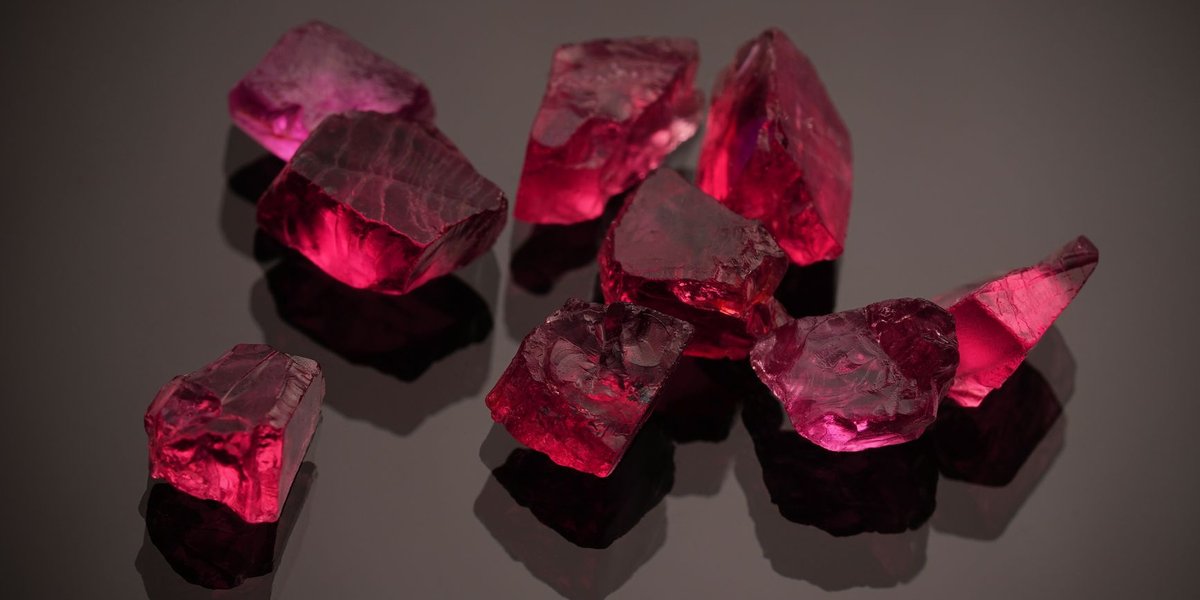
Two rubies can look identical under a jeweler’s loupe and sell for wildly different prices, purely because of where they came from. That’s not snobbery. Origin changes a ruby’s trace-element chemistry, its inclusion pattern, and — because of a century of marketing plus genuine geological rarity — its price per carat by a factor of ten or more.
If you’re trying to understand the ruby market, whether you’re buying one, studying gemology, or just curious why “Burmese ruby” gets whispered like a magic phrase, you need to know which countries actually produce them, what makes each source distinct, and why the same red stone can be a $400 souvenir or a museum piece depending on which patch of ground it came out of.
Table of Contents
- The Short Version
- Myanmar: The Standard Everyone Else Is Measured Against
- Mozambique: The Mine That Rewrote the Supply Chain
- Madagascar: Small, Scattered, and Genuinely Good
- Sri Lanka: The Raspberry Rubies
- Thailand: Not a Source Anymore, But You Can’t Avoid It
- The Second Tier: Everywhere Else Rubies Turn Up
- Country-by-Country Comparison
- How Anyone Actually Proves Where a Ruby Came From
- Sourcing Ethics: The Part the Retailers Don’t Lead With
- FAQ
The Short Version
Myanmar still produces the rubies collectors chase hardest, largely because of geology, not nostalgia. Mozambique now supplies most of the ruby market by volume, and its best stones compete with Burmese material on quality, if not always on price. Madagascar and Sri Lanka contribute smaller volumes of genuinely fine stones. Thailand stopped being a real source decades ago but still touches most of the world’s rubies on their way to market, because that’s where the cutting and treatment happens.
Everything below it — Vietnam, Tanzania, Afghanistan, Kashmir, Nepal, Cambodia, even a handful of stones out of Montana — matters more to collectors and gemologists than to the average buyer, but it’s worth knowing they exist.
Myanmar: The Standard Everyone Else Is Measured Against {#myanmar}
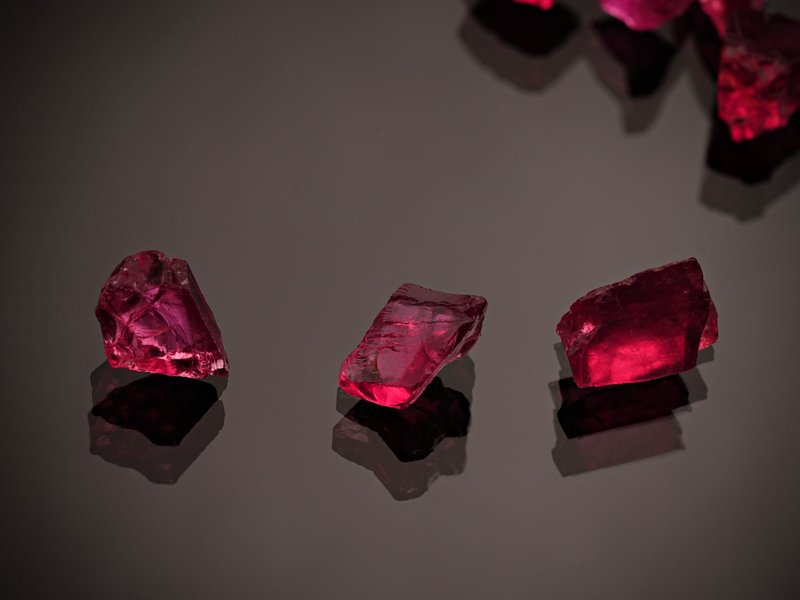
Rubies have been mined in the Mogok Valley, roughly 200 kilometers north of Mandalay, for over 800 years. The term “pigeon’s blood” — used to describe the specific saturated, slightly purplish-red that top Burmese stones can hit — dates back to at least 1829, and it’s still the industry’s shorthand for the best red a ruby can be.
The reason Mogok rubies look the way they do comes down to geochemistry. The marble host rock there produces stones with unusually low iron content, which is what lets them fluoresce under UV and even daylight — that’s the “glow” collectors talk about, and it’s genuinely rare in rubies from other deposits, which tend to carry more iron and get muted as a result. Mogok stones typically show silk-like rutile needle inclusions alongside calcite and apatite crystals, a combination distinct enough that it functions almost like a fingerprint.
For most of the 20th century, Myanmar supplied the overwhelming majority of the world’s fine ruby — historical estimates put it near 90% of gem-quality material at points before Mozambique’s deposits were developed. That dominance has faded on the volume side, but not on the price side: at equivalent clarity and color, Mogok rubies still sell for 20 to 40% more than comparable Mozambican or Thai stones, and the very top examples are a different market entirely — the Sunrise Ruby, a 25.59-carat unheated Burmese pigeon’s blood stone, sold at auction for over $30 million.
The complication, and it’s a real one, is that Mogok sits in an active conflict zone. The military junta controls much of the licensing and gem-emporium system around Myanmar’s ruby and jade trade, and watchdog groups including Global Witness have documented how that revenue helps fund the military’s operations. Several countries maintain import restrictions on Burmese gemstones specifically because of this, which is part of why Mozambique’s supply has become so important to the legitimate trade.
Mozambique: The Mine That Rewrote the Supply Chain {#mozambique}
Rubies weren’t found in Mozambique’s Montepuez district until 2009 — recent enough that some of the geologists who mapped the deposit are still working. The Montepuez Ruby Mine now covers more than 33,000 hectares, making it the largest ruby deposit on Earth, and it’s majority-owned by Gemfields, the same company that runs the Kagem emerald mine in Zambia.
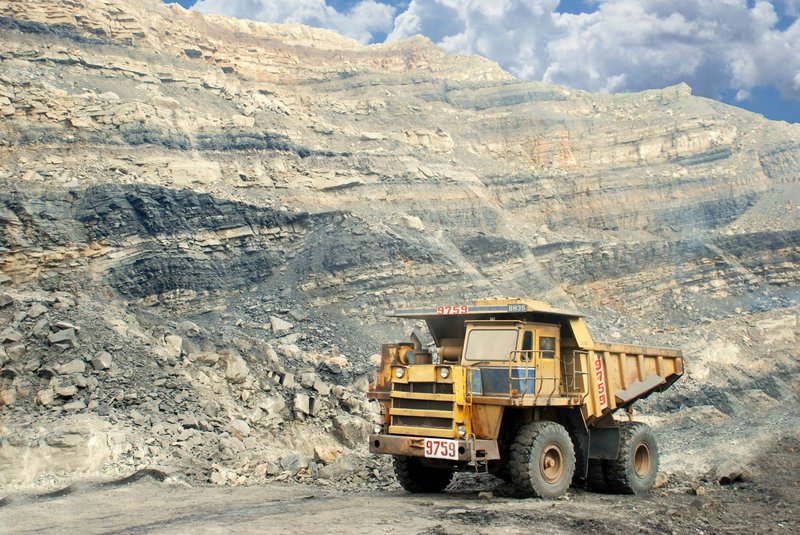
What made Montepuez matter wasn’t just scale. Some of its rubies are genuinely comparable to Mogok material in color and clarity — the stones formed in similar marble-hosted geology roughly 500 million years ago — and at the top end, that’s produced record-setting stones of its own. The Estrela de Fura, a 55.22-carat unheated Mozambican ruby, sold for $34.8 million in 2023, briefly making it the most expensive ruby ever sold at auction, ahead of any Burmese stone.
Gemfields has built its brand around traceability and formal sourcing standards, which matters given the industry’s history: the company reports spending roughly 32 cents of every revenue dollar on social programs, environmental compliance, and community infrastructure around Montepuez, and Montepuez Ruby Mining holds ISO certifications for environmental and safety management. That said, the record isn’t spotless — independent reporting has documented land-rights disputes and violence connected to the mine’s early years, which is worth knowing if “ethical” is doing real work in your buying decision.
For the market overall, Mozambique’s real contribution is depth. It supplies the bulk of the mid-market ruby trade now — the $1,000-to-$8,000-per-carat range where most fine jewelry actually gets made — in a way Myanmar’s shrinking, sanctioned output can’t.
Madagascar: Small, Scattered, and Genuinely Good {#madagascar}
Madagascar’s ruby deposits, concentrated around Andilamena and Vatomandry, are geologically younger to the market than Mozambique’s but no less real. The stones tend toward a bright red to pinkish-red with good transparency, and the better material holds its own against Mozambican rubies at similar price points.
What limits Madagascar isn’t quality, it’s infrastructure. The deposits are scattered across jungle terrain that doesn’t lend itself to mechanized mining, so most extraction still happens the way it has for decades: digging ruby-bearing gravel out of pits and hand-washing it in a nearby river. That keeps volumes low and makes traceability inconsistent — a lot of Madagascar rough still moves through Thailand for cutting and treatment before it reaches a jewelry counter, which muddies the “country of origin” story by the time it’s set in a ring.
Sri Lanka: The Raspberry Rubies {#sri-lanka}
Sri Lanka’s gem trade goes back further than almost anywhere else — the island has been a source of corundum (the mineral family that includes both ruby and sapphire) for over two thousand years, and it’s better known today for sapphires than rubies. When Sri Lanka does produce fine ruby, it tends toward a lighter, pinker red often described as “raspberry,” distinct from Myanmar’s deeper pigeon’s blood tone or Mozambique’s typically more saturated stones.
Modern production is mostly alluvial — gems washed out of ancient riverbeds rather than mined from hard rock — and constrained by Sri Lankan mining regulations that limit large-scale operations. That keeps Sri Lanka a boutique source: not high-volume, but consistent, and prized by buyers who specifically want that lighter color over the deep red that dominates the market’s marketing.
Thailand: Not a Source Anymore, But You Can’t Avoid It {#thailand}
Thailand’s own ruby deposits, centered around Chanthaburi and Trat, were a major source of “Siamese rubies” through the 1980s. They’re essentially mined out now. But Thailand never left the ruby business — it just moved further down the supply chain.
Bangkok and Chanthaburi remain the world’s center for ruby cutting, heat treatment, and trading. A large share of rough ruby from Mozambique, Madagascar, and elsewhere passes through Thai facilities before it reaches a retail counter, which is part of why “Thai ruby” on an old certificate doesn’t necessarily mean the stone was mined there — it often means it was processed there. Heat treatment, which improves color and clarity in the vast majority of commercial rubies on the market, is a specialty Thai lapidaries have refined for generations.
The Second Tier: Everywhere Else Rubies Turn Up {#second-tier}
A handful of other countries produce ruby in smaller, more sporadic quantities. None of these compete with the big five on volume, but each has turned up material worth knowing about:
- Vietnam — Deposits in Luc Yen and Yen Bai produce rubies with a color profile close enough to Myanmar’s that fine Vietnamese stones sometimes get mistaken for Burmese without lab testing.
- Tanzania — The Winza deposit, discovered in 2007, produces rubies alongside sapphires; quality varies widely and much of it needs treatment.
- Afghanistan — The Jegdalek deposit near Kabul has produced ruby for centuries, though decades of conflict have kept output small and inconsistent.
- India and Kashmir — Better known historically for sapphire, but ruby occurrences exist, mostly of modest commercial grade.
- Nepal — Small deposits near the Ganesh Himal range produce limited quantities, mostly of interest to specialist collectors.
- Cambodia — Historically linked to the same geological belt as Thailand’s exhausted mines, with similarly limited remaining output.
- Montana, USA and Macedonia — Both produce ruby in tiny, mostly hobbyist or specimen quantities rather than anything that moves the commercial market.
Country-by-Country Comparison {#comparison}
| Country | Signature Color | Status Today | Typical Price Tier |
|---|---|---|---|
| Myanmar (Mogok) | Deep “pigeon’s blood” red, strong fluorescence | Active but conflict-affected, import-restricted in several markets | Highest — often 20-40% above comparable-quality Mozambican stones |
| Mozambique (Montepuez) | Saturated red, sometimes near-Burmese quality | Largest active deposit; primary volume source | Mid to very high at top end |
| Madagascar | Bright red to pinkish-red | Small-scale, hand-mined | Mid |
| Sri Lanka | Lighter “raspberry” red | Limited alluvial mining, regulated | Mid, boutique demand |
| Thailand | N/A (mined out) | Cutting and trading hub only | N/A — processing center |
| Vietnam, Tanzania, Afghanistan, others | Varies widely | Small, inconsistent output | Low to mid, occasional exceptions |
How Anyone Actually Proves Where a Ruby Came From {#origin-testing}
This is the part most retailer guides skip, and it’s the actual answer to “how do I know this is really Burmese.” Gemological labs don’t take a seller’s word for it. They test.
The two main techniques work together. Trace-element analysis, usually done with laser ablation inductively coupled plasma mass spectrometry (LA-ICP-MS), measures the concentration of elements like vanadium, gallium, and magnesium in the crystal — each deposit has a distinct chemical signature based on the geology it formed in. Inclusion analysis under magnification looks at what got trapped inside the stone as it grew: Burmese rubies typically show low iron with silk-like rutile needles plus calcite and apatite crystals, a profile that’s visibly different from Thai or Mozambican material under a microscope.
Origin reports combining both methods come from a small number of specialist labs — GIA’s own published research on this exact question is a useful primer if you want the technical detail — along with the Gübelin Gem Lab in Lucerne and the SSEF Swiss Gemmological Institute in Basel. For any ruby being sold above a few thousand dollars per carat, an origin report from one of these labs isn’t optional due diligence, it’s the entire basis of the price.
Sourcing Ethics: The Part the Retailers Don’t Lead With {#ethics}
Colored gemstones never got their own version of the Kimberley Process, the certification system built for diamonds after the blood-diamond crisis. That gap matters more for ruby than almost any other stone, because the two biggest producing regions carry genuinely different ethical profiles.
Myanmar’s ruby trade is tied to a military government that controls much of the licensing system and, according to organizations like Global Witness, uses gem revenue to help finance its operations. That’s why the US and other governments maintain specific import restrictions on Burmese gemstones, and why a growing share of the legitimate jewelry trade has shifted away from Burmese stones regardless of quality.
Mozambique’s Montepuez mine represents the industry’s attempt at an alternative model — formal licensing, ISO certification, published revenue-sharing figures, and full-chain traceability from mine to market. It’s not a perfect record; the mine’s early years included documented conflicts over land rights. But the paperwork trail exists in a way it simply doesn’t for most Burmese stones, which is a meaningful distinction if you’re buying and want to know where your money actually went.
FAQ {#faq}
Which country has the best rubies? By reputation and by price, Myanmar’s Mogok Valley still produces the finest rubies in the world — the deepest “pigeon’s blood” red with genuine fluorescence. But “best” and “best available” aren’t the same question. Given import restrictions and dwindling Burmese supply, the finest rubies most buyers can actually purchase today, with full traceability, increasingly come from Mozambique.
Are Mozambique rubies as good as Burmese rubies? The top tier of Mozambican material, from deposits like Montepuez, can match Burmese stones in color and clarity — the 2023 sale of the Estrela de Fura for $34.8 million, a Mozambican stone, briefly set the all-time auction record for any ruby. At the commercial and mid-market level, though, Burmese stones still command a premium of 20 to 40% over comparable Mozambican quality, largely on reputation and rarity rather than any visible difference.
What does “pigeon’s blood” actually mean? It’s a trade term, not a scientific one, describing a ruby’s color: a saturated, slightly purplish-red with strong fluorescence that makes the stone appear to glow from within, even in low light. The term originated with Mogok Valley rubies in the 19th century and is still most associated with Burmese material, though top Mozambican stones can occasionally earn the designation too.
Is ruby more valuable than sapphire from the same origin? Generally, yes, particularly at the top end. Fine ruby is rarer than fine sapphire in gem-quality material, and red corundum has carried a price premium over blue for most of the modern gem trade. Origin still matters for both — a Kashmir sapphire or a Mogok ruby each command premiums specific to their own deposit’s reputation.