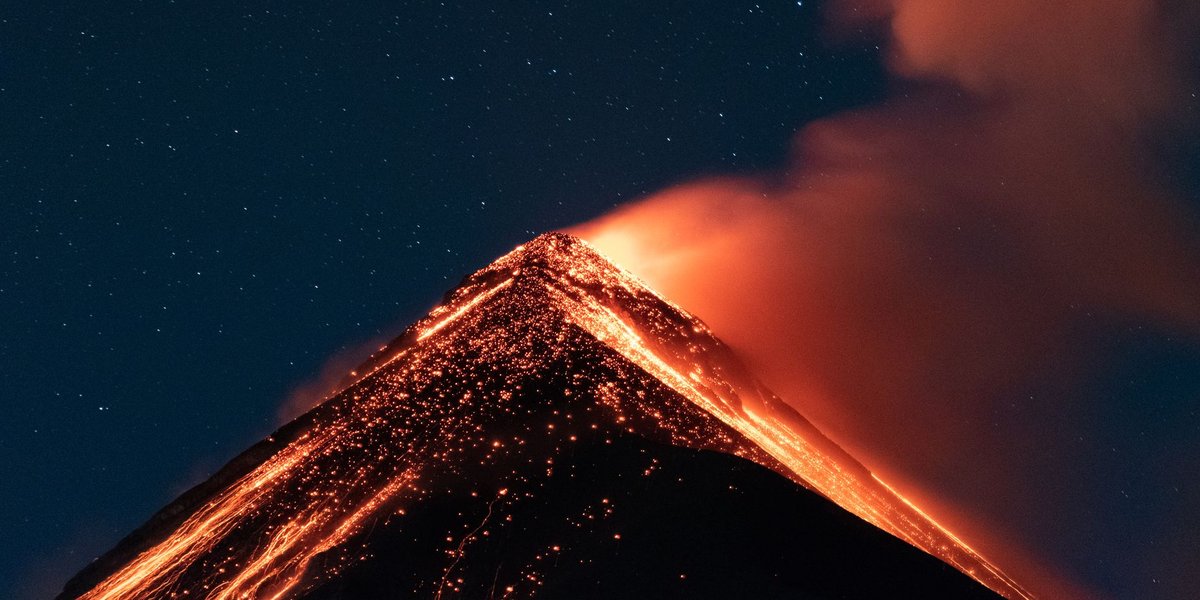
Two volcanoes in the Democratic Republic of the Congo erupt in the modern record: Nyiragongo (3,470 m) and Nyamuragira (3,058 m). Both sit in the Virunga chain, in the far east of the country, and both are about 20 km from each other and from the city of Goma. The rest of the Virunga peaks you’ll see on “active volcano” lists are dormant or extinct.
Contents
- TLDR
- Quick reference table
- Why the DRC has volcanoes
- Nyiragongo
- Nyamuragira
- Dormant and extinct DRC volcanoes
- Hazards for Goma
- Visiting the Virunga volcanoes
- FAQ
TLDR
- Active: Nyiragongo and Nyamuragira, both in Virunga National Park, North Kivu.
- Nyiragongo holds one of the world’s few persistent lava lakes and has sent lava into Goma in 1977, 2002 and 2021.
- Nyamuragira is Africa’s most frequently erupting volcano, with outbursts every few years, mostly on its flanks.
- Not active: Karisimbi, Mikeno, Visoke (Bisoke), May-ya-Moto and Tshibinda.
Quick reference table
| Volcano | Elevation | Status | Most recent major eruption | Nearest town |
|---|---|---|---|---|
| Nyiragongo | 3,470 m | Active | 2021 (lava lake persists) | Goma |
| Nyamuragira | 3,058 m | Active | Repeated flank and summit activity into the 2010s and after | Goma / Sake |
| Karisimbi | 4,507 m | Dormant | No eruption in historical record | Goma (Rwanda border) |
| Mikeno | 4,437 m | Extinct | Pre-historic | Bukima |
| Visoke (Bisoke) | 3,711 m | Dormant | No major historical eruption | Bunagana |
| May-ya-Moto | Low cone field | Dormant | Uncertain | Between Nyiragongo and Nyamuragira |
| Tshibinda | Low cone field | Dormant | Pre-historic to Holocene | Near Bukavu |
Status is based on the historical record, and the dormant category carries the usual caveat: a dormant volcano can wake up. Check the Smithsonian Global Volcanism Program for current reports.
Why the DRC has volcanoes
The Virunga volcanoes sit at the northern end of Lake Kivu, in the Western Branch of the East African Rift, where the African plate is slowly splitting in two. As the crust thins, magma rises and reaches the surface through the rift’s faults. The result is a line of volcanoes along the border with Rwanda and Uganda.
The magma here is unusual. It is low in silica and rich in alkali elements, so it flows like thin syrup instead of sitting thick in the vent. That chemistry explains the two things that make these volcanoes famous: a lava lake that stays molten for years, and lava that can run downhill at highway speeds.
Nyiragongo
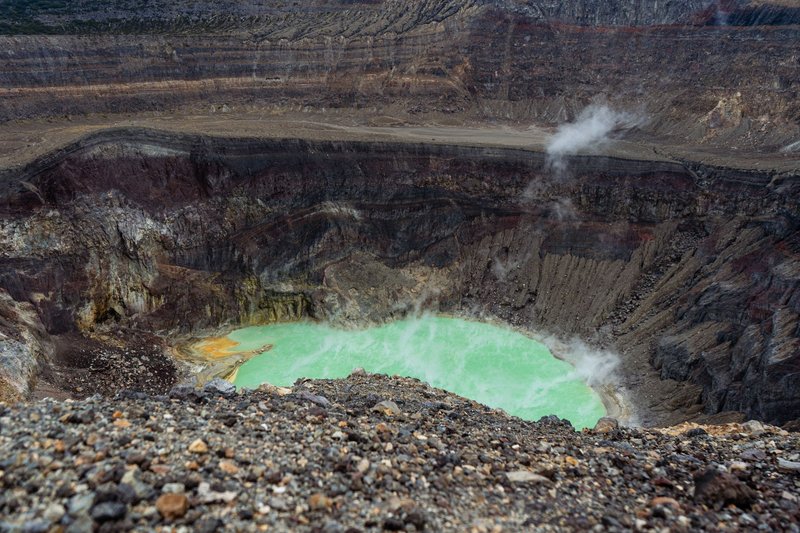
Nyiragongo is a stratovolcano with a summit crater about 2 km wide and a lava lake that has filled and drained at least twice in recent memory. It is one of very few volcanoes on Earth with a lava lake that lasts, and it’s the one most likely to threaten a major city.
The 1977 eruption. The crater wall cracked on January 10, 1977, and the lava lake drained within about an hour. The lava was so fluid it reached speeds estimated at up to 100 km/h on the steepest slopes and hit villages with almost no warning. Estimates of the death toll range widely, from several dozen to over 600, because nobody was counting.
The 2002 eruption. Fissures opened on the south flank on January 17, 2002, and three streams of lava ran toward Goma. One crossed the airport runway and cut the city in two. Smithsonian Global Volcanism Program records describe the lava destroying a large share of the city center, leaving around 120,000 people homeless. Gas and fires added casualties.
The 2021 eruption. On May 22, 2021, lava poured from fissures on the volcano’s south flank. Roughly 400,000 people were told to leave, and about 30 people died, many from road accidents, burns and gas during the evacuation. The lava stopped at the northern edge of Goma’s airport and destroyed about a thousand homes in nearby neighborhoods. Researchers later found that magma had moved sideways in a dike beneath the city and toward Lake Kivu, a finding that unsettled volcanologists and local officials alike.
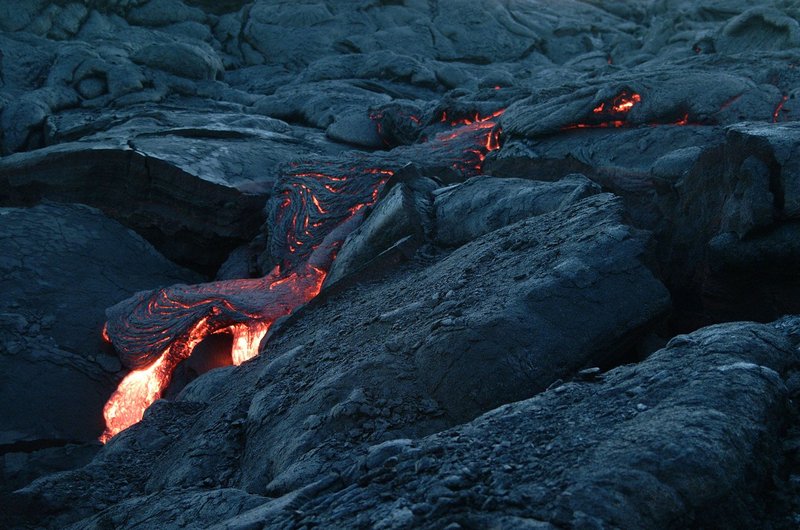
The lava lake drained in 2021, then began to rebuild. If you trek to the rim today, you’ll see the lake again.
Nyamuragira
Nyamuragira is a broad shield volcano, a lower, wider, gentler-looking mountain than its neighbor. Don’t let that fool you. It is the most active volcano in Africa, with more than 40 eruptions recorded since the 1880s, according to the Smithsonian Global Volcanism Program.
Most Nyamuragira eruptions are flank eruptions: fissures open on the sides of the mountain and fountain lava into the forest, sometimes 15 to 25 km from the summit. Lava from these events has covered hundreds of square kilometers over the past century and a half. Because its lavas are fluid but erupt away from towns, Nyamuragira makes fewer headlines than Nyiragongo. It also produces large volumes of sulfur dioxide. Satellite instruments have tracked its plumes drifting across central Africa, and the volcano is one of the continent’s larger natural sources of the gas.
Recent eruptions came in 2006, 2010, 2011 to 2012 and 2014, and an active lava lake has been reported in its summit caldera. The mountain sits inside Virunga National Park and the surrounding lava fields are a rough habitat for chimpanzees, elephants and other wildlife.
Dormant and extinct DRC volcanoes
Search results often mix the live volcanoes with their neighbors. Here is how the rest of the list breaks down.
- Karisimbi (4,507 m): The highest of the Virunga volcanoes, on the DRC-Rwanda border. It has no confirmed eruption in the historical record, although it has erupted in the past 10,000 years, so volcanologists treat it as potentially active.
- Mikeno (4,437 m): A heavily eroded, steep-sided peak. It is extinct, and its jagged ridges are the product of long erosion.
- Visoke or Bisoke (3,711 m): Straddles the DRC-Rwanda border and holds a crater lake. Dormant. It’s best known to visitors as the starting point for gorilla treks on the Rwandan side.
- May-ya-Moto: The name means “water of fire” in Swahili and refers to hot springs and vents between Nyiragongo and Nyamuragira. It is a line of vents rather than a single mountain.
- Tshibinda: A field of small cones near the South Kivu highlands. It isn’t part of the Virunga chain proper and has no recent activity.
Hazards for Goma
Goma is home to well over a million people and sits at the foot of Nyiragongo, on the shore of Lake Kivu. Three hazards drive risk assessments.
Lava flows. Nyiragongo’s fluid lava can reach town in under an hour once a flank fissure opens. The 2021 flow stopped at the airport’s northern edge, a few hundred meters from dense housing.
Gas. Carbon dioxide seeps through the ground in low-lying parts of Goma, collecting in pits and basements. Locals call these pockets “mazuku,” or evil winds. They kill animals and sometimes children. Lake Kivu itself holds dissolved methane and CO2, and a major earthquake or lava entry could, in theory, release them.
Earthquakes. Eruptions bring swarms of earthquakes, some strong enough to crack buildings. The Goma Volcano Observatory monitors the region, but its funding and equipment have been limited, and conflict in North Kivu has further complicated its work.
Visiting the Virunga volcanoes
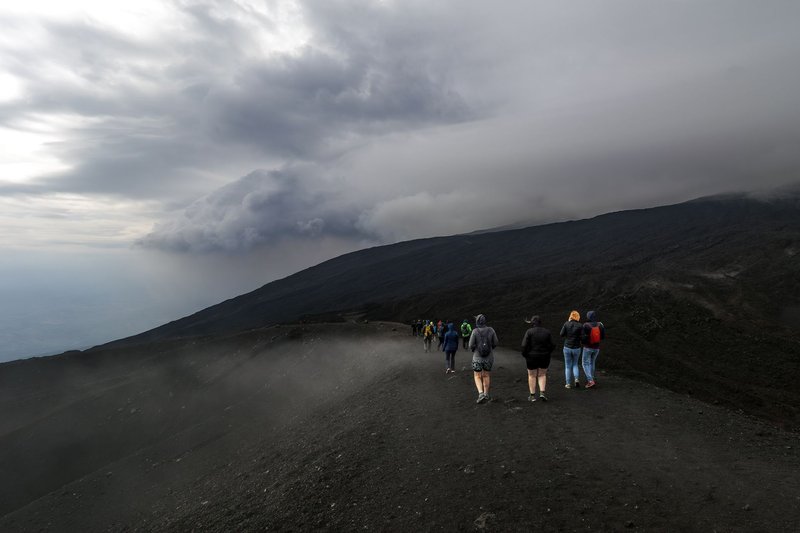
The Nyiragongo summit trek is the one that draws visitors. The route takes four to six hours up about 1,400 m of elevation to a rim shelter, where hikers sleep before looking into a crater with a glowing lava lake. It’s run by Virunga National Park, which also arranges armed escorts.
Security in North Kivu has been unstable for years, and the situation has shifted repeatedly, including fighting around Goma in 2025. Before planning any trip, check the park’s current advisories and your government’s travel guidance. The park has closed the trek multiple times.
FAQ
How many active volcanoes are in the DRC? Two: Nyiragongo and Nyamuragira. Karisimbi is sometimes counted as potentially active because of Holocene eruptions.
Which DRC volcano is most dangerous? Nyiragongo, because of its fast lava and its proximity to Goma.
When did Nyiragongo last erupt? May 22, 2021. Its lava lake has since re-formed.
Is Nyamuragira erupting now? It erupts every few years, and the lava lake is persistent. Check the Smithsonian’s weekly volcano report for the current state.
Can you climb Nyiragongo? Yes, when the park is open, with a guide, in a two-day trek. Security conditions decide the schedule.