Search “endemic species of Montenegro” and you get two kinds of results. One is a 280-entry taxonomic list, mostly blind cave beetles, with no photos and no context. The other is a travel-blog paragraph on wildflowers. Nobody tells you that a country roughly the size of Connecticut holds a trout that lives in one river, a lizard that split into a new species where two river canyons meet, and a wetland that hosts nearly every Dalmatian pelican left in the Balkans.
That’s the actual story. Here it is, organized by what these species are, where they hide, and how worried you should be about losing them.
Table of Contents
- The Fast Version
- Amphibians and Reptiles: The Cave and Karst Specialists
- Freshwater Fish: Species That Never Left One River Basin
- Plants: The Adriatic Karst Endemics
- Where to See Them: The National Parks
- Why So Little of This Is Protected
The Fast Version
Montenegro’s endemism story isn’t about big mammals — there isn’t a single country-endemic bear, wolf, or wildcat here, and that’s expected given how young and porous the Balkan borders are geologically. The real story is small, aquatic, and easy to walk past: a blind salamander in limestone caves, four fish species boxed into the Zeta and Morača river systems, a handful of rock lizards that speciated inside individual canyons, and a cluster of Adriatic karst plants that grow on cliffs and nowhere else. Durmitor, Lake Skadar, and the Tara River Canyon are where most of it concentrates.
Amphibians and Reptiles: The Cave and Karst Specialists {#amphibians-and-reptiles}
Olm (Proteus anguinus). This is the animal that made Slovenian and Balkan cave biology famous: a pale, blind, fully aquatic salamander that can go a decade between meals and lives entirely in the total darkness of Dinaric karst caves. It’s not exclusive to Montenegro — its range runs through the limestone belt shared with Slovenia, Croatia, and Bosnia and Herzegovina — but Montenegro’s cave systems around the Zeta and Morača basins hold populations that have never been formally assessed at the national level. That’s not a small gap. The IUCN lists the olm as Vulnerable globally, and a species that already survives on razor-thin population numbers doesn’t benefit from being an afterthought in national conservation planning.
Mosor Rock Lizard (Dinarolacerta mosorensis). A small, shade-loving lizard restricted to limestone cracks and karst scree across a narrow band of Bosnia and Herzegovina, Croatia, and Montenegro. In Montenegro it shows up at altitudes from near sea level up to almost 1,900 meters, with a notable population inside Durmitor National Park — 80 kilometers from the coast, which tells you how far this thing has pushed into the mountains from its Adriatic origins.
Montenegrin Rock Lizard (Dinarolacerta montenegrina). This one is the sharper story. It used to be lumped in with the Mosor rock lizard until genetic work showed it split off as its own lineage back in the late Miocene — and the trigger was geographic: the Morača river canyon cut a barrier deep enough to separate two lizard populations long enough for them to become different species. You can stand at that canyon today and be looking at the exact geological feature that made a new species.
Dalmatian Algyroides (Algyroides nigropunctatus). Technically sub-endemic — its range extends into Croatia, Bosnia and Herzegovina, and Albania — but it’s a genuine Mediterranean specialist that depends on the same warm, dry microclimate found along Montenegro’s coastal karst. Recent field surveys have flagged its Montenegrin populations as under-documented, which is a polite way of saying nobody’s checked on it in a while.
Freshwater Fish: Species That Never Left One River Basin {#freshwater-fish}
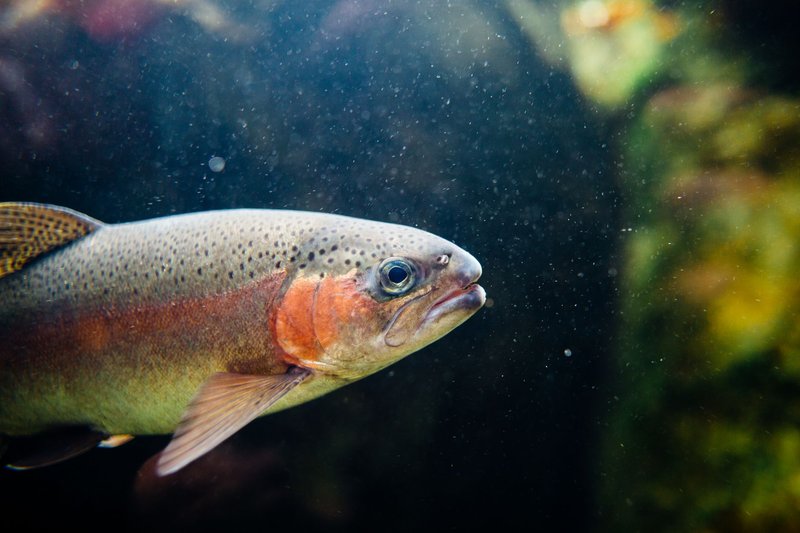
This is the category every other “endemic species” list skips, and it’s the strongest one. Four fish species exist only in Montenegro, all confined to the Zeta-Morača-Skadar drainage:
- Soft-muzzled Trout (Salmo obtusirostris zetensis) — known from just three localities in the Zeta River, always in low numbers, living alongside brown and marble trout without interbreeding into them. Genetic work has confirmed it as a distinct lineage, not a variant.
- Skadar Gudgeon (Gobio skadrensis) — a small bottom-dwelling fish found exclusively in the Lake Skadar basin.
- Zeta Stone Loach (Barbatula zetensis) — restricted to the Morača river basin, sharing habitat with the equally range-limited Ohrid spined loach.
- Morača Dwarf Goby (Knipowitschia montenegrina) — one of the smallest fish in this list, and one of the least studied.
None of these have common names you’ll find on a restaurant menu or a fishing forum, which is exactly the problem. A trout population that exists in three spots on one river is one poorly timed dam or drought away from gone, and unlike the Olm, there’s no glamour factor pulling in conservation funding.
Plants: The Adriatic Karst Endemics {#plants}
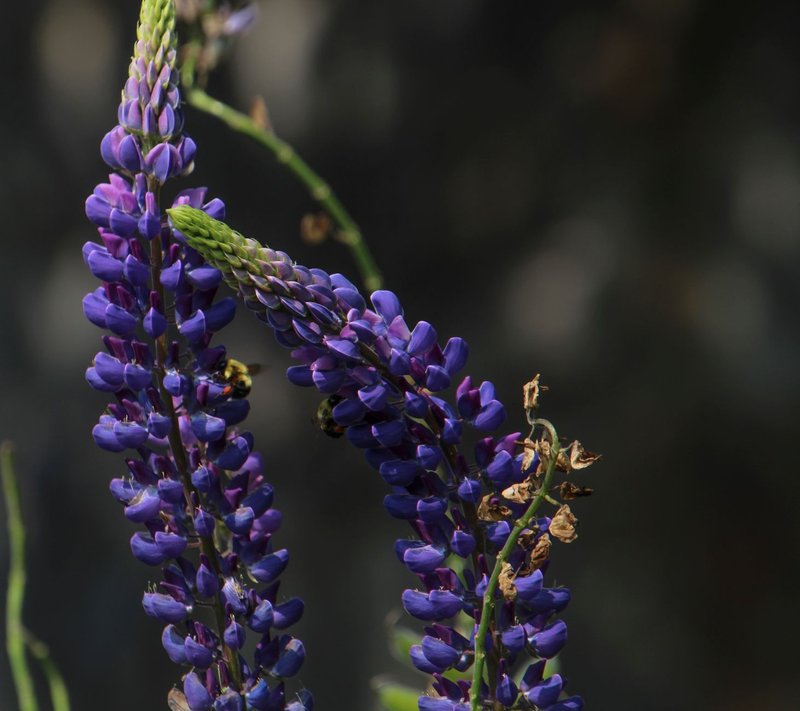
Montenegro’s flora leans heavily on Balkan-endemic species — plants restricted to the wider Balkan Peninsula rather than the country alone — concentrated on the limestone cliffs of Lovćen, Rumija, and the alpine zones of Durmitor. A 2016 critical inventory catalogued the region’s Balkan endemic vascular plants growing in Montenegro’s chasmophytic — cliff-face — vegetation, and a few stand out:
- Moltkia petraea — a low, purple-flowered shrub of the borage family that grows straight out of limestone rock faces, found by botanists at Kew as native to the western Balkan coastal karst. No soil required, apparently.
- Tanacetum cinerariifolium — Dalmatian pyrethrum, the plant that’s the natural source of pyrethrin insecticide, still used in organic pest control today. It grows wild on Montenegro’s Adriatic-facing cliffs and has been harvested commercially elsewhere in the region for over a century.
- Petteria ramentacea — a Balkan-endemic shrub in the pea family, found in scrub and rocky woodland along the coastal ranges.
- Lonicera glutinosa — a Balkan-endemic honeysuckle restricted to the same limestone habitat band.
The pattern across all four: cliffs, thin soil, full sun, and almost zero tolerance for competition from anything that isn’t equally stubborn.
Where to See Them: The National Parks {#where-to-see-them}
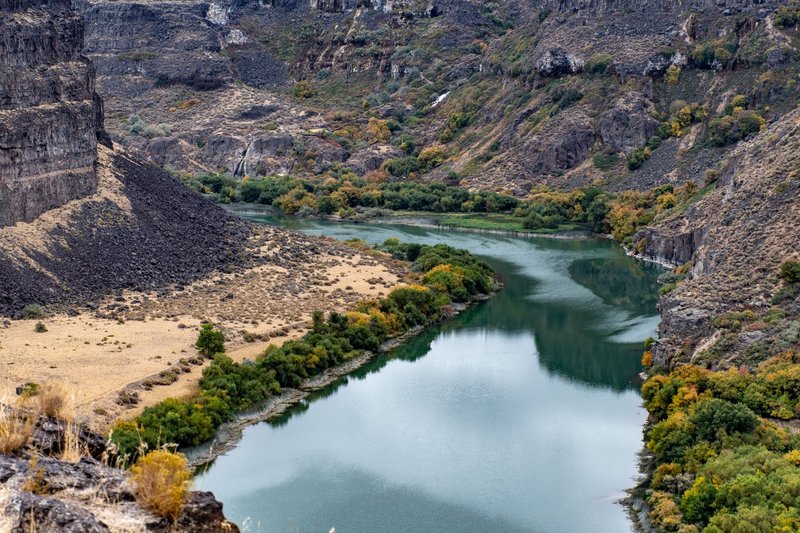
Durmitor National Park. A UNESCO World Heritage Site since 1980, Durmitor is Montenegro’s biggest concentration of alpine endemic flora and the highest-altitude home of the Mosor rock lizard. It also holds the Tara River Canyon, which drops to a maximum depth of roughly 1,300 meters — the deepest canyon in Europe — carved through limestone that’s been isolating species on either side of it for millions of years.
Lake Skadar National Park. The Balkans’ largest lake, protected since 1983 and listed as a Ramsar wetland of international importance since 1996. It’s Montenegro’s only breeding site for the Dalmatian pelican, hosts roughly 280 recorded bird species, and its basin carries around 48 fish species — the Skadar gudgeon among them, true to its name.
Tara Canyon and the Zeta River basin. Less a single park than a river corridor, but it’s the whole reason the four endemic fish species exist as separate species at all: isolated pools and stretches that stayed cut off long enough for speciation to happen and stick.
Why So Little of This Is Protected {#conservation}
The pattern across every species on this list is the same: small range, small population, low visibility. The olm is IUCN Vulnerable globally but has no defined national conservation status in Montenegro specifically. The soft-muzzled trout survives in three known spots on one river, a location count that would trigger emergency protocols for almost any other vertebrate. The Zeta stone loach and Morača dwarf goby don’t have current, published IUCN assessments at all — they’re simply too obscure to have been formally evaluated.
That’s the gap eco-tourism and biology enthusiasts both run into: the charismatic story (blind cave salamander, deepest canyon in Europe) is well documented, and the fragile story (four fish species that could disappear from a single bad drought year) mostly isn’t. Hydropower development on the Balkan rivers — the Morača included — is the specific pressure worth watching, since these fish don’t have anywhere else to go if their one stretch of river changes.
If you’re planning to see any of this in person, Durmitor and Lake Skadar are the two parks that reward the trip on their own merits, endemic species or not. But knowing what you’re actually looking at — a lizard that exists because of that exact canyon wall, a trout that lives in three pools and nowhere else on Earth — is the difference between a scenic hike and understanding what’s actually at stake in it.