
TLDR
Nebraska has almost no strict endemics, meaning species found nowhere else on Earth. The clearest case is the Salt Creek tiger beetle, which lives only in the saline wetlands of Lancaster and Saunders counties. The blowout penstemon is the state’s best-known rare plant, but it also grows across the border in Wyoming, so it counts as a near-endemic. The rest of the list is made of regional specialists that depend on Nebraska habitats without being exclusive to the state.
Contents
- Why Nebraska has so few endemics
- Endemic, native, rare: what the words mean
- The Salt Creek tiger beetle
- Blowout penstemon
- Quick comparison table
- Near-endemics and regional specialties
- Where to see these habitats
- Summary
Why Nebraska has so few endemics
Endemic species usually need walls. Islands, isolated mountaintops, sealed-off lakes, caves. Something has to keep a population apart long enough for it to become a species of its own.
Nebraska has none of that. It’s a Great Plains state with no oceans, no high ranges, and almost no natural borders. Grassland runs across the state line into Kansas, South Dakota, and Colorado without changing character. Animals and seeds cross freely, so anything that evolves here tends to spread, and anything that spreads stops being endemic.
The exceptions come from small patches of unusual habitat: salt-laden wetlands, shifting dunes, a few river valleys where eastern forest meets western prairie. Those patches are where you find the species worth knowing about, and the Nebraska state species list from Nebraska Game and Parks shows how much of the state’s rarity is concentrated in them.
Endemic, native, rare: what the words mean
Most pages on this topic blur three different ideas, so here they are separated.
- Endemic: found only in one defined area. Nowhere else on Earth.
- Native: belongs in the area naturally, but may also live in many other places. Plains bison and prairie dogs are native to Nebraska and far from endemic.
- Rare or endangered: few individuals remain, regardless of where they live. A species can be rare everywhere, or rare in Nebraska and common elsewhere.
Endemism also depends on the boundary you draw. A species endemic to the Great Plains is common to a dozen states. A species endemic to Nebraska is a much shorter list, and that’s the list this post is about. Our guide to endemic plants of Nebraska explores these distinctions in more detail.
The Salt Creek tiger beetle
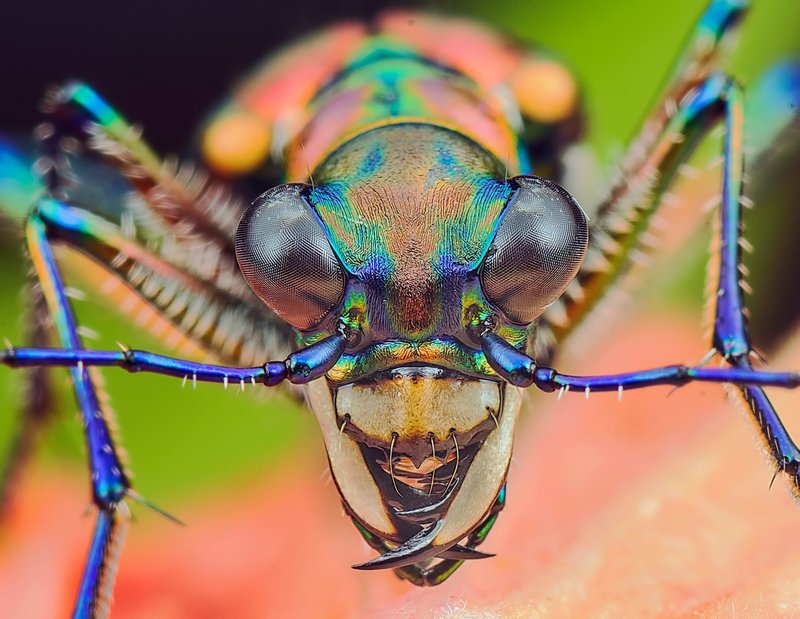
If you want a true Nebraska endemic, this is it. The Salt Creek tiger beetle (Cicindela nevadica lincolniana) lives only in the saline wetlands of Lancaster and Saunders counties, in the eastern part of the state around Lincoln.
These wetlands are an odd feature for the Midwest. Salty groundwater seeps to the surface and leaves crusted mudflats where most plants can’t grow. The beetle hunts on those bare, salty flats, running down small insects on foot, and its larvae dig burrows in the same mud.
That tiny range is the whole problem. The beetle’s habitat has been drained, farmed, and built over for more than a century, and what’s left is a scatter of fragments. A count in 2005 found roughly 150 adults, a number small enough that a single bad drought or a drained wetland matters. The U.S. Fish and Wildlife Service lists it as federally endangered, and conservation work has focused on protecting the remaining saline wetlands and restoring the water flow that keeps them salty.
It’s easy to miss. An adult beetle is about the size of a grain of rice’s longer cousin, and adults are active in spring and early summer. Don’t expect to stumble onto one on a hike.
Blowout penstemon
The blowout penstemon (Penstemon haydenii) is the plant version of the same story, with a twist.
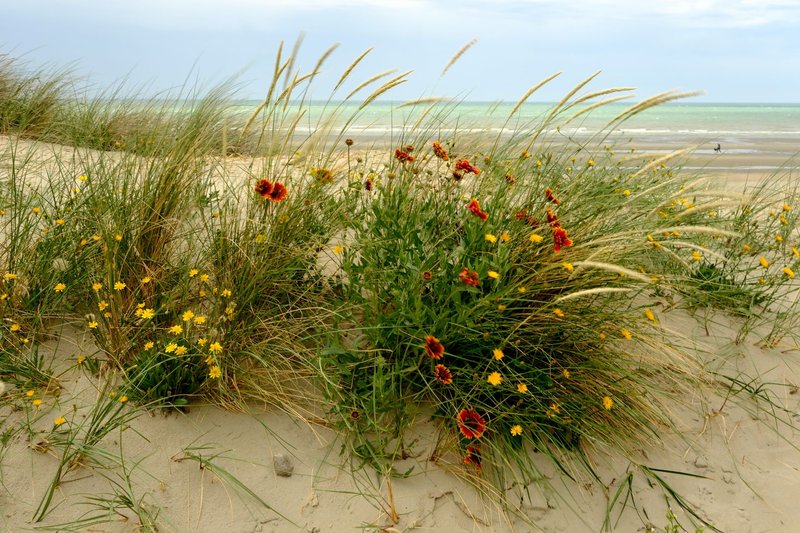
It grows in blowouts: bowl-shaped hollows where wind has torn the grass cover off the Sandhills and exposed loose sand. Most plants fail there. The blowout penstemon needs it. Its seeds germinate in open, shifting sand, and it grows long roots that anchor the dune around it. It produces lavender-blue tubular flowers in early summer.
The problem is that the thing it needs, moving sand, is the thing people spent a century stopping. Fire suppression, grazing management, and grass stabilization closed the blowouts, and the plant lost its habitat. It was listed as federally endangered in 1987.
Here’s the catch for anyone building a list of Nebraska-only species: the plant isn’t strictly Nebraska’s. It’s found in the Nebraska Sandhills and also in a small area of Wyoming. That makes it a near-endemic, a species with an extremely limited range split across two states. Some sources call it endemic to the Sandhills region as a shorthand, which is fair if you mean the broader dune landscape and misleading if you mean the state.
Quick comparison table
| Species | Type | Range | Status |
|---|---|---|---|
| Salt Creek tiger beetle (Cicindela nevadica lincolniana) | Insect | Saline wetlands of Lancaster and Saunders counties, Nebraska | True endemic, federally endangered |
| Blowout penstemon (Penstemon haydenii) | Plant | Nebraska Sandhills, plus a small area in Wyoming | Near-endemic, federally endangered |
Two rows is the honest answer. Anyone who gives you a list of twenty Nebraska endemics is counting regional species or stretching the definition.
Near-endemics and regional specialties
Past the two headline species, Nebraska’s distinctive wildlife comes from places where several ecosystems overlap. These species aren’t unique to the state, but their Nebraska populations are often the reason people visit.
- The Sandhills. About 20,000 square miles of grass-covered dunes, among the largest dune fields in the Western Hemisphere. The grassland supports sharp-tailed grouse and greater prairie-chickens, and the wetlands between the dunes feed migrating waterfowl. The blowout penstemon belongs here.
- The Pine Ridge. In the northwest, a band of ponderosa pine bluffs sits in the middle of prairie. It’s a Rocky Mountain outlier, with habitat more typical of the Black Hills and Wyoming than of the rest of Nebraska.
- The Niobrara Valley. Here eastern deciduous forest, northern boreal species, and western ponderosa pine meet along the river. Ecologists treat it as a crossroads, and that mix of ranges is rare for a single valley.
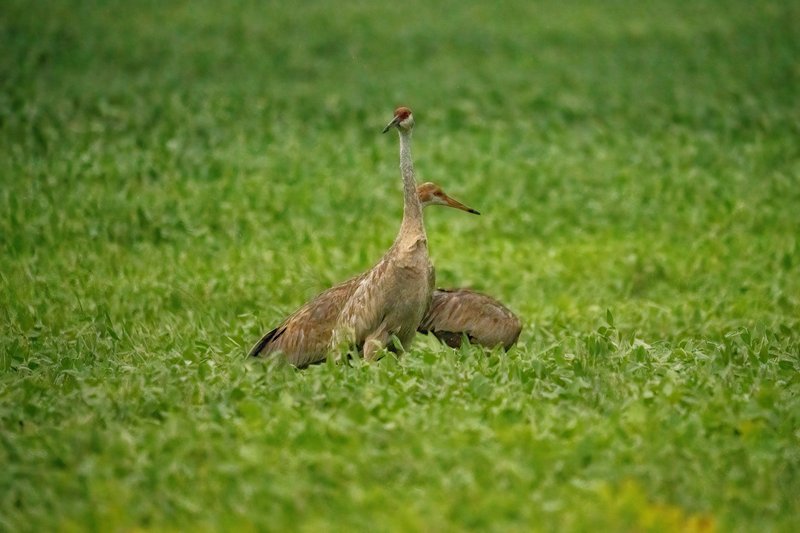
- The Platte Valley. The braided Platte River is the center of the spring sandhill crane migration, when hundreds of thousands of cranes stop over in the Central Platte. It’s a seasonal gathering, not endemism, but it shows how a single river can hold a global-scale wildlife event.
- Eastern saline wetlands. The same salt-seep habitat that holds the tiger beetle also supports plants adapted to salty soil, which is rare this far from the coast.
Fish, mussels, and most plants don’t make the endemic list. The Great Plains river systems they live in connect across state lines, so their ranges follow watersheds, not borders. Nebraska’s contribution there is stewardship, not exclusivity. For details on what the state tracks and protects, the state species list is the most complete source.
Where to see these habitats
You won’t see the Salt Creek tiger beetle on a casual visit, and the saline wetlands near Lincoln are protected, so treat this as a habitat tour and not a safari.
- Sandhills: Drive Nebraska Highway 2 across the dunes, or visit Valentine National Wildlife Refuge. Blowouts are visible from the road as pale scars in the grass. The penstemon blooms in early summer, so go in June or early July.
- Niobrara Valley: The Niobrara National Scenic River near Valentine is the best place to see the forest-prairie overlap, and canoeing it takes you through the transition.
- Pine Ridge: Fort Robinson State Park and the nearby Wildcat Hills give you the ponderosa pine bluffs and a different Nebraska from the corn-and-pasture image.
- Central Platte: Late February through early April, when the sandhill cranes stop over.
Stick to marked trails. Both endemic species depend on habitat that trampling damages easily.
Summary
Nebraska is a poor place for endemics and a good place for habitat. The Salt Creek tiger beetle is the clearest case of a species that exists nowhere else, and the blowout penstemon comes close, with its range split between the Nebraska Sandhills and Wyoming. Everything else on the “unique to Nebraska” list is a regional specialist, a species whose Nebraska population matters but whose range doesn’t end at the state line.
That’s still a useful finding. The endemic species of Nebraska number in the single digits, and every one of them is tied to a small, fragile patch of habitat that needed centuries to form and is easy to lose.