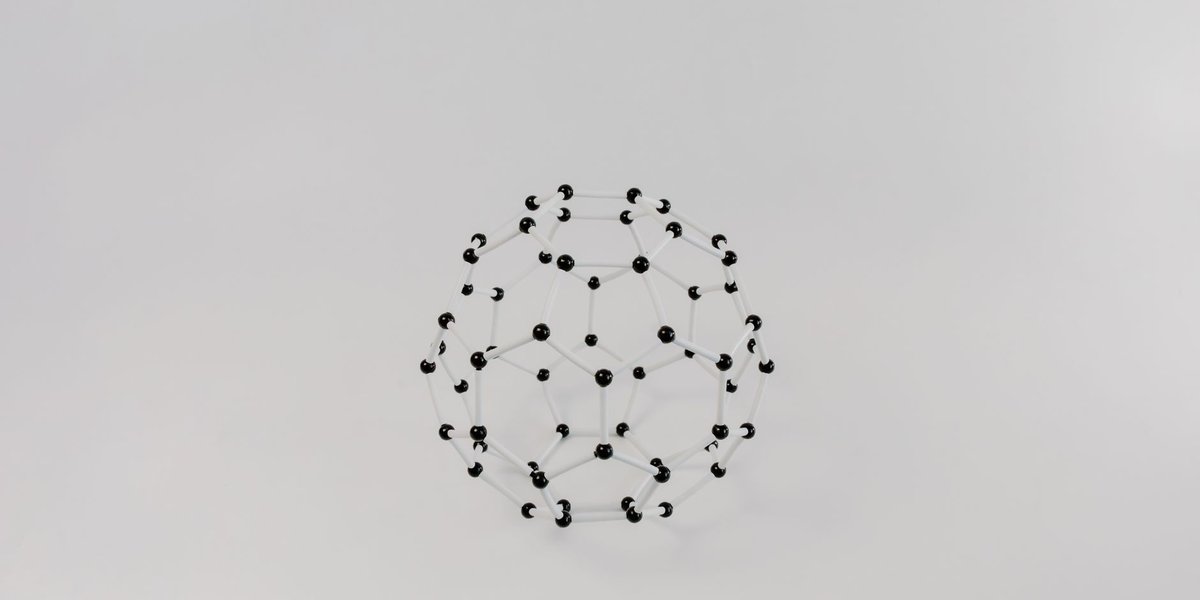
Aromatic hydrocarbons are ring-shaped molecules of carbon and hydrogen whose pi electrons are spread evenly around the whole ring instead of sitting in individual double bonds. That sharing makes them unusually stable, and it explains almost everything else about them: why they react differently from other hydrocarbons, why they show up in plastics and fuels, and why a few of them are dangerous to breathe.
The name is a historical accident. Early chemists isolated these compounds from sweet-smelling balsams and resins, and the label stuck even after it became clear that smell has nothing to do with it. Today “aromatic” is a statement about electrons, not scent.
Table of contents
- Quick facts
- What makes a hydrocarbon aromatic
- A four-point checklist: is it aromatic?
- Examples of aromatic hydrocarbons
- Aromatic vs aliphatic hydrocarbons
- How aromatic hydrocarbons react
- Where aromatic hydrocarbons come from
- What aromatic hydrocarbons are used for
- Health and environment: BTEX and PAHs
Quick facts
- Definition: a cyclic, flat, fully conjugated hydrocarbon with 4n + 2 pi electrons (2, 6, 10, 14…).
- Parent compound: benzene, C6H6, a six-carbon ring with six delocalized pi electrons.
- Stability: benzene is roughly 150 kJ/mol more stable than a hypothetical ring with three fixed double bonds.
- Signature reaction: substitution, not addition. The ring keeps its aromatic character and swaps a hydrogen for something else.
- Two families: monocyclic arenes (benzene, toluene, xylenes) and polycyclic aromatic hydrocarbons, or PAHs (naphthalene, anthracene, benzo[a]pyrene).
- Main sources: coal tar and petroleum, mostly through catalytic reforming.
- Main hazards: benzene and the larger PAHs are carcinogens. Toluene, ethylbenzene and xylenes are less toxic but still harmful at high exposure.
What makes a hydrocarbon aromatic
Draw benzene the way a textbook did in 1865 and you get a hexagon with alternating single and double bonds. Friedrich August Kekulé’s ring was a breakthrough, but it predicts something that doesn’t happen. A ring with three fixed double bonds should have two kinds of carbon–carbon bond, short and long. Measure real benzene and all six bonds are identical, at about 139 picometers. That sits between a typical C–C single bond (154 pm) and a C=C double bond (134 pm).
The modern picture is that each of the six carbons contributes one p orbital, and those orbitals overlap above and below the flat ring to form a continuous cloud. The six pi electrons belong to the ring as a whole. Chemists draw this as two resonance structures with a circle or dashed ring in the middle, but the real molecule is neither of the two drawings. It’s one structure that the drawings can’t capture.
The payoff shows up in the heat of hydrogenation. Adding hydrogen to cyclohexene releases about 120 kJ/mol. Three isolated double bonds should release about 360 kJ/mol. Benzene releases about 208. The missing 150 or so is the resonance stabilization energy, the price you’d pay to break the delocalization.
Hückel’s rule
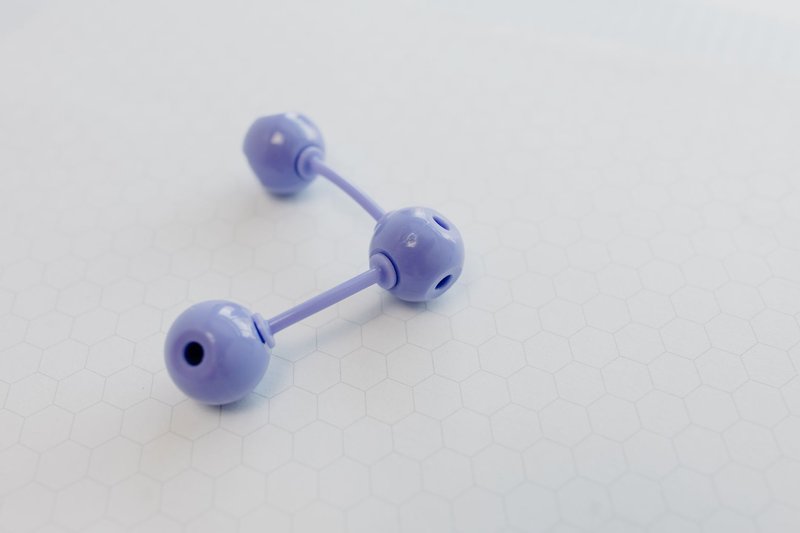
In the 1930s Erich Hückel worked out which rings get this bonus. A flat, fully conjugated ring is aromatic when it holds 4n + 2 pi electrons, where n is a whole number. That gives 2, 6, 10, 14. Rings with 4n electrons (4, 8, 12) get the opposite effect and are antiaromatic, meaning the delocalization makes them less stable than expected.
Cyclobutadiene is the standard example. It has four pi electrons, it’s so unstable that it can only be studied at extremely low temperatures, and it makes a good argument that the rule is more than bookkeeping.
A four-point checklist: is it aromatic?
Exam questions and real molecules both come down to the same four tests. A compound has to pass all of them.
- Cyclic. The atoms form a ring.
- Planar. The ring is flat, so the p orbitals can line up.
- Fully conjugated. Every ring atom has a p orbital. One sp3 carbon (a CH2, for example) breaks the loop.
- 4n + 2 pi electrons. Count them and check against 2, 6, 10, 14.
Run a few molecules through it:
- Benzene: cyclic, flat, six carbons each with a p orbital, six pi electrons. Aromatic.
- Cyclopentadiene: one carbon in the ring is CH2, so conjugation is interrupted. Not aromatic. Yank a proton off that carbon, though, and you get the cyclopentadienyl anion with six pi electrons in a complete loop. That ion is aromatic, which is why cyclopentadiene is surprisingly acidic for a hydrocarbon.
- Cyclooctatetraene: eight pi electrons, which would make it antiaromatic if it were flat. It avoids that by folding into a tub shape, which breaks test 2. Not aromatic.
- Tropylium cation (C7H7+): a seven-carbon ring with an empty p orbital on one carbon and six pi electrons overall. Aromatic.
- Naphthalene: two fused rings sharing a bond, ten pi electrons, flat. Aromatic.
Strictly speaking, “aromatic hydrocarbon” means carbon and hydrogen only. Pyridine, furan and the bases in DNA are aromatic too, but they contain nitrogen or oxygen in the ring, so they belong to a separate class called heteroaromatics.
Examples of aromatic hydrocarbons
Aromatic hydrocarbons split into two groups. Monocyclic arenes have one ring, usually with side groups attached. Polycyclic aromatic hydrocarbons (PAHs) have two or more rings fused edge to edge.
| Compound | Formula | Rings | Main use |
|---|---|---|---|
| Benzene | C6H6 | 1 | Feedstock for styrene (polystyrene), phenol, cyclohexane (nylon) |
| Toluene | C7H8 | 1 | Solvent, gasoline blending, raw material for TNT |
| Ethylbenzene | C8H10 | 1 | Almost all of it becomes styrene |
| Xylenes (o-, m-, p-) | C8H10 | 1 | Solvents; p-xylene becomes PET plastic |
| Naphthalene | C10H8 | 2 | Mothballs, dye and plastic intermediates |
| Anthracene | C14H10 | 3 (in a line) | Anthraquinone dyes, wood preservatives |
| Phenanthrene | C14H10 | 3 (bent) | Dye, drug and plastic precursors |
| Benzo[a]pyrene | C20H12 | 5 | No use; a combustion by-product and benchmark carcinogen |
Two details in that table are worth pausing on. Anthracene and phenanthrene share a formula but differ in how the three rings are arranged, one straight and one bent, which gives them different melting points and reactivity. And anthracene has a place in chemical history: in 1868 chemists made alizarin, the red dye that had been farmed from madder roots for centuries, from coal-tar anthracene, and the natural dye industry collapsed within a few decades.
Keep adding rings and the pattern has a logical endpoint. A flat sheet of fused benzene rings extending forever is graphene.
PAHs aren’t only an Earth phenomenon. Astronomers detect their infrared signature across interstellar space, and they’ve been found in carbon-rich meteorites. Estimates suggest PAH-like molecules hold a sizeable share of the carbon in the galaxy.
Aromatic vs aliphatic hydrocarbons
Aliphatic hydrocarbons are everything that isn’t aromatic: straight chains like hexane, branched ones like isooctane, and non-aromatic rings like cyclohexane. Putting them side by side makes the difference concrete.
| Aromatic (benzene) | Aliphatic (cyclohexene, hexane) | |
|---|---|---|
| Bonding | Delocalized pi cloud over the whole ring | Localized single or double bonds |
| Bond lengths in ring | All equal (139 pm) | Single and double bonds differ |
| Typical reaction | Substitution | Addition (alkenes), radical substitution (alkanes) |
| Bromine water test | No reaction | Alkenes decolorize it instantly |
| Burning | Smoky, sooty flame (high carbon-to-hydrogen ratio) | Cleaner flame |
| Stability | Extra ~150 kJ/mol | Baseline |
The bromine test is the classic lab demonstration. Shake cyclohexene with bromine water and the orange color vanishes in seconds, because bromine adds straight across the double bond. Do the same with benzene and nothing happens. The sooty flame is easy to see too: benzene is 92% carbon by mass, so it burns incompletely in air and throws off smoke.
How aromatic hydrocarbons react
Alkenes react by addition because breaking a double bond costs little and the product is stable. Do that to benzene and you destroy the delocalization and give up the 150 kJ/mol bonus. So benzene takes a different route: electrophilic aromatic substitution (EAS). The ring’s electron cloud attacks a hungry electrophile, and then the ring puts itself back together.
The mechanism in three steps
- Make a strong electrophile. A catalyst or acid mixture converts a mild reagent into something that wants electrons badly.
- Attack. A pair of pi electrons from the ring bonds to the electrophile. This produces a carbocation called the arenium ion (or sigma complex), where aromaticity is temporarily lost. This is the slow, energy-expensive step.
- Restore. A base removes the hydrogen on the carbon that was attacked. The electrons from that C–H bond drop back into the ring, aromaticity returns, and the net result is hydrogen replaced by the electrophile.
The main EAS reactions differ only in how they produce the electrophile:
| Reaction | Reagents | Electrophile | Product from benzene |
|---|---|---|---|
| Nitration | HNO3 + H2SO4 | NO2+ | Nitrobenzene |
| Halogenation | Br2 + FeBr3 | Br+ (polarized complex) | Bromobenzene |
| Sulfonation | Fuming H2SO4 | SO3 | Benzenesulfonic acid |
| Friedel-Crafts alkylation | R–Cl + AlCl3 | R+ (carbocation) | Alkylbenzene |
| Friedel-Crafts acylation | RCOCl + AlCl3 | RCO+ | Aryl ketone |
Worked example: nitrating toluene
Toluene already has a methyl group, and that group steers where the next substituent lands. Methyl donates electron density to the ring, which makes toluene react faster than benzene and favors attack at the positions next to it (ortho) and across from it (para). Nitrating toluene gives roughly 58% ortho, 38% para and only a few percent meta.
Repeat the nitration twice more under harsher conditions and you get 2,4,6-trinitrotoluene, which is TNT. Each nitro group is electron-withdrawing, so every step is slower than the last, which is why the final nitration needs hotter, stronger acid.
That “directing effect” is the rule of thumb to remember: electron-donating groups (methyl, hydroxyl, amino) push new groups to ortho and para and speed things up. Electron-withdrawing groups (nitro, carbonyl) slow the ring down and push new groups to meta.
Where aromatic hydrocarbons come from
Nothing about benzene is exotic. Michael Faraday first isolated it in 1825 from the oily residue that collected in London’s gas-lighting cylinders. Two industrial routes still supply almost all of it.
Coal tar. Heating coal without air to make coke produces a black liquid, coal tar, that is rich in aromatics. Naphthalene, anthracene and phenanthrene come mostly from here. It was the first source, and it’s now a minority one.
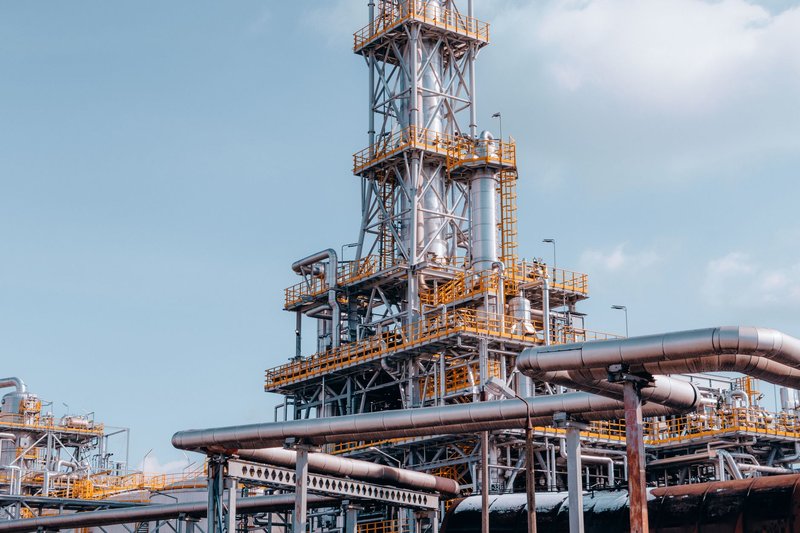
Petroleum. Crude oil contains few aromatics as pumped, so refineries make them. In catalytic reforming, naphtha (a mix of C6 to C10 hydrocarbons) passes over a platinum catalyst at high temperature and pressure. Cyclohexane rings lose hydrogen and become benzene rings, and straight chains curl up and dehydrogenate into rings. The output, called reformate, is loaded with benzene, toluene and xylenes. A second source is steam cracking, where ethylene plants make a benzene-rich by-product called pyrolysis gasoline.
Refiners do this on purpose because aromatics have high octane ratings. Toluene’s research octane number is around 120, well above ordinary gasoline, which is why reformate is a core blending stock. A typical gasoline is roughly a quarter or more aromatics by volume.
What aromatic hydrocarbons are used for
Most aromatics never reach a consumer as themselves. They’re building blocks.
- Plastics: Benzene plus ethylene gives ethylbenzene, then styrene, then polystyrene and ABS. Benzene also feeds cyclohexane for nylon and, via cumene, phenol for polycarbonate and epoxy resins. p-Xylene is oxidized to terephthalic acid, the main ingredient in PET, the plastic in drink bottles and polyester clothes.
- Solvents: Toluene and xylenes dissolve paints, resins, adhesives and inks. Toluene took over most of benzene’s solvent jobs once benzene’s link to leukemia was established.
- Dyes and pigments: Aniline, made from benzene via nitrobenzene, launched the synthetic dye industry. Anthracene derivatives give a range of vat dyes.
- Explosives: TNT comes from toluene.
- Fuel: Aromatics raise the octane rating of gasoline and jet fuel.
- Pharmaceuticals: Aspirin and paracetamol both contain a benzene ring. So do three of the 20 standard amino acids (phenylalanine, tyrosine, tryptophan), which is why proteins absorb ultraviolet light near 280 nm.
Health and environment: BTEX and PAHs
Two groups account for nearly all of the public-health concern.
BTEX
BTEX is shorthand for benzene, toluene, ethylbenzene and xylenes. They’re volatile, they turn up together in gasoline and solvent vapors, and environmental agencies track them as a set.
Benzene is the dangerous one. The National Cancer Institute lists it as a known human carcinogen linked to leukemia, particularly acute myeloid leukemia. The damage comes from benzene’s metabolites in the liver and bone marrow rather than benzene itself. Common exposure routes are tobacco smoke, vehicle exhaust, gasoline fumes at the pump or in an attached garage, and workplace exposure in refining and chemical plants. That’s why regulators cap benzene in fuel. The EU allows up to 1% by volume in petrol, and the US refinery average limit is 0.62%.
Toluene, ethylbenzene and xylenes are far less potent. High toluene exposure, such as deliberate inhalation of glue or paint thinner, harms the central nervous system, and solvent vapors in poorly ventilated rooms cause headaches and dizziness well before anything worse. None of the three has benzene’s link to leukemia.
PAHs
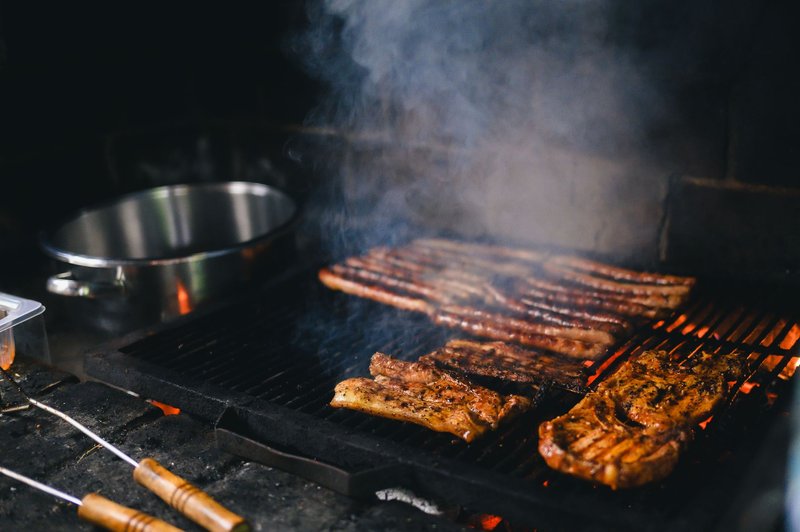
PAHs form whenever organic material burns incompletely: wood fires, coal stoves, diesel engines, cigarettes, and the char on grilled food. The U.S. Environmental Protection Agency tracks 16 as priority pollutants, and the ATSDR toxicological profile summarizes what’s known about their effects on human health.
The pattern in PAH toxicity is that bigger and more fused generally means more dangerous. Naphthalene is irritating and toxic in large doses. Benzo[a]pyrene, with five fused rings, is a proven carcinogen. In the body, enzymes try to make it water-soluble to excrete it, and in the process convert it into a diol epoxide that binds to DNA, mainly at guanine bases, and causes mutations.
The link between soot and cancer is old. In 1775 the London surgeon Percivall Pott connected scrotal cancer in chimney sweeps to chronic soot exposure, one of the first documented occupational cancers. Benzo[a]pyrene was identified as a carcinogenic component of coal tar in the 1930s.
Where you actually meet them
- Grilled and smoked food: PAHs form when fat drips onto hot coals and the resulting smoke coats the food. The National Cancer Institute notes that cooking meat at high temperature produces PAHs, along with a separate group called heterocyclic amines. Cooking over a lower flame, trimming fat and flipping often all reduce the load.
- Gasoline and exhaust: Benzene evaporates at the pump, and exhaust carries both benzene and PAHs. Keeping gasoline cans out of the house and not idling in an attached garage cuts the largest everyday exposure for most people.
- Cigarette smoke: Smoke contains both benzene and a long list of PAHs. It’s the largest source of benzene exposure for smokers and the people around them.
- Wood smoke and urban air: Winter heating with wood or coal pushes PAH levels up in many towns, and they cling to fine particles that travel deep into the lungs.
PAHs also stick around in the environment. They don’t dissolve readily in water, they bind to soil and sediment, and heavier ones can persist for years. That makes contaminated sites of former gas works and creosote-treated wood a recurring cleanup problem.