Eighty-three percent of the world’s people live under a sky that artificial light has brightened. In the United States and Europe, it’s more than 99 percent. One in three people on Earth has never seen the Milky Way, and the glow is growing every year. These facts about light pollution cover how it works, who it affects, and what has been shown to help.
TLDR
- About 83% of humanity lives under light-polluted skies, and the Earth’s lit area grew roughly 2% a year from 2012 to 2016.
- Artificial light disorients sea turtles, migrating birds and fireflies, and blue-rich light at night suppresses melatonin in people.
- The fixes are cheap: shielded fixtures, bulbs at 3000 K or warmer, and timers.
Table of contents
- The basics
- How widespread light pollution is
- Wildlife
- Human health
- Energy and money
- What works
- The LED problem
- Satellites: the newer glow
- What you can do tonight
The basics
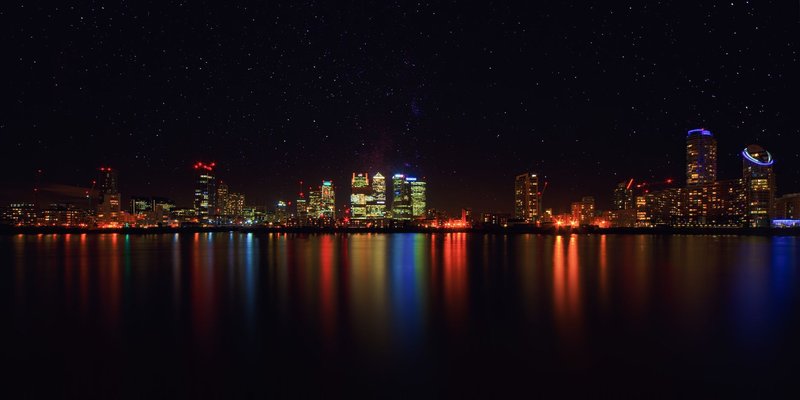
1. Light pollution is artificial light that is excessive, misdirected or unnecessary. The light itself isn’t the problem. The problem is light that goes where nobody needs it: up into the sky, into a bedroom, onto a beach.
2. It comes in four main types, plus a fifth some researchers add. DarkSky International, the nonprofit that has led dark-sky protection for decades, lists skyglow (the haze over inhabited areas), glare (brightness that hurts your vision), light trespass (a floodlight shining through your window) and clutter (confusing clusters of bright sources). Researchers often add over-illumination: more light than the task requires. Light is one of the five main types of pollution, alongside air, water, soil and noise.
3. Skyglow is light that left the ground and came back. Light aimed upward, or bounced off pavement, scatters off air molecules and dust and returns as a haze. A big city’s dome is visible from dozens of miles out, which is why a campsite an hour away can still have an orange horizon.
How widespread light pollution is
4. In 2016, a global atlas found that 83% of people live under light-polluted skies. The World Atlas of Artificial Night Sky Brightness, led by Fabio Falchi and published in Science Advances, counted a sky as polluted when artificial light adds at least 10% to the natural background. By that measure, more than 99% of Americans and Europeans live under one.
5. “One-third,” “80%” and “90%” are all numbers you’ll see for the Milky Way, and they aren’t contradicting each other. The same atlas found that about one-third of humanity can’t see the Milky Way, including roughly 80% of North Americans and 60% of Europeans. Higher figures, like 90%, tend to come from stricter brightness cutoffs or newer data. Depending on how it’s measured, the answer shifts, but the direction doesn’t.
6. The Earth’s lit area grew about 2% a year. A 2017 satellite study by Christopher Kyba and colleagues found outdoor lit area grew 2.2% a year from 2012 to 2016, and brightness in already-lit areas rose 1.8% a year. The notable exceptions were places in conflict, such as Syria and Yemen, where lights went out for the wrong reasons.
7. Ground observers see a faster rise than satellites do. A 2023 study in Science used tens of thousands of star-count reports from volunteers and found the night sky brightened about 9.6% a year from 2011 to 2022. That doubles sky brightness in roughly eight years. Satellites miss part of it, including some blue light and light that shines sideways. The authors’ illustration: a child born where 250 stars are visible would see around 100 by age 18.
8. Country comparisons are lopsided. In the 2016 atlas, Singapore’s entire population lived under skies too bright for the eyes to fully adapt to darkness. Kuwait and Qatar also ranked among the most polluted. Chad, the Central African Republic and Madagascar were among the darkest.
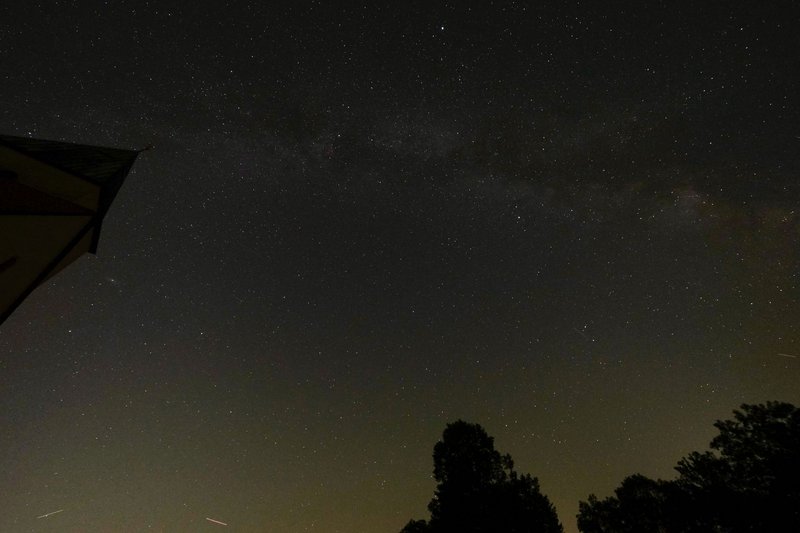
9. The Bortle scale gives you a number for your own sky. Amateur astronomer John Bortle published it in Sky & Telescope in 2001. Class 1 is a pristine dark site, where the Milky Way is bright enough to cast faint shadows. Class 9 is an inner-city sky where only the Moon, planets and a few dozen stars show. The Milky Way fades out around class 6 or 7, so most suburbs lose it entirely.
Wildlife
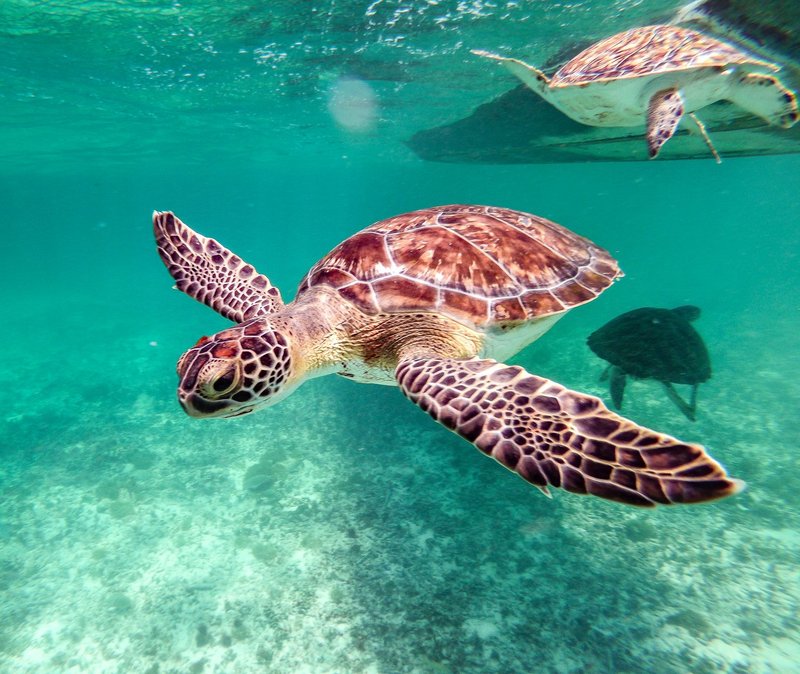
10. Sea turtle hatchlings crawl toward the brightest horizon. On an undeveloped beach that’s the sea, which reflects open sky. A row of beachfront lights behind the dunes sends them inland, where they dehydrate or get hit by cars. Many Florida coastal counties now require turtle-friendly lighting for that reason.
11. Night-migrating birds get pulled into cities. Most songbirds migrate in the dark, and bright skyscrapers draw them in until they circle, tire or hit glass. A 2019 radar analysis ranked Chicago, Houston and Dallas as the riskiest U.S. cities for migrating birds. Cornell’s BirdCast and local “Lights Out” programs ask buildings to switch off during peak spring and fall migration.
12. Insects and fireflies take a hit too. A 2020 review by Avalon Owens and colleagues in Biological Conservation named artificial light at night as a likely contributor to insect decline, alongside habitat loss and pesticides. Fireflies are the clearest case: they find mates by flash patterns, and skyglow and lamps drown those signals out.
Human health
13. Blue light suppresses melatonin harder than other colors. In a study summarized by Harvard Health, blue light suppressed melatonin for about twice as long as green light and shifted the body clock by about three hours, compared with one and a half hours for green. That study used indoor exposure, not streetlights, but the physiology is the same.
14. The American Medical Association has a bulb recommendation. In 2016 the AMA advised communities to choose LED streetlights at 3000 K or lower, citing glare that impairs night driving and the potential for sleep disruption. Evidence linking outdoor light at night to chronic disease is mostly observational so far, and researchers are still sorting out what’s causal.
Energy and money
15. Roughly 30% of outdoor lighting in the U.S. is wasted, by DarkSky’s estimate. That’s light aimed at the sky or spilling past the area that needs it, and it costs billions of dollars a year in electricity. Wasted light is also the cheapest kind to cut, because you don’t have to light anything less. You just have to aim it better.
What works
16. Flagstaff, Arizona has been fixing this since 1958. The city passed one of the first outdoor lighting codes in the country to protect nearby observatories. In 2001 it became the world’s first International Dark Sky City.
17. The first International Dark Sky Reserve is in Quebec. Mont-Mégantic earned the title in 2007, and the surrounding towns changed their outdoor lighting to get there. It proved that a populated region, not just an empty park, can cut its glow.
18. A fully shielded fixture sends no light above horizontal. The same pavement gets lit with fewer watts, because none of them are spent on the sky. This is the single most common fix in dark-sky ordinances.
The LED problem
LEDs were supposed to help, and they save energy. But many early LED streetlights were blue-rich, around 4000 K or higher. Blue light scatters more in the atmosphere, which means more skyglow per unit of light and a stronger melatonin effect.
Then there’s the rebound effect. When lighting gets cheaper to run, cities install more of it. The 2017 study found that the switch to LEDs hadn’t reduced total light output. Efficiency didn’t shrink the glow; it paid for more of it.
Satellites: the newer glow
Satellite constellations, with thousands of satellites in orbit, are a different kind of problem. They reflect sunlight rather than shining from the ground, so they don’t show up in surface light pollution maps. But they leave bright streaks in astronomical images and add to the load on dark skies. Astronomers are working with operators on dimmer designs.
What you can do tonight
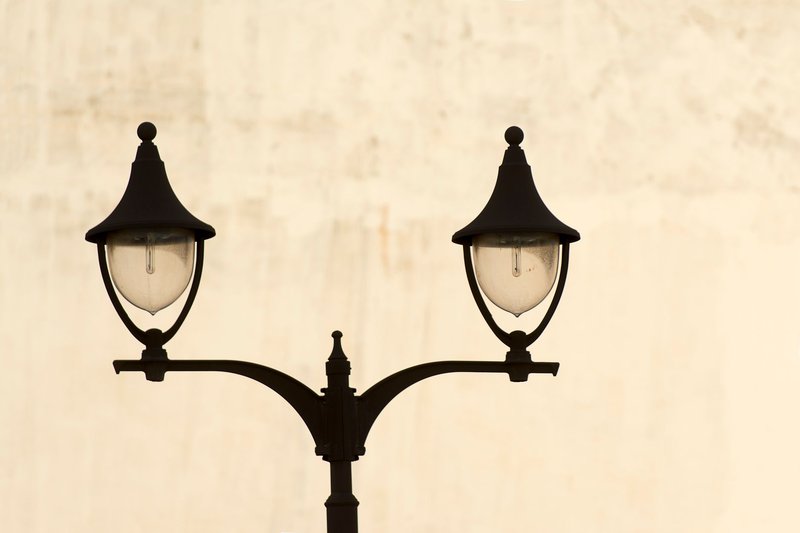
- Shield it. Choose fixtures that point down and cover the bulb. If you can see the bulb from the street, it’s leaking.
- Go warm. Use bulbs of 3000 K or lower. Look for “warm white” or 2700 K on the box.
- Use timers and motion sensors. A porch light that’s on only when you need it costs less and pollutes less.
- Close your curtains. It keeps your own light inside and blocks your neighbor’s.
- Find your sky. Check your Bortle class on lightpollutionmap.info, then look for the nearest dark spot. A drive of an hour can move you several Bortle classes.