You’ve already used environmental science today. The forecast you glanced at, the water you drank, the light you switched on: each one runs on research into how air, water, land, living things and human activity affect each other. That research field is environmental science, and its everyday applications are less abstract than the textbook definition suggests.
Most lists on this topic stop at “recycle more” and “turn off the lights.” This one goes a layer deeper. For each of nine ordinary moments, you get the science underneath and one number worth remembering.
Table of contents
- 1. Checking the forecast
- 2. Looking at the air quality number
- 3. Filling a glass from the tap
- 4. Living above the soil: home radon
- 5. Buying groceries
- 6. Scraping a plate into the bin
- 7. Switching on a light
- 8. Sorting the trash
- 9. Walking down a hot street
- Everyday applications of environmental science at a glance
- What you can do with this
1. Checking the forecast
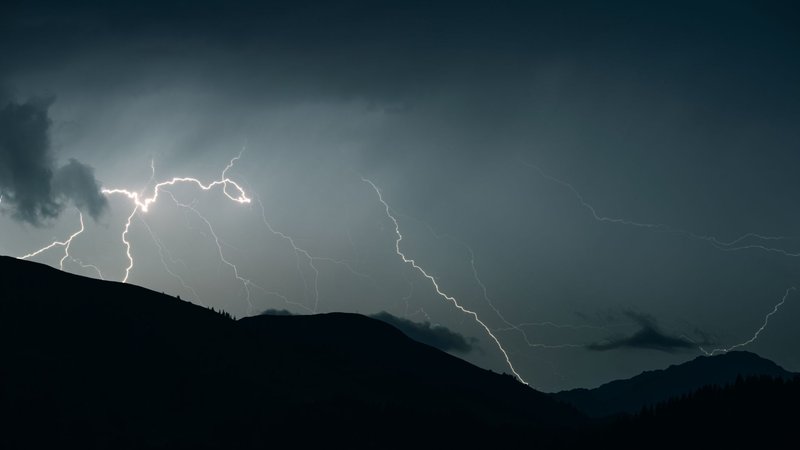
A forecast is a physics and chemistry problem solved on a supercomputer. Weather services feed satellite, balloon, buoy and ground-station readings into models of the atmosphere and run them forward in time. Then they run them dozens of times with slightly different starting values, so the spread between runs tells forecasters how much to trust the result. That’s why you see “40% chance of rain” instead of a flat yes or no.
The payoff has been steady. A review in Nature found that forecast skill has improved by about one day of useful lead time per decade. Today’s three-day forecast beats what a one-day forecast could do not long ago. When a hurricane warning gives a coastal county enough hours to evacuate, this is the science doing its job.
2. Looking at the air quality number
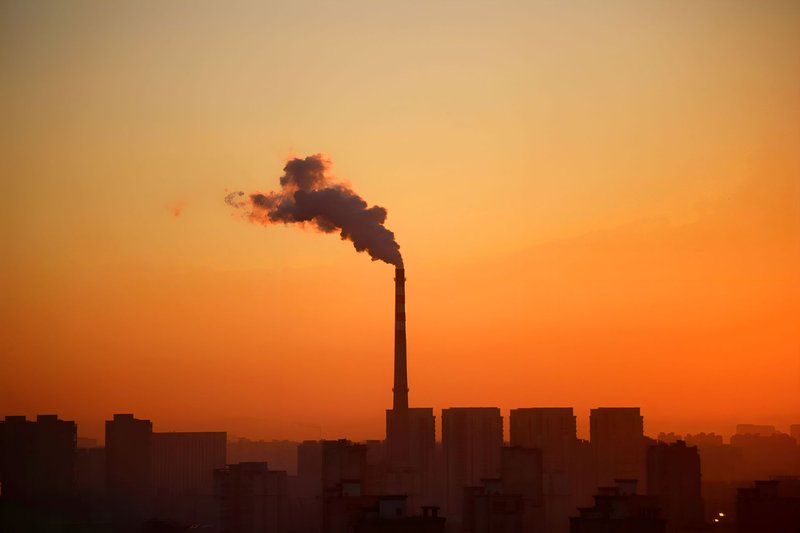
The Air Quality Index on your weather app is a single number built from monitors that count tiny particles (PM2.5, specks narrow enough to reach deep into your lungs) and gases such as ozone and nitrogen dioxide. In the US, the scale runs from 0 to 500, and 100 marks the legal health-based limit. Anything above it is a day when sensitive groups should cut back on outdoor exercise.
You probably remember the proof. In June 2023, smoke from Canadian wildfires pushed New York City’s index past 400, and millions of people checked a number they’d never thought about before. The stakes are global: the World Health Organization estimates that outdoor air pollution causes about 4.2 million premature deaths a year. Air monitoring is how cities decide when to issue alerts, close schools or restrict traffic.
3. Filling a glass from the tap
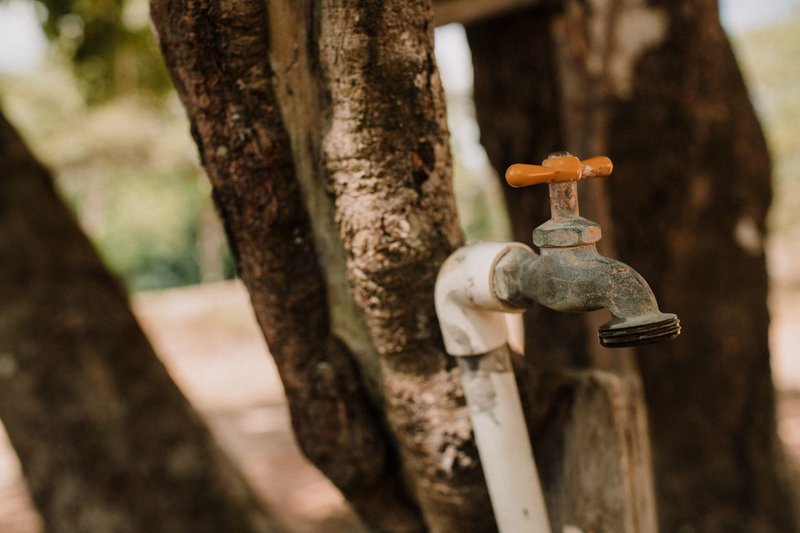
Safe tap water is not a default state of nature. It’s the output of continuous testing. In the US, the Safe Drinking Water Act of 1974 gave the EPA the job of setting legal limits for more than 90 contaminants, from bacteria to arsenic to lead. Utilities sample at treatment plants and across the pipe network, and every year they must publish a Consumer Confidence Report with the results. Yours is online, and most people have never read it.
Water-quality science also tells us where the weak points are. The EPA’s most recent survey estimated about 9 million lead service lines still connect homes to water mains across the country. Chemists learned that lead doesn’t just wash off pipes. It dissolves depending on the water’s acidity and mineral content, so utilities now adjust water chemistry to keep a protective coating on the pipe walls.
4. Living above the soil: home radon
Radon is an invisible, odorless gas produced when uranium in rock and soil breaks down. It seeps up through foundation cracks and collects in basements and ground floors. Geologists map where it’s likely to occur using Earth science that tracks how soil and rock behave, and health scientists tracked its effects in people for decades to establish the risk.
The EPA ranks radon as the leading cause of lung cancer among nonsmokers, responsible for about 21,000 lung cancer deaths a year in the US. About one in 15 homes has a level at or above the 4 picocuries per liter action line. You can’t predict which one from the outside. A neighbor’s clean result says little about your house, because it depends on the soil under your own slab. A short-term test kit is cheap, and a fix, usually a vent pipe and a fan, is a one-day job.
5. Buying groceries
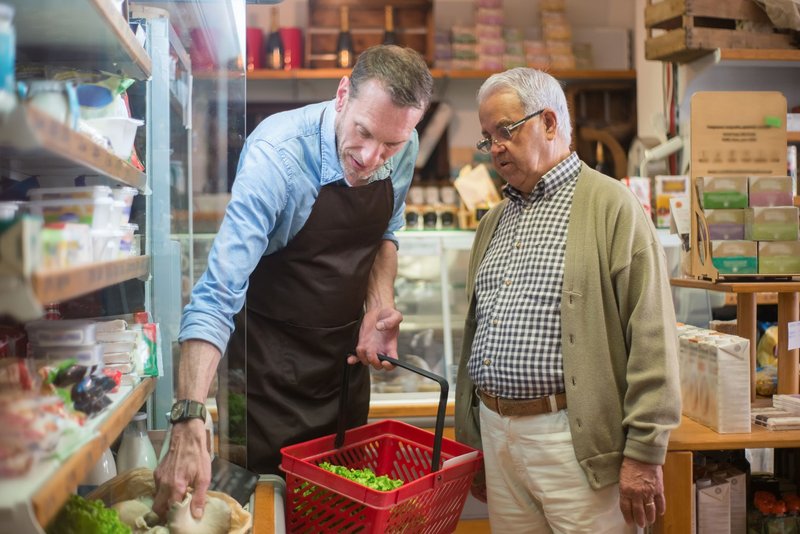
Every food you pick up has a footprint, and scientists measure it with life-cycle assessment, a method that adds up land, water and emissions from farm to shelf. A widely cited 2018 analysis in Science, covering about 38,000 farms in 119 countries, found that food accounts for roughly a quarter of global greenhouse gas emissions. Beef from dedicated beef herds averages around 100 kilograms of CO2-equivalent per kilogram of meat. Peas come in under one.
The same study produced a finding that surprises people: transport makes up only about 6% of food’s emissions. What you eat matters far more than how far it traveled, so a local steak is rarely the greener choice over imported lentils. Eco-labels, carbon footprint stickers and the “better choice” tags on some seafood and coffee all trace back to this kind of measurement.
6. Scraping a plate into the bin
The USDA estimates that 30 to 40 percent of the US food supply goes uneaten. Globally, the UN Environment Programme’s 2024 Food Waste Index counted 1.05 billion tonnes thrown away in 2022, about 19% of all food available to consumers. Households were the biggest source, at roughly 60% of the total.
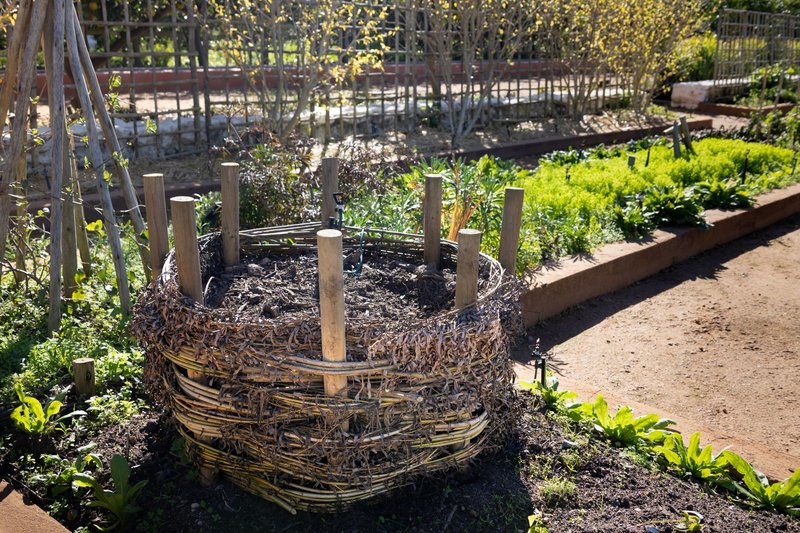
Here’s where the environmental science comes in. Food buried in a landfill breaks down without oxygen, and microbes in that low-oxygen environment release methane, which traps about 80 times more heat than CO2 over 20 years. UNEP attributes 8 to 10% of global greenhouse gas emissions to food loss and waste. Composting reverses the chemistry: with air in the mix, microbes produce mostly CO2 and a stable, soil-building material. Landfills are the third-largest human source of methane in the US, and a banana peel in a compost pile contributes to that statistic far less than one in the trash.
7. Switching on a light
An LED bulb uses at least 75% less energy than an incandescent bulb and lasts up to 25 times longer, according to the US Department of Energy. That’s the kind of number you only get when someone does a life-cycle assessment, comparing the energy to make, ship, run and dispose of each option. The LED costs more to manufacture, but the electricity saved over its life dwarfs the difference.
Environmental scientists also track where the electricity comes from. The same bulb has a different footprint in a state running on hydropower than in one running on coal, because grid operators and researchers measure the carbon intensity of every kilowatt-hour. The ENERGY STAR and EU energy labels on appliances rest on the same testing. Someone measured that refrigerator’s consumption in a lab so you can compare it against the one next to it on the showroom floor.
8. Sorting the trash
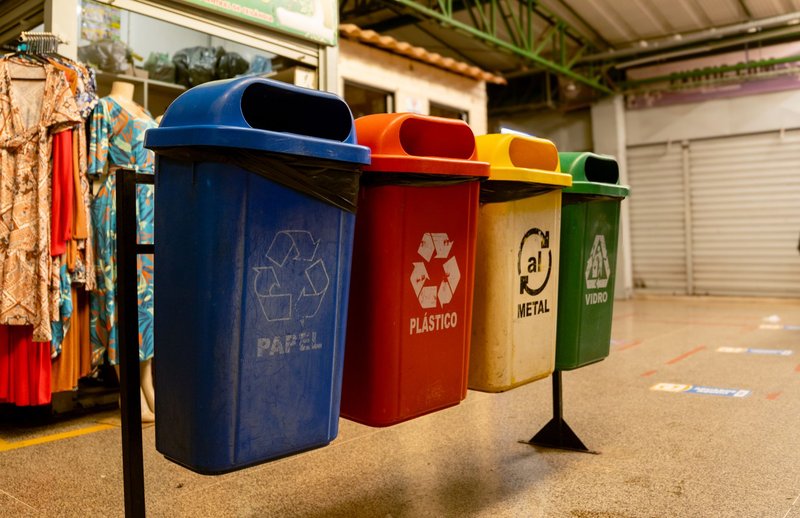
The reason your bins are divided the way they are comes from materials science and waste audits. Aluminum is the success story: recycling a can takes about 95% less energy than making a new one from bauxite ore, which is why an aluminum can is worth money and a yogurt cup often isn’t.
Plastic is the cautionary tale. A 2017 study in Science Advances tallied all the plastic ever produced through 2015 and found only about 9% had been recycled. Roughly 12% was incinerated, and the rest sat in landfills or the environment. Different plastic resins can’t be melted together, and food residue ruins a batch. That’s why recycling programs publish lists of exactly what they accept. A greasy pizza box in the blue bin is a contaminant, not a good intention.
9. Walking down a hot street

Cities run hotter than the countryside around them. According to the EPA’s heat island research, a city of a million people or more can be 1 to 3°C warmer than its surroundings on average, and up to 12°C warmer on a calm evening. Dark pavement and roofs soak up sunlight, and a lack of trees means less shade and less evaporative cooling. A conventional roof on a summer afternoon can be 50 to 90°F hotter than the air above it.
Scientists measure all this with thermal satellite imagery and sensors on bikes and cars, and cities now act on it. Los Angeles has coated streets with reflective paint. Paris and Madrid are planting shade trees and building cooling corridors. Heat maps show which neighborhoods lack canopy, and those tend to be the neighborhoods where heat-related illness is highest. The shaded bench you sat on last summer might exist because of one of those maps.
Everyday applications of environmental science at a glance
| Daily moment | Science behind it | What it protects you from |
|---|---|---|
| Checking the forecast | Atmospheric modeling, ensemble forecasting | Storms, floods, bad travel days |
| Reading the air quality index | Air monitoring, particle chemistry | Smoke and smog exposure |
| Drinking tap water | Water testing, treatment chemistry | Bacteria, lead, arsenic |
| Testing a home | Geology, radiation science | Radon-linked lung cancer |
| Buying food | Life-cycle assessment | High-footprint diets, misleading labels |
| Composting scraps | Microbiology, methane science | Landfill methane |
| Choosing a bulb or appliance | Energy and life-cycle analysis | Wasted electricity, grid emissions |
| Sorting recycling | Materials science, waste audits | Contaminated, unrecyclable loads |
| Walking in summer | Remote sensing, urban climatology | Dangerous urban heat |
What you can do with this
Knowing the science makes your small choices sharper. A few that pay off:
- Read your water report. Search “[your city] Consumer Confidence Report” and check the lead and contaminant sections.
- Test for radon. Buy a short-term kit, especially if you live in a ground-floor or basement unit.
- Check the air index before a run, and keep a stash of masks if you live in wildfire country.
- Cut food waste first. It beats most other kitchen habits, and composting handles what’s left.
- Swap in LEDs and look for energy labels when an old appliance dies.
- Read your local recycling list. Ten minutes now saves contaminated batches later.
- Plant a tree or support one on your street. Shade is the cheapest cooling technology there is.