Some myths about weather are harmless. Others, like the one about opening windows during a tornado, waste the 60 seconds that matter most. This list sorts 14 common beliefs into false, partly true and true, tells you where each one came from, and gives you a “what to do instead” for the ones that can hurt you.
A few of them hold up better than you’d expect. Folk forecasters watched the sky for thousands of years, and some of what they noticed was real.
Contents
Quick reference: myth vs. verdict
| # | Myth | Verdict |
|---|---|---|
| 1 | Lightning never strikes the same place twice | False |
| 2 | Rubber tires protect you from lightning in a car | False |
| 3 | Open your windows in a tornado to equalize pressure | False |
| 4 | A highway overpass is a safe tornado shelter | False |
| 5 | A few inches of floodwater is safe to drive through | False |
| 6 | Cold weather gives you a cold | Partly true |
| 7 | Aching joints predict rain | Partly true |
| 8 | Red sky at night means good weather tomorrow | Partly true |
| 9 | Animals can predict the weather | Mostly false |
| 10 | A falling barometer means a storm is coming | Partly true |
| 11 | Raindrops are teardrop-shaped | False |
| 12 | Heat lightning is a separate kind of lightning | False |
| 13 | You can smell rain before it arrives | True |
| 14 | It’s too cold to snow | False |
Safety myths about weather
1. Lightning never strikes the same place twice
Verdict: False.
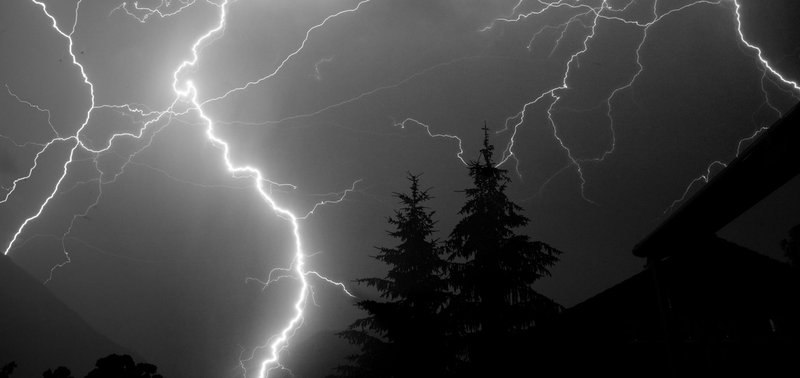
Lightning picks tall, pointed, conductive things, and those stay tall, pointed and conductive after the first hit. The Empire State Building takes roughly 20 to 25 strikes a year. Park ranger Roy Sullivan was struck seven separate times between 1942 and 1977 and survived all of them.
The saying is a metaphor for bad luck that doesn’t repeat, and it got promoted to a physics claim somewhere along the way.
What to do instead: treat every storm as capable of striking near you again. The National Weather Service’s rule is when thunder roars, go indoors. Wait 30 minutes after the last thunder before going back out.
2. Rubber tires protect you from lightning in a car
Verdict: False.
Cars are safe because of the metal shell, not the tires. A hard-topped vehicle acts as a conductor that routes the current around the passengers and into the ground. Rubber tires add almost nothing, since a bolt that has already crossed miles of air isn’t stopped by a few inches of tread. Convertibles and fabric-topped vehicles don’t give that protection.
The myth probably comes from the true fact that rubber insulates against ordinary household voltages, a number lightning exceeds by many orders of magnitude.
What to do instead: in a hard-topped car, keep the windows shut and avoid touching the metal frame, radio and door handles until the storm passes.
3. Open your windows in a tornado to equalize pressure
Verdict: False.
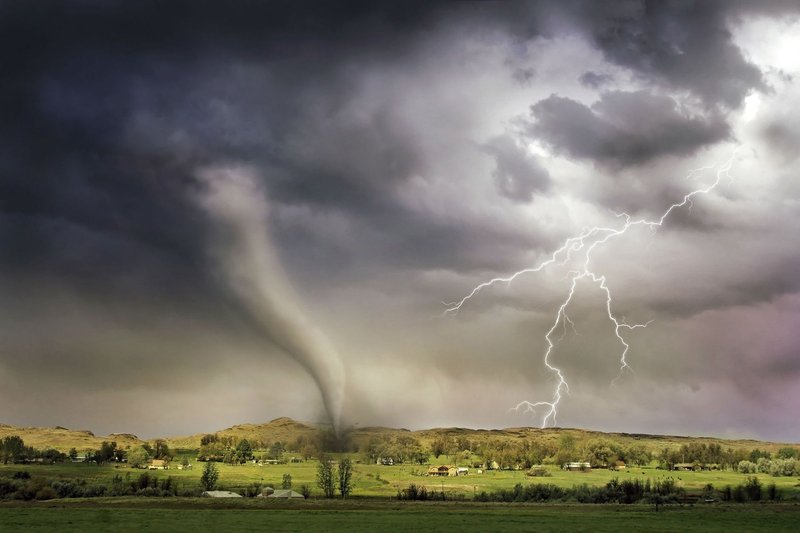
The idea is that a tornado’s low-pressure core makes a sealed house burst outward, so you should let the pressure out. Houses leak enough air through walls, eaves and gaps that their pressure equalizes on its own. What destroys buildings is wind and flying debris, and the National Weather Service says to skip the windows entirely.
Opening them also puts you next to glass at the moment you most want to be away from it.
What to do instead: go to the lowest floor, into an interior room with no windows, such as a closet or bathroom. Get under something sturdy and cover your head and neck.
4. A highway overpass is a safe tornado shelter
Verdict: False.
In 1991, a news crew near Andover, Kansas, sheltered under an overpass and filmed a tornado passing. They survived, the footage spread, and a rule of thumb was born. The problem is that the overpass funnels wind through the narrow gap beneath the bridge and speeds it up, and debris has nowhere to go. During the May 1999 outbreak in Oklahoma, several people died at overpasses.
What to do instead: get into a solid building. If you’re caught in a car with no shelter nearby, the least-bad options are staying buckled in with your head below the window line, or lying flat in a low ditch away from the car. Both are last resorts.
5. A few inches of floodwater is safe to drive through
Verdict: False.
Water looks shallow because you can’t see the road under it. The NWS’s Turn Around, Don’t Drown figures: six inches of fast-moving water can knock an adult off their feet, 12 inches can float a small car, and two feet can carry away an SUV. About half of flood deaths happen in vehicles.
People believe it because their car handled a puddle fine last week. A puddle doesn’t have a current.
What to do instead: turn around and find another route. If water is rising around a stalled car, leave the car and move to higher ground.
Health myths
6. Cold weather gives you a cold
Verdict: Partly true.
Viruses cause colds, mainly rhinoviruses. No virus, no cold, however long you stand outside in a wet jacket. Colds peak in winter mostly because people crowd indoors, breathe dry air that helps virus particles linger, and share surfaces.
Cold does play a small role, though. A Yale-led study in PNAS found that rhinovirus replicates better at the cooler temperature inside the nose (around 33°C) than at core body temperature (37°C), and that airway cells mounted a weaker antiviral response at the cooler temperature. Chilled nasal passages may help a virus you’ve already picked up.
The belief is as old as the word itself. “Catching a cold” and “catching a chill” were treated as the same thing long before anyone knew viruses existed.
7. Aching joints predict rain
Verdict: Partly true.
Hippocrates wrote about weather and illness around 2,400 years ago, so this one has an excellent pedigree. Older studies mostly found no link. A large UK smartphone study called Cloudy with a Chance of Pain, which tracked thousands of people with chronic pain, found that days with higher humidity, lower pressure and stronger wind were linked to slightly more pain.
The effect was small, and it varied from person to person. One person’s knee reacts to falling pressure, another’s doesn’t react to anything. Expect a weak signal rather than a forecast.
Folk forecasting myths

8. Red sky at night means good weather tomorrow
Verdict: Partly true.
“Red sky at night, shepherd’s delight; red sky in morning, shepherd’s warning” appears in the Gospel of Matthew, and sailors have repeated it ever since. In the mid-latitudes, where weather systems generally travel from west to east, it works as a rough rule. A red sunset means the sun’s low light is passing through dry, dust-laden air to the west, which is usually high pressure and clear weather heading your way.
It fails in the tropics, where weather doesn’t follow that pattern, and it fails whenever a system changes direction or speed. Call it a decent hint, not a forecast.
9. Animals can predict the weather
Verdict: Mostly false.
Punxsutawney Phil is the famous case. The Groundhog Day tradition traces to German Candlemas folklore brought to Pennsylvania, and the first official Gobbler’s Knob ceremony took place in 1887. Checked against records by NOAA’s climate data center, Phil’s record comes out around 40 percent, worse than a coin flip. A groundhog’s shadow also says nothing about the next six weeks across an entire region.
Cows lying down before rain, ants building higher mounds and woolly caterpillars with thick bands all lack good evidence behind them. There is one real footnote. In April 2014, researchers tracking golden-winged warblers in Tennessee found that the birds left their nesting grounds a day or two before a major tornado outbreak hit, apparently after sensing low-frequency infrasound from the storms hundreds of miles away. Some animals detect things we can’t. That’s different from forecasting.
10. A falling barometer means a storm is coming
Verdict: Partly true.
The trend matters, not the number. A steady drop over several hours means a low-pressure system is approaching, and a fast drop of several millibars in three hours points to something strong. But a single reading says little by itself. The average sea-level pressure is about 1013 millibars, and a steady 1005 can bring a calm day while a reading of 1020 that’s falling quickly can bring rain.
Old “Rain / Change / Fair” labels on household barometers made people read the dial like a prediction. Watch which way the needle is moving, not where it’s resting.
Science trivia myths
11. Raindrops are teardrop-shaped
Verdict: False.
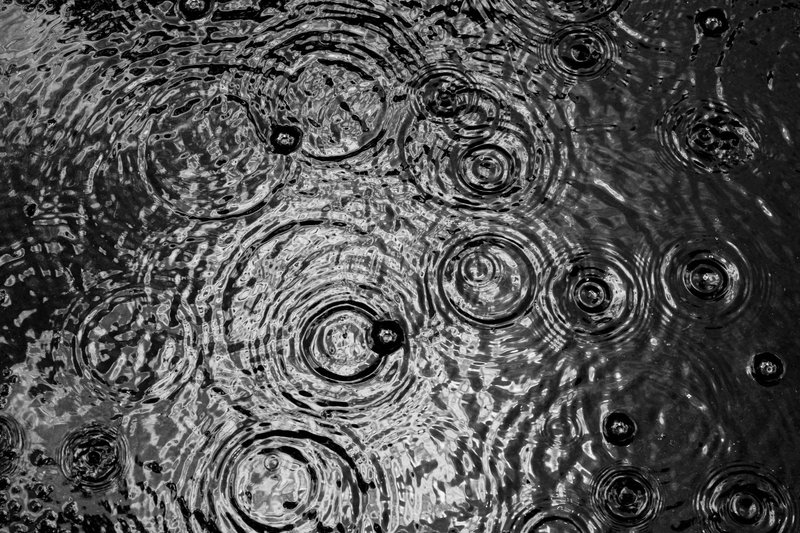
Small raindrops are nearly spherical. Larger ones flatten on the bottom as air pushes up on them, ending up shaped like a hamburger bun, according to the USGS. Drops bigger than about four to five millimeters break apart on the way down.
The teardrop shape comes from illustrations, and from the look of water hanging from a tap just before it falls. Falling rain doesn’t do that.
12. Heat lightning is a separate kind of lightning
Verdict: False.
Those silent flashes on a warm summer night are ordinary lightning from a storm too far away to hear, usually more than 10 miles. Thunder rarely carries that far, but the light of the flash can be seen reflecting off clouds from much farther. The name comes from the fact that hot, humid evenings are when distant thunderstorms are common.
What to do instead: treat it as a sign that a storm exists, not proof that it’s harmless. Storms can move toward you, and lightning can strike up to about 10 miles from the storm itself.
13. You can smell rain before it arrives
Verdict: True.
This one is real, and it has three ingredients. Rain hitting dry ground releases petrichor, a word coined in 1964 by Australian scientists Isabel Joy Bear and Richard Thomas, for the oils plants secrete in dry spells. Soil bacteria add geosmin, the earthy note, and humans can detect it at parts per trillion. MIT researchers later filmed raindrops trapping tiny air bubbles that burst and fling those scent aerosols into the air. Before a storm, downdrafts can also bring ozone down from higher up, giving that sharp, clean smell.
So you really can smell the front of the storm a few minutes before the first drop. It wasn’t folklore, just an unusually good nose.
14. It’s too cold to snow
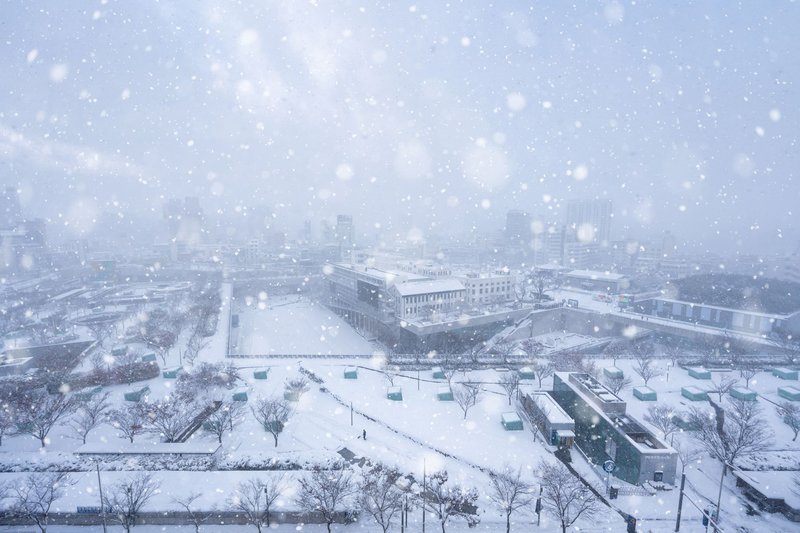
Verdict: False.
Snow has fallen at temperatures far below zero. The catch is that cold air holds much less water vapor, so very cold air makes light, dry flurries rather than big accumulations. The heaviest snowstorms tend to hit when temperatures are near freezing, with plenty of moisture to work with.
People feel this is true because the really cold days are often clear, dry and bright. That’s the weather pattern, not a temperature limit.