TLDR
Florida has more than 200 plant species that grow wild nowhere else on the planet, most of them squeezed onto ancient sand ridges — Lake Wales Ridge, Apalachicola’s bluffs, Miami’s pine rocklands — that were islands when sea levels were higher. Below are 20 of them, what makes each one distinct, and where you can actually go see one. Most are rare enough that you’ll never buy seed for them; a handful have native cousins you can plant in your own yard.
Table of Contents
- Why Florida Grows Plants Nowhere Else Does
- The Lake Wales Ridge Scrub Specialists
- The Panhandle’s Ancient Refugees
- Miami’s Pine Rockland Rarities
- Growing Florida Natives at Home
Why Florida Grows Plants Nowhere Else Does
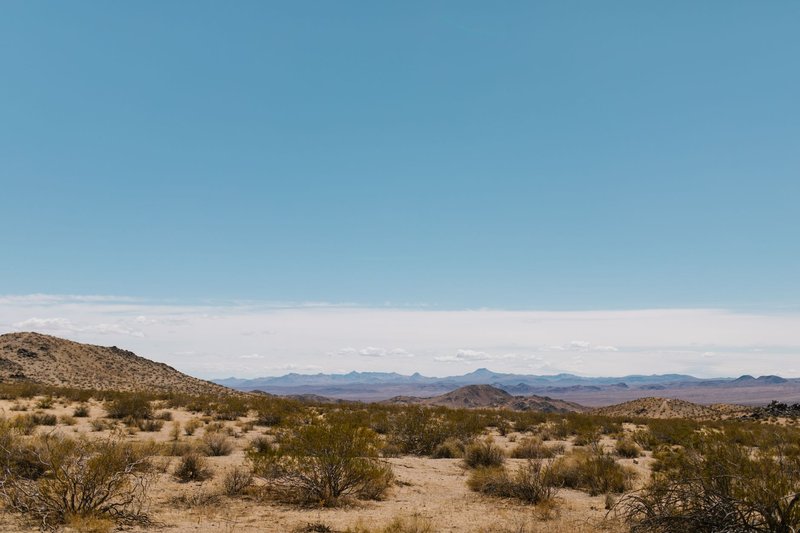
Two million years ago, most of the Florida peninsula was underwater. What stuck out above the waves was a scattering of sand ridges running down the center of the state — real islands, surrounded by ocean the way the Bahamas are today. As sea levels rose and fell with the ice ages, those ridges kept forming and reforming, and the plants stranded on top of them kept evolving in isolation, the same way finches diversified on the Galápagos.
That’s the short version of why the Lake Wales Ridge — a strip of ancient dunes running through Polk and Highlands counties — is one of the most concentrated pockets of plant endemism in North America. The soil doesn’t help matters, or rather it does, depending on your definition of help: deep, bone-white, nutrient-starved sand that drains almost instantly. Ordinary plants can’t handle it. The ones that could adapted into forms found nowhere else, and then fire came through every few years and killed off anything that hadn’t specialized for that too.
The same story plays out with variations elsewhere in the state. The bluffs along the Apalachicola River in the panhandle sat far enough from Ice Age glaciers to become a refuge for species that vanished everywhere else in the eastern United States. Miami’s pine rocklands grow on limestone so close to the surface that soil barely exists, forcing a different set of adaptations. Roughly 11% of Florida’s native flora — by most counts, upward of 200 species — exists only within the state’s borders, and most of it traces back to one of these three engines: ancient scrub islands, panhandle relict refuges, or South Florida limestone.
The Lake Wales Ridge Scrub Specialists
The Lake Wales Ridge holds close to two dozen plants that exist nowhere else on Earth, packed into a strip of central Florida scrub you could drive through in an afternoon without noticing it. Archbold Biological Station in Venus, Florida runs public trails through some of the best remaining examples.
1. Florida ziziphus (Pseudoziziphus celata). Botanists assumed this thorny little shrub had gone extinct until a population turned up along a Highlands County fence line in 1987. It’s still one of the rarest plants in the country — a handful of wild sites, all in Polk and Highlands counties — and it’s the only close North American relative of the jujube. Federally endangered; not something you’ll find at a nursery.
2. Florida bonamia, or scrub morning glory (Bonamia grandiflora). A trailing vine with two-inch lavender-blue flowers that open at dawn and close by early afternoon, which is part of why it’s easy to walk past without seeing it bloom at all. Federally threatened, though roughly 100 populations remain scattered through central Florida scrub, including inside Ocala National Forest.
3. Clasping warea (Warea amplexifolia). A late-summer bloomer with clusters of white, four-petaled flowers on stalks that push straight up out of sandhill and scrub habitat. It’s a fire follower — populations spike after a burn clears competing brush, then fade as the canopy closes back in. Federally endangered.
4. Pygmy fringetree (Chionanthus pygmaeus). A shrub-sized cousin of the fringe tree you might have in a suburban yard, except this one tops out around six feet and grows only in the sand-pine scrub and oak scrub of central Florida’s ridge system. Around 46 known populations remain, and development keeps eating into the habitat.
5. Garberia (Garberia heterophylla). The only species in its genus, full stop — no other plant on the planet is a Garberia. It’s a gray-green shrub that turns Lake Wales Ridge scrub faintly pink-purple every fall when it flowers. Not federally listed, but the Florida Native Plant Society tracks it as threatened.
6. Highlands scrub hypericum (Hypericum cumulicola). A wiry, yellow-flowered St. John’s-wort that grows only in the open white-sand gaps between scrub shrubs — the same bare patches scrub-jays use for foraging. Federally endangered, and its entire range fits inside a few Highlands and Polk county preserves.
7. Curtiss’ milkweed (Asclepias curtissii). One of the few endemic scrub plants with a job most people recognize: it’s a monarch and queen butterfly host plant, with grayish leaves adapted to reflect scrub sun instead of absorbing it. State-listed endangered.
8. Britton’s beargrass (Nolina brittoniana). A yucca-like rosette of tough, grass-like leaves that can go a full decade between flowering events, then send up a flower spike taller than a person almost overnight. Federally endangered, found in scattered scrub and sandhill patches from Marion County south to Highlands.
9. Scrub plum (Prunus geniculata). A knee-high shrub with branches that zig-zag at sharp angles between each leaf — an actual identifying feature, not just a description — and small white spring flowers. Federally endangered, restricted to the Lake Wales Ridge and a few outlying sites in Polk and Highlands counties.
10. Papery whitlow-wort, also called sandlace (Paronychia chartacea). A mat-forming plant so low and pale it’s easy to mistake for a patch of dry moss until you notice the tiny straw-colored flowers. It grows in the bare sand gaps of scrub, the same fire-maintained openings several other species on this list depend on. Federally threatened.
The Panhandle’s Ancient Refugees
The bluffs above the Apalachicola River sit at the opposite end of the state, geologically and ecologically, from the scrub ridges — cooler, shadier, closer in feel to Appalachian ravine forest than to anything most people picture as Florida. Torreya State Park protects the core of what’s left.
11. Florida torreya, also called Florida nutmeg (Torreya taxifolia). This is the headline case for how fast an endemic species can collapse. A fungal pathogen swept through the population starting in the 1950s, and the tree has lost an estimated 98.5% of its numbers since. Fewer than ten wild trees are still known to produce cones. The U.S. Fish and Wildlife Service lists it as one of the most endangered conifers on Earth, restricted to a roughly 40-mile stretch of limestone bluffs in Gadsden, Liberty, and Jackson counties.
12. Florida yew (Taxus floridana). Growing in the same ravines as the torreya and facing similar pressure, this small understory conifer produces the bright red arils typical of yews worldwide, but nowhere outside a narrow band of the Apalachicola bluffs. State and federally tracked as endangered.
Miami’s Pine Rockland Rarities
Pine rockland is its own kind of strange: slash pine forest growing directly on exposed limestone, with almost no soil layer at all, historically kept open by fire that burned across the Miami Rock Ridge every few years. Less than 2% of the original pine rockland outside Everglades National Park still exists — the rest is Miami-Dade. What’s left inside the park, particularly around Long Pine Key, is the best place left to see it intact.
13. Blodgett’s wild mercury (Argythamnia blodgettii). A low, spreading shrub with small greenish flowers, found in the thin rocky soil of pine rockland and coastal rock barren from Miami-Dade down into the Florida Keys. Federally threatened.
14. Carter’s small-flowered flax (Linum carteri var. carteri). A slender, yellow-flowered annual that pops up in the open, sunny gaps of recently burned pine rockland, then all but disappears as the understory grows back in. State-listed endangered.
15. Sand flax (Linum arenicola). Related to Carter’s flax and just as dependent on regular fire, but tolerant of slightly more disturbed rockland edges — which hasn’t spared it from federal endangered status, given how little of that rockland remains.
16. Florida lantana (Lantana depressa var. depressa). A low, sprawling native with small orange-and-yellow flower clusters that would be unremarkable if it weren’t fighting a losing battle against its own invasive relative — the ornamental Lantana camara sold at big-box garden centers, which readily crossbreeds with it and swamps the wild gene pool. State-listed endangered.
17. Pineland milkpea (Galactia pinetorum). A trailing legume with small purple-pink pea flowers, one of the less showy pine rockland endemics but a genuine rarity — most surviving populations are confined to a handful of Miami-Dade preserves.
18. Few-flowered crabgrass (Digitaria pauciflora). Don’t let the name fool you into skipping it — this isn’t the lawn weed. It’s a delicate native grass restricted to the marl-edged fringes of pine rockland and adjacent wet prairie, federally listed as threatened.
19. Deltoid spurge (Euphorbia deltoidea ssp. deltoidea). A tiny, ground-hugging plant with leaves shaped like their name suggests, growing directly out of cracks in exposed limestone. Federally endangered, and almost entirely confined to fragments of pine rockland within Miami-Dade County’s urban footprint.
20. Lakela’s mint (Dicerandra immaculata). Crush a leaf and you’ll understand the genus name immediately — the whole plant is aromatic. It grows on the Atlantic coastal ridge in Indian River and St. Lucie counties, a scrub habitat type distinct from the Lake Wales Ridge interior, and is federally endangered with only a small number of protected sites remaining.
Growing Florida Natives at Home
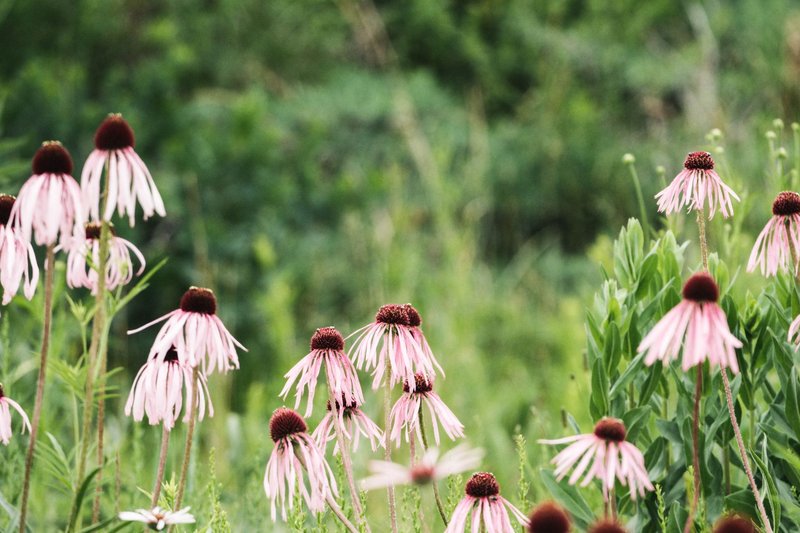
None of the plants listed above with federal endangered status should come out of the ground, full stop — collecting them from the wild is illegal, and most exist in populations too small to survive any removal anyway. But endemism doesn’t mean untouchable across the board, and Florida’s broader native flora includes plenty of species built for exactly the same sandy, fast-draining conditions that make most home landscaping fail.
The Florida Native Plant Society runs plant sales through its regional chapters that sell nursery-propagated straight species, not the cultivars you’ll find at a chain garden center. Look for scrub relatives in the same genera as some of the rarest species above — coontie, saw palmetto, and various milkweeds and blazing stars are widely available and were built by the same evolutionary pressure: full sun, sandy soil, and long stretches without rain.
The practical upside is that a real Florida scrub garden needs almost no irrigation once it’s established, no fertilizer, and no pesticide, because the plants co-evolved with the pests. The tradeoff is patience — these aren’t fast growers, and a scrub garden looks sparse for its first couple of years before it fills in. That’s a fair trade for a yard that isn’t drawing down the aquifer every August, and for a small chance to keep a piece of a 200-species-strong, million-year-old evolutionary experiment alive somewhere other than a preserve.