Category
Chemistry
198 articles
 Chemistry
Types of Organic Reactions: How to Spot Each One
Nearly every organic reaction you’ll meet in a first course is a variation on four moves: atoms get…
October 22, 2026
 Chemistry
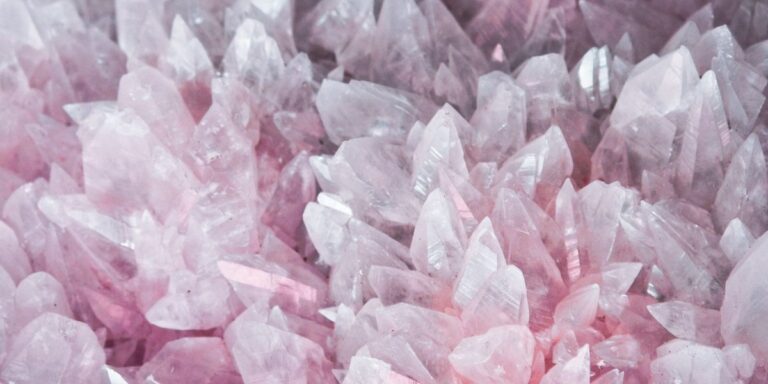
Erbium Compounds: Colors, Uses, and Why They’re Pink
Erbium compounds are almost all pink. The oxide, the nitrate, the sulfate and the fluoride all come out…
October 22, 2026
 Chemistry
Vanadium-Producing Countries: Who Mines It and How
China produces roughly 70,000 tonnes of vanadium a year, about 70% of the world’s supply. Russia is a…
October 22, 2026
 Chemistry
Uses of Krypton: What the Noble Gas Actually Does
TLDR The main uses of krypton are lighting (fluorescent tubes, photographic flashes, high-intensity bulbs), insulating gas inside high-end…
October 20, 2026
 Chemistry
Examples of Organic Compounds, Sorted by Class and Use
An organic compound is a molecule built on a carbon skeleton, almost always with carbon-hydrogen bonds. Methane, ethanol,…
October 20, 2026
 Chemistry
Real Gases: Why They Break the Ideal Gas Law
A real gas is any actual gas, as opposed to the idealized one in PV = nRT. It…
October 20, 2026
 Chemistry
Ytterbium Isotopes: Stable, Radioactive, and What They Do
TLDR Table of Contents The seven stable ytterbium isotopes Natural ytterbium is a mix of seven isotopes, and…
October 20, 2026
 Chemistry
Non-Electrolytes: Definition, Examples, and How They Work
A non-electrolyte is a substance that dissolves in water without forming ions, so the solution doesn’t conduct electricity.…
October 20, 2026
 Chemistry
Acetic Acid vs Glacial Acetic Acid: What Actually Differs
The differences between acetic acid and glacial acetic acid come down to one thing: water. The molecule is…
October 16, 2026
 Chemistry
12 Myths About Chemistry (and What’s Actually True)
Chemistry gets blamed for a lot: pollution, “toxins,” that mystery ingredient on the shampoo bottle. It also gets…
October 13, 2026
