The differences between acetic acid and glacial acetic acid come down to one thing: water. The molecule is identical. Glacial acetic acid is the pure compound, at least 99.5% acetic acid with almost no water. “Acetic acid” on its own usually means a solution in water, and the version in your kitchen is vinegar, at roughly 4 to 8%.
That gap in concentration changes how the liquid behaves, what it can do to your skin, and what you can safely use it for.
TLDR
- Both are CH₃COOH. The only difference is how much water is present.
- Glacial acetic acid is about 99.5%+ pure. Vinegar is about 4-8% acetic acid.
- Glacial acetic acid freezes at about 16.6 °C (62 °F), which is where the name comes from.
- Vinegar is a food. Glacial acetic acid burns skin, gives off irritating vapor, and is flammable.
- Never swap one for the other without diluting properly.
Contents
- Same molecule, different water content
- Side-by-side comparison
- Why it’s called “glacial”
- Is vinegar glacial acetic acid?
- Safety and handling
- How to dilute glacial acetic acid
- Reading the label
- FAQ
Same molecule, different water content
Acetic acid is a two-carbon carboxylic acid with the formula CH₃COOH. (Some exam-prep sites print HCOOH, which is formic acid, a different compound.) Its PubChem entry lists it as a colorless liquid with a sharp, vinegar-like smell.
Chemists use “acetic acid” loosely. It can mean the pure compound or any aqueous solution of it. When the water is essentially gone, the product is called glacial acetic acid. When it’s diluted to a few percent, you get something you can sprinkle on fries.
Water matters here because acetic acid is a weak acid. In dilute solution, only a small fraction of molecules give up a proton (pKa about 4.76). In the concentrated liquid, there’s no water to soften things, and the sheer number of acid molecules makes it aggressively corrosive.
Side-by-side comparison
| Property | Glacial acetic acid | Acetic acid (vinegar) |
|---|---|---|
| Concentration | 99.5%+ | About 4-8% in table vinegar |
| Freezing point | About 16.6 °C (62 °F) | Roughly 0 °C or a little below, close to water |
| Boiling point | About 118 °C (244 °F) | Close to 100 °C |
| Density | About 1.05 g/mL | About 1.01 g/mL |
| Flammable | Yes (flash point about 39 °C) | No |
| Corrosive | Severely; burns skin and eyes | Mild irritant at most |
| Typical use | Lab reagent, chemical manufacturing, solvent | Cooking, pickling, cleaning |
| Where you buy it | Chemical suppliers | Any grocery store |
Freezing and boiling points of the solutions shift with concentration, so treat the vinegar column as approximate.
Why it’s called “glacial”
Pure acetic acid freezes at 16.6 °C. That’s a cool room, not a cold one. Leave a bottle on a lab bench overnight in winter with the heating off and you may find a solid, ice-like mass of crystals inside. Early chemists compared it to glacier ice, and the name stuck.
Water gets in the way of freezing here. Mix just a little water into the acid and the freezing point drops, which is why a 90% solution stays liquid in a room where the 99.8% stuff solidifies. Some labs use this as a rough purity check: if a bottle freezes in the fridge, it’s still close to pure.
If your bottle freezes, warm it gently in a water bath. Don’t hit it with a heat gun or an open flame. The vapor is flammable.
Is vinegar glacial acetic acid?
No. Vinegar is a dilute solution, typically 5% acetic acid with the rest water and trace flavor compounds. A few sites say glacial acetic acid is “also called vinegar,” which is wrong. Glacial acetic acid is roughly 20 times stronger than a bottle of white vinegar.
You could make vinegar from glacial acetic acid by diluting it, and some commercial “synthetic vinegars” are made that way. But the concentrated liquid is an industrial chemical, not a pantry ingredient.
Safety and handling
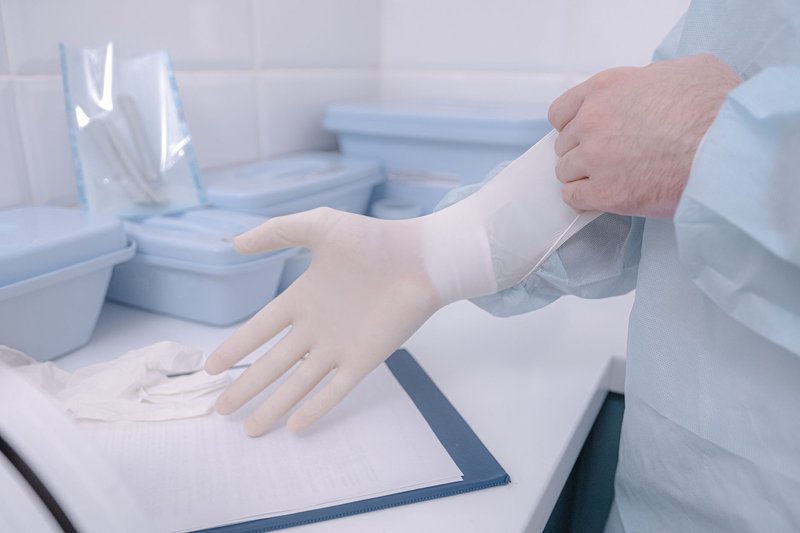
The CDC’s NIOSH pocket guide sets an exposure limit of 10 ppm over a workday for acetic acid vapor. Concentrated liquid is well beyond what skin or lungs tolerate, so a few habits apply:
- Gloves and eye protection. Use chemical splash goggles and nitrile or butyl rubber gloves. Contact with the glacial form causes chemical burns, and splashes in the eye can cause serious damage.
- Ventilation. Work in a fume hood or outdoors. The vapor irritates the nose, throat and lungs.
- Add acid to water, not water to acid. Mixing generates heat, and the safe habit is to put the acid into the larger volume of water, slowly.
- Keep it away from ignition sources. With a flash point near 39 °C, a warm room can produce vapor that ignites.
- Store it tightly capped, away from strong oxidizers and bases. Acetic acid reacts violently with oxidizers such as chromic acid and nitric acid.
Spills on skin: rinse with plenty of water for at least 15 minutes and get medical attention for anything beyond a small splash.
How to dilute glacial acetic acid
Use the dilution formula C₁V₁ = C₂V₂, where C is concentration and V is volume.
Say you want 1 liter of 5% acetic acid from 99.5% glacial:
V₁ = (5% × 1000 mL) ÷ 99.5% ≈ 50 mL
So measure roughly 50 mL of glacial acetic acid and add it slowly to about 900 mL of water, stirring, then top up to 1,000 mL. Always add the acid last to a vessel that already holds most of the water.
Two caveats. First, this gives you a lab-grade dilution, not food-grade vinegar. Use it only for non-food purposes unless the glacial acid is certified food grade. Second, volume percent and weight percent aren’t the same, because glacial acetic acid is denser than water. For protocols that specify w/w, calculate by mass, not volume.
Reading the label
Labels use a few conventions:
- “Glacial” means about 99% or higher. Reagent grade is typically 99.7% or more.
- A percentage alone (such as 5% or 20%) tells you it’s a solution. Cleaning vinegar at 6-10% sits in between.
- Grade (ACS, USP, food grade, technical) tells you about impurities, not strength.
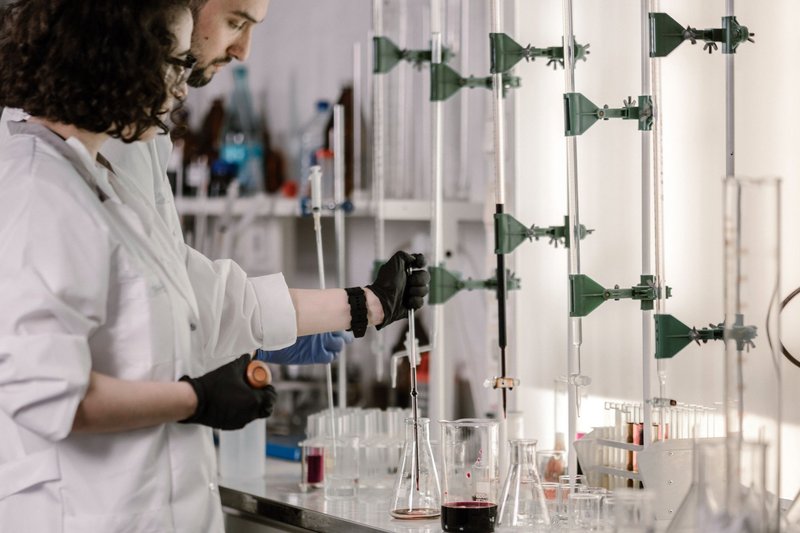
If you need to confirm what is actually in a bottle rather than trust the label, titrate a measured sample against a standard base. The Types of Titration: A Complete Guide to Every Method walks through which method suits this kind of acid-strength check.
If a protocol says “acetic acid” without a percentage, check whether it means glacial. Staining protocols and buffers often do.
FAQ
Can I use glacial acetic acid instead of vinegar for cleaning or pickling? No. It’s too strong, corrosive and flammable. Pickling also needs a precise, food-safe acidity.
Does glacial acetic acid expire? It’s chemically stable if capped. The main issue is it absorbs moisture from air over time, which lowers its purity.
Is glacial acetic acid stronger as an acid? Per molecule, no. Acetic acid is a weak acid either way. It’s more hazardous because there’s far more of it per milliliter.
What is glacial acetic acid used for? Making vinyl acetate (for paints and adhesives), cellulose acetate, solvents, and as a lab reagent.