A reptile is a cold-blooded vertebrate with dry, scaly skin that breathes air through lungs for its whole life. Most lay shelled eggs on land, and none have a larval water stage the way frogs do.
That definition covers more than 12,000 species according to the Reptile Database, spread across just five living groups. Below are 30 examples, sorted by group, picked to cover the familiar (green iguana, ball python), the extreme (Komodo dragon, saltwater crocodile) and the plain odd (tuatara, worm lizards).
Table of Contents
- The five groups at a glance
- Turtles and tortoises
- Lizards
- Snakes
- Crocodilians
- The tuatara
- Common reptile mix-ups
- FAQ
The five groups at a glance
| Group | Example species | Distinguishing trait |
|---|---|---|
| Turtles and tortoises | Leatherback sea turtle | Bony shell fused to the ribs and spine |
| Lizards | Komodo dragon | Most have four legs, eyelids and external ear openings |
| Snakes | Ball python | No legs, no eyelids, flexible jaws |
| Crocodilians | American alligator | Armored back, powerful jaws, eyes and nostrils on top of the head |
| Tuatara | Tuatara | Lizard-like body from a separate, ancient lineage |
Turtles and tortoises
About 360 species of turtles and tortoises exist, and every one of them grows a shell. The shell is part of the skeleton, so a turtle can’t leave it, whatever cartoons suggest. Tortoises are the land-dwelling branch with stumpy, elephant-like feet.
1. Leatherback sea turtle (Dermochelys coriacea)
The largest living turtle, reaching about 2 m (7 ft) and 500 kg or more. It has no hard shell at all, just leathery skin over a mesh of tiny bones. Leatherbacks dive deeper than 1,000 m chasing jellyfish, as NOAA Fisheries documents.
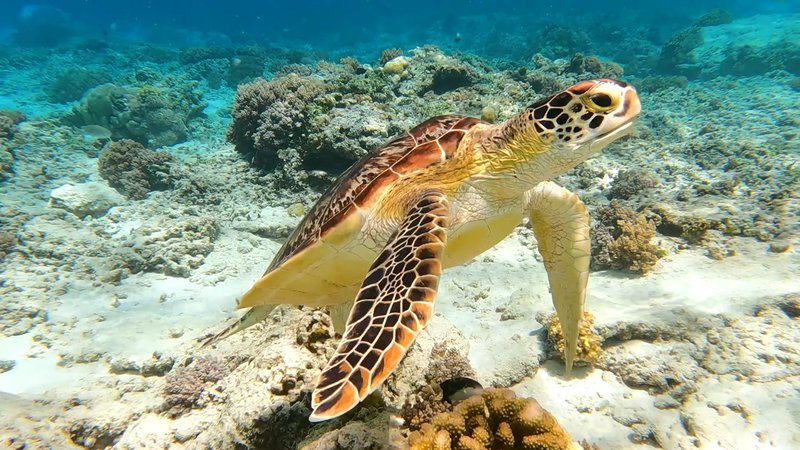
2. Green sea turtle (Chelonia mydas)
Found in tropical and subtropical oceans worldwide. Adults eat mostly seagrass and algae, and that diet turns their body fat green, which is where the name comes from. The shell itself is brown or olive.
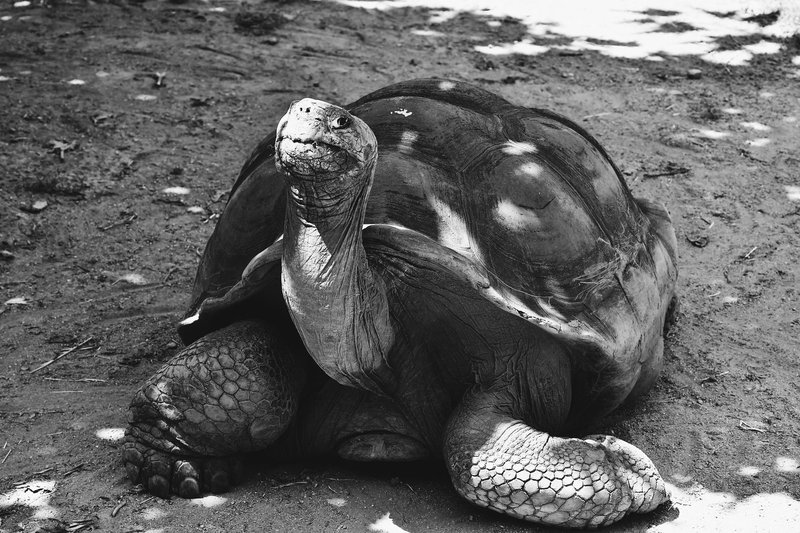
3. Galápagos giant tortoise (Chelonoidis niger complex)
Native to the Galápagos Islands, with males exceeding 250 kg. Individuals regularly live past 100 years. Islands with tall vegetation produced tortoises with long necks and domed shells that let them reach upward.
4. Red-eared slider (Trachemys scripta elegans)
Native to the central and southeastern United States, recognizable by a red stripe behind each eye. Decades of pet-store sales and dumped pets have made it an invasive species on every continent except Antarctica.
5. Common snapping turtle (Chelydra serpentina)
Lives in ponds and slow rivers across eastern North America and can weigh 15 kg. Its shell is too small to pull its head and legs inside, so it relies on a fast, hard bite instead.
6. Desert tortoise (Gopherus agassizii)
Lives in the Mojave Desert of the southwestern United States. It spends most of its life underground in burrows, which keeps it out of surface temperatures that can pass 50 degrees C. It can store water in its bladder for the dry season.
7. Indian star tortoise (Geochelone elegans)
Found in India and Sri Lanka. Each shell scute carries a yellow star-like pattern that works as camouflage in dry grass. It is a common pet, which is also why wild populations are under pressure from illegal trade.
Lizards
Lizards are the largest reptile group, with over 7,000 species, and several common myths about them don’t hold up. Most have four legs, movable eyelids and external ear openings. Those last two features are the easy way to tell a legless lizard from a snake.
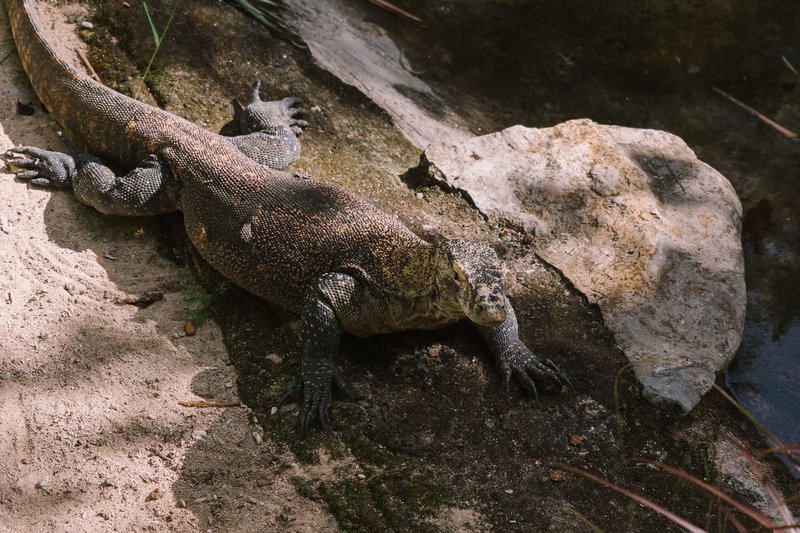
8. Komodo dragon (Varanus komodoensis)
The heaviest living lizard, up to 3 m long and over 70 kg, found only on a handful of Indonesian islands. It has venom glands in its lower jaw, a discovery that overturned the old idea that bacteria in its mouth did the killing. National Geographic covers its range and hunting.
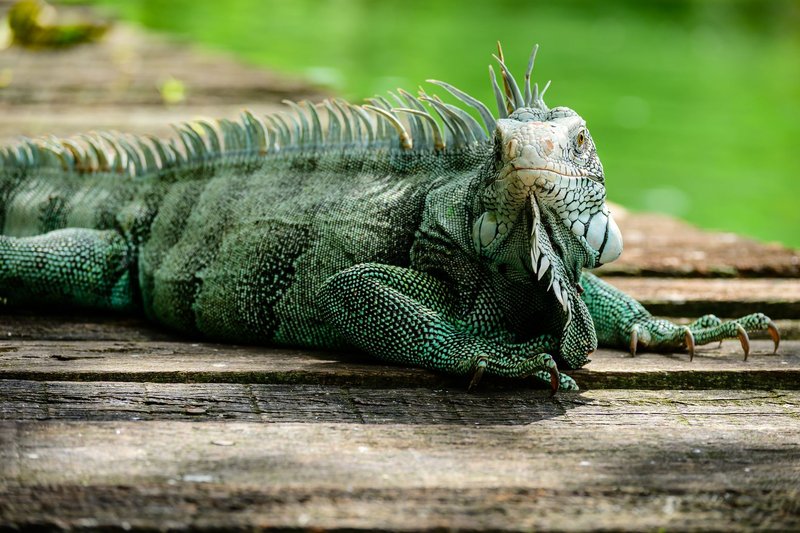
9. Green iguana (Iguana iguana)
Native to Central and South America, up to 1.5 m with most of that length in the tail. Adults eat leaves, flowers and fruit. Green iguanas have established breeding populations in southern Florida, where cold snaps sometimes drop them stiff from trees.
10. Marine iguana (Amblyrhynchus cristatus)
Found only in the Galápagos Islands and the only lizard that feeds in the sea. It grazes on algae and expels excess salt by sneezing, which leaves white crusts on its head.
11. Gila monster (Heloderma suspectum)
A heavy, beaded lizard from the deserts of the southwestern United States and northwestern Mexico, around 50 cm long. Its venom is delivered by chewing, not injection. It stores fat in its tail and may eat only a few big meals a year.
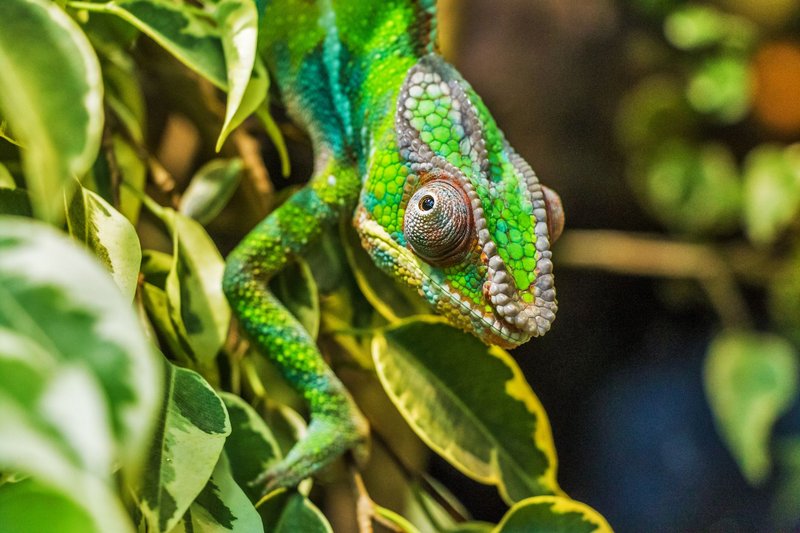
12. Veiled chameleon (Chamaeleo calyptratus)
Native to Yemen and Saudi Arabia. Its eyes rotate independently, and its tongue can reach out nearly two body lengths to snatch an insect. The head casque, a tall crest on top, is how you recognize it.
13. Leopard gecko (Eublepharis macularius)
Lives in the rocky deserts of Pakistan, Afghanistan and northwestern India. Unlike most geckos it has no sticky toe pads and can’t climb glass, but it does have real eyelids. It stores fat in a thick tail, which also breaks off as a decoy and regrows.
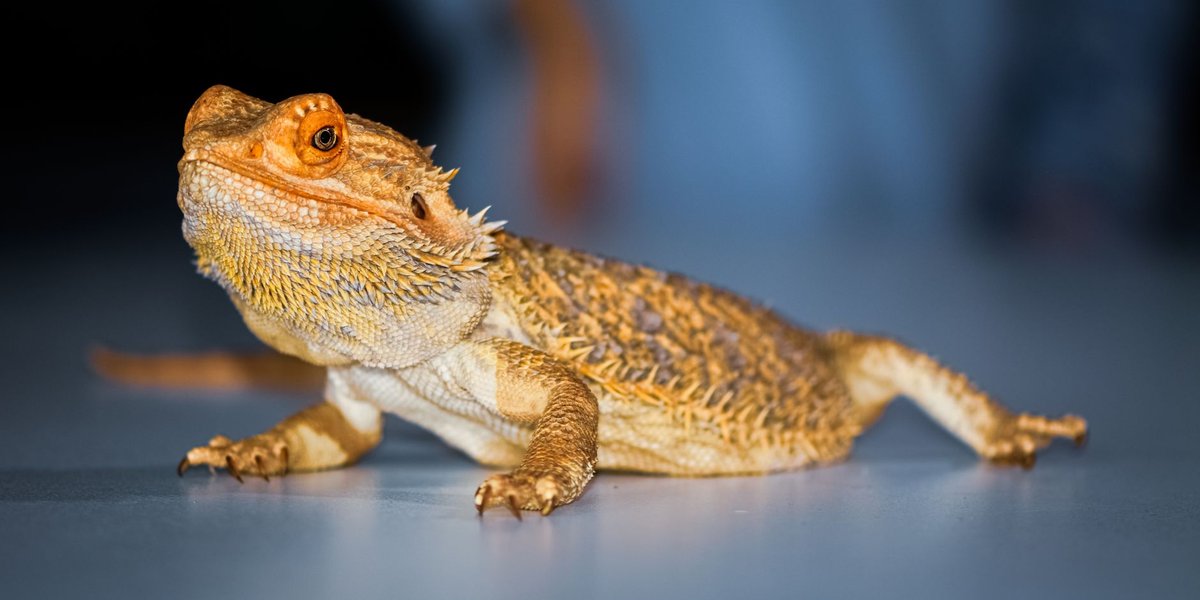
14. Bearded dragon (Pogona vitticeps)
An Australian lizard about 50 cm long. It puffs out the spiny throat pouch that gives it its name to look bigger, and waves one front arm slowly at rivals as a submission signal. One of the best-known beginner pet reptiles.
15. Eastern glass lizard (Ophisaurus ventralis)
A legless lizard from the southeastern United States that is regularly killed because people take it for a snake. The giveaways are eyelids and ear openings. Its tail snaps off in pieces under attack, hence “glass”.
16. Florida worm lizard (Rhineura floridana)
Strictly speaking, not a lizard. Worm lizards (amphisbaenians) are a related group of legless burrowers, and this pink, ringed, 30 cm species lives underground in sandy Florida soil. It is the only worm lizard native to the United States.
Snakes
There are around 4,000 snake species, all descended from lizards that lost their legs. Snakes have no eyelids, so they never blink, and they can unhinge parts of their jaws to swallow prey larger than their heads.
17. Ball python (Python regius)
Native to West and central Africa and usually 1 to 1.5 m long. When frightened it tucks its head inside a tight coil, which gives it both its common name and its reputation as a calm pet.
18. Reticulated python (Malayopython reticulatus)
The longest snake in the world, with confirmed lengths beyond 6 m. It lives across Southeast Asia and swims between islands. The geometric, net-like pattern is the origin of its name.
19. Green anaconda (Eunectes murinus)
The heaviest snake, topping 90 kg, found in the swamps and slow rivers of the Amazon and Orinoco basins. It spends most of its time in water with its eyes and nostrils on top of its head. It kills by constriction, not venom.
20. King cobra (Ophiophagus hannah)
The longest venomous snake at up to about 5.5 m, found from India through Southeast Asia. The genus name means “snake eater”, and that’s accurate: other snakes are its main prey. Females build a leaf nest for their eggs and guard it, which is rare among snakes.
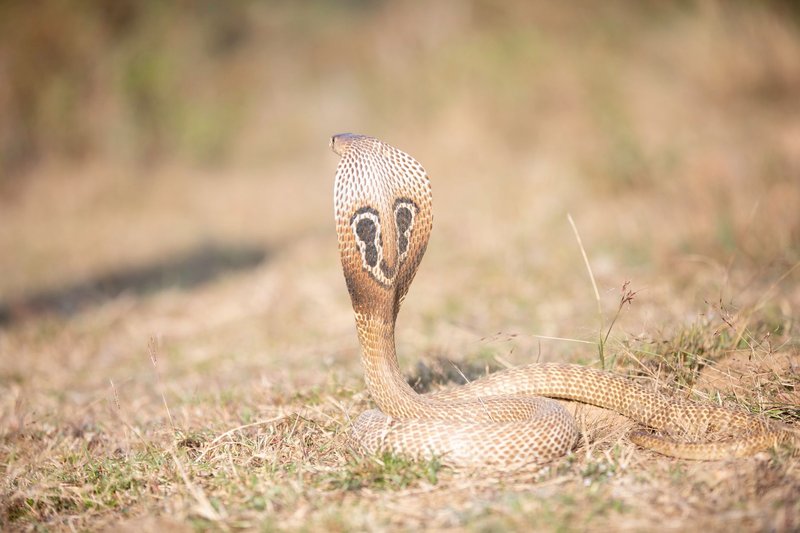
21. Black mamba (Dendroaspis polylepis)
Found in sub-Saharan Africa, up to about 4 m long and among the fastest snakes on land. The name comes from the inky inside of its mouth, not its skin, which is olive to grey.
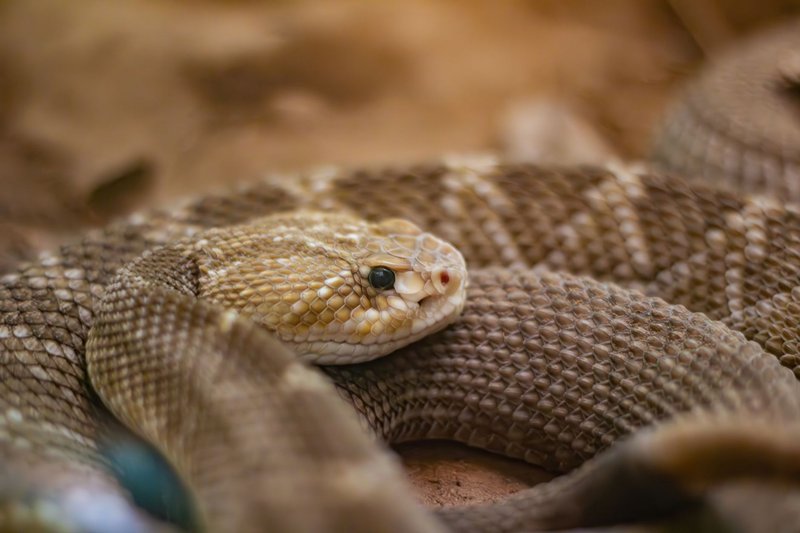
22. Eastern diamondback rattlesnake (Crotalus adamanteus)
The heaviest venomous snake in North America, living in the southeastern United States. A new rattle segment is added every time it sheds, but rattles break, so you can’t read age from the count.
23. Corn snake (Pantherophis guttatus)
Common across the southeastern and central United States, about 1.2 m long and non-venomous. It’s one of the most popular first pet snakes and is often found around barns and farms where it hunts rodents, which is likely how it got its name.
24. Common garter snake (Thamnophis sirtalis)
Found across much of North America, as far north as Canada. Some populations have evolved resistance to the toxin in rough-skinned newts and eat them regularly, an arms race scientists use as a textbook example of evolution.
Crocodilians
Crocodilians include crocodiles, alligators, caimans and the gharial. They are the closest living relatives of birds, and unlike other reptiles they have a four-chambered heart. Over 20 species exist.
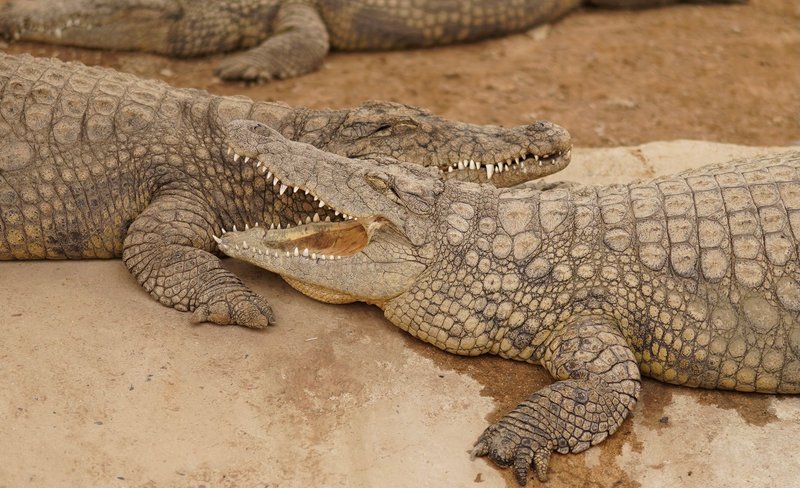
25. Saltwater crocodile (Crocodylus porosus)
The largest living reptile. Big males pass 5 m and 1,000 kg. It ranges from eastern India through Southeast Asia to northern Australia and has been recorded far out at sea.
26. American alligator (Alligator mississippiensis)
Lives in freshwater swamps and rivers across the southeastern United States, reaching about 4 m. Its snout is broad and U-shaped, and its upper teeth hide the lower ones when the mouth is shut. Its recovery from near extinction in the 1960s is one of the notable conservation wins in the country.
27. Nile crocodile (Crocodylus niloticus)
Found across sub-Saharan Africa, around 4 to 5 m long. Hunting wildebeest crossing rivers is the famous behavior. Mothers also carry their hatchlings gently to the water in their mouths.
28. Gharial (Gavialis gangeticus)
A fish-eating crocodilian of northern India and Nepal with a long, thin snout lined with sharp interlocking teeth. Adult males grow a bulb on the end of the snout called a ghara, used to make a buzzing sound. Listed by the IUCN Red List as critically endangered.
29. Black caiman (Melanosuchus niger)
The largest predator in the Amazon basin, reaching 4 to 5 m. Dark, almost black coloring and a home in flooded forests and oxbow lakes set it apart from the smaller spectacled caiman.
The tuatara
Tuatara are the only living members of an order that thrived alongside the dinosaurs. They look like lizards but have a distinct skull, jaw structure and teeth fused to the jawbone.
30. Tuatara (Sphenodon punctatus)
Found only on a few dozen islands off New Zealand, about 60 cm long. It has a “third eye” on top of the head, a light-sensing patch under the skin that’s most visible in hatchlings. Tuatara are active at temperatures that would stall most reptiles, grow slowly and can live over 60 years in the wild.
Common reptile mix-ups
Turtle vs. tortoise. Tortoises live on land and have domed shells and stumpy legs. Turtles spend most time in water and have flatter shells and flippers or webbed feet.
Crocodile vs. alligator. An alligator has a broad, rounded snout and hides its lower teeth when its mouth is closed. A crocodile has a pointed snout and shows its lower teeth, particularly the big fourth tooth on each side.
Salamanders are not reptiles. They are amphibians. They have smooth, moist skin, no claws and eggs without shells that are laid in water. If it looks like a lizard but feels slimy, it’s probably a salamander.
Snakes vs. legless lizards. Check for eyelids and ears. If it blinks, it’s a lizard.
FAQ
What are the main types of reptiles?
Turtles and tortoises, lizards (including worm lizards), snakes, crocodilians and the tuatara.
What makes an animal a reptile?
Dry, scaly skin, lungs for breathing and body heat that depends on the environment. Most lay eggs with leathery or hard shells on land, and some give birth to live young.
Which reptiles make the best pets for beginners?
Leopard geckos, bearded dragons, corn snakes and ball pythons are the standard recommendations because they stay a manageable size, tolerate handling and have well-documented care needs. Check local laws first, and never release a pet reptile into the wild.
What is the biggest reptile?
The saltwater crocodile is the largest living reptile by length and weight. The reticulated python is the longest snake, and the leatherback is the largest turtle.
Are all reptiles cold-blooded?
All reptiles are ectotherms, meaning they rely on outside heat sources such as sunlight to regulate their body temperature. This doesn’t mean their blood is cold: a basking lizard can run warmer than a mammal.