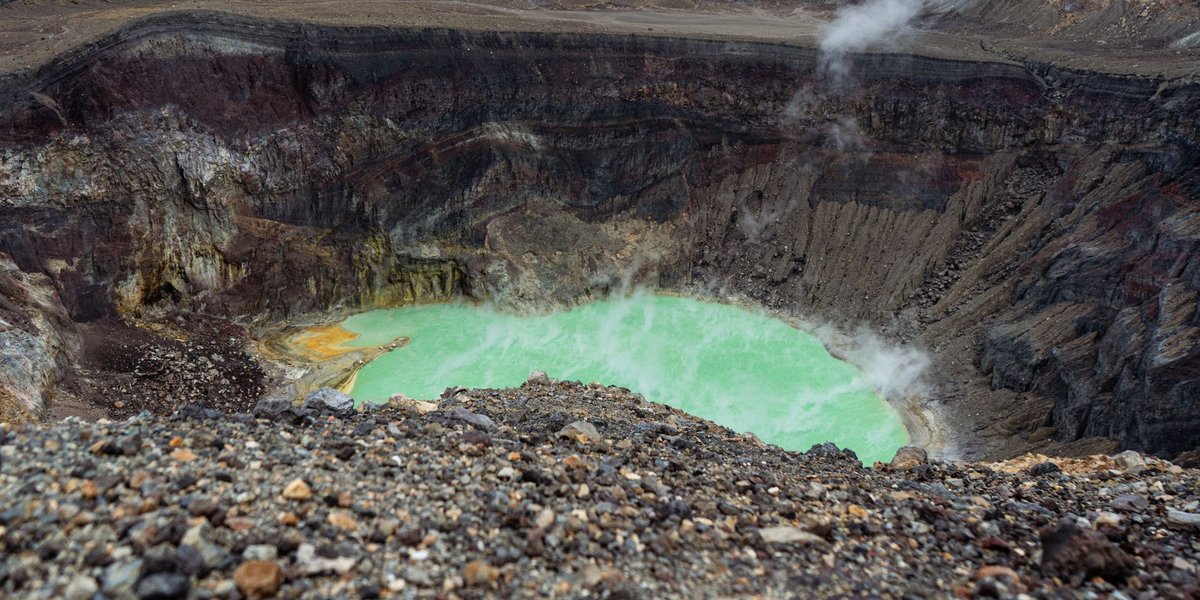
Pennsylvania has no active volcanoes, no dormant ones, and no chance of an eruption. But it did have volcanoes, hundreds of millions of years ago, and the rock they left behind is still in the ground. You can hike on it, climb on it and, in one park, hit it with a hammer to make it ring.
Contents
- TLDR
- Volcanoes in Pennsylvania: the timeline
- Volcano vs. intrusion
- Where to see Pennsylvania’s volcanic rock
- The nearest recent volcanoes
- FAQ
TLDR
- No active or dormant volcanoes exist in Pennsylvania. There is no eruption risk.
- The state has three volcanic chapters: South Mountain lavas (about 600 million years ago), the Jonestown Volcanic Field (Ordovician), and diabase intrusions from the breakup of Pangaea (about 200 million years ago).
- The third chapter wasn’t volcanoes at all. That magma cooled underground.
- Best places to see the rock: Gettysburg, Ringing Rocks County Park, Haycock Mountain, Governor Dick Hill and Gifford Pinchot State Park.
- The nearest recent East Coast volcanism was in Virginia, about 47 million years ago.
Volcanoes in Pennsylvania: the timeline
Pennsylvania sits in the middle of a tectonic plate, a long way from any plate boundary. That’s why nothing is erupting. But the East Coast wasn’t always a quiet edge. Oceans opened and closed here, and each event brought magma up with it.
About 600 million years ago: South Mountain
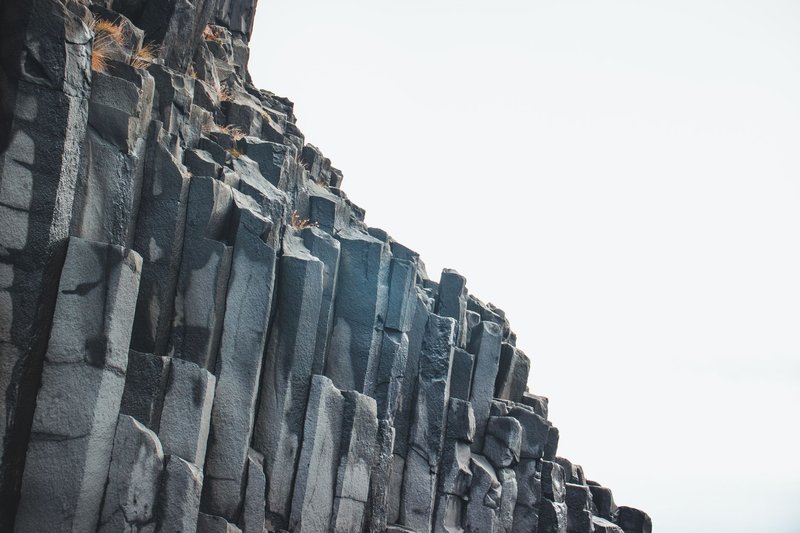
The oldest chapter is in South Mountain, the ridge that runs through Adams, Franklin and Cumberland counties. Around 600 million years ago, the continent that would become North America was splitting apart, and the crack let out huge volumes of basalt and rhyolite. Basalt is the runny, dark lava you see in Hawaii. Rhyolite is the thick, silica-rich kind that tends to erupt explosively.
None of it looks like lava today. Later mountain building baked and squeezed the rocks until they metamorphosed into greenish metabasalt and metarhyolite. The original volcanoes are long gone, but geologists can still read the chemistry and tell what the magma was.
Ordovician: the Jonestown Volcanic Field
Roughly 450 to 480 million years later in the geologic calendar, a different ocean was closing. In the Ordovician, a chain of volcanic islands was crashing toward the proto-North American coast during the Taconic mountain-building event. The Jonestown Volcanic Field in Lebanon County is a leftover piece of that system.
It covers an area of about 5 by 15 kilometers (roughly 3 by 9 miles). The rocks include lavas that erupted on the sea floor, and they got shoved inland and folded into the Appalachians when the islands collided with the continent. Most of the field sits under farmland and woods. It’s a research site, not a tourist stop, and the outcrops that exist are mostly in road cuts and quarries on land you shouldn’t wander onto.
Triassic-Jurassic: diabase from the Atlantic rift
The best-known volcanic rock in the state came last, about 200 million years ago. Pangaea started to break up, and the future Atlantic Ocean began to open. In southeastern and south-central Pennsylvania, the crust stretched and cracked into rift basins, and magma pushed up into them.
Here’s the catch: most of that magma never reached the surface. It squeezed between layers of older rock and froze in place as sheets and walls of diabase, a dark, dense, fine-grained rock. Those are intrusions, not volcanoes. Over the following 200 million years, erosion stripped away the softer rock above and left the hard diabase standing as ridges and boulder fields.
Volcano vs. intrusion
The distinction matters because most people who say “Pennsylvania has volcanic rock” are talking about diabase, and diabase never made a volcano.
- Volcano: magma reaches the surface and erupts as lava, ash or gas. You get a cone, a lava flow, or a crater.
- Intrusion: magma stops underground and cools slowly. You get solid rock with visible crystals and no surface eruption.
Intrusions come in a few shapes. A sill is a horizontal sheet that squeezes between rock layers, like jam between slices of bread. A dike is a vertical or steep sheet that cuts across the layers. Pennsylvania has both.
Slow cooling is the tell. Lava that hits air or water chills in hours or days and ends up glassy or finely grained. Magma buried in the crust can take thousands of years to solidify, which lets crystals grow large enough to see. Diabase has that texture, which is how geologists know it formed underground.
Where to see Pennsylvania’s volcanic rock
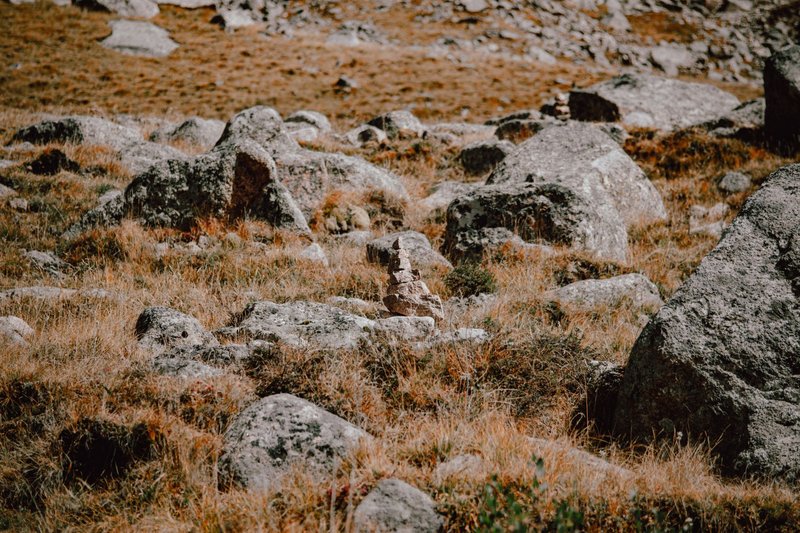
Here are the best sites, mostly diabase, with South Mountain in the mix. All are public and none require climbing gear.
Gettysburg National Military Park (Adams County). The Gettysburg Sill is a big sheet of diabase, and the Civil War landmarks sit on it. The boulders at Devil’s Den, along with Culp’s Hill and Little Round Top, are diabase. The hard rock formed the ridges the armies fought over. Few visitors realize they’re standing on frozen magma.
Ringing Rocks County Park (Bucks County). Near Upper Black Eddy, a boulder field of diabase covers roughly seven acres. Hit the rocks with a hammer and many of them ring like a bell, which is why the park lets you do it. Some boulders don’t ring at all, and geologists haven’t settled on why. Bring a hammer and ear protection if you plan to spend a while.
Haycock Mountain (Bucks County). A diabase peak topping out just under 1,000 feet. It rises above the surrounding farmland because the erosion-resistant intrusion outlasted the softer rock around it. You can hike it and look out at the Delaware Valley from the top.
Governor Dick Hill (Lebanon County). Near Mount Gretna, this hill is capped with diabase and has an observation tower at the top. The Jonestown Volcanic Field lies in the same county, so Lebanon County packs two volcanic chapters into a small area.
Gifford Pinchot State Park (York County). Diabase outcrops show up around the lake and along the trails. It’s a pleasant place to combine rock-spotting with a swim or a picnic.
Pine Grove Furnace and the South Mountain area (Cumberland and Franklin counties). For the oldest chapter, walk the Appalachian Trail through South Mountain. The ridge’s metabasalt and metarhyolite are the altered remains of the 600-million-year-old lavas. They look like ordinary gray-green rock until you know what they are. The state’s geologic features guide from DCNR is a useful starting point for trip planning, though it doesn’t cover the volcanic angle. For a book to take on the drive, see the Roadside Geology series guide.
How to recognize diabase
Look for dark gray to black rock that’s heavy for its size, with a rusty brown weathering skin. Break surfaces show a fine, sugary, speckled texture. It doesn’t have layers like sandstone or shale. Where it forms boulder fields, the rounded blocks often look like loaves of dark bread.
The nearest recent volcanoes
Pennsylvania’s last volcanic activity ended long ago, but the East Coast hasn’t been completely quiet since. In Virginia, near Harrisonburg and in neighboring parts of the Shenandoah Valley and West Virginia, small volcanoes erupted about 47 million years ago, in the Eocene. A Scientific American report covered the dating of the rocks, which turned out to be far younger than anything else in the region.
These were cinder cones and basalt flows, modest volcanoes by Hawaii or Cascades standards. Mole Hill, near Harrisonburg, is a well-known remnant. It’s less than 100 miles from Pennsylvania’s southern border, which makes it the closest Cenozoic volcanism to the state, and it’s the reason “East Coast volcano” isn’t a contradiction.
Those eruptions also show that volcanism can happen far from plate edges. It’s rare, and it hasn’t happened in the East for tens of millions of years.
For active volcanoes you have to leave the region altogether. The closest ones the USGS tracks in the lower 48 are in the West, such as the Cascades and Yellowstone. In the Atlantic, the Lesser Antilles volcanoes in the Caribbean are the nearest active ones, more than 1,500 miles away.
FAQ
Is there an active volcano in Pennsylvania?
No. Pennsylvania has no active volcanoes and none that are dormant. The last volcanic rock in the state formed roughly 200 million years ago, and that was intrusive.
Is there a supervolcano in Pennsylvania?
No. The supervolcanoes in the US, such as Yellowstone, are in the West, over hot spots or in rifting regions. Pennsylvania has no magma chamber under it.
Could a volcano form in Pennsylvania?
Not in any timeframe that matters to people. New volcanoes need a source of magma, such as a plate boundary, a hot spot or active rifting. Pennsylvania has none of them.
What is the closest volcano to Pennsylvania?
The nearest recent volcanic rocks are the Eocene cinder cones in Virginia, which are about 47 million years old and extinct. The nearest active volcanoes are far to the west, or in the Caribbean.
Does Pennsylvania get earthquakes?
Yes, but they’re small and unrelated to volcanoes. Eastern earthquakes come from old faults being squeezed by plate stress. The April 2024 magnitude 4.8 quake in New Jersey was felt across eastern Pennsylvania, and damage was minor. Pennsylvania’s seismic risk is low compared with the West Coast.
What is the Jonestown Volcanic Field?
It’s an Ordovician-age patch of volcanic rock in Lebanon County, about 5 by 15 kilometers. It records a chain of volcanic islands that collided with the ancient North American coast during the Taconic mountain-building event.
Is diabase a volcanic rock?
It’s an igneous rock, but it’s not volcanic in the strict sense. Diabase forms when magma cools underground. Basalt is its erupted equivalent, with the same chemistry but a finer grain.