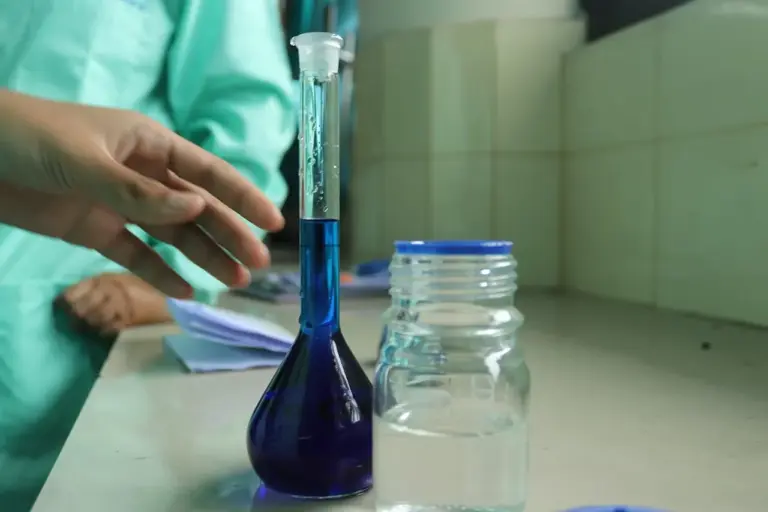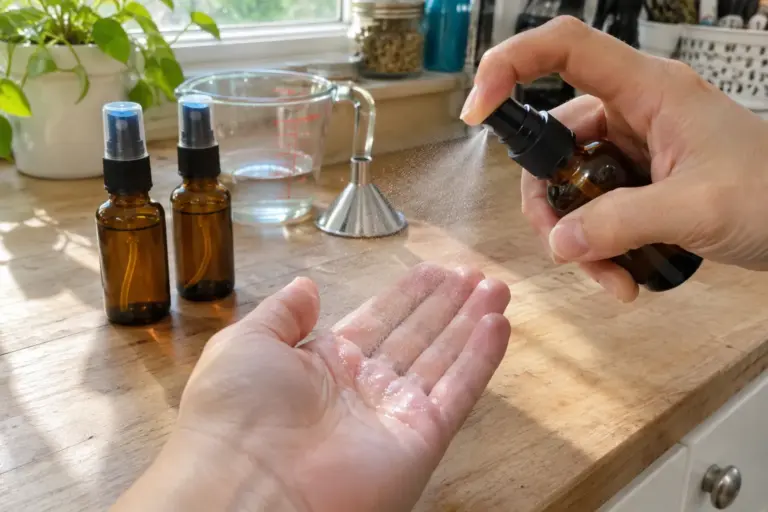
A solvent is the substance that does the dissolving. The solute is the thing that gets dissolved. In salt water, water is the solvent and salt is the solute. In nail polish remover, acetone is the solvent and the polish is the solute.
The ten examples of solvents you’ll meet most often:
- Water
- Ethanol
- Methanol
- Isopropanol (rubbing alcohol)
- Acetone
- Acetic acid
- Ethyl acetate
- Hexane
- Toluene
- Dichloromethane
The rest of this post puts them in a table, sorts them by polarity and by where you’ll find them, and covers the ones you shouldn’t handle without a fume hood.
Table of Contents
- Common solvents at a glance
- Why some things dissolve and others don’t
- Polar and non-polar solvents: examples by type
- Household solvents
- Laboratory and industrial solvents
- Solid and gaseous solvents
- Safer alternatives
- Solvent safety: flammability and toxicity
- FAQ
Common solvents at a glance
| Solvent | Formula | Polarity | Typical use |
|---|---|---|---|
| Water | H₂O | Polar protic | Drinking, cleaning, biological reactions, most inorganic salts |
| Methanol | CH₃OH | Polar protic | Antifreeze, fuel additive, lab extractions |
| Ethanol | C₂H₅OH | Polar protic | Sanitizer, tinctures, perfumes, fuel blending |
| Isopropanol | C₃H₈O | Polar protic | Rubbing alcohol, electronics cleaning |
| Acetic acid | CH₃COOH | Polar protic | Vinegar, chemical synthesis |
| Acetone | C₃H₆O | Polar aprotic | Nail polish remover, cleaning glassware |
| Acetonitrile | C₂H₃N | Polar aprotic | HPLC chromatography |
| DMSO | C₂H₆OS | Polar aprotic | Drug research, dissolving stubborn compounds |
| Ethyl acetate | C₄H₈O₂ | Polar aprotic | Glues, nail polish, decaffeination, lab extractions |
| Tetrahydrofuran (THF) | C₄H₈O | Polar aprotic | Making polymers, PVC cement |
| Dichloromethane | CH₂Cl₂ | Weakly polar | Paint stripping, extractions |
| Diethyl ether | C₄H₁₀O | Weakly polar | Lab extractions, historic anesthetic |
| Toluene | C₇H₈ | Non-polar | Paint thinner, adhesives, fuel |
| Hexane | C₆H₁₄ | Non-polar | Extracting vegetable oils, gasoline component |
Why some things dissolve and others don’t
The rule chemists use is “like dissolves like.” Polar solvents have an uneven charge distribution, so they pull apart other polar molecules and ions. Non-polar solvents have an even one, so they dissolve other non-polar molecules, which cling to them through weak van der Waals forces.
Oil and water show this. Water molecules cling to each other through strong hydrogen bonds. An oil molecule has nothing for them to grab, so the water squeezes it out and the two layers separate. Add hexane to the oil instead and the oil disappears into it, because both are made of long, non-polar hydrocarbon chains.
Salt behaves the opposite way. Table salt is ionic, and water’s slightly negative oxygen and slightly positive hydrogens surround the sodium and chloride ions and pull them off the crystal. Hexane can’t do that, so salt sits at the bottom untouched.
Water’s polarity is why it’s often called the “universal solvent.” That’s an overstatement. It dissolves more substances than any other common liquid, but it does nothing for grease, wax or most plastics.
Polar and non-polar solvents: examples by type
Polar protic solvents contain an O–H or N–H bond and can donate hydrogen bonds. They dissolve salts and sugars well.
- Water
- Methanol, ethanol, isopropanol
- Acetic acid
- Ammonia (liquid)
Polar aprotic solvents are polar but have no hydrogen to donate. They dissolve many organic compounds and some salts, and chemists like them for reactions where a protic solvent would interfere.
- Acetone
- Acetonitrile
- Dimethyl sulfoxide (DMSO)
- Dimethylformamide (DMF)
- Ethyl acetate
- Tetrahydrofuran (THF)
Non-polar solvents dissolve fats, oils, waxes and many polymers.
- Hexane and other alkanes (pentane, heptane)
- Toluene and xylene
- Diethyl ether
- Chloroform and dichloromethane (these sit on the edge, since they’re only weakly polar)
A rough guide is the dielectric constant, a measure of how well a liquid screens electric charge. Water scores about 80, DMSO about 47, methanol about 33, ethanol about 25, acetone about 21, and hexane about 2. The bigger the number, the better the solvent handles ions.
Household solvents
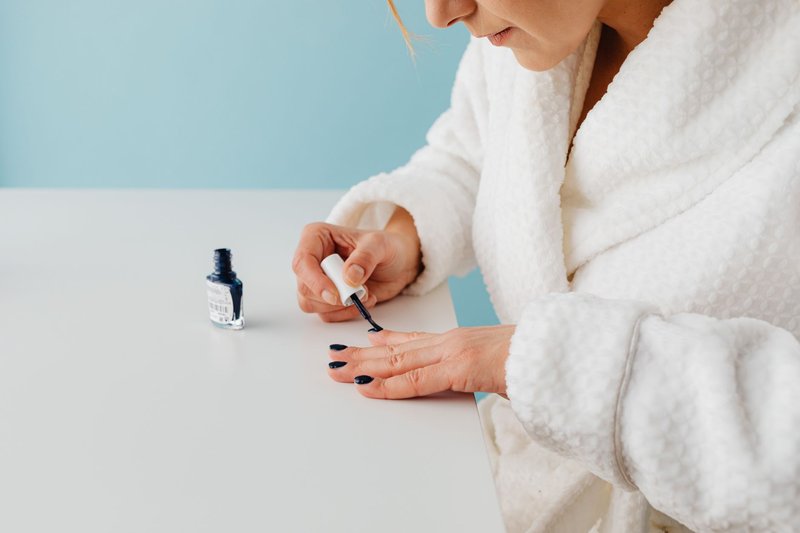
You already own several solvents.
- Water handles sugar, salt, coffee and most cleaning jobs.
- Vinegar is acetic acid in water, about 5% acid by volume, and it dissolves limescale because the acid reacts with calcium carbonate.
- Rubbing alcohol (isopropanol, typically 70% or 91%) removes marker ink and sticky residue.
- Acetone, the simplest ketone, in nail polish remover dissolves the polymer film in the polish.
- Mineral spirits and turpentine thin oil-based paint and clean brushes.
- Ethanol in vanilla extract pulls flavor compounds out of vanilla beans that water would leave behind. That’s extraction, and it’s the reason the label says “alcohol.”
- Citrus oil (limonene) is a non-polar solvent in many “natural” degreasers.
Laboratory and industrial solvents
In the lab, the choice depends on what you’re dissolving and how easily you want to remove the solvent afterward. Dichloromethane boils at 40 °C and diethyl ether at 35 °C, so both evaporate quickly. DMSO boils at 189 °C, which makes it hard to remove but useful for reactions that need heat.
Industrial use is mostly about volume:
- Hexane pulls oil from soybeans and other seeds on a very large scale.
- Toluene and xylene are aromatic hydrocarbons and go into paints, inks and adhesives.
- Ethyl acetate is a common coating and adhesive solvent that has largely replaced harsher options.
- Perchloroethylene has been the standard dry-cleaning solvent for decades, though many cleaners now use alternatives.
- Acetonitrile is the workhorse of HPLC, the technique labs use to separate and measure compounds in a mixture.
Solid and gaseous solvents
Solvents aren’t always liquids. A solution is any homogeneous mixture, and the solvent is whichever component is present in the largest amount.
- Air is a gaseous solution with nitrogen as the solvent, and oxygen, argon and carbon dioxide dissolved in it.
- Brass is a solid solution with copper as the solvent and zinc as the solute.
- Mercury dissolves metals like gold and silver to form amalgams, which dentists used for fillings for over a century.
- Supercritical carbon dioxide is CO₂ held above 31 °C and about 74 atmospheres of pressure. It behaves like a gas and a liquid at once, and it dissolves non-polar compounds. Producers use it to decaffeinate coffee and extract hop oils, and it leaves no solvent residue because it turns back into gas when the pressure drops.
Safer alternatives
The EPA’s green chemistry program lists safer solvents as one of its core principles: avoid auxiliary substances where possible, and use harmless ones when you can’t. In practice that looks like this:
- Water replaces organic solvents wherever the chemistry allows.
- Ethanol replaces methanol and many halogenated solvents, since it comes from fermentation and is far less toxic.
- Ethyl lactate, made from corn sugars, replaces some paint strippers and degreasers.
- 2-Methyltetrahydrofuran can stand in for THF and is made from agricultural waste.
- Supercritical CO₂ replaces hexane and dichloromethane in extractions.
Solvent safety: flammability and toxicity
Most organic solvents catch fire. Diethyl ether has a flash point of about −45 °C, which means it gives off ignitable vapor well below freezing. Hexane’s is about −22 °C, and acetone’s is about −20 °C. The vapors are heavier than air and can travel along a bench to a spark or a pilot light.
Toxicity varies. Methanol is poisonous if swallowed, and as little as 10 mL can cause blindness. Toluene and hexane affect the nervous system with repeated exposure. Dichloromethane breaks down to carbon monoxide in the body, and the EPA has restricted its use in consumer paint strippers.
Two solvents mostly belong to history:
- Benzene is a known human carcinogen. The National Cancer Institute links exposure to leukemia, and toluene replaced it in most uses.
- Carbon tetrachloride damages the liver and depletes the ozone layer. It was phased out under the Montreal Protocol and survives mainly as a feedstock for other chemicals.
General rules: work in a ventilated space, keep solvents away from flames and sparks, never mix them without checking compatibility, and store them in the container they came in, with the cap on.
FAQ
What is the most common solvent? Water. It’s the solvent of every living cell, and the one used most often in industry and at home.
What is the difference between a solvent and a solute? The solvent is the component present in the larger amount and does the dissolving. The solute is the smaller component that gets dissolved. Sugar is the solute in sweet tea, and water is the solvent.
What are examples of organic solvents? Acetone, ethanol, methanol, hexane, toluene, ethyl acetate, dichloromethane and diethyl ether. They all contain carbon.
Is alcohol a solvent? Yes. Ethanol, methanol and isopropanol are polar protic solvents. They dissolve both polar and some non-polar substances, which is why they turn up in sanitizers, perfumes and tinctures.
Can a solvent be a gas or a solid? Yes. Air is a gas-phase solution, and alloys like brass are solid solutions. Supercritical CO₂ is a solvent in a state between gas and liquid.