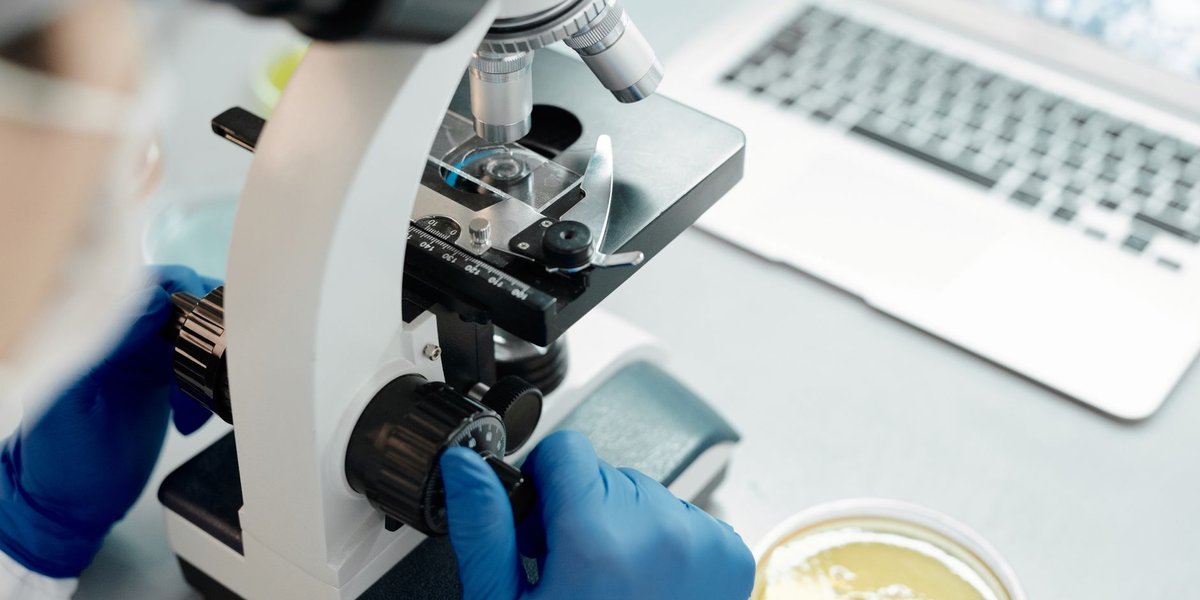
The nanoscale runs from 1 to 100 nanometers. A human hair is roughly 80,000 nanometers wide, so you’re working with objects thousands of times thinner than that. At this size, materials stop behaving the way they do in bulk: gold turns red or purple, carbon becomes stronger than steel, and a particle can slip through places a larger one can’t. The benefits of nanotechnology come from exploiting those changes on purpose, as the National Nanotechnology Initiative explains.
Most lists stop at “nanotech will revolutionize medicine” and leave you guessing which parts exist. This one sorts them. Every benefit below carries one of three labels:
- Available now: you can buy it or get it from a doctor today.
- Early commercial: shipping in limited products, with higher costs or narrow use.
- Research stage: works in labs or trials, not yet on the market.
Contents
- 1. Cancer drugs that reach the tumor
- 2. mRNA vaccines
- 3. Faster, cheaper diagnostic tests
- 4. Stronger, lighter materials
- 5. Cleaner drinking water
- 6. More efficient solar cells
- 7. Batteries that hold more charge
- 8. Smaller, faster computer chips
- 9. Brighter, more accurate screens
- The benefits of nanotechnology at a glance
- The limits: cost, safety and regulation
1. Cancer drugs that reach the tumor
Maturity: available now (basic versions), research stage (smart targeting)
Chemotherapy’s problem is that it hits healthy cells too. Wrapping the drug in a nanoparticle changes where it goes. Tumors have leaky blood vessels, and particles around 100 nanometers can slip through those gaps and collect in the tumor, while mostly staying out of tissue like the heart.
The proof is old enough to have a track record. Doxil, a liposomal form of the drug doxorubicin, was approved in the US in 1995 and was the first nanomedicine of its kind. Doxorubicin carries a risk of heart damage, and the liposome coating lowers that risk. Abraxane, paclitaxel bound to albumin nanoparticles, followed in 2005 and removes the need for the harsh solvents the original drug required.
The research-stage part is the next step: particles decorated with antibodies or other molecules that home in on specific cancer cells. Trials are ongoing, and results so far are mixed, since getting particles into a tumor is harder in humans than in mice.
2. mRNA vaccines
Maturity: available now
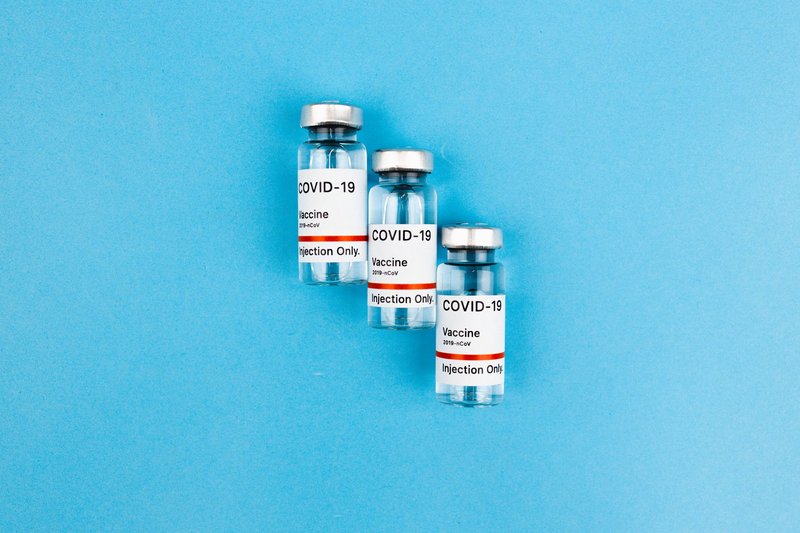
The Pfizer-BioNTech and Moderna COVID-19 vaccines are nanotechnology products. Messenger RNA breaks down within minutes if you inject it bare, and cells won’t take it up on their own. Each dose therefore packs the mRNA into lipid nanoparticles, fatty bubbles roughly 80 to 100 nanometers across, which protect the cargo and fuse with cells to deliver it.
The 2023 Nobel Prize in Physiology or Medicine went to Katalin Karikó and Drew Weissman for the mRNA modifications that made these vaccines workable. The lipid nanoparticle was the other half of the system. Without it, the molecule never reaches the cell.
The same delivery approach is now in trials for flu, RSV and personalized cancer vaccines, where each patient’s tumor mutations shape the mRNA. Those uses are still research stage.
3. Faster, cheaper diagnostic tests
Maturity: available now
Look at the line on a rapid COVID test or a home pregnancy test. That colored stripe is usually colloidal gold: gold nanoparticles a few dozen nanometers wide. At that size, gold absorbs light in a way that shows up as a vivid red-purple, and it clumps visibly when it binds to its target.
That’s the benefit: a result in 15 minutes, with no lab, no machine and a cost of a few dollars. It’s one of the quietest wins in nanotechnology, because nobody thinks of a test strip as high-tech.
4. Stronger, lighter materials
Maturity: available now (simple additives), early commercial (carbon nanotubes and graphene)
Add a small amount of nanoparticles to a plastic or metal and its properties shift. Nanomaterials are one of the eight branches of materials science, and clay nanoparticles make plastics stiffer and less permeable to gas, and automakers have used them in interior and exterior parts since the early 2000s. Nano-sized silica is mixed into tire rubber for better grip and lower rolling resistance. Zinc oxide and titanium dioxide nanoparticles are in many mineral sunscreens, where they block UV without leaving a white film on your skin.
Carbon nanotubes sit higher on the hype ladder. A single tube has a tensile strength many times that of steel at a fraction of the weight. Spun into bulk fiber or added to resin, they turn up in some bicycle frames, tennis rackets and wind turbine blades. The catch is that the record-strength numbers come from single perfect tubes, and strength drops sharply when you bundle them into something you can actually build with. Bulk materials aren’t close to the lab figures.
5. Cleaner drinking water
Maturity: available now (nanofiltration), research stage (graphene membranes)
Nanofiltration membranes have pores around 1 nanometer wide. They remove many dissolved organics, hardness minerals and some salts from water, and they’re already used in municipal treatment plants and for softening water in industry. Reverse osmosis, which desalinates seawater, relies on membranes with similar nanoscale structure.
The research frontier is graphene oxide membranes, whose layered sheets can be tuned to let water through while holding salt back. A University of Manchester team showed in 2017 that these membranes could be stopped from swelling in water, one of the main obstacles to sieving out small salt ions. Scaling this to membrane sheets that last for years in a real plant has not been solved yet.
6. More efficient solar cells
Maturity: early commercial
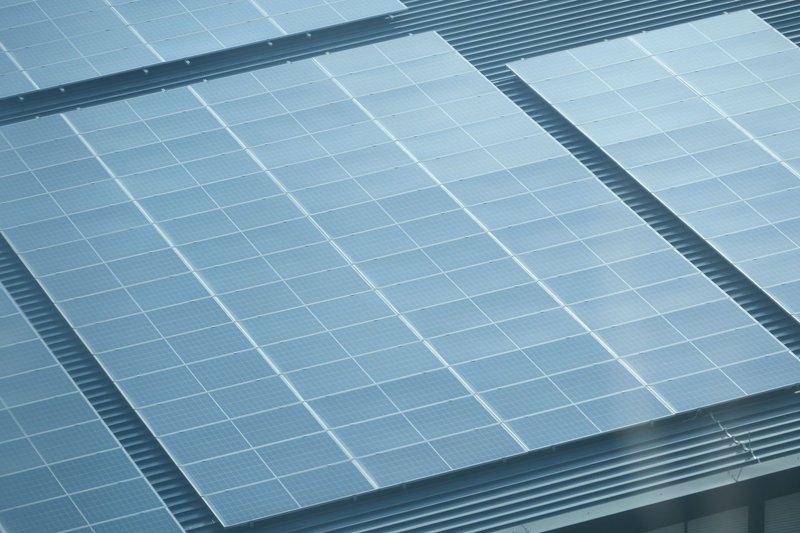
A standard silicon solar cell has a practical efficiency ceiling of around 29 percent. Stacking a thin perovskite layer on top of silicon lets the cell use more of the spectrum, and perovskite films are built from crystals grown at the nanoscale. Lab tandem cells have passed 34 percent, according to the NREL efficiency chart, well above what silicon alone can reach.
Oxford PV began shipping the first commercial perovskite-on-silicon modules in 2024, with module efficiency in the mid-20s percent. That puts them ahead of the typical rooftop panel, but production is small and the price is higher.
The open question is durability. Silicon panels are warrantied for 25 years or more. Perovskites degrade faster in heat and moisture, and proving a 25-year lifespan takes 25 years, or very good accelerated testing.
7. Batteries that hold more charge
Maturity: early commercial
Silicon can store roughly ten times more lithium than the graphite in a standard battery anode. The problem is that silicon swells by about 300 percent when it charges, and bulk silicon cracks apart. Break it into nanoscale particles, structure it inside a carbon scaffold, and it flexes without fracturing.
Companies such as Sila and Group14 now produce these silicon-carbon anode materials, and phones and wearables with silicon-carbon batteries started shipping from 2023 on, with higher energy density in the same volume. The gain over standard cells is real but modest at this stage, usually a few tens of percent more capacity rather than a doubling. Cycle life and cost are still being worked out.
8. Smaller, faster computer chips
Maturity: available now
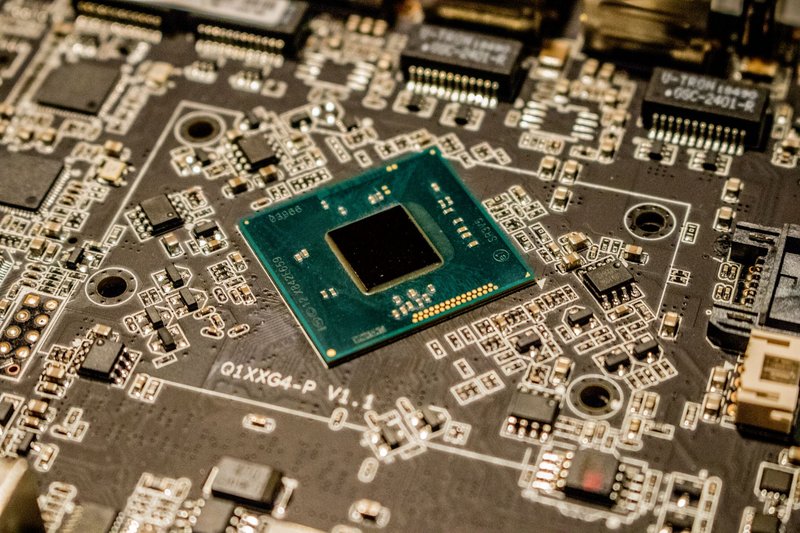
This is the biggest nanotechnology success, and it’s inside the phone you’re probably holding. Intel’s first microprocessor, the 4004 in 1971, had 2,300 transistors built on a 10,000-nanometer process. Apple’s A17 Pro chip, released in 2023 on a 3-nanometer-class process, packs about 19 billion transistors. The sharpest features inside modern transistors, such as fin and gate dimensions, are a handful of nanometers.
One caution: “3 nm” is now a marketing name for a generation of chip technology, not a literal measurement of any one feature. The real structures are still deep in nanoscale territory, though, and the payoff is concrete. More transistors per chip means faster processors and lower power use per operation.
9. Brighter, more accurate screens
Maturity: available now
Quantum dots are semiconductor crystals just a few nanometers across. Their size sets the color of light they emit: smaller dots glow blue, larger ones red. That gives manufacturers precise control over color, and it’s why QLED and quantum-dot TVs show richer reds and greens than older LCDs.
The 2023 Nobel Prize in Chemistry went to Moungi Bawendi, Louis Brus and Alexei Ekimov for discovering and producing quantum dots. Beyond TVs, they’re being tested as markers in medical imaging and as light absorbers in solar cells. Those uses are research stage.
The benefits of nanotechnology at a glance
| Sector | Benefit | Example | Maturity |
|---|---|---|---|
| Medicine | Drugs concentrate in tumors | Doxil (1995), Abraxane (2005) | Available now |
| Medicine | Targeted, antibody-guided particles | Experimental cancer nanomedicines | Research stage |
| Medicine | Protected mRNA delivery | Pfizer-BioNTech and Moderna COVID-19 vaccines | Available now |
| Diagnostics | Quick, low-cost tests | Gold nanoparticle rapid tests | Available now |
| Materials | Stiffer, lighter plastics and rubber | Clay nanocomposites, silica in tires | Available now |
| Materials | Ultra-strong fibers | Carbon nanotube composites | Early commercial |
| Environment | Water filtering at 1 nm | Nanofiltration plants | Available now |
| Environment | Salt-blocking membranes | Graphene oxide desalination | Research stage |
| Energy | Higher solar efficiency | Perovskite-silicon tandem modules (2024) | Early commercial |
| Energy | More battery capacity | Silicon-carbon anodes | Early commercial |
| Electronics | More transistors per chip | Apple A17 Pro, about 19 billion (2023) | Available now |
| Electronics | Purer display color | Quantum-dot TVs | Available now |
The limits: cost, safety and regulation
Nanotechnology isn’t free of trade-offs, and the same size that makes these materials useful is the reason people worry about them.
Cost. Making nanomaterials consistently is hard. Carbon nanotubes, graphene and perovskite films all work well in small batches and cost much more at industrial scale. That explains why so many of the benefits above sit in “early commercial” rather than “available now.” Market-size figures for the sector vary widely depending on what a report counts as nanotechnology, so treat any single number with suspicion.
Safety. Small particles can behave differently inside the body than the same material in bulk. Some long, rigid multi-walled carbon nanotubes caused asbestos-like lung damage in animal studies, and the International Agency for Research on Cancer classified one type, MWCNT-7, as possibly carcinogenic to humans. That doesn’t mean all nanomaterials are dangerous, since the shape, size and coating matter a lot, but each one needs testing on its own. Europe banned titanium dioxide (E171) as a food additive in 2022 after its food safety regulator couldn’t rule out health concerns about the smallest particles.
Regulation. In the US there’s no separate approval system for nanotechnology: the FDA, EPA and other agencies evaluate nano products under existing rules, case by case. The EU is stricter on labeling, and cosmetic ingredients that are nanomaterials must be marked “[nano]” on the packaging. Rules vary by country and lag behind the science.
So the honest summary of the benefits of nanotechnology is uneven. Vaccines, chips, diagnostics and water filtration are delivering today. Better batteries and solar cells are arriving. Targeted cancer nanomedicine and graphene membranes still need years of work. When you read a headline promising a nano-breakthrough, check which of the three labels it actually earns.