As an Amazon Associate we earn from qualifying purchases. Disclosure
On my internal medicine rotation I was paged to see a retired bus driver two days after a stroke in the left side of his brain. He understood everything we said to him and could not answer. When he tried to say his daughter’s name, what came out was a strained “da… da.” That evening I walked past his room and his daughter was singing “Happy Birthday” to him, because it was his birthday, and he was singing it back. Every word, in tune.
She caught me in the hallway and asked how a man who could not say her name could sing a whole song. The neurology resident with me explained it in two minutes: speech is built mostly in the left hemisphere, while melody and the words of songs we have known for decades draw on both sides of the brain, and speech therapists use singing to get some patients with this kind of aphasia talking again. Then she asked the question I hear more than any other about the brain: “Is there a book I can read that starts from the beginning?”
The best neuroscience book for beginners is The Brain: The Story of You by David Eagleman, a short, illustrated tour of how the brain builds perception, memory and decisions, written for readers with no science background. For a single bigger book, read Robert Sapolsky’s Behave. To study neuroscience properly, the best textbook to start with is Bear, Connors and Paradiso’s Neuroscience: Exploring the Brain, and the graduate reference is Kandel’s Principles of Neural Science. For children, start with Your Fantastic Elastic Brain (ages 4 to 8) or Brain Lab for Kids (ages 7 to 11).
The 33 neuroscience books below are sorted by what you want from them: a first book about the brain, a deeper book on one topic, an illustrated reference, a textbook, or a book for a child or teenager. Each entry says who it suits, what it covers and where it falls short, with the edition to buy. After the list you will find what neuroscientists and students on Reddit recommend, two popular books to read with care, free resources and a reading order.
Quick picks
| Pick | Best for | Type |
|---|---|---|
| The Brain: The Story of You | Best first neuroscience book | Popular science |
| Seven and a Half Lessons About the Brain | Shortest good introduction | Popular science |
| The Man Who Mistook His Wife for a Hat | Classic case stories | Popular science |
| Behave | Best big book on brain and behavior | Popular science |
| In Search of Memory | Memory, by a Nobel laureate | Popular science |
| Being You | Consciousness | Popular science |
| The Human Brain Book | Illustrated reference | Reference |
| Neuroscience: Exploring the Brain | Best first textbook | Textbook |
| Principles of Neural Science | Graduate standard | Textbook |
| Biological Psychology (Kalat) | Psychology students | Textbook |
| Your Fantastic Elastic Brain | Kids aged 4 to 8 | Kids |
| Brain Lab for Kids | Kids aged 7 to 11 | Kids |
| Inventing Ourselves | Teenagers | Teens |
Which neuroscience book to start with
“Neuroscience books” covers three kinds of book that do different jobs. Pick the kind first and the title second.
- You are curious about how the brain works. Read a popular science book written by a working neuroscientist or neurologist. These assume no biology and are the right first neuroscience book for almost every adult.
- You want to see the brain: its parts, where they sit and how they connect. Get an illustrated reference or a coloring book. Neuroanatomy is three-dimensional, and pictures teach it faster than paragraphs.
- You want to study neuroscience as a science, for a course, a career change or serious self-study. Get a textbook. Bear is the usual first one; Purves and Kandel come after.
The common mistake is starting with Kandel. Principles of Neural Science is 1,696 pages and written for graduate students and medical students. Readers who buy it first tend to read the first chapter and stop. Start with a book that makes you want to know more, and move to a textbook when you notice you want the mechanisms, not just the stories.
Best neuroscience books for beginners
These are books to read from start to finish. None of them assumes you know any biology, and all of them are written by scientists who study or treat the brain.
Best first neuroscience book
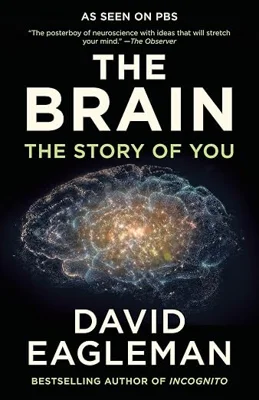
1. The Brain: The Story of You
David Eagleman is a neuroscientist at Stanford, and this book is the companion to his PBS series The Brain with David Eagleman. Six short chapters each answer one question: who am I, what is reality, who is in control, how do I decide, do I need you, and who will we be. Along the way it covers how the brain builds what you see from incomplete signals, why memory is reconstruction rather than recording, how much of what you do runs without your awareness and how the brain changes through life.
It is the book I give people who ask where to start. It is short, it is illustrated, and every chapter is built around a real experiment or patient. If you finish it and want more of the same, Eagleman’s Incognito goes deeper into the unconscious brain and how it should change the way the law treats responsibility.
- David Eagleman
- Vintage, paperback, 256 pages, color illustrations
- Companion to the six-part PBS series
Good: the clearest, shortest overview of what neuroscience knows, by a working researcher. Not great: it skims; no single topic goes deep, and readers who want mechanisms will outgrow it fast.
Check on Amazon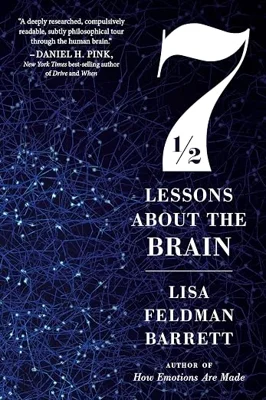
Shortest good introduction
2. Seven and a Half Lessons About the Brain
Lisa Feldman Barrett is a professor of psychology at Northeastern University and one of the most cited scientists in her field. This is a book of essays you can read in an afternoon. The half lesson argues that your brain did not evolve for thinking but for running your body. The others take apart myths that still appear in other popular books, such as the “lizard brain” with an emotional layer and a rational layer stacked on top, and explain what replaced them: a brain that predicts, wires itself to its surroundings and works as a network.
It is the best choice for a reader who will only finish a short book, and a useful corrective for anyone who has picked up brain facts from self-help.
- Lisa Feldman Barrett
- Mariner Books, paperback, 192 pages
Good: short, current and willing to correct popular myths. Not great: it is an essay collection, not a tour of the brain; anatomy and neurons get little space.
Check on Amazon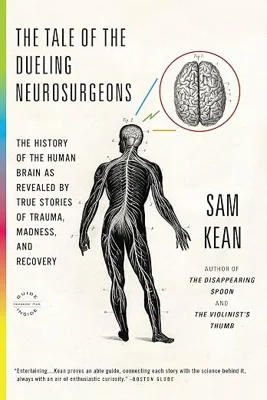
Best history of neuroscience through cases
3. The Tale of the Dueling Neurosurgeons
The title refers to 1559, when a jousting lance splintered into the head of King Henri II of France and two of the greatest surgeons of the age, Ambroise Paré and Andreas Vesalius, tried to save him. Sam Kean uses stories like this one, from Phineas Gage and his tamping iron to the amnesic patient H.M., to explain what each case taught doctors about one part of the brain. The book moves from cells and senses to memory, language and consciousness, so by the end you have toured the whole nervous system.
Kean is a science journalist, not a neuroscientist, but the science is careful and sourced in long endnotes. Reddit users name it often as the book that made them want to study the brain.
- Sam Kean
- Little, Brown, paperback (2015), 432 pages
Good: the most entertaining way to learn which brain region does what. Not great: history-first, so newer research gets less room than in Eagleman or Barrett.
Check on Amazon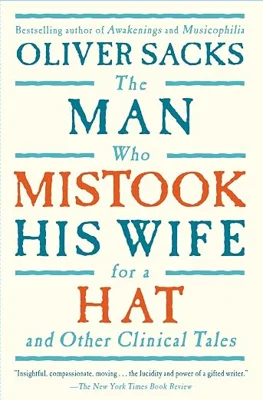
Classic neurology case stories
4. The Man Who Mistook His Wife for a Hat
Oliver Sacks was a neurologist in New York, and this 1985 collection of 24 case histories is the most recommended popular neurology book ever written. The title patient, a music teacher, could see shapes and details but could no longer recognize faces or objects as wholes. Another, a former sailor with Korsakoff syndrome, lived permanently in 1945. Sacks writes about each patient as a person first and a diagnosis second, and he explains what each case shows about how the healthy brain works.
Some diagnoses and terms are dated, and the book teaches neurology through exceptions rather than explaining the normal brain step by step. Read it alongside or after Eagleman, not instead of him.
- Oliver Sacks
- Touchstone, paperback, 256 pages
- 24 short case histories, each readable alone
Good: humane, memorable and the book that started the genre. Not great: written in 1985; some language and medical understanding has moved on.
Check on Amazon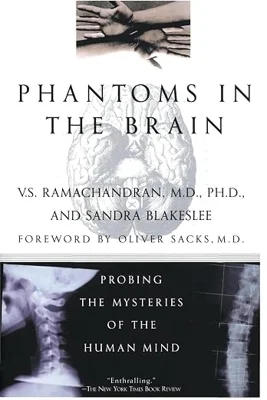
Best for curious puzzles
5. Phantoms in the Brain
V. S. Ramachandran, a neurologist at UC San Diego, built his career on patients whose symptoms look impossible: amputees who feel pain in a hand they no longer have, people who insist a paralyzed arm is moving, a man convinced his parents had been replaced by impostors. For each, he designs a simple test, such as the mirror box he invented for phantom limb pain, and uses the result to explain how the brain maps the body and builds belief.
Written with science journalist Sandra Blakeslee, it reads like a series of detective stories. His later book, The Tell-Tale Brain, covers synesthesia and language, but leans heavily on mirror neurons, an idea that has since been scaled back by other researchers.
- V. S. Ramachandran and Sandra Blakeslee
- Mariner Books, paperback (1999), 352 pages
Good: shows how neuroscientists think, with experiments a reader can follow. Not great: 1998 science; some of his bolder theories have not held up.
Check on Amazon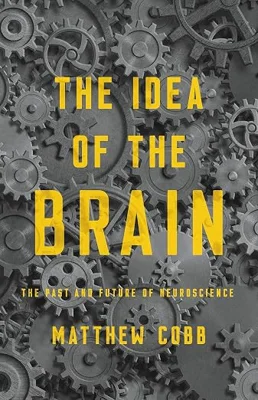
Best history of brain science
6. The Idea of the Brain
Matthew Cobb, a zoologist at the University of Manchester, tells the story of how people have explained the brain, from the ancient view that thought lived in the heart to today. His thread is metaphor: each era described the brain in terms of its newest technology, from hydraulics and clockwork to electricity, the telegraph and the computer. The last third is a frank account of what neuroscience still cannot explain, including how a few hundred neurons in a worm produce its behavior.
It suits a reader who has read one or two general books and wants to know how the field got here and what it is arguing about now.
- Matthew Cobb
- Basic Books, hardcover (2020), 496 pages
Good: the best overview of the field’s history and its open questions. Not great: long and dense in places; not a first book about how the brain works.
Check on Amazon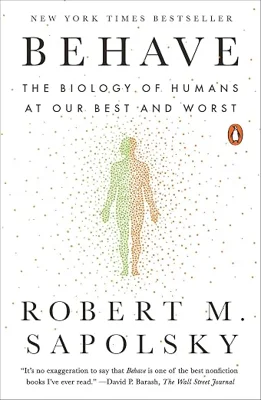
Best big book on brain and behavior
7. Behave
Robert Sapolsky is a professor of biology and neurology at Stanford. Behave takes one act, a person doing something good or terrible, and asks why it happened, working backward in time: what the brain did one second before, what hormones did hours before, what childhood did years before, what genes and culture did over generations. By the end you have covered the amygdala, the frontal cortex, dopamine, testosterone and oxytocin, development and evolution, with jokes throughout.
Behave is the popular neuroscience book named most often on Reddit, by a wide margin. It is 800 pages, and appendices on neuroscience, endocrinology and proteins help readers without a biology background. Sapolsky’s sequel, Determined, uses the same evidence to argue that free will does not exist.
- Robert M. Sapolsky
- Penguin Books, paperback, 800 pages
- Background appendices for readers new to biology
Good: the most complete popular account of how brain, body and environment produce behavior. Not great: very long, and the opening chapters on the amygdala and frontal cortex are the hardest in the book.
Check on Amazon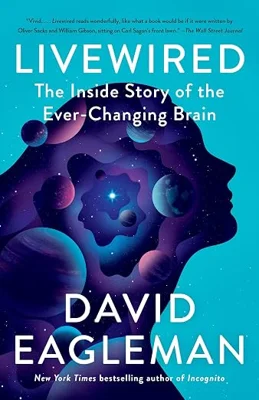
Best book on neuroplasticity
8. Livewired
Livewired is Eagleman’s book about neuroplasticity: how the brain rewires itself in response to what it experiences. He covers why the visual cortex of a blind person gets taken over by touch and hearing, how a child who has half the brain removed can still grow into a functioning adult and how devices that feed new senses to the skin can be learned by the brain as if they were native.
If you came here looking for a book on neuroplasticity, start with this one rather than the better-known Doidge book (see Popular books to read with care). It explains the mechanism, not just the recoveries.
- David Eagleman
- Vintage, paperback, 320 pages
Good: the clearest explanation of plasticity for general readers. Not great: repeats some material from The Brain: The Story of You, and the final chapters on technology are more speculative.
Check on Amazon
Neuroscience books on one topic
Once you have read a general book, the next step is a book on one topic. These are the best on memory, music, emotion, consciousness, neurons, stress and the senses.
Best book on memory
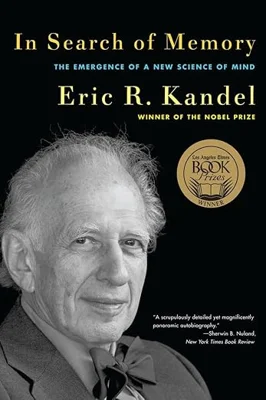
9. In Search of Memory
Eric Kandel shared the 2000 Nobel Prize in Physiology or Medicine for showing how memories are stored as changes in the connections between neurons. This book is half memoir and half science. It begins with his family fleeing Vienna in 1939 and follows his decision to study memory in the sea slug Aplysia, whose large, few neurons let him watch a synapse strengthen as the animal learned. Kandel explains short-term and long-term memory at the level of molecules, in language a general reader can follow.
Kandel is also the lead author of Principles of Neural Science, the textbook further down this list. This is the best way to meet his thinking without 1,696 pages.
- Eric R. Kandel
- W. W. Norton, paperback, 528 pages
Good: how memory works at the cellular level, told by the scientist who worked it out. Not great: the molecular chapters are demanding, and the memoir sections will not interest every reader.
Check on Amazon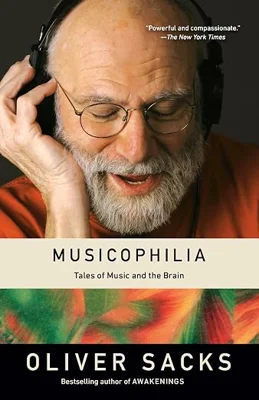
Best book on music and the brain
10. Musicophilia
Musicophilia is Sacks’s book on music and the brain: a surgeon who became obsessed with piano after a lightning strike, musicians with focal dystonia who lose control of one hand, people with amnesia who can still play and conduct and patients with aphasia who can sing words they cannot speak. That last chapter is the one I sent the bus driver’s daughter to. It explains why melodic intonation therapy, which teaches patients to sing their way back to speech, works for some stroke survivors.
Like The Man Who Mistook His Wife for a Hat, it teaches through case stories, so it pairs well with a general introduction.
- Oliver Sacks
- Vintage, revised and expanded paperback, 425 pages
Good: the best book on how the brain processes music, with real patients. Not great: loosely organized; some chapters are short anecdotes with little explanation.
Check on Amazon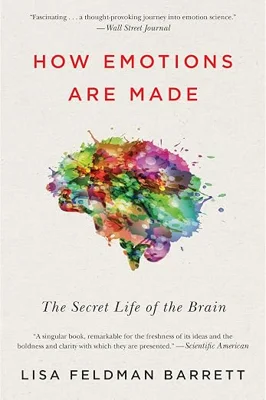
Best book on emotion
11. How Emotions Are Made
The classical view holds that each emotion, such as fear or anger, has its own circuit in the brain and its own fingerprint on the face. Barrett spent two decades testing it and found the fingerprints were not there. Her alternative, the theory of constructed emotion, holds that the brain builds each emotion on the spot from signals inside the body, past experience and the concepts a culture teaches. She explains interoception, the brain’s budget for running the body, and why that changes how we should think about mental health and the law.
The theory is still debated, and Barrett says so. Read it after Seven and a Half Lessons if you want the full argument.
- Lisa Feldman Barrett
- Mariner Books, paperback, 448 pages
Good: a serious, evidence-based challenge to how most people think emotions work. Not great: argues for one theory, and repeats its main point more than it needs to.
Check on Amazon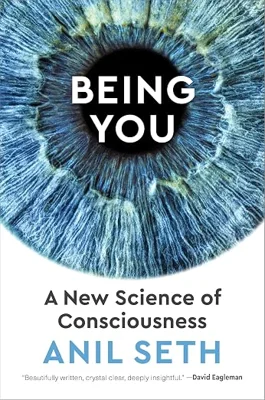
Best book on consciousness
12. Being You
Anil Seth directs consciousness research at the University of Sussex. His argument is that the world you experience is a “controlled hallucination”: the brain constantly predicts what is out there and uses the senses mainly to correct its guesses. He applies the same idea to the self, arguing that our sense of being a body comes from the brain predicting signals from inside it. The book covers how consciousness is measured in anesthesia and coma, and why the question of machine consciousness is not settled by how fluent a chatbot sounds.
It is the clearest current book on consciousness by a working scientist. Readers who want a different answer can follow it with Mark Solms’s The Hidden Spring, which places the source of consciousness in the brainstem and in feeling.
- Anil Seth
- Dutton, hardcover (2021), 352 pages
Good: clear, current and grounded in experiments. Not great: the middle chapters on predictive processing take concentration.
Check on Amazon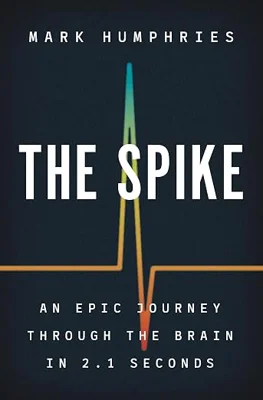
Best book on how neurons compute
13. The Spike
Most popular books talk about brain regions. Mark Humphries, a computational neuroscientist at the University of Nottingham, talks about spikes, the electrical pulses neurons use to signal. The book follows about two seconds of brain activity, from light hitting the eye through the cortex to a movement, explaining what neurons are doing at each step: why most of them are almost silent, why the cortex is noisy and how the brain gets reliable behavior from unreliable parts.
It is the best bridge between popular books and textbooks, and the right book for readers coming from computing or engineering.
- Mark Humphries
- Princeton University Press, hardcover (2021), 232 pages
Good: explains neural signaling itself, which most popular books skip. Not great: a few chapters are hard going without some science background, and the jokes do not land for everyone.
Check on Amazon
Best book on stress and the brain
14. Why Zebras Don’t Get Ulcers
A zebra’s stress response switches on when a lion charges and switches off when the chase ends. Humans switch it on for traffic, deadlines and worry, and leave it on. Sapolsky explains what that does: how stress hormones affect the heart, the gut, sleep and the immune system, and how prolonged high levels of glucocorticoids can damage the hippocampus, the region the brain needs to form new memories. The final chapters cover why some people cope better than others.
The third edition is from 2004, so the newest research is missing, but the physiology has not changed and no later book explains it better.
- Robert M. Sapolsky
- Holt Paperbacks, 3rd edition (2004), 560 pages
Good: the best explanation of the stress response for general readers. Not great: two decades old, so treat the “latest research” sections as history.
Check on Amazon
Best book on the senses
15. An Immense World
Every animal lives inside its own sensory bubble, which biologists call its umwelt. Ed Yong, a science journalist who won the Pulitzer Prize for explanatory reporting, tours them: bees that see ultraviolet, pit vipers that sense heat, fish that sense electric fields, birds that may sense Earth’s magnetic field. Each chapter explains how a sense works, from the receptor to the brain, and in doing so shows how much of reality human senses filter out.
It is a biology book as much as a neuroscience book, and the best one here for readers who are more drawn to animals than to the human brain.
- Ed Yong
- Random House, paperback, 480 pages
Good: beautifully researched, and it explains sensory neuroscience through animals. Not great: little on the human brain beyond perception.
Check on AmazonTwo more worth knowing: Jeff Hawkins’s A Thousand Brains lays out a theory of how the neocortex builds models of the world, from the co-founder of Palm and the neuroscience company Numenta. It is popular with readers interested in artificial intelligence, but it is one researcher’s theory, not consensus. Dean Buonomano’s Your Brain Is a Time Machine covers how the brain tells time and predicts the future.
Illustrated brain books and references
These are books to look at and look things up in. They work best next to one of the books above.
Best illustrated brain book
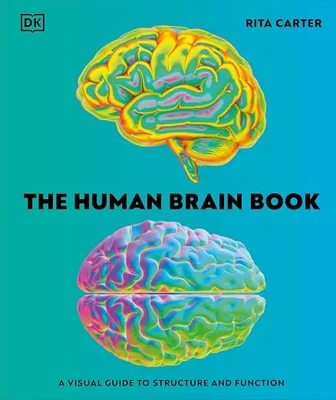
16. The Human Brain Book
DK’s brain book, written by medical journalist Rita Carter with neuroscientist contributors, is the best illustrated overview of the brain for adults. Every spread pairs a short explanation with detailed 3D renderings and brain scans: the lobes and deep structures, neurons and synapses, the senses, movement, memory, emotion, language and consciousness. A final section covers disorders from migraine to dementia. The 2026 edition is the newest.
It is the book to keep beside any of the popular books when they mention a structure you cannot picture, and a good gift for a teenager interested in medicine.
- Rita Carter
- DK, hardcover (2026), 264 pages
Good: the best pictures of the brain in any book under textbook level. Not great: each topic gets a page or two, so explanations stay brief.
Check on Amazon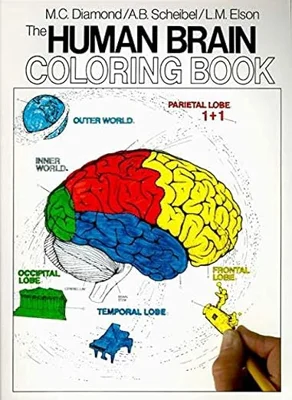
Best for learning neuroanatomy
17. The Human Brain Coloring Book
Marian Diamond was a neuroanatomist at UC Berkeley, best known for her studies of how enriched environments change the brain and for her analysis of Albert Einstein’s brain tissue. Her coloring book takes you through the nervous system plate by plate: you read the text on each page and color each structure as it is named. Coloring forces you to find every part and see how it connects to the next, which is why it works better than reading an atlas.
It is old (1985), but neuroanatomy has not moved. Students in Reddit threads recommend it for the first year of a neuroscience degree.
- Marian C. Diamond, Arnold B. Scheibel and Lawrence M. Elson
- Collins Reference, paperback, 320 pages
Good: the most active way to learn brain anatomy without a lab. Not great: anatomy only; nothing on how the brain computes, and the typeface shows its age.
Check on Amazon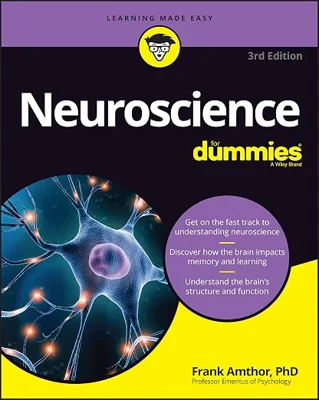
Best structured self-study primer
18. Neuroscience For Dummies
Frank Amthor was a professor of psychology and neuroscience at the University of Alabama at Birmingham. His book covers what an introductory course covers, in the same order: neurons and synapses, the senses, movement, memory and learning, emotion, consciousness and disorders. The third edition (2023) adds newer material on brain-computer interfaces and neural networks.
It suits readers who want the content of a textbook without its length, or students who need a second explanation of a chapter they did not follow in class.
- Frank Amthor
- For Dummies, 3rd edition (2023), 416 pages
Good: organized like a course, and cheap compared with any textbook. Not great: black-and-white diagrams and a breezy tone that some readers find padded.
Check on AmazonMichael O’Shea’s The Brain: A Very Short Introduction is 160 pages and accurate, but it dates from 2005, so it misses two decades of research. Treat it as a quick primer, not a current overview.
Best neuroscience textbooks
A textbook is the only way to learn neuroscience properly: membrane potentials, synaptic transmission, sensory and motor systems, development and plasticity, in order and with figures. Buy one of the first three for general neuroscience, and the others when you know which direction you are taking.
Best first neuroscience textbook
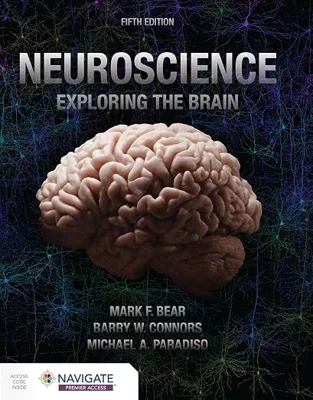
19. Neuroscience: Exploring the Brain
Mark Bear (MIT), Barry Connors (Brown) and Michael Paradiso (Brown) wrote this book for undergraduates with no prior neuroscience, and it is the most readable of the major textbooks. It starts with neurons and how they signal, moves through the senses and the motor system, and ends with the brain and behavior: sleep, emotion, language, memory and mental illness. Boxes called “Path of Discovery” are written by the researchers who made each finding.
On Reddit it is the textbook recommended most often as a starting point, usually with the advice to read Purves or Kandel next. The fifth edition came out in July 2025.
- Mark F. Bear, Barry W. Connors and Michael A. Paradiso
- Jones & Bartlett Learning, 5th edition (2025), 975 pages
- Assumes high school biology and chemistry
Good: the clearest major textbook, written for a first course. Not great: expensive new, and less detailed on molecular mechanisms than Purves or Kandel.
Check on Amazon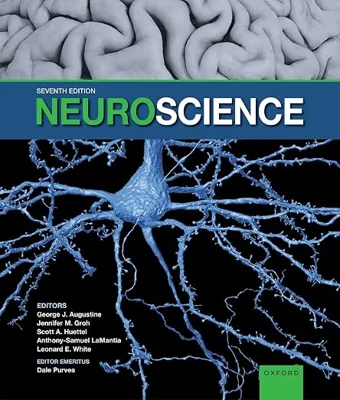
Best for science majors and pre-med
20. Neuroscience (Purves)
Known as “Purves” after its founding editor Dale Purves, this book is now edited by George Augustine, Jennifer Groh, Scott Huettel, Anthony-Samuel LaMantia and Leonard White. It covers the same ground as Bear with more molecular and cellular detail and more experimental evidence, which makes it the usual text for upper-level undergraduate and medical neuroscience courses. The clinical boxes link each system to disease.
Choose it over Bear if you have taken college biology or chemistry, or if you are heading toward medicine.
- George J. Augustine and colleagues
- Sinauer / Oxford University Press, 7th edition (2023), 1,008 pages
Good: rigorous, current and strong on how each finding was made. Not great: denser than Bear; heavy going as a very first book.
Check on Amazon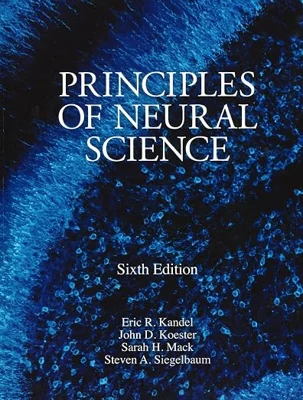
Graduate and medical standard
21. Principles of Neural Science
Principles of Neural Science, edited by Eric Kandel, John Koester, Sarah Mack and Steven Siegelbaum, is the reference that graduate neuroscience programs and medical schools build their courses around. Its chapters are written by leading researchers and run from ion channels to consciousness; the sixth edition added material on decision-making, psychiatric disorders and brain-machine interfaces.
It is the most-mentioned neuroscience book in the Reddit threads I read, and almost every mention adds the same warning: not as a first textbook. Use it as a reference when Bear or Purves is not detailed enough.
- Eric R. Kandel, John D. Koester, Sarah H. Mack and Steven A. Siegelbaum
- McGraw Hill, 6th edition (2021), 1,696 pages
Good: the most authoritative and complete neuroscience text. Not great: enormous and uneven between chapters; nobody should read it cover to cover as an introduction.
Check on Amazon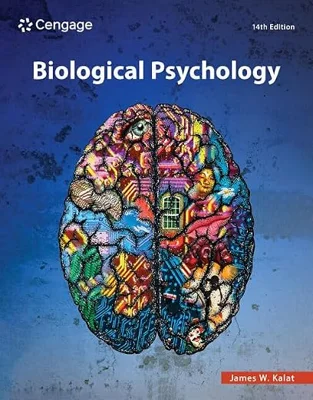
Best for psychology students
22. Biological Psychology
James Kalat’s textbook is written for psychology majors taking their first brain course, and it reads more easily than any of the neuroscience texts above. It covers neurons, drugs and synapses, the senses, movement, sleep, hunger, sex, emotion, learning, cognition and psychological disorders, always tied to behavior. One Reddit user, a self-described textbook collector, called it the only one they could keep reading without falling asleep.
It suits psychology students, counselors and readers whose interest is behavior and mental health rather than cells.
- James W. Kalat
- Cengage, 14th edition (2023), 624 pages
Good: the most readable brain textbook, built around behavior. Not great: lighter on cellular and molecular detail than Bear or Purves.
Check on Amazon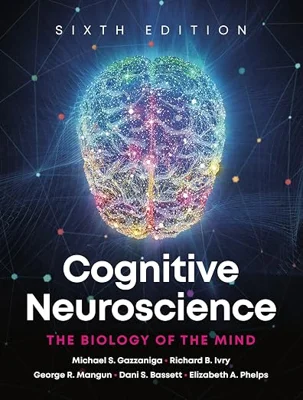
Best cognitive neuroscience textbook
23. Cognitive Neuroscience: The Biology of the Mind
Michael Gazzaniga founded the field of cognitive neuroscience, partly through his work with split-brain patients. This textbook, written with Richard Ivry and George Mangun, covers how the brain produces perception, attention, memory, language, emotion, decisions and social behavior, and how researchers study them with fMRI, EEG, lesion patients and brain stimulation.
Choose it if your interest is the mind more than the cell, or if you are heading for research in psychology or cognitive science.
- Michael S. Gazzaniga, Richard B. Ivry and George R. Mangun
- W. W. Norton, 6th edition (2025), 720 pages
Good: the standard text on the brain basis of thought, with strong coverage of research methods. Not great: assumes some background in neurons; pair it with Bear’s first chapters.
Check on Amazon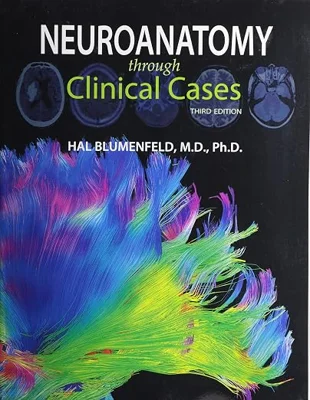
Best neuroanatomy textbook
24. Neuroanatomy through Clinical Cases
On my neurology weeks, the attending asked the same question about every patient before anything else: where is the lesion? Weakness of the right arm and leg with a drooping left eyelid points to the left side of the brainstem, because of where the motor pathway crosses and where the nerve to the eyelid leaves. Hal Blumenfeld, a neurologist at Yale, built this whole textbook on that question. Each chapter teaches one system, then gives real cases with scans for you to localize.
It is the best neuroanatomy book for medical and graduate students, and the most engaging way for any serious learner to understand how the brain’s wiring explains its symptoms. For a short version, Clinical Neuroanatomy Made Ridiculously Simple fits the essentials into 112 pages.
- Hal Blumenfeld
- Sinauer / Oxford University Press, 3rd edition (2021), 1,056 pages
Good: teaches neuroanatomy the way neurologists use it, with cases on every page. Not great: long and clinical; general readers will want a lighter book first.
Check on Amazon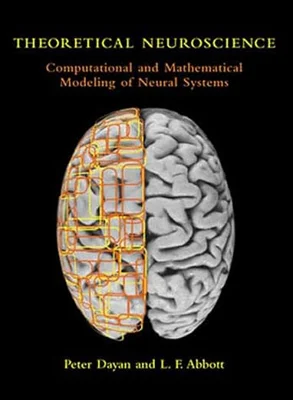
Best computational neuroscience textbook
25. Theoretical Neuroscience
Peter Dayan and Larry Abbott’s book is the standard graduate introduction to computational neuroscience: how neurons encode information, models of single neurons and networks, plasticity and learning. It assumes calculus, linear algebra and some probability, and it is the book Reddit’s computational neuroscience community recommends first.
It dates from 2001 but remains the core text. Wulfram Gerstner’s Neuronal Dynamics is a newer alternative focused on spiking neurons, and its full text is free online from EPFL.
- Peter Dayan and L. F. Abbott
- MIT Press, paperback, 480 pages
Good: the clearest mathematical treatment of how neurons compute. Not great: no help for readers without university math, and nothing on deep learning.
Check on AmazonFor graduate readers who have finished a textbook, György Buzsáki’s The Brain from Inside Out argues that neuroscience has been asking its questions backward. It is the most-discussed theoretical book in the field and assumes you know the textbook material.
Neuroscience books for kids
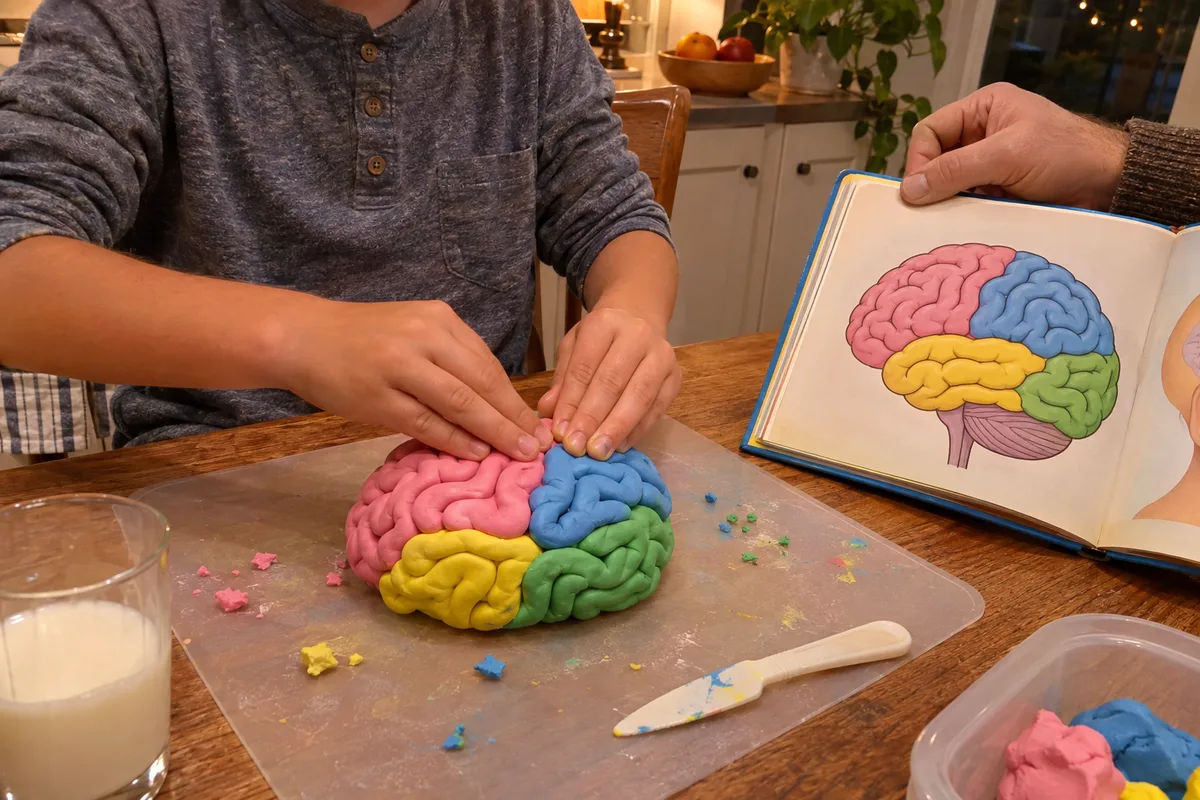
This summer my nephew Mateo, who is ten, asked me why he cannot tickle himself. The answer is one of my favorite experiments: when you move, your cerebellum predicts the touch your movement will cause and the brain turns that sensation down, so your own fingers never surprise you. Sarah-Jayne Blakemore and her colleagues at University College London showed it in 1998 with a tickling robot. Mateo wanted to know where the cerebellum was, so we made a brain out of modeling clay at my sister’s kitchen table, one color per lobe, with the cerebellum tucked underneath.
The best neuroscience books for kids give children something to do or something to look at, not just facts to read. These are sorted by age.
Best for ages 4 to 8
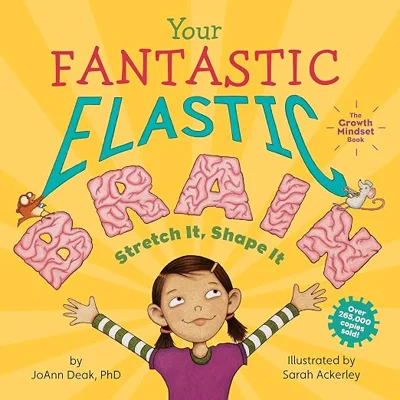
26. Your Fantastic Elastic Brain
JoAnn Deak, a psychologist and educator, wrote this picture book to explain to young children that the brain grows stronger with practice, including practice at things they are bad at. It names real parts of the brain (the cerebellum, the amygdala, the hippocampus, the prefrontal cortex) and says in one sentence what each does. Sarah Ackerley’s illustrations are bright and friendly.
Teachers use it for lessons on effort and mistakes. It is the best first brain book for preschool and early elementary children.
- JoAnn Deak, illustrated by Sarah Ackerley
- Little Pickle Press, 32 pages, ages 4 to 8
Good: real brain vocabulary pitched for young children. Not great: the growth-mindset message is the point; it is light on how the brain works.
Check on Amazon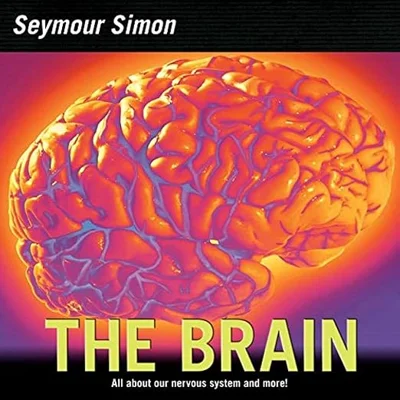
Best photo book for ages 6 to 10
27. The Brain: All About Our Nervous System and More!
Seymour Simon has written more than 300 science books for children. This one uses real photographs, microscope images and MRI scans to show neurons, the spinal cord, the lobes of the brain and how signals travel from a fingertip to the brain and back. The text is short and accurate, and it treats children as able to handle real images.
- Seymour Simon
- HarperCollins, paperback, 32 pages, ages 6 to 10
Good: real scans and micrographs instead of cartoons. Not great: short, and older children will finish it in one sitting.
Check on Amazon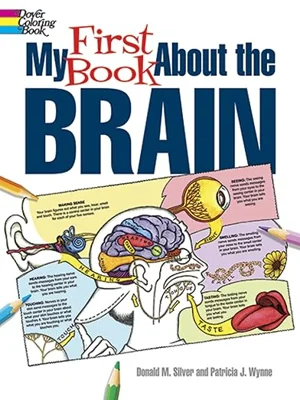
Best brain coloring book for kids
28. My First Book About the Brain
This Dover coloring book by Donald Silver and illustrator Patricia Wynne is the children’s version of the coloring method that works for medical students. Each page has a labeled drawing of a part of the nervous system, from neurons to the senses, with a few lines of explanation to read while coloring. It costs little enough to buy one per child.
- Donald M. Silver and Patricia J. Wynne
- Dover, paperback, 32 pages, ages 6 to 10
Good: hands-on, inexpensive and accurate. Not great: line drawings only; pair it with Seymour Simon’s photos.
Check on Amazon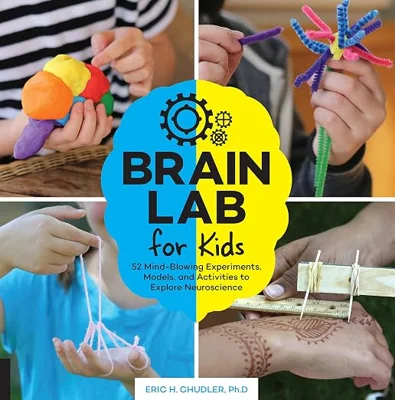
Best hands-on neuroscience book for kids
29. Brain Lab for Kids
Eric Chudler is a neuroscientist at the University of Washington who has run the free Neuroscience for Kids website since 1996. His book has 52 activities using household materials: building a neuron from pipe cleaners, mapping touch sensitivity with two toothpicks, testing reaction time with a falling ruler, finding your blind spot, and making a brain model. Each activity explains the science behind it.
It is the best neuroscience book for children who learn by doing, and the activities work for a classroom or a rainy weekend.
- Eric H. Chudler
- Quarry Books, paperback, 144 pages, ages 7 to 11
Good: 52 real experiments by a working neuroscientist. Not great: most activities need an adult to set up.
Check on Amazon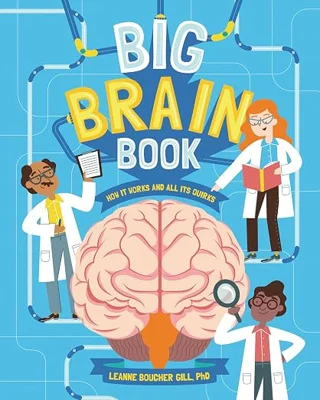
Best for ages 10 to 13
30. Big Brain Book: How It Works and All Its Quirks
Leanne Boucher Gill is a professor of psychology and neuroscience, and this book, published by the American Psychological Association’s children’s imprint, is a proper introduction to neuroscience for middle-grade readers. It covers neurons, brain regions, the senses, memory, emotions and sleep, with experiments to try and explanations of why the brain gets things wrong, such as optical illusions and false memories.
- Leanne Boucher Gill
- Magination Press, hardcover (2021), ages 10 to 13
Good: real neuroscience for middle-grade readers, by a neuroscientist. Not great: younger readers will find the text dense.
Check on Amazon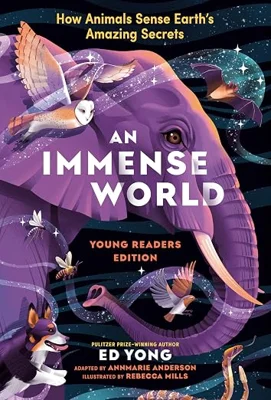
Best for animal-loving kids aged 9 to 12
31. An Immense World (Young Readers Edition)
Ed Yong’s book on animal senses, adapted for children by the author with illustrations by Rebecca Mills. It keeps the best stories from the adult book, such as how a star-nosed mole feels its way through soil, and explains how each sense works in language a fourth or fifth grader can follow. It is a good way to teach how nervous systems work to a child who is more interested in animals than in brains.
- Ed Yong, illustrated by Rebecca Mills
- Bright Matter Books, 272 pages, ages 9 to 12
Good: sensory neuroscience through animals children love. Not great: little about the human brain.
Check on AmazonFor ages 8 to 12, Robert Winston’s What Goes On in My Head? from DK is a colorful question-and-answer book on the brain and the mind.
Neuroscience books for teens
A teenager interested in the brain can read most of the adult beginner books above; The Brain: The Story of You and The Tale of the Dueling Neurosurgeons work well from about 13. These two are about the teenage brain itself.
Best for teenagers
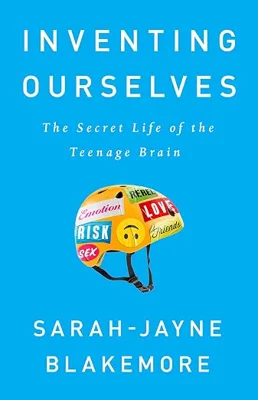
32. Inventing Ourselves
Sarah-Jayne Blakemore, now a professor of psychology at the University of Cambridge, studies how the brain changes during adolescence, and she ran the tickling experiment Mateo liked. This book explains what is happening in a teenage brain: why the social brain is so sensitive to peers, why risk-taking rises, why sleep schedules shift later, and how the prefrontal cortex keeps developing into the twenties. She is clear that adolescence is a period of opportunity, not a defect.
- Sarah-Jayne Blakemore
- PublicAffairs, paperback, 256 pages, ages 14 and up
Good: real research on adolescence, written for teens and parents alike. Not great: UK examples throughout, and the middle chapters describe experiments in detail.
Check on Amazon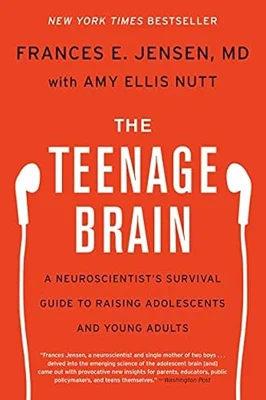
Best for parents of teens
33. The Teenage Brain
Frances Jensen is a neurologist and chair of neurology at the University of Pennsylvania, and she wrote this book while raising two teenage sons. It covers the same science as Blakemore from a parent’s side: sleep, risk, stress, addiction, the effects of alcohol and cannabis on a developing brain, and what parents can do with that knowledge.
- Frances E. Jensen with Amy Ellis Nutt
- Harper Paperbacks, 384 pages
Good: practical, evidence-based and written by a neurologist. Not great: written for adults; teenagers will prefer Blakemore.
Check on AmazonWhat Reddit recommends
I read 37 Reddit threads in r/neuroscience, r/neuro, r/AskNeuroscience, r/suggestmeabook and related communities where people asked for neuroscience books, 722 comments in all. These are the books named most often, by number of threads.
| Book or author | Threads | Type |
|---|---|---|
| Principles of Neural Science (Kandel) | 23 | Textbook |
| Oliver Sacks (any book) | 18 | Popular science |
| Neuroscience: Exploring the Brain (Bear) | 18 | Textbook |
| Behave (Sapolsky) | 16 | Popular science |
| Ramachandran (Phantoms in the Brain, The Tell-Tale Brain) | 15 | Popular science |
| Neuroscience (Purves) | 13 | Textbook |
| The Brain That Changes Itself (Doidge) | 13 | Popular science |
| David Eagleman (any book) | 12 | Popular science |
| The Tale of the Dueling Neurosurgeons (Kean) | 8 | Popular science |
| Gazzaniga (any book) | 5 | Textbook and popular |
| In Search of Memory (Kandel) | 5 | Popular science |
| Lisa Feldman Barrett (any book) | 5 | Popular science |
| Biological Psychology (Kalat) | 4 | Textbook |
The pattern is consistent across threads. For textbooks, the advice is Bear first, then Purves, with Kandel as the reference. One commenter summed up the typical university sequence: Bear for undergraduates, Purves and Kandel for graduate courses. For popular books, Sapolsky and Sacks dominate, and Behave threads are full of readers who also recommend Sapolsky’s free Stanford lecture series, Human Behavioral Biology, on YouTube.
Popular books to read with care
Two of the most popular books about the brain get frequent recommendations and frequent criticism from researchers.
The Brain That Changes Itself by Norman Doidge is the seventh most-named book in the Reddit threads, and several commenters say it made them want to study the brain. It introduced many readers to neuroplasticity through dramatic recoveries. The problem is that it builds general claims on individual cases and gives some therapies more credit than the evidence supports. Read Eagleman’s Livewired for the science of plasticity, and Doidge, if you want, for the stories.
Why We Sleep by Matthew Walker is a good introduction to why sleep matters, by a sleep scientist at UC Berkeley. Critics, including researcher Alexey Guzey, have documented figures in it that are overstated or wrong, such as claims about sleep and disease risk that go beyond the studies cited. The broad message, that adults need regular, sufficient sleep, is sound. Check the specific numbers before repeating them.
The same caution applies to any book that promises to make you smarter by using “both sides of your brain” or calming your “lizard brain.” The left-brain, right-brain personality types and the triune brain are myths that neuroscientists abandoned decades ago.
Free neuroscience resources
Some of the best neuroscience learning material costs nothing. These are all made by universities or scientific societies.
- BrainFacts.org, from the Society for Neuroscience, the largest professional body for neuroscientists. Its book, Brain Facts, is a free downloadable primer for the public and for teachers.
- Neuroscience Online, a free open-access textbook from the McGovern Medical School at UTHealth Houston, written for medical students.
- Foundations of Neuroscience, a free open textbook by Casey Henley at Michigan State University, written for a first undergraduate course.
- Neuroscience for Kids, Eric Chudler’s site at the University of Washington, with experiments and explanations for children and teachers.
- Robert Sapolsky’s Stanford course, Human Behavioral Biology, 25 lectures free on YouTube, which covers much of the material in Behave.
- Neuronal Dynamics, the full text of Gerstner’s computational neuroscience textbook, free online from EPFL.
For background on the field itself, see our overview of the branches of neuroscience, the list of neurons and the everyday applications of neuroscience.
How to study neuroscience from a book
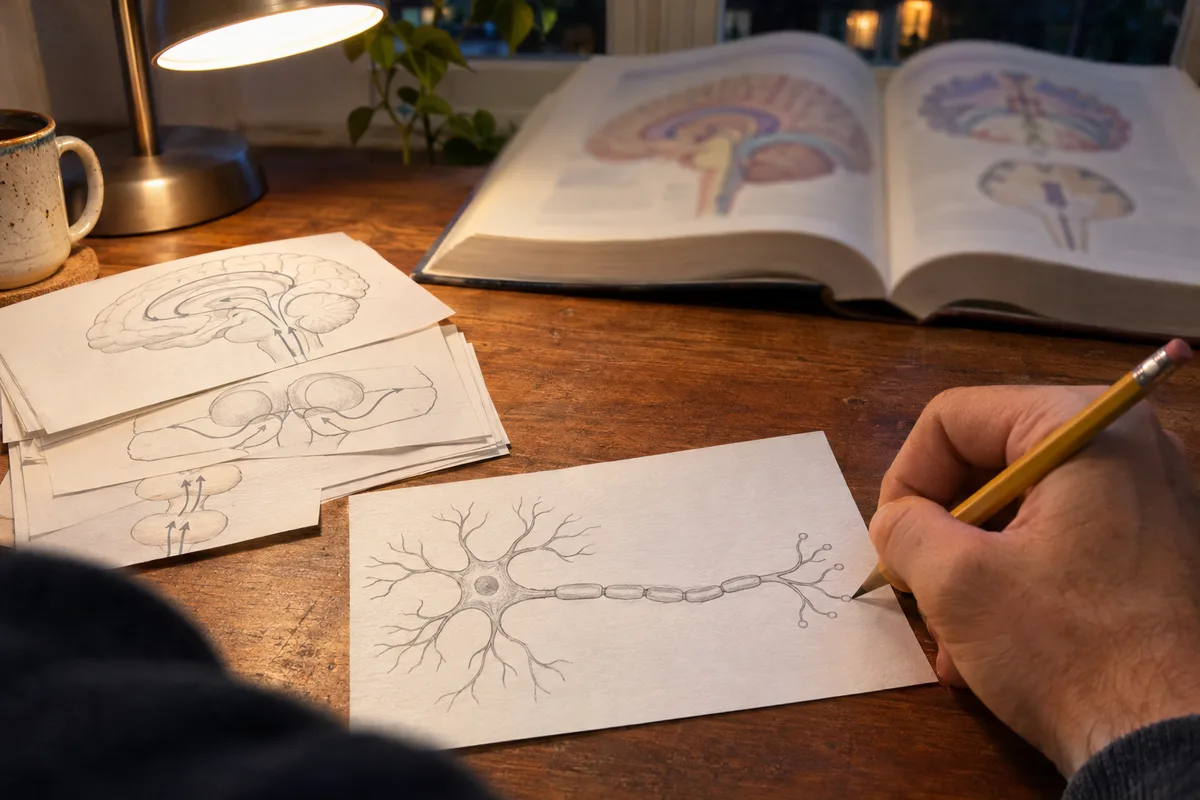
Popular books can be read like novels. Textbooks cannot. In medical school, the students who learned neuroanatomy fastest were the ones who closed the book and drew. I kept a stack of index cards during my neuroscience block, one pathway per card, drawn from memory: the touch and position pathway that crosses to the other side in the lower brainstem, the pain and temperature pathway that crosses almost immediately in the spinal cord, the motor pathway that crosses at the bottom of the medulla. Where each one crosses is the whole reason a lesion in one place causes symptoms on one side of the body and not the other.
- Draw it with the book closed. After each section, sketch the neuron, the pathway or the circuit from memory, then check it. What you get wrong is what you study next.
- Explain the mechanism out loud. If you cannot say how an action potential travels down an axon in your own words, you do not know it yet.
- Use a 3D atlas. Free tools such as the BrainFacts 3D brain let you rotate the structures your textbook shows in flat slices.
- Pair a textbook chapter with a story. Read Bear’s chapter on memory with Kandel’s In Search of Memory, or the chapter on the visual system with the visual agnosia cases in Sacks. The cases make the anatomy stick.
If you are also learning the rest of the body, our guide to the best anatomy books for beginners covers atlases and coloring books for every system, and the best biology books for self-study covers the cell biology neuroscience is built on.
A reading order
If you want to go from no background to a working knowledge of neuroscience, read in this order:
- The Brain: The Story of You (Eagleman) or Seven and a Half Lessons About the Brain (Barrett), to see the whole field.
- The Tale of the Dueling Neurosurgeons (Kean) or The Man Who Mistook His Wife for a Hat (Sacks), to connect brain regions to what they do.
- Behave (Sapolsky), for the biology of behavior from neurons to culture.
- One topic book from the list above: memory, emotion, consciousness, neurons, stress or the senses.
- Neuroscience: Exploring the Brain (Bear), with The Human Brain Coloring Book for anatomy.
- Purves or Kandel, depending on whether you want breadth for a course or a reference for research.
Steps one to four take a few months of evening reading. Bear is a year of steady self-study, the equivalent of a university course.
FAQ
The Brain: The Story of You by David Eagleman is the best neuroscience book for beginners. It is short, illustrated and assumes no science background. Seven and a Half Lessons About the Brain by Lisa Feldman Barrett is an even shorter alternative, and Behave by Robert Sapolsky is the best choice if you want one long, complete book.
For a first textbook, Neuroscience: Exploring the Brain by Bear, Connors and Paradiso is the best and most readable. Purves’s Neuroscience is more detailed and suits science majors and pre-med students. Kandel’s Principles of Neural Science is the graduate and medical reference, not a first book.
No. Principles of Neural Science is 1,696 pages and written for graduate and medical students. Start with Bear’s Neuroscience: Exploring the Brain and use Kandel as a reference when you need more detail on a topic.
Your Fantastic Elastic Brain by JoAnn Deak is the best for ages 4 to 8. Brain Lab for Kids by neuroscientist Eric Chudler is the best for ages 7 to 11, with 52 hands-on activities. Big Brain Book by Leanne Boucher Gill suits ages 10 to 13, and Seymour Simon’s The Brain is the best photo book for ages 6 to 10.
Yes. Read two or three popular books by neuroscientists, then work through Bear’s textbook chapter by chapter, drawing pathways from memory and using free resources such as BrainFacts.org and Neuroscience Online. That gives you the content of a first university course. Lab skills and research experience need a university or a research program.
Livewired by David Eagleman is the best book on neuroplasticity for general readers. It explains how the brain rewires itself and why. The Brain That Changes Itself by Norman Doidge is better known, but it relies on individual cases and overstates some therapies.
Yes, with patience. Behave assumes no biology and includes appendices on neuroscience, hormones and proteins for readers who need them. It is 800 pages, so if you want a shorter first book, read Eagleman’s The Brain: The Story of You first.
Biological Psychology by James Kalat is the most readable brain textbook for psychology students. Gazzaniga’s Cognitive Neuroscience: The Biology of the Mind covers perception, memory, language and decision-making, and Lisa Feldman Barrett’s How Emotions Are Made is the best popular book on the science of emotion.
For self-study, one edition back is fine and costs far less used: Bear’s 4th edition (2015) or Kandel’s 5th (2012) still teach the core well. Newer editions add research on brain-machine interfaces, psychiatric genetics and imaging. Avoid editions more than about fifteen years old.
Sources
- Amazon product pages for each book, checked November 2026 (editions, page counts, publishers and age ranges).
- Reddit threads asking for neuroscience books in r/neuroscience, r/neuro, r/suggestmeabook, r/booksuggestions, r/cogsci and r/compmathneuro, summarized in What Reddit recommends.
- Society for Neuroscience, BrainFacts.org.
- The Nobel Prize, The Nobel Prize in Physiology or Medicine 2000 (Carlsson, Greengard, Kandel).
- Sarah-Jayne Blakemore, Daniel Wolpert and Chris Frith, “Central cancellation of self-produced tickle sensation,” Nature Neuroscience 1 (1998).
- American Speech-Language-Hearing Association, Aphasia.
- Gottfried Schlaug and colleagues, “From singing to speaking: why singing may lead to recovery of expressive language function in patients with Broca’s aphasia,” Music Perception 25 (2008).
- Alexey Guzey, “Matthew Walker’s ‘Why We Sleep’ Is Riddled with Scientific and Factual Errors” (2019).
- McGovern Medical School at UTHealth Houston, Neuroscience Online.