TLDR
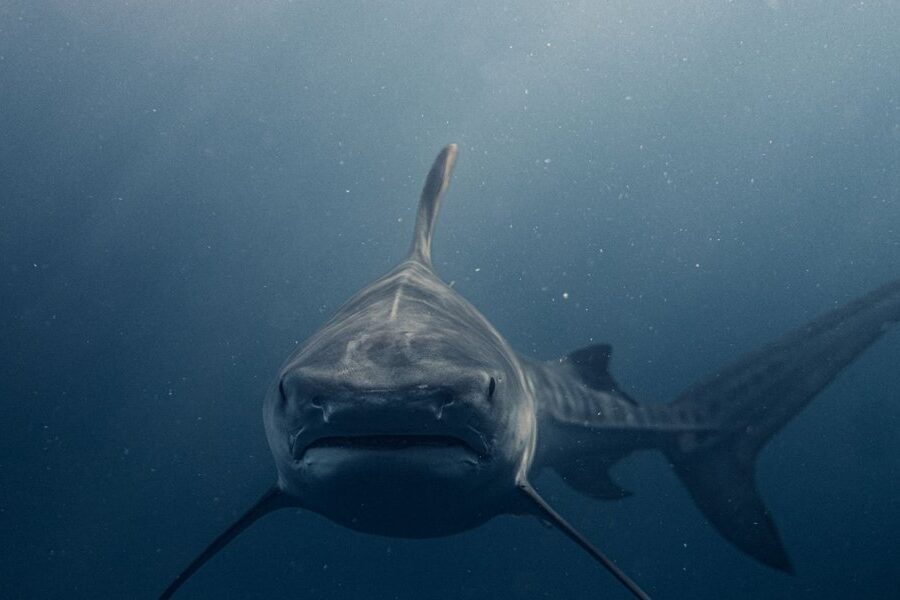
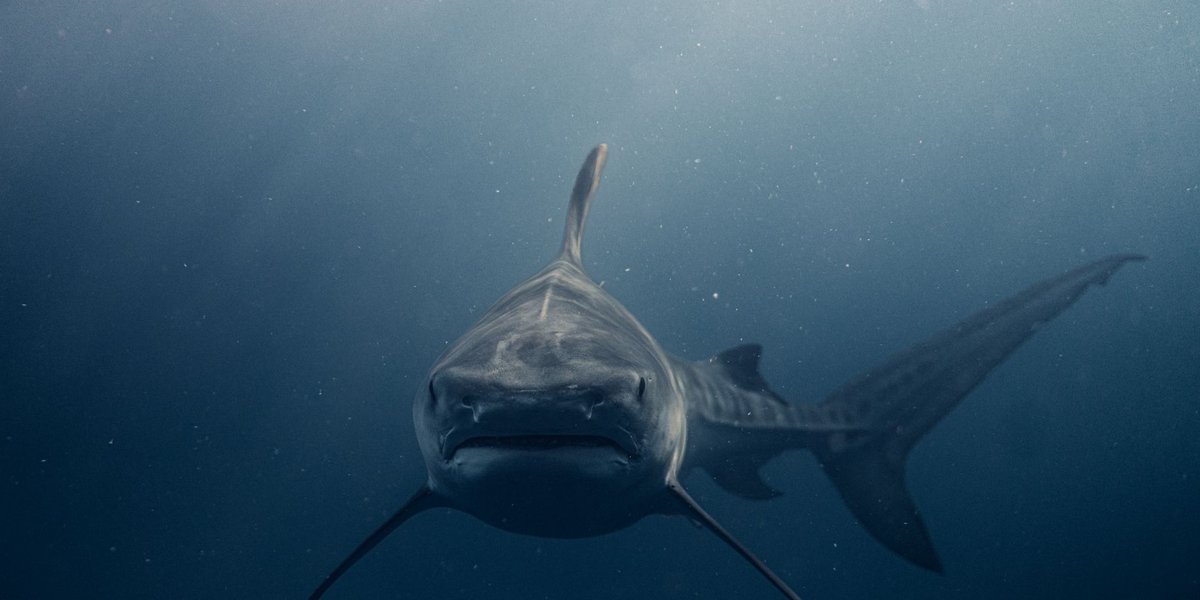
Cartilaginous fish are fish whose skeletons are made of cartilage instead of bone. They fall into three groups:
- Sharks: great white, whale shark, hammerhead, mako, goblin, basking, thresher, megamouth, angel and sawshark.
- Rays and skates: manta ray, stingray, electric ray, sawfish, guitarfish and little skate.
- Chimaeras: spotted ratfish and elephant fish.
All of them belong to the class Chondrichthyes. Details on each species are below.
Table of Contents
What makes a fish cartilaginous
Your nose and ears are made of cartilage. A shark’s entire skeleton is made of the same flexible tissue, including its jaws, spine and skull. Biologists group these animals in the class Chondrichthyes, and the Florida Museum’s ichthyology pages are a good place to see how they fit into the wider fish family tree.
Cartilage is lighter than bone, which helps with buoyancy. Several other traits come with it:
- Placoid scales. Instead of flat scales, the skin is covered in tiny tooth-like denticles. Run a hand along a shark from head to tail and it feels smooth. Go the other way and it feels like sandpaper.
- No swim bladder. Bony fish use a gas-filled bladder to hover. Cartilaginous fish rely on an oil-rich liver and constant movement or fin lift.
- Exposed gill slits. Most have five to seven slits on each side, with no bony cover over them. Chimaeras are the exception and have a single flap.
- Internal fertilization. Males carry claspers, and young are born live or hatch from leathery egg cases.
Sharks
Sharks are the group everyone pictures first. There are more than 500 species, from a few inches long to the size of a bus. These ten show the range.
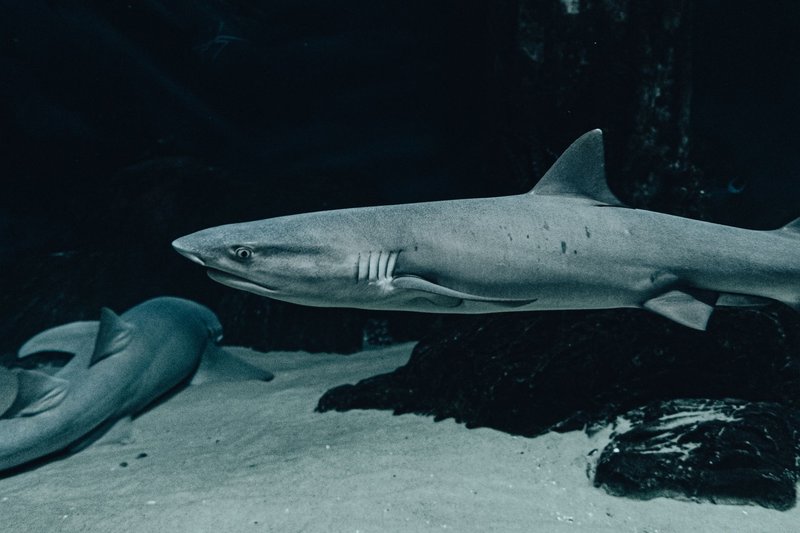
Great white shark
The great white reaches roughly 4 to 6 meters and hunts seals and sea lions by ambush from below. It is a warm-bodied predator that can keep its muscles and brain warmer than the surrounding water.
Whale shark
The largest fish alive, at up to about 12 meters. It filters plankton and small fish through its huge mouth and is harmless to people. NOAA Fisheries lists it as endangered.
Hammerhead shark
The flattened, wing-like head spreads its eyes and electrical sensors wide, which helps it find stingrays buried in sand. Stingrays are its favorite meal. The great hammerhead is the largest of the group, at about 6 meters.
Shortfin mako
Built like a torpedo and widely regarded as the fastest shark. Bursts of around 70 km/h (45 mph) have been reported. It feeds on tuna, swordfish and squid.
Goblin shark
A deep-sea shark with a pink face, a flat blade of a snout, and jaws that shoot forward to snap up prey. It usually lives hundreds of meters down, so most people have only seen photos of dead specimens.
Basking shark
The second-largest fish, at around 10 meters. It cruises slowly at the surface with its mouth open, straining zooplankton. The gill rakers in its throat do the work that teeth do in other sharks.
Thresher shark
The upper tail lobe is as long as the rest of its body. It whips the tail through schools of fish to stun them, then circles back to eat.
Megamouth shark
Discovered only in 1976 when one tangled in a U.S. Navy research vessel’s anchor off Hawaii. Fewer than a few hundred have been recorded since. It filter-feeds in deep water and is one of the rarest large sharks known.
Angel shark
It looks like a ray, but its pectoral fins aren’t attached to its head. Angel sharks bury themselves in sand and snap at passing fish. Several species are now critically endangered.
Sawshark
The long, toothed snout (the rostrum) is the giveaway, along with a pair of barbels dangling halfway along it. Sawsharks are small, deep-water sharks that are often confused with sawfish, which are rays.
One more worth knowing: the bull shark isn’t on the list above, but it tolerates fresh water and has been recorded far up rivers such as the Mississippi and the Amazon.
Rays and skates
Rays and skates have flattened bodies and enlarged pectoral fins that look like wings. Their gills are on the underside, and most rest on the seafloor. Their mouths are underneath too, which is why you see their faces from below at an aquarium.
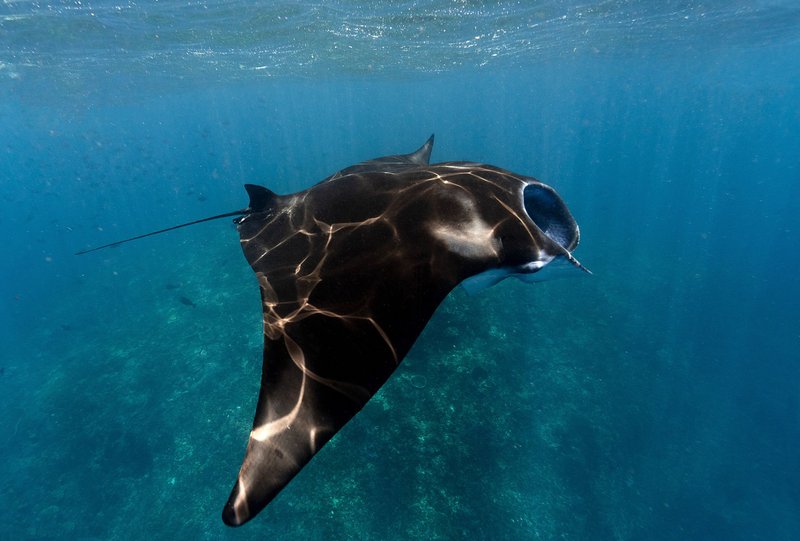
Manta ray
The giant oceanic manta has a wingspan of up to about 7 meters. It feeds on plankton, steering food into its mouth with two paddle-shaped lobes beside the head. It has one of the largest brains relative to body size of any fish.
Stingray
Stingrays carry one or more venomous barbs on the tail, used defensively. Most injuries to people happen when someone steps on one hidden in sand. Shuffling your feet in shallow water gives them time to move.
Electric ray
Electric rays generate current from specialized organs on either side of the head. Torpedo rays can discharge enough to stun prey and, in the largest species, deliver a shock of up to about 200 volts.
Sawfish
A ray with a long, flat rostrum edged with teeth, used to slash through schools of fish and probe the bottom. All sawfish species are threatened. The IUCN Red List classifies most of them as endangered or critically endangered. Some travel into rivers and estuaries.
Guitarfish
Half shark, half ray in appearance, with a ray’s flat front and a shark’s thick tail. Guitarfish live along sandy coasts and eat crabs and clams, which they crush with plate-like teeth.
Little skate
A small skate of the northwest Atlantic, around 50 centimeters long. Skates lay egg cases, which wash ashore as the “mermaid’s purses” beachcombers find. Rays, by contrast, generally give birth to live young.
River stingrays add a freshwater twist. The family Potamotrygonidae lives only in South American rivers, which makes them one of the few fully freshwater groups of cartilaginous fish.
Chimaeras
Chimaeras are the least known group. They split from sharks and rays more than 300 million years ago and are mostly found in cold, deep water, which is why they’re also called ghost sharks.
Spotted ratfish
A silvery fish of the North Pacific, about a meter long, with large green eyes, a long whiplike tail and a venomous spine in front of its dorsal fin. Unlike sharks, it has four tooth plates for crushing shellfish. It can be found in shallow water in Puget Sound in some seasons.
Elephant fish
Found around Australia and New Zealand. A fleshy, trunk-like snout covered in electroreceptors sweeps the muddy bottom for worms and shellfish. Females lay large, spindle-shaped egg cases.
Sharks vs rays vs chimaeras
| Feature | Sharks | Rays and skates | Chimaeras |
|---|---|---|---|
| Body shape | Torpedo-like, side-to-side | Flattened, wing-like fins | Rounded head, tapering tail |
| Gill openings | 5 to 7 slits on the sides | Slits on the underside | One flap on each side |
| Teeth | Many rows, regularly replaced | Flat plates or small teeth | Few plates, not replaced |
| Reproduction | Live birth or egg cases | Rays: live birth; skates: egg cases | Egg cases |
| Typical habitat | Open ocean to deep sea | Mostly seafloor | Deep, cold water |
Rays and skates look similar but differ in a few ways. Skates lay eggs and have a thin, spineless tail. Rays usually give birth to live young and often have a stinging barb.
FAQ
What is the largest cartilaginous fish?
The whale shark, at up to about 12 meters. The basking shark comes second. Both are filter feeders.
Are cartilaginous fish different from bony fish?
Yes. Bony fish have a skeleton of true bone, flat scales, a swim bladder and a gill cover. Cartilaginous fish have a cartilage skeleton, placoid scales, no swim bladder and exposed gill slits.
Do all cartilaginous fish live in salt water?
Most do. Bull sharks, some sawfish and the South American river stingrays can live in fresh water.
Is a manta ray a fish?
Yes. A manta ray is a cartilaginous fish, in the same class as sharks.
How many species of cartilaginous fish are there?
Roughly 1,200, made up of about 500 sharks, about 650 rays and skates, and around 50 chimaeras.