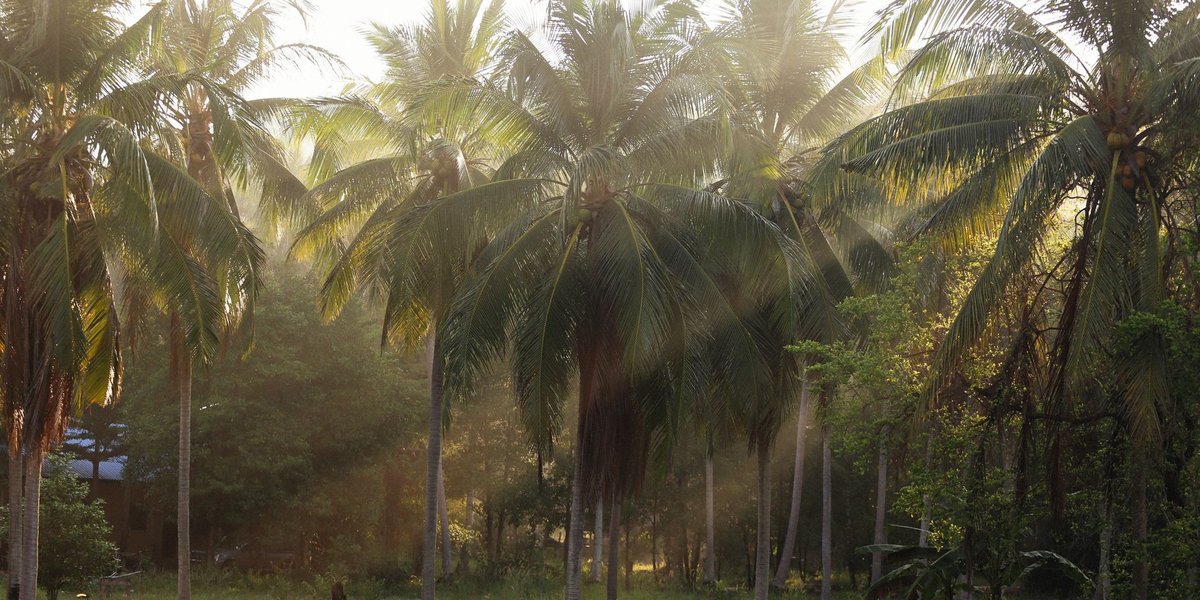
Haiti covers the western third of Hispaniola, and it is one of the most biologically distinctive countries in the Caribbean. Around 2,050 of its plant species, roughly 34% of the flora, grow nowhere else on Earth. Of its 58 frog species, 30 are found only on the island. Thirty-three of its birds are endemic, and 10 of those are threatened with extinction.
Those numbers come with a catch. Haiti has lost almost all of its original forest, and the endemic species that remain are squeezed into a few mountain refuges. This guide covers the endemic species of Haiti group by group, with scientific names and IUCN conservation status, then explains where they live, what threatens them and what is being done.
One note on terms. Many “Haitian endemics” are really Hispaniolan endemics, meaning they also occur in the Dominican Republic. A few are restricted to Haiti itself. The tables and lists below say which is which where it matters.
Contents
- The numbers at a glance
- Mammals
- Birds
- Amphibians
- Reptiles
- Plants
- Marine life, freshwater fish and insects
- Summary table
- Habitats and hotspots
- Threats
- Conservation actions and how to help
The numbers at a glance
Hispaniola is the second-largest island in the Caribbean, and it has been isolated long enough for its wildlife to diverge from everything on the mainland. The island’s mountain ranges add to the effect. Each range works like a separate island of cool, wet forest surrounded by dry lowlands, and species that settled in one often never reached the next.
| Group | Headline figure |
|---|---|
| Endemic plants | About 2,050 species (34% of the flora) |
| Frogs | 30 of 58 species found nowhere else |
| Endemic birds | 33 species, 10 of them threatened |
Amphibians are the standout. The ratio of endemic frogs is high even by tropical standards, and nearly all of them are tiny forest species that depend on moisture and shade.
Mammals
Haiti has very few native land mammals, and almost none of them are large. That is why the two surviving ground-dwelling endemics get so much conservation attention.
Hispaniolan solenodon (Solenodon paradoxus), Endangered. A nocturnal, long-snouted insectivore the size of a small cat, with a flexible nose and a groove in its lower incisors that delivers venom. Few mammals on Earth are venomous, and this is one of them. Solenodons are an ancient lineage that split from other mammals tens of millions of years ago, which is why conservation groups such as EDGE of Existence rank them as a priority. Dogs and cats introduced to the island are the main killers.
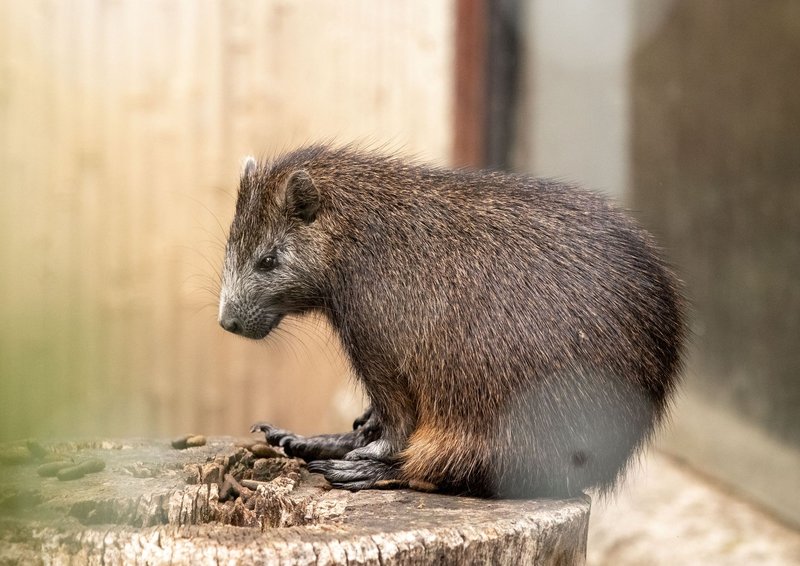
Hispaniolan hutia (Plagiodontia aedium), Endangered. A stocky, rabbit-sized rodent that nests in tree hollows and rock crevices and feeds on bark, leaves and fruit. It is the last surviving member of its group on Hispaniola. Hunting for bushmeat and loss of forest cover have pushed it into a few forest remnants.
Hispaniolan bats. Haiti’s caves hold several endemic and near-endemic bat species, and they matter more than their small size suggests. They are the island’s main nocturnal pollinators and seed dispersers, and cave disturbance is a real risk to them.
Birds
Birders know Haiti for its endemics. The cloud forests of the southern massifs hold species that are hard to find even in the Dominican Republic, because Haiti’s last high-altitude forest sits in the south.
La Selle thrush (Turdus swalesi), Endangered. A dark, shy thrush of high-elevation cloud forest in the Massif de la Selle and the Massif de la Hotte. It forages on the forest floor, which makes it vulnerable to both clearing and predators. Its range is small and shrinking.
White-winged warbler (Xenoligea montana), Vulnerable. A small gray-and-olive songbird with white wing patches, found in dense mountain undergrowth. It depends on intact wet forest and does not tolerate cleared slopes.
Hispaniolan trogon (Priotelus roseigaster), Near Threatened. The most photographed bird on the list. It has a green back, a red belly and a squared tail that looks barred underneath. It nests in tree cavities, so large old trees matter for it as much as forest area does.
Hispaniolan palm crow (Corvus palmarum), Least Concern. A noisy crow found in pine and palm woods. It is one of the few endemics that holds up outside protected areas.
Black-capped petrel (Pterodroma hasitata), Endangered. Strictly speaking this one is not endemic, because it ranges across the Atlantic. But Hispaniola’s high mountains hold nearly all of its known nesting sites, and Haiti’s Massif de la Selle and Massif de la Hotte are among the best-known colonies. The birds nest in burrows on steep forested slopes, the same slopes people are clearing for charcoal and farming.
Amphibians
Frogs are the clearest example of what Haiti has to lose. Hispaniola has dozens of endemic Eleutherodactylus frogs, most of which have no tadpole stage. The eggs hatch directly into tiny froglets on land, so the animals need forest leaf litter and humidity rather than ponds. Take away the canopy and the damp ground dries out.
Mozart frog (Eleutherodactylus amadeus), Critically Endangered. Named for Wolfgang Amadeus Mozart because its call recalls a chime. It lives in the high forest of the Massif de la Selle and is known from a small number of sites.
Macaya breast-spot frog (Eleutherodactylus glandulifer), Critically Endangered. A forest-floor frog from the Massif de la Hotte, found in the Pic Macaya area. It was also nearly lost to scientists: the species was feared extinct before it was rediscovered.
Hispaniolan giant treefrog (Osteopilus vastus), Endangered. One of the larger frogs on the island, and a rare one. It breeds in streams and pools and was once much more widespread.
Across the Caribbean, a fungal disease called chytridiomycosis has hit amphibians hard, and habitat loss compounds the damage. The IUCN Red List lists a large share of Hispaniola’s frogs as Critically Endangered or Endangered.
Reptiles
Hispaniola’s reptiles include some of the largest lizards in the Caribbean, and several are in serious trouble.
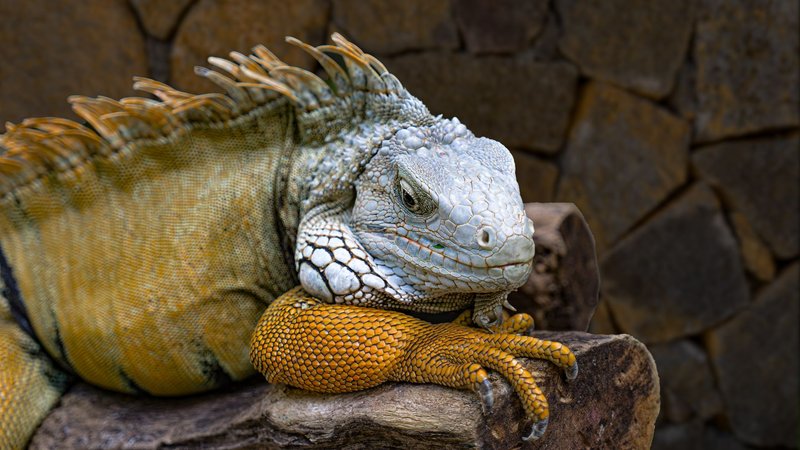
Ricord’s iguana (Cyclura ricordii), Critically Endangered. A heavy-bodied rock iguana of arid scrubland, found in Haiti and the Dominican Republic. It nests communally in sandy soil, and feral pigs, dogs and cats eat both eggs and hatchlings. Populations in Haiti are small and scattered.
Rhinoceros iguana (Cyclura cornuta), Vulnerable. Named for the horn-like scales on its snout. Males can top four feet long. It lives in dry forest and is hunted for meat.
Hispaniolan giant galliwasp (Celestus warreni), Critically Endangered. A large, secretive, legless-looking lizard that hunts at night in forest litter. It is so rarely seen that scientists know little about its numbers.
Plants
Plants make up the biggest number in this story. With about 2,050 endemic species out of a flora where roughly one in three species exists nowhere else, Haiti ranks among the most botanically unique places in the Caribbean. Only a fraction have been formally assessed for extinction risk, so many of them have no IUCN status at all.
Hispaniolan pine (Pinus occidentalis). The dominant tree in Haiti’s high-elevation pine forests, including parts of the Massif de la Selle and the Massif de la Hotte. It is the main source of timber and charcoal pressure at altitude, and the pine forests protect the watersheds below them.
Hamor’s magnolia (Magnolia hamori). A rare magnolia known from the wet forests of southern Haiti. Magnolias are an ancient flowering-plant lineage, and the Caribbean species are some of the most threatened members of the family.
Tree ferns and cloud-forest orchids. The Massif de la Hotte and the Massif de la Selle hold a high concentration of endemic orchids, bromeliads and tree ferns. Many grow on a single mountain and nowhere else.
Marine life, freshwater fish and insects
This is the least-documented group, and that is part of the point. Haiti has had very little biodiversity survey work, so many endemic invertebrates and fish are poorly known.
Freshwater fish. Hispaniola’s salty and brackish lakes, including Étang Saumâtre near the Dominican border, hold small endemic killifish and livebearers (Limia and related genera). Each lake species can be restricted to one water body, which makes it very exposed to drought, pollution and introduced fish.
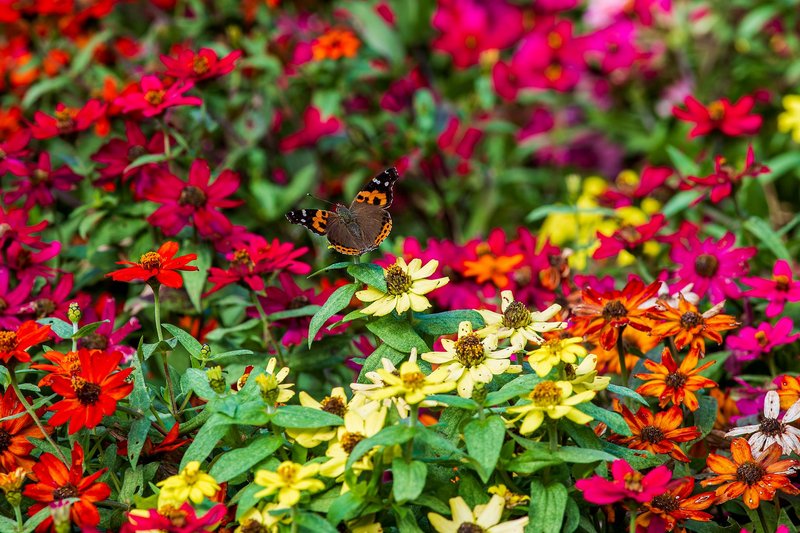
Butterflies. Hispaniola has a large number of endemic butterflies, including swallowtails of the genus Papilio such as Papilio machaonides. Most have not been assessed by the IUCN, and they track the same forest habitats as the birds and frogs.
Marine life. Haiti’s coasts have reefs, mangroves and seagrass, and these sustain marine species shared across the Caribbean rather than strict endemics. Their loss matters because overfishing and coastal runoff, driven in part by deforested hillsides, are among the main stresses on them.
Summary table
| Species | Scientific name | Group | IUCN status |
|---|---|---|---|
| Hispaniolan solenodon | Solenodon paradoxus | Mammal | Endangered |
| Hispaniolan hutia | Plagiodontia aedium | Mammal | Endangered |
| La Selle thrush | Turdus swalesi | Bird | Endangered |
| White-winged warbler | Xenoligea montana | Bird | Vulnerable |
| Hispaniolan trogon | Priotelus roseigaster | Bird | Near Threatened |
| Mozart frog | Eleutherodactylus amadeus | Amphibian | Critically Endangered |
| Macaya breast-spot frog | Eleutherodactylus glandulifer | Amphibian | Critically Endangered |
| Hispaniolan giant treefrog | Osteopilus vastus | Amphibian | Endangered |
| Ricord’s iguana | Cyclura ricordii | Reptile | Critically Endangered |
| Rhinoceros iguana | Cyclura cornuta | Reptile | Vulnerable |
| Hispaniolan giant galliwasp | Celestus warreni | Reptile | Critically Endangered |
Habitats and hotspots
Haiti’s endemics cluster in a few places. If you want to understand the country’s biodiversity, learn these three.
Massif de la Selle. The country’s highest range, topping out at Pic la Selle at about 2,680 meters. Its upper slopes hold the last real cloud forest on the eastern side of the south, including the pine and broadleaf forest of La Visite National Park. The La Selle thrush, the Mozart frog and the black-capped petrel all depend on it.
Massif de la Hotte. The southwestern peninsula’s mountain range and the single richest area for Haitian endemics. Its wet forests hold extraordinary concentrations of frogs, plants and invertebrates. Researchers regularly describe new species from here, and the Massif de la Hotte biodiversity is still being catalogued.
Pic Macaya National Park. Protected in 1983, and the heart of the Hotte. It contains some of the last intact primary forest in the country, along with frogs such as the Macaya breast-spot frog. It is also remote and hard to reach, which has helped preserve it.
Dry-forest and wetland sites matter too. Ricord’s iguana lives in arid scrub near Lake Azuei, and Étang Saumâtre supports its own aquatic species.
Threats
The central problem is deforestation. Haiti’s forest was cleared over centuries, first for plantation agriculture and timber, then increasingly for charcoal, which most households still use for cooking. Estimates of remaining forest cover vary with the definition used, but primary forest is down to a tiny fraction of the country. What is left is mostly on mountaintops, which is exactly where the endemic species now live.
Several other pressures stack on top:
- Soil erosion. Bare hillsides lose topsoil in every heavy rain, which silts streams and reefs and makes forest regrowth harder.
- Invasive predators. Cats, dogs, mongooses and rats kill solenodons, iguanas and ground-nesting birds.
- Hunting and bushmeat. Hutias, iguanas and some birds are eaten where food is scarce.
- Disease. Chytrid fungus has reduced amphibian populations across the Caribbean, and frogs already squeezed by habitat loss have little room to recover.
- Climate change. Species restricted to the top of a mountain have nowhere higher to go as temperatures climb.
- Poverty and weak enforcement. Protected areas exist on paper, but resources to patrol them are thin.
Habitat loss and disease together have produced the amphibian collapse. Frogs that once thrived across the island are now confined to a handful of forest patches, and some may already be extinct.
Conservation actions and how to help
Conservation in Haiti is slow and underfunded, but it is happening, and the most effective work is local.
- Protecting Macaya and La Visite. Local organizations and international partners fund park staff, monitor species and work with the communities living at the park boundaries.
- Community reforestation. Planting native trees, plus alternatives to charcoal such as efficient cookstoves, takes pressure off the remaining forest.
- Surveys and species rediscovery. Research teams have gone back to sites to confirm whether frogs and reptiles survive. Documenting what is left is the first step toward protecting it.
- International coordination. Because most Haitian endemics are shared with the Dominican Republic, protecting habitat on both sides of the border matters.
- Captive breeding and assurance populations. Zoos and research groups keep reserves of some of the most threatened amphibians and iguanas.
You can help in practical ways. Donate to organizations that run on-the-ground programs in Haiti and publish what they spend. Support Haitian-led conservation groups directly where possible. If you travel there, hire local guides, and choose birdwatching or hiking trips that put money into communities near the parks. Cut your own demand for products linked to tropical deforestation. And if you spend time in the field, report sightings through citizen-science platforms, because data from Haiti is scarce.
The endemic species of Haiti are not a distant abstraction. They are a short list of animals and plants that exist in one place on Earth, and most of that place is a few mountain ranges. Protecting those mountains protects all of them at once.