Contents
- Why two small islands hold so many unique species
- Birds
- Amphibians
- Reptiles
- Mammals
- Invertebrates
- Plants
- Summary table
- Threats
- Where to see the endemic species
The endemic species of São Tomé and Príncipe include around 27 birds packed into roughly 1,000 km² of land. The Galápagos, far larger and far more famous, have fewer endemic bird species. Add a blind-ish yellow-bellied caecilian, a shrew described only in 2015, snails the size of your palm and a hundred-plus plants found nowhere else, and you have one of the densest concentrations of unique life on Earth.
This guide covers the standout species group by group, explains why the islands produce so many, and ends with how to see them.
Why two small islands hold so many unique species
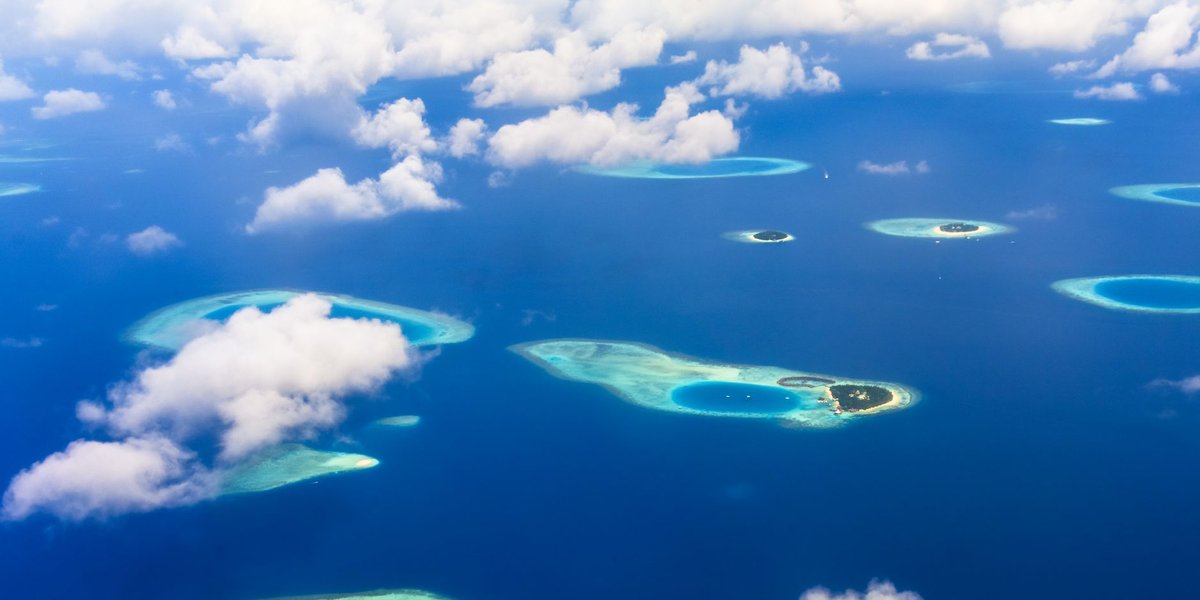
São Tomé and Príncipe sit in the Gulf of Guinea, off the coast of Gabon. Both are volcanic. They rose from the seafloor and have never touched the African mainland, which means every plant and animal arrived by crossing open ocean: on wind, on floating vegetation, in the gut of a bird.
Almost nothing makes that trip, and what does arrive then evolves in isolation. Príncipe is the older island, at roughly 31 million years. São Tomé is younger, at around 13 million, and tall enough (Pico de São Tomé reaches 2,024 m) to catch clouds and grow a wet montane forest. Different altitudes, wet and dry sides and old lava soils give newcomers many niches to split into.
Two patterns repeat across the islands:
- Island gigantism. Small colonists with no competitors grow large. The São Tomé Grosbeak is the textbook case, along with the giant snails.
- Island dwarfism. Larger animals shrink to fit scarce resources. The Dwarf Olive Ibis is a smaller relative of the mainland’s Olive Ibis, and the São Tomé Ibis is among the smallest ibises on the planet.
The WWF ecoregion profile groups the islands with the Gulf of Guinea’s forest hotspot, but the islands stand apart from the mainland in species composition. Almost every group below has a mainland ancestor that arrived once, then split.
Birds
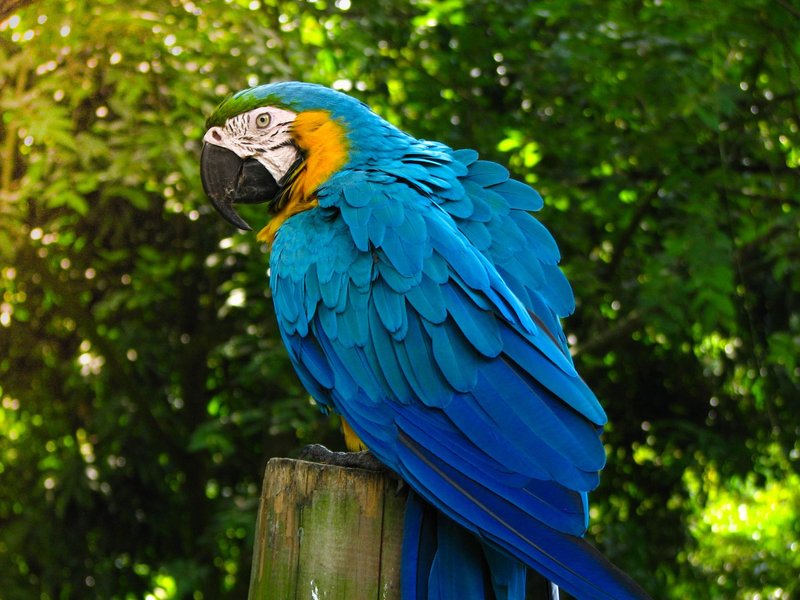
Birds are the headline. Estimates run from the high twenties up, depending on which taxonomy you follow, and the species below are the ones birders fly in for.
São Tomé Grosbeak (Neospiza concolor). Thick-billed, brownish and drab to look at, with a bill built for cracking palm nuts. Its lineage is related to the small seedeaters, which makes it a clear gigantism case. It lives in primary forest in the south of São Tomé. Scientists treated it as lost for more than a century before it was rediscovered in 1991. It is Critically Endangered.
Dwarf Olive Ibis (Bostrychia bocagei). A small dark ibis that forages on the forest floor and along streams in São Tomé’s remaining old-growth forest. It spent decades without a confirmed record, and sightings are still rare. It is also Critically Endangered.
São Tomé Fiscal (Lanius newtoni). A black-and-yellow shrike, also called Newton’s Fiscal, restricted to primary forest on São Tomé. Another Critically Endangered species whose survival depends on a small block of intact forest.
São Tomé Giant Sunbird (Dreptes thomensis). Sunbirds are usually tiny. This one is large, with a long, sharply curved bill that probes flowers. Look for it in forest and plantation edges on São Tomé.
Príncipe Thrush (Turdus xanthorhynchus). A forest thrush with an orange-yellow bill, found only on Príncipe. If you walk the forest trails there at dawn, it is among the first voices you’ll hear.
Príncipe Seedeater (Crithagra rufobrunnea). The Príncipe form is small and plain. On the islet of Boné de Jóquei off Príncipe’s south coast, the seedeater is much larger, with a heavier bill, another small-scale demonstration of gigantism.
Bikegila’s Scops Owl (Otus bikegila). The newest star. It was described in 2022 from Príncipe’s southern forest and named after Ceslau Bikegila, a local naturalist who first noticed the call. It is the island’s own scops owl, and the species is Critically Endangered, with a tiny known population.
Amphibians
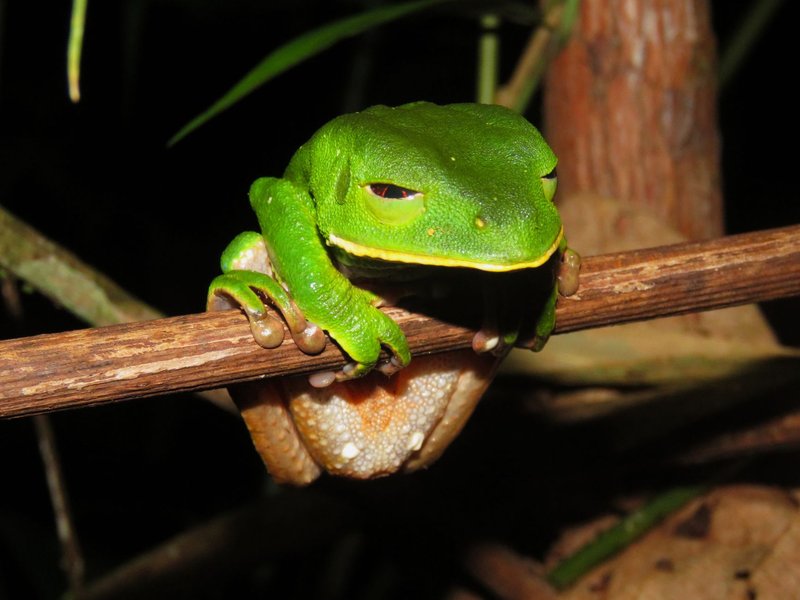
Amphibians have trouble crossing salt water, so oceanic islands rarely have any. São Tomé and Príncipe have a handful of species, and every native amphibian is endemic. All of them are thought to have arrived once and then diverged.
São Tomé Caecilian (Schistometopum thomense). A legless, burrowing amphibian that looks like a fat, glossy worm with a yellow belly and a blue-grey back. Adults reach roughly 30 cm, and the species lives in soil and leaf litter, mostly around farms and forest margins on São Tomé. Young caecilians feed on their mother’s skin, an unusual trait documented in related species.
Tree frogs (Hyperolius species). Small frogs, usually shades of green, tan or yellow, in different species on each island. They call in chorus after rain, and finding one on a banana leaf at night is easy.
Reptiles
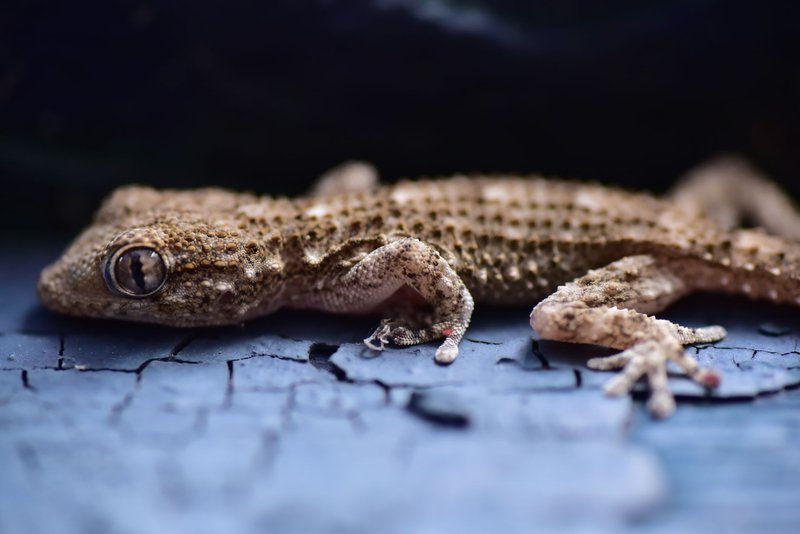
Adamastor Skink (Trachylepis adamastor). One of the species described in 2015, the sort of discovery that tells you the islands are still undercounted. It is a small, smooth skink that hunts in forest litter.
Endemic geckos. Several geckos live only on the islands, including the dwarf gecko Lygodactylus thomensis, a small day-active species usually seen clinging to tree trunks. Reptiles are the least studied vertebrates here, and genetic work keeps splitting what looked like single species.
Snakes also include island endemics, such as the Príncipe green snake, but they are shy and rarely seen by visitors.
Mammals
Land mammals are the weak point of any oceanic island. None crossed to São Tomé and Príncipe on their own except bats and shrews, and the monkeys, civets and rodents you might see were brought by people.
Príncipe Shrew. Described in 2015, it is a small insectivore living in the forests of Príncipe. Its 2015 discovery sits next to the Adamastor Skink as proof of how thin the baseline survey data was.
São Tomé Shrew (Crocidura thomensis). Same lifestyle, other island. It forages on leaf litter in forest and plantations.
São Tomé Collared Fruit Bat (Myonycteris brachycephala). A fruit bat found only on São Tomé, roosting in forest and plantations. It is rarely seen and little studied.
Invertebrates
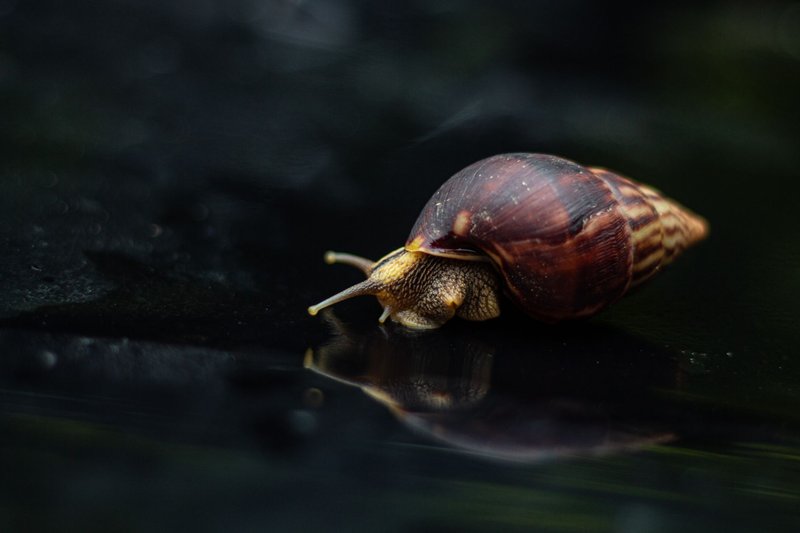
Giant land snails (Archachatina species). Island gigantism in the most visible form. The shells are palm-sized or larger, and locals have long eaten the snails. They spend dry spells sealed up and emerge in the rains to feed on decaying vegetation.
Endemic insects and millipedes. Beetles, butterflies, dragonflies and spiders include many species recorded nowhere else. Invertebrate checklists for the islands are incomplete, so the true number is unknown. Expect more names to be added.
Plants
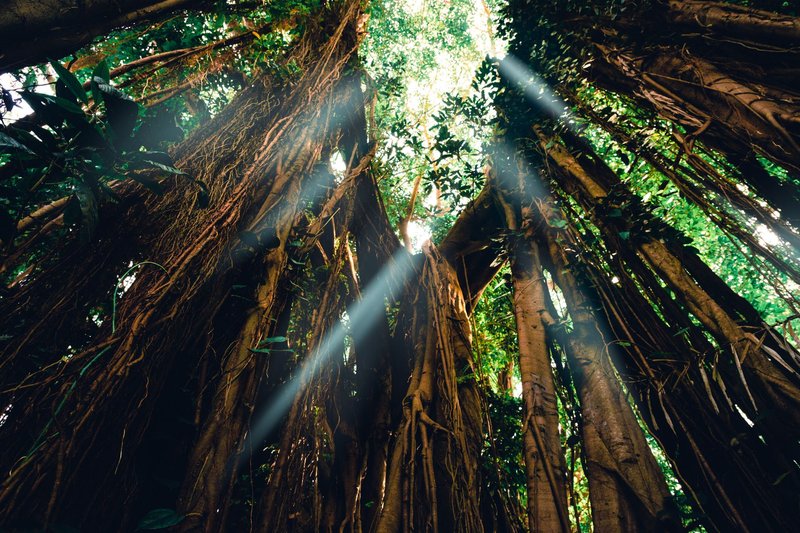
More than a hundred plant species are found only on these islands. Begonias, Impatiens (relatives of the garden busy Lizzie), orchids, ferns and tree species are all represented, and many are tied to the cloud forest on São Tomé’s highest slopes. Epiphytes crowd every trunk. Because the high-altitude forest has been cleared less than the lowlands, much of the plant endemism survives there.
Many of the best-known trees on the islands are not endemic. Cacao and coffee were introduced during the plantation era and now cover much of the lowlands, and wild forest has retreated to the interior and the south.
Summary table
| Species | Group | Island | Notes |
|---|---|---|---|
| São Tomé Grosbeak | Bird | São Tomé | Critically Endangered, rediscovered 1991 |
| Dwarf Olive Ibis | Bird | São Tomé | Critically Endangered, rarely seen |
| São Tomé Fiscal | Bird | São Tomé | Critically Endangered shrike |
| São Tomé Giant Sunbird | Bird | São Tomé | Large, long curved bill |
| Príncipe Thrush | Bird | Príncipe | Orange-yellow bill |
| Príncipe Seedeater | Bird | Príncipe | Giant form on Boné de Jóquei |
| Bikegila’s Scops Owl | Bird | Príncipe | Described 2022 |
| São Tomé Caecilian | Amphibian | São Tomé | Legless, up to roughly 30 cm |
| Hyperolius tree frogs | Amphibian | Both | Different species per island |
| Adamastor Skink | Reptile | Described 2015 | Forest litter skink |
| Dwarf gecko (Lygodactylus thomensis) | Reptile | São Tomé | Day-active, on trunks |
| Príncipe Shrew | Mammal | Príncipe | Described 2015 |
| São Tomé Shrew | Mammal | São Tomé | Leaf litter forager |
| São Tomé Collared Fruit Bat | Mammal | São Tomé | Rarely seen |
| Giant land snails | Invertebrate | Both | Palm-sized shells |
| Begonias and Impatiens | Plant | Mostly São Tomé | Cloud forest specialists |
Threats
Endemic species on islands go extinct faster than anywhere else, and these islands show the pattern. The IUCN Red List lists several of the birds above as Critically Endangered, and the pressure is consistent.
- Habitat loss. Lowland forest went to cacao and coffee plantations, and the clearing for farms and firewood continues at the forest edge.
- Invasive predators. Introduced rats, cats, civets and weasels reach nests and ground-dwellers that never evolved defenses.
- Hunting and collecting. Pigeons, snails and other animals are taken for food.
- Small ranges. A species that lives in a few square kilometers can vanish from one storm, one road or one new plantation.
Conservation here is not hopeless. The islands protect large forest blocks, and local guides and researchers (the owl’s namesake among them) are part of the monitoring.
Where to see the endemic species
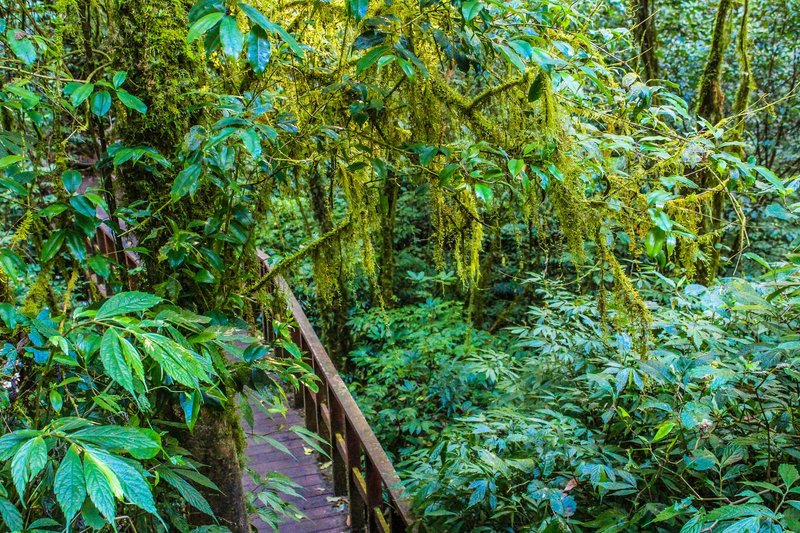
Obô Natural Park, São Tomé. Obô covers roughly a third of São Tomé and holds most of the island’s primary forest. This is where you look for the São Tomé Grosbeak, Dwarf Olive Ibis and Giant Sunbird, along with the caecilians and shrews. Hire a local guide. Primary-forest birds here are hard to find without one, and the grosbeak and ibis need far more time than a day trip.
Príncipe Biosphere Reserve. UNESCO designated the whole island of Príncipe a biosphere reserve in 2012. Expect Príncipe Thrush, Príncipe Seedeater and the island’s scops owls on forest trails, and the Boné de Jóquei seedeater by boat.
Practical notes.
- The dry season (gravana, roughly June to September) makes trails easier. The rainy months are better for frogs.
- Start before dawn. Birdsong peaks in the first two hours of light.
- Bring waterproof boots, binoculars and a headlamp for nocturnal species such as scops owls and frogs.
- Stay on trails and keep to guided routes. Several of these species nest or forage at ground level.
The endemic species of São Tomé and Príncipe survive because the forests are still partly intact. Visiting with local guides and staying on marked trails gives the people who live beside that forest a reason to keep it standing.