
Your baby’s eye color odds
Most likely:
Pick both parents' eye colors to see your baby's odds
- BirthOften slate blue or gray in lighter-skinned babies; brown in darker-skinned babies.
- 6 monthsMost of the change happens between 6 and 9 months.
- 1 yearThe color is usually settled.
- 3 yearsSubtle shifts are still possible.
Baby eye color chart by parents’ eye colors
| Parent 1 / Parent 2 | Brown | Hazel | Green | Blue |
|---|---|---|---|---|
| Brown | Brown 82% Hazel 14%, Green 3%, Blue 1% | Brown 62% Hazel 25%, Green 7%, Blue 6% | Brown 50% Hazel 32%, Green 9%, Blue 9% | Brown 39% Hazel 37%, Green 12%, Blue 12% |
| Hazel | Brown 62% Hazel 25%, Green 7%, Blue 6% | Brown 40% Hazel 29%, Green 12%, Blue 19% | Blue 29% Brown 28%, Hazel 29%, Green 14% | Blue 38% Brown 18%, Hazel 28%, Green 16% |
| Green | Brown 50% Hazel 32%, Green 9%, Blue 9% | Blue 29% Brown 28%, Hazel 29%, Green 14% | Blue 43% Brown 17%, Hazel 24%, Green 16% | Blue 56% Brown 9%, Hazel 19%, Green 16% |
| Blue | Brown 39% Hazel 37%, Green 12%, Blue 12% | Blue 38% Brown 18%, Hazel 28%, Green 16% | Blue 56% Brown 9%, Hazel 19%, Green 16% | Blue 73% Brown 3%, Hazel 10%, Green 14% |
Assumes a mixed-ancestry family and no grandparent information. Use the calculator above for your family.
How the baby eye color calculator works
The calculator predicts your baby’s eye color from six genes that decide most of the difference between brown, hazel, green and blue eyes. It reads each parent’s eye color as evidence about which gene variants that parent carries, then works out every combination they could pass on. Grandparents’ eye colors sharpen that picture, because they show which variants each parent could have inherited.
The gene model is IrisPlex, built by forensic geneticists at Erasmus University Rotterdam from the DNA and eye photographs of 3,804 Dutch adults. Police laboratories use it to predict eye color from crime scene DNA. In tests on 6,168 Dutch adults it sorted blue and brown eyes correctly more than 90% of the time, and a study of 3,840 people in seven European countries confirmed that accuracy. The population frequencies for each gene come from the 1000 Genomes Project.
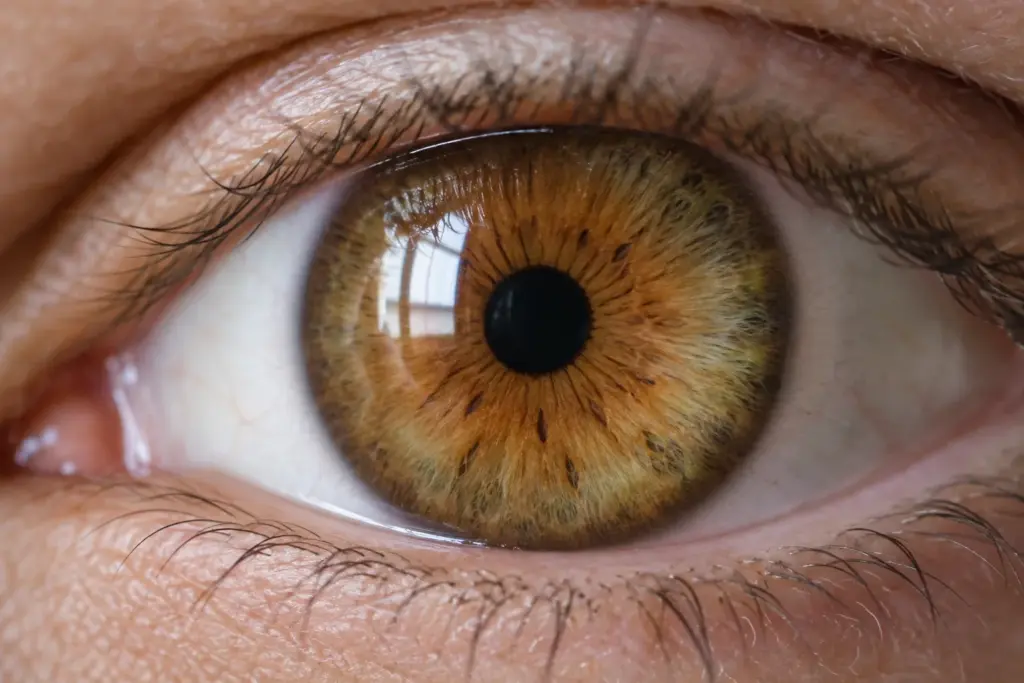
Most baby eye color calculators online use a two-gene school chart, a simple genetic cross where brown always beats green and green always beats blue. Real eye color does not follow that chart, and the idea that it does is one of the most common myths about genetics. Two blue-eyed parents can have a brown-eyed child, and a brown-eyed parent can carry blue eyes for generations without showing it.
Eye color chart for parents
The chart under the calculator gives the odds for all 16 pairings of parents’ eye colors. It assumes a family of mixed ancestry with no grandparent information. Add your own family to the calculator for numbers that fit you.
Three patterns stand out in the chart. Brown is dominant but not absolute. Blue needs a blue copy of the gene from both parents. Green and hazel turn up from almost every pairing, because they sit between the two extremes.
Can two blue-eyed parents have a brown-eyed baby?
Yes, but it is uncommon. For two blue-eyed parents the calculator gives 73% blue, 14% green, 10% hazel and 3% brown. Blue eyes almost always mean two blue copies of the HERC2 switch gene, so blue-eyed parents nearly always pass a blue copy on. The brown chance comes from the five other genes, which can add enough pigment to darken a child’s eyes even when HERC2 says blue.
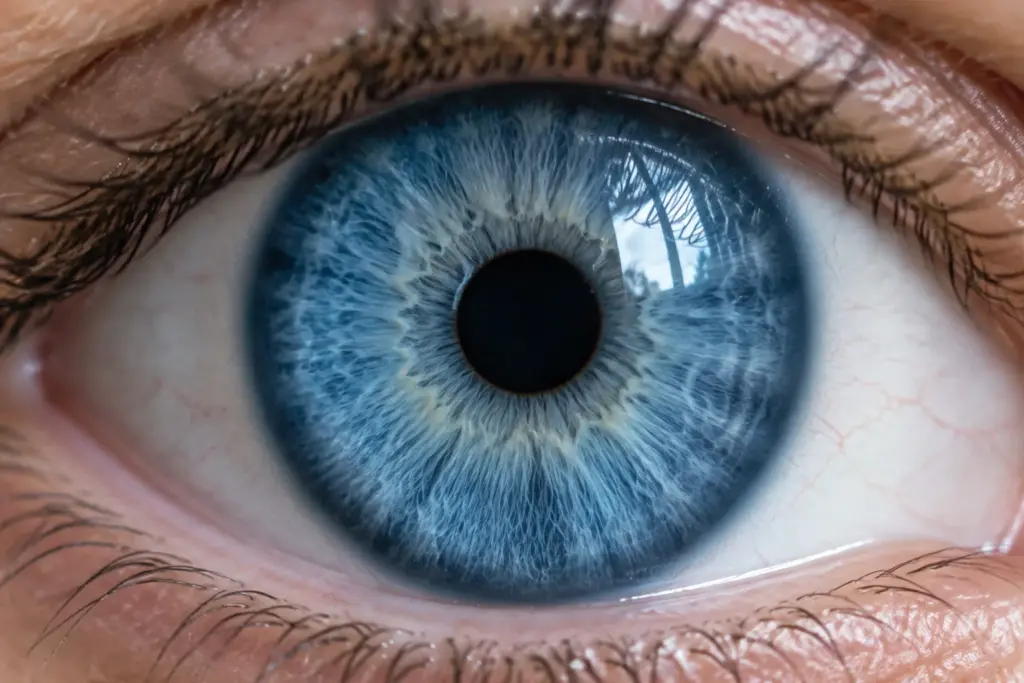
Grandparents change this answer. If all four grandparents have brown eyes, the brown chance for the baby of two blue-eyed parents rises from 3% to 23%.
Can two brown-eyed parents have a blue-eyed baby?
Yes. A brown-eyed parent can carry one hidden blue copy of the HERC2 gene, and a baby who inherits a hidden blue copy from each parent will usually have light eyes. Whether that is likely depends on ancestry and family:
- For two brown-eyed parents of mixed ancestry, the calculator gives about 1% blue. Each parent has a 21% chance of carrying a hidden blue copy.
- For two brown-eyed parents of Northern European ancestry, blue rises to 16%. Blue variants are common in Northern Europe, so brown-eyed people there often carry one.
- If all four grandparents have blue eyes, each brown-eyed parent almost certainly carries a blue copy (93%), and the baby’s blue chance rises to 25%.
- For two brown-eyed parents of East Asian ancestry, the blue chance is close to zero. The blue HERC2 variant is almost absent from East Asian populations.
When do babies’ eyes change color?
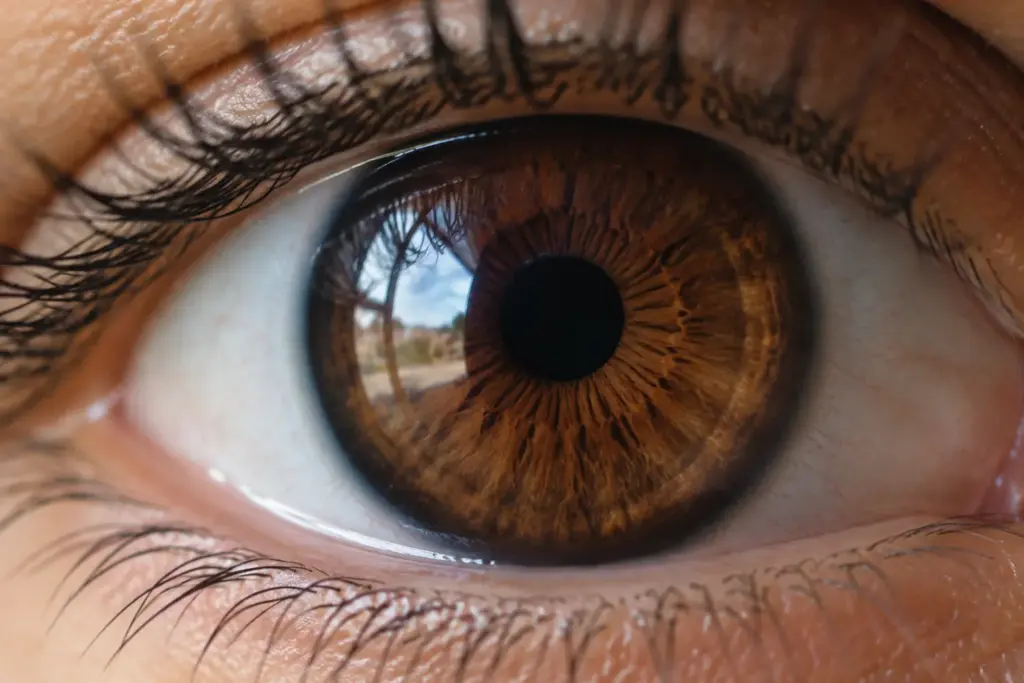
Most babies’ eye color changes between 6 and 9 months and settles by their first birthday. Babies are born with little melanin in the front layer of the iris, the colored ring that controls how much light enters the eye. Pigment cells called melanocytes build it up over the first year, and the more melanin they make, the darker the eyes become.
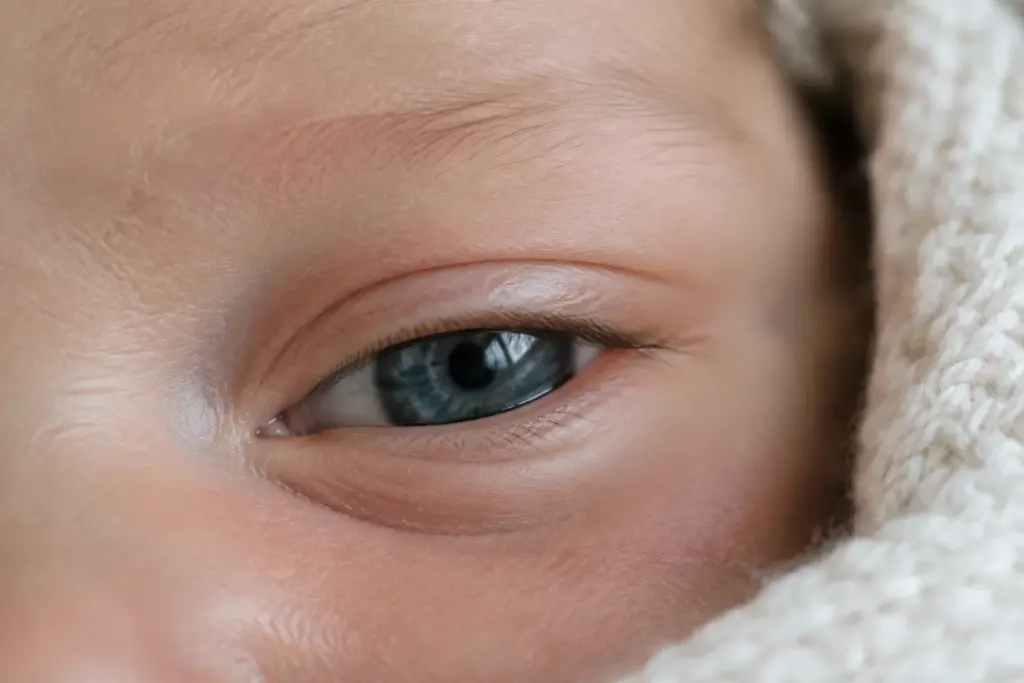
Many babies of European ancestry are born with slate blue or gray eyes that later turn green, hazel or brown. Babies of African, Asian and Latin American ancestry are usually born with brown eyes that stay brown. Eye color almost always darkens or stays the same as a baby grows. It rarely gets lighter. In a minority of children the color keeps shifting slightly until about age 3, and occasionally into the school years.
The calculator predicts the settled, adult eye color, not the color at birth.
Why green and hazel eyes are hard to predict
Green and hazel eyes have no green or hazel pigment. Every iris contains the same brown pigment, melanin, in different amounts. Blue eyes have very little of it in the front layer of the iris, and the blue comes from light scattering in the tissue, the same effect that makes the sky blue. Green eyes have a small amount of melanin over that blue scattering. Hazel eyes have more, usually concentrated in a golden-brown ring around the pupil.
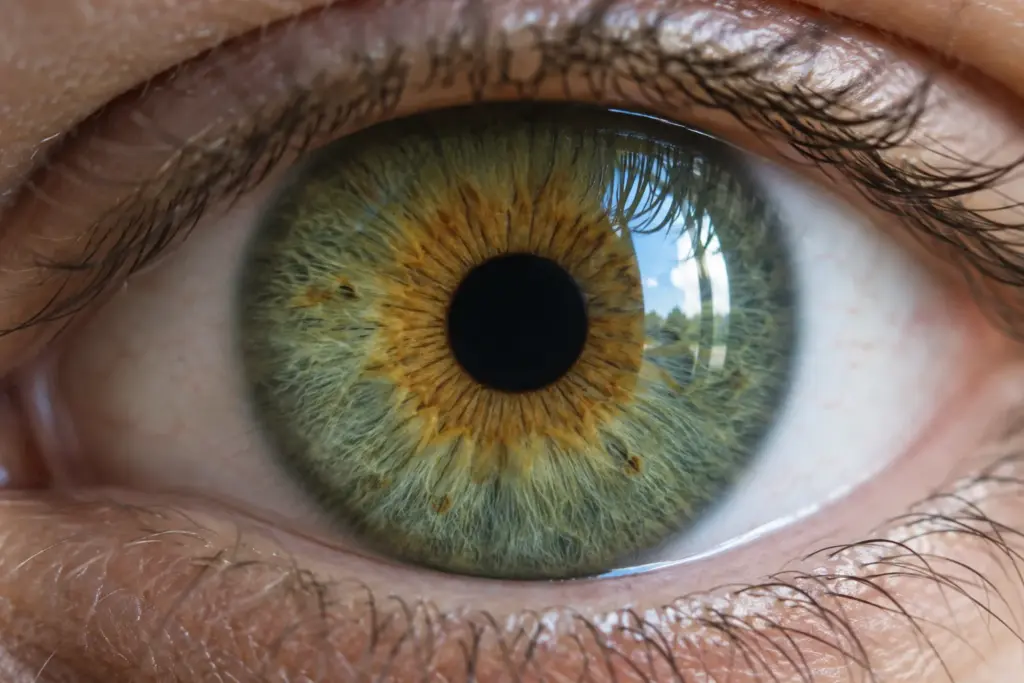
Because green and hazel are mixtures, small genetic differences push them toward blue or toward brown. IrisPlex predicts them far less reliably than blue and brown. This is why two green-eyed parents get only 16% green from the calculator, with blue the most likely result at 43%. About half of green-eyed people carry two blue copies of HERC2, and their extra pigment comes from genes they pass on less predictably.
The genes behind eye color
One gene region on chromosome 15 does most of the work. The OCA2 gene makes a protein that melanocytes need to produce melanin. A neighboring gene, HERC2, contains a switch (the variant rs12913832) that turns OCA2 up or down in the iris. The blue version of the switch lowers OCA2 activity and leaves the iris light. Everyone with blue eyes today likely shares this mutation from a single ancestor who lived in Europe or the Near East between 6,000 and 10,000 years ago.
Five more genes adjust the result. A second OCA2 variant (rs1800407) lightens brown eyes toward green or hazel. SLC24A4, SLC45A2, TYR and IRF4 each nudge pigment up or down. The calculator uses all six. Other genes affect eye color too, which is why no model predicts it perfectly.
What this calculator can’t tell you
The calculator gives odds, not a promise. It cannot see your actual DNA, so it estimates each parent’s genes from their eye color, and two people with the same eye color can carry different genes.
- The split between green and hazel is calibrated to population figures, not measured gene by gene. The blue and brown predictions rest on the published model.
- The six genes explain most but not all of eye color. Rare variants and genes the model does not include can produce surprises.
- OCA2 and HERC2 sit next to each other and are usually inherited together. The calculator treats them as separate, which is a simplification.
- Gray eyes are treated as blue. Genetically they are a light form of blue with a different tissue structure.
Frequently asked questions
What color eyes will my baby have?
Your baby’s eye color depends on both parents’ eye colors and on the hidden gene variants each parent carries. Two brown-eyed parents usually have a brown-eyed baby, two blue-eyed parents usually have a blue-eyed baby, and mixed pairs can go either way. Enter both parents’ eye colors, and the grandparents’ if you know them, in the baby eye color predictor above to see your baby’s odds.
What is the rarest eye color?
Green is the rarest of the common eye colors, worn by about 2% of people worldwide. Gray and amber are rarer still but are usually grouped with blue and hazel. Brown is the most common eye color in the world.
Do grandparents’ eye colors matter?
Yes. A parent’s eye color shows only part of their genes, and grandparents reveal hidden variants. Two brown-eyed parents whose own parents all have blue eyes have a much higher chance of a blue-eyed baby than two brown-eyed parents from all-brown families.
What eye color is most common in the United States?
Brown, at about 45% of Americans, followed by blue at 27%, hazel at 18% and green at 9%, according to the American Academy of Ophthalmology.
Can a baby have a different eye color from both parents?
Yes. Two brown-eyed parents can have a green, hazel or blue-eyed baby, and two blue-eyed parents can have a green or hazel-eyed baby. Each parent passes on a random half of their genes, so the baby gets a new combination.
Can a baby have two different colored eyes?
Yes. Heterochromia, where the two eyes differ in color or one iris has two colors, is usually harmless and often inherited. A baby whose eye color differs between eyes from birth, or whose eyes change color unevenly, should be seen by a pediatrician, because heterochromia is occasionally a sign of an underlying condition.
At what age is eye color permanent?
Eye color is usually permanent by 12 months. A small number of children see slight changes until about age 3.