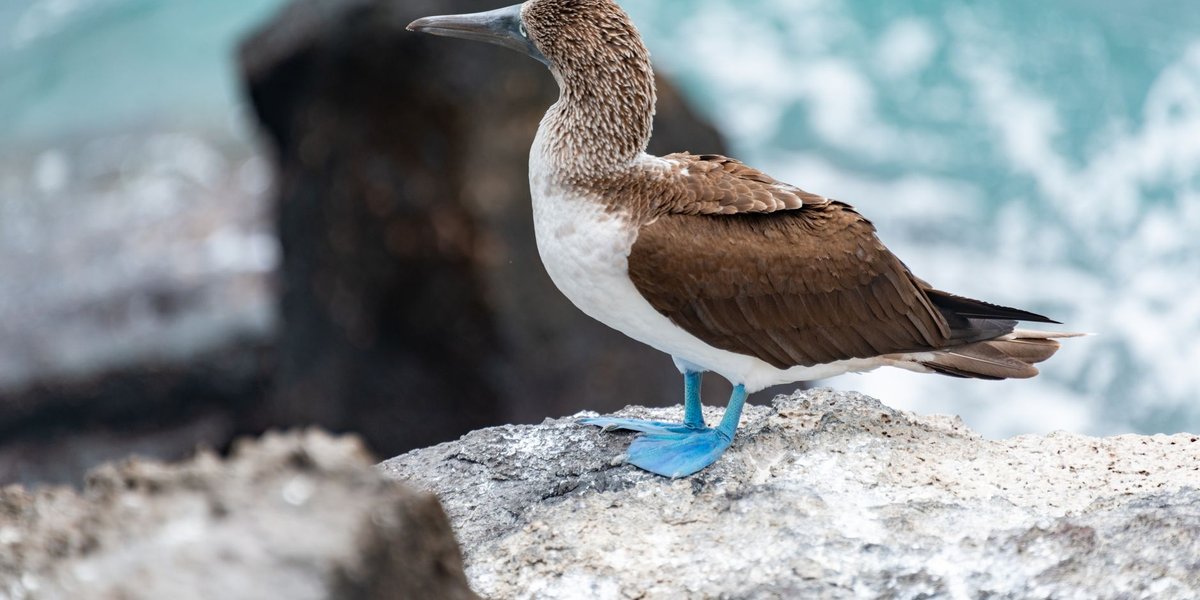
Every list of Galapagos birds tells you what lives there. Almost none of them tell you when to go if you actually want to see a blue-footed booby dance, or which boat route gets you to the one island where waved albatrosses nest. That gap is the whole point of this guide.
The islands hold around 56 resident bird species, and more than 30 of them exist nowhere else on Earth. That endemism isn’t trivia — it’s the reason Charles Darwin left the archipelago in 1835 with the beginnings of a theory that rewrote biology. The birds here evolved in near-total isolation, with almost no land predators, which is why a blue-footed booby will let you stand three feet away while it dances for a mate and barely blink.
Table of Contents
- Why Galapagos Birds Behave Differently
- The Month-by-Month Guide to Timing Your Trip
- Seabirds: The Reason People Book This Trip
- Land Birds and Darwin’s Living Laboratory
- Coastal and Shore Birds
- Which Island Gets You Which Bird
- Summary
Why Galapagos Birds Behave Differently
Mainland birds spook at fifty feet. Galapagos birds nest on the trail. The archipelago never had ground predators until humans brought rats, cats, and goats, so the birds never evolved a flight response to anything walking upright. That’s why every operator brief starts with the same instruction: stay two meters back, not because the bird will run, but because it won’t.
That fearlessness is also why this destination rewards patience over checklist-chasing. You don’t need a 400mm lens and a blind. You need to be on the right island in the right month, because Galapagos wildlife runs on a breeding calendar as strict as a tide table.
The Month-by-Month Guide to Timing Your Trip
Most Galapagos content treats the islands as a year-round buffet. They’re not. Species show up, pair off, and disperse on their own schedules, and missing a window by six weeks can mean the difference between a courtship dance and an empty cliff.
| Months | What’s Happening |
|---|---|
| January–March | Warm, rainy season. Land birds are most active and vocal; Darwin’s finches are breeding and easiest to hear. Sea conditions are calmest for outer-island crossings. |
| April–June | Waved albatrosses return to Española and begin egg-laying by mid-April. Blue-footed booby courtship starts ramping up. Transitional weather, fewer crowds. |
| June–August | Peak of the blue-footed booby’s whistle-and-strut dance on North Seymour and Española. Garúa (cool, misty) season begins, which frigatebirds and boobies tolerate fine. |
| September–November | Nazca and red-footed booby chicks are fledging on Genovesa. Waved albatross chicks hatch on Española through late in this window. |
| December | Albatross fledglings prepare to leave Española for good, not returning to land again until they breed, years later. Garúa season ends. |
The single most useful fact buried in that table: waved albatrosses are only ever on land between April and December. Book a January-through-March cruise expecting to see one, and you’ll be looking at empty cliffside nesting sites where 25,000 to 30,000 birds sat six weeks earlier, according to the Galapagos Conservation Trust.
Seabirds: The Reason People Book This Trip
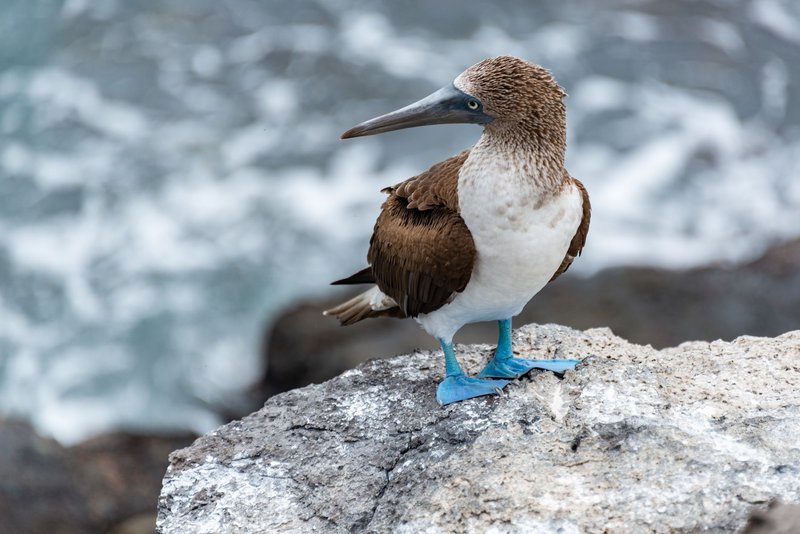
Blue-footed booby. The dance is real and it is exactly as absurd as the videos suggest: the male presents a twig or pebble, lifts his cobalt feet one at a time in an exaggerated march, then points his bill, wings, and tail skyward and whistles. Peak dancing season runs June through August, though courtship starts earlier and timing shifts slightly by island depending on food availability. Likelihood: very high on North Seymour and Española during peak season, moderate elsewhere.
Nazca booby. Larger and whiter than its blue-footed cousin, with a black mask and orange bill. Nazca boobies practice obligate siblicide — the first-hatched chick pushes its younger sibling out of the nest, and the parents don’t intervene. It’s a brutal detail, but it’s the kind of fact that actually explains why colonies produce so few fledglings per pair. Best seen on Genovesa and Española. Likelihood: high, year-round.
Red-footed booby. The smallest booby and the only one that nests in trees rather than on open ground, using its namesake red feet to grip branches. Genovesa’s cliffs hold the largest colony in the islands. Likelihood: high on Genovesa, low to absent elsewhere.
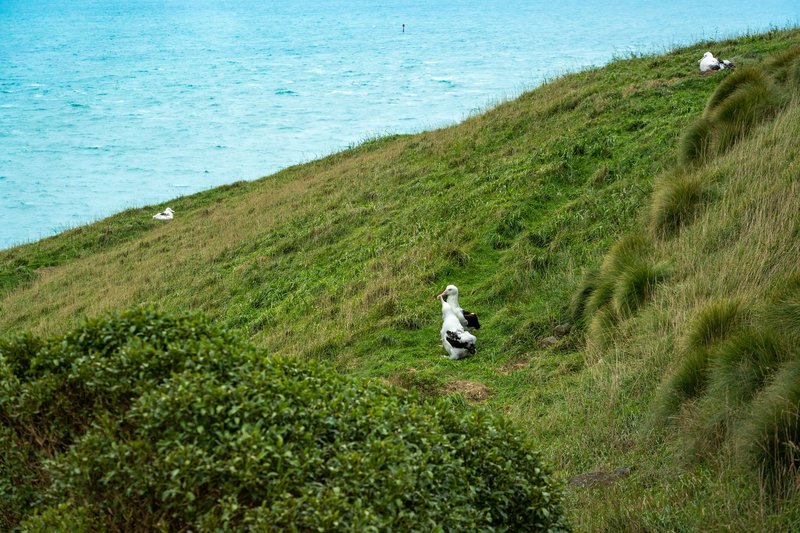
Waved albatross. The only tropical albatross species, and it breeds on exactly one island: Española. Courtship involves a bill-fencing routine that looks like a sword fight in slow motion, followed by mutual bill-circling that pairs repeat for years with the same partner. Chicks hatch around June and don’t fledge until December. Miss the April–December window and you’ll see cliffs, not albatrosses. Likelihood: near-certain on Española in season, zero outside it or anywhere else.
Flightless cormorant. Found only on the western coasts of Isabela and Fernandina, and nowhere else on the planet — not another Galapagos island, not the mainland. Its wings have shrunk to stubs it can’t use for flight, a direct trade against a hunting style built entirely around diving for octopus and eel. The IUCN downlisted it from Endangered to Vulnerable in 2011 after population counts came in higher than feared; the most recent Galapagos National Park survey put the number near 2,000 birds. Likelihood: high if your itinerary includes Fernandina or western Isabela, zero if it doesn’t.
Galapagos penguin. The only penguin species that lives north of the equator, kept alive here by the cold, nutrient-rich Cruz current. It’s listed as Endangered, and El Niño years hit its population hard by disrupting the fish stocks it depends on. Punta Espinosa on Fernandina and the Bartolomé/Sullivan Bay area are the most consistent spots. Likelihood: moderate — real, but never guaranteed.
Magnificent and great frigatebirds. The males inflate a bright red throat pouch into a balloon roughly the size of a human head to attract females, and they’ll hold that display for hours, sometimes competing shoulder to shoulder along the same branch. North Seymour has one of the most accessible colonies in the islands, an easy day trip from Baltra. Likelihood: very high, nearly any time of year.
Swallow-tailed gull. The world’s only fully nocturnal gull, adapted to feed on squid that surface only after dark — its oversized eyes are the giveaway. Unlike most gulls, it doesn’t have a fixed breeding season, so pairs nest whenever conditions favor it. Likelihood: moderate to high on cliff-edge sites across the archipelago.
Lava gull. With a worldwide population estimated at only a few hundred pairs, this is the rarest gull on the planet, and it breeds exclusively in the Galapagos. It doesn’t form dense colonies like other seabirds — pairs are scattered and easy to miss. Likelihood: low; consider it a bonus sighting, not a planned one.
Land Birds and Darwin’s Living Laboratory
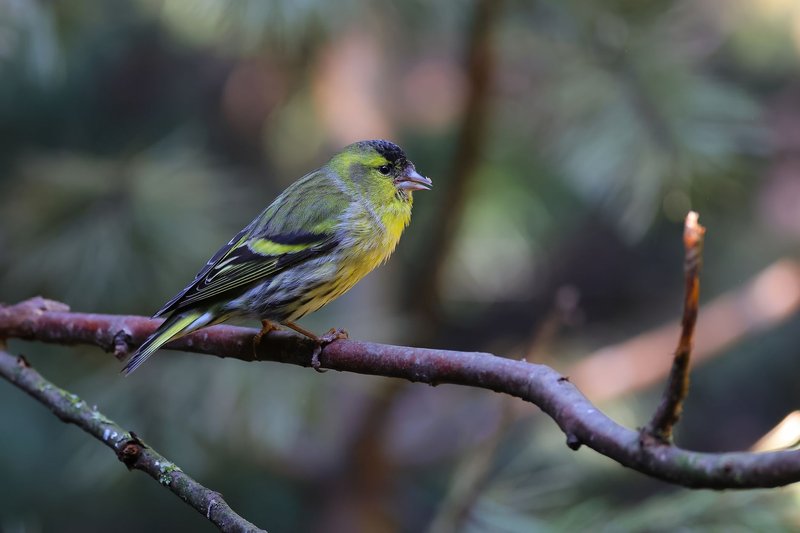
Darwin’s finches. There are 17 recognized species, all descended from a single ancestral finch that reached the islands roughly two to three million years ago, then diversified into forms with beaks built for cracking hard seeds, probing cactus flowers, or picking insects off bark. Darwin didn’t actually work out the finch connection until after he’d left the islands — the insight came later, back in London, when ornithologist John Gould examined his specimens.
The clearest proof that this evolution is still happening didn’t come from Darwin. It came from Peter and Rosemary Grant, who spent six months a year for four decades tracking finches on the tiny island of Daphne Major. After a severe drought killed off small, soft seeds and left only large, tough ones, the average beak size of the medium ground finch rose by 4% in a single generation — natural selection caught in the act, not inferred from fossils. In a more recent twist documented by Princeton researchers, the Grants watched a stray finch from a different species mate with a local resident and found the offspring formed a distinct new lineage within just two generations. You can see several finch species yourself in the highlands of Santa Cruz, where they forage in scalesia forest at close range. Likelihood: very high — this is one of the easiest endemic sightings in the islands.
Mangrove finch. The grim counterpoint to the finch success story. Restricted to two small mangrove patches on Isabela, with a population the Charles Darwin Foundation has tracked down to as few as 20 to 40 mature individuals, making it a strong contender for the rarest bird on Earth. It’s not on any standard tourist route. Likelihood: essentially zero without a dedicated conservation-focused visit.
Galapagos hawk. The apex land predator of the islands, unbothered enough by humans that it will perch on a trail marker while you walk past. It fills the ecological role a wolf or eagle would elsewhere, feeding on iguanas, snakes, and carrion. Likelihood: high on Santiago, Española, and Isabela.
Vermilion flycatcher. A small bird that looks like it caught fire — the male is a solid, saturated red with a black mask and wings. It favors the cooler, greener highlands over the arid coast. Likelihood: moderate, best in Santa Cruz’s highland farms and forest edges.
Galapagos mockingbird. Darwin actually paid closer attention to these than to the finches during his own visit, noting that mockingbird appearance shifted from island to island in a way that hinted at common ancestry with variation. Bold and curious, they’ll investigate an open backpack without hesitation. Likelihood: very high, nearly guaranteed on any island visit.
Short-eared owl. Unusual among owls for hunting in daylight, a habit it picked up in the Galapagos partly to compete with the abundant short-eared owl’s usual night-shift rivals, the Galapagos hawks, less. Genovesa is the most reliable island for a daytime sighting near petrel burrows, where the owls ambush storm-petrels as they return to their nests. Likelihood: low to moderate, and worth treating as a lucky find.
Coastal and Shore Birds
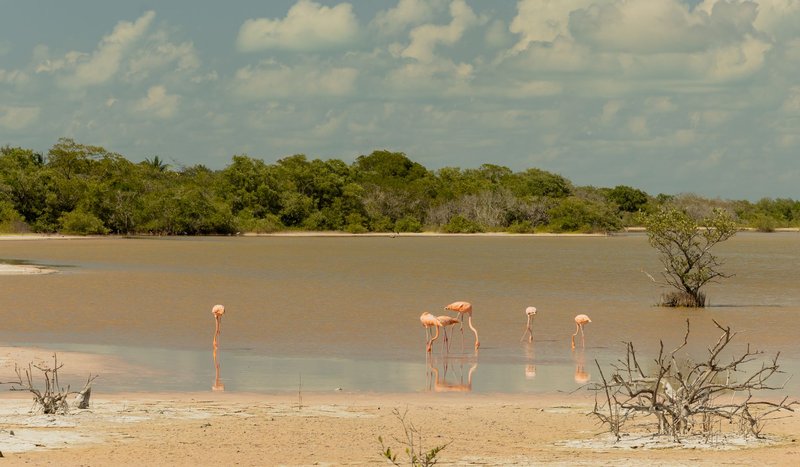
Greater flamingo. A small, genetically distinct population feeds in brackish coastal lagoons on Floreana, Isabela, and Rábida, filtering brine shrimp that give the birds their color. Likelihood: moderate, tied to lagoon water levels that shift seasonally.
Lava heron. A dark, stocky little heron that hunts by standing motionless at the tideline, then striking at crabs and small fish with almost no wasted motion. Found practically everywhere there’s a rocky shore. Likelihood: very high.
American oystercatcher. Loud, black-and-white, and impossible to miss thanks to a long orange-red bill built for prying open bivalves. Pairs are territorial and tend to occupy the same stretch of beach for years. Likelihood: high along sandy and rocky coastlines alike.
Whimbrel and migratory shorebirds. Several North American shorebird species pass through or overwinter here, including whimbrels, sanderlings, and turnstones, most visible from September through March. Likelihood: seasonal and variable, a genuine bonus category for visitors during those months.
Which Island Gets You Which Bird
Itinerary choice matters more than trip length. A five-night western-islands cruise and a five-night eastern-islands cruise will hand you almost entirely different bird lists.
- Genovesa (“Bird Island”) — red-footed and Nazca boobies, great frigatebirds, storm-petrels, short-eared owls hunting them. Only reachable on northern itineraries; some shorter southern-loop cruises never go near it.
- Española — the only waved albatross colony on Earth, plus Nazca boobies and swallow-tailed gulls nesting on the same cliffs. Southern itineraries only, and only useful April through December.
- North Seymour — frigatebirds and blue-footed boobies at close range, reachable as a half-day trip from Baltra without a multi-day cruise at all.
- Fernandina and western Isabela — flightless cormorants, Galapagos penguins, and the largest marine iguana colonies. Western itineraries only.
- Santa Cruz highlands — Darwin’s finches, vermilion flycatchers, and Galapagos mockingbirds, all reachable without a boat, from a land-based base in Puerto Ayora.
- Floreana — flamingo lagoons and a shot at the endemic Floreana mockingbird, one of the rarest mockingbird species in the archipelago.
If your trip planning has to prioritize one thing, prioritize this: land-based stays out of Santa Cruz cover finches, mockingbirds, and flycatchers easily, but they can’t get you to Española or Genovesa. Those require a cruise, and the itinerary you book determines the entire bird list you’ll come home with.
Summary
The birds worth building a Galapagos trip around aren’t evenly distributed or available year-round, and that’s the detail every generic species list leaves out. Want the blue-footed booby dance? June through August. Waved albatross? Española, and only between April and December. Darwin’s finches doing the thing that rewrote evolutionary biology? Santa Cruz highlands, essentially any time you go. Match the islands on your itinerary to the months on your calendar, and the difference between a good trip and the one you’ll actually talk about for years comes down to that planning, not luck.