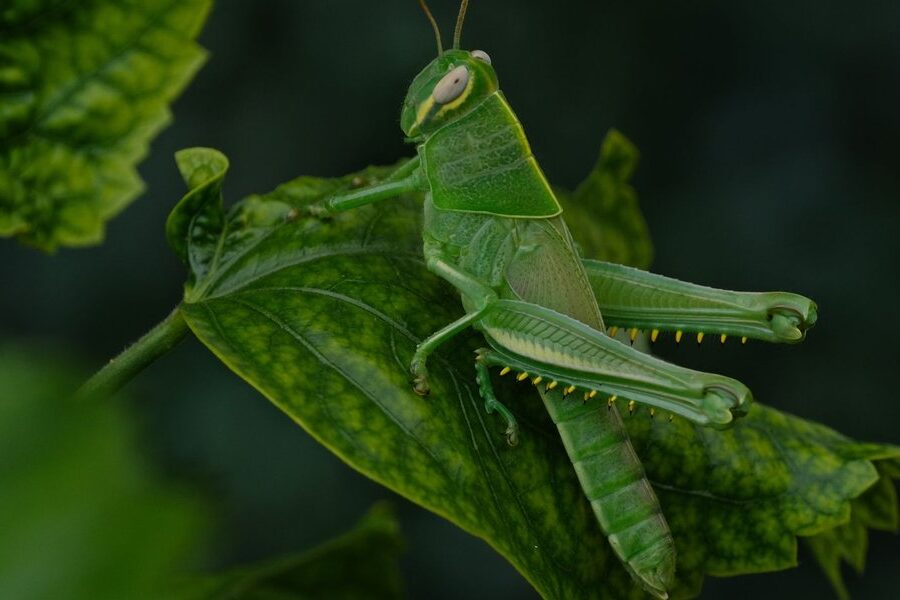
A primary consumer is any organism that eats producers — plants, algae, or phytoplankton — and nothing else. That makes it the second link in a food chain, sitting right above the plants and algae that make their own food from sunlight. Deer, grasshoppers, zooplankton, and manatees are all primary consumers. Wolves and hawks are not, because they eat other animals instead of plants.
Humans who eat only plants are functioning as primary consumers for that meal — but biologists classify species by their overall diet, not a single sandwich, so people are usually filed under a different category (more on that below). Decomposers, despite also feeding on organic matter, occupy their own separate role and aren’t counted as primary consumers either.
Table of Contents
- What Makes an Organism a Primary Consumer
- Where Primary Consumers Sit in the Food Chain
- Primary Consumer Examples by Habitat
- Primary vs. Secondary vs. Tertiary Consumers
- Specialized Feeding Strategies
- FAQ
- Quick Quiz
What Makes an Organism a Primary Consumer
The label comes down to one question: does the organism get its energy directly from a producer? If yes, it’s a primary consumer, full stop. It doesn’t matter if that producer is a 200-year-old oak tree or a single-celled diatom floating in seawater — the relationship is the same.
Biologists call this position the second trophic level. The first trophic level belongs to producers (plants, algae, cyanobacteria) that convert sunlight into usable energy through photosynthesis. Primary consumers are the first organisms in the chain that can’t make their own food — they have to eat something that already did the work.
This is also why primary consumers are almost always herbivores. There are a handful of omnivores that slide into the role part-time, but the core definition is strict: plant matter in, energy out. A grizzly bear eating berries is acting as a primary consumer in that moment; the same bear eating salmon a week later is acting as a secondary or tertiary consumer instead.
Where Primary Consumers Sit in the Food Chain
Energy moves through an ecosystem in one direction, and it loses steam at every step. Producers capture energy from sunlight, but only about 10% of that energy actually transfers to the primary consumers that eat them — the rest gets used up by the producers’ own metabolism or lost as heat. That 10% rule keeps repeating up the chain, which is exactly why there are always vastly more plants than herbivores, and more herbivores than predators, in a stable ecosystem.
This stacking is usually drawn as a pyramid:
- Trophic Level 1 — Producers: grasses, trees, algae, phytoplankton
- Trophic Level 2 — Primary Consumers: rabbits, grasshoppers, zooplankton, deer
- Trophic Level 3 — Secondary Consumers: foxes, frogs, small fish
- Trophic Level 4 — Tertiary Consumers: wolves, hawks, sharks
Remove the primary consumers from that pyramid and the whole thing collapses. Every secondary and tertiary consumer above them is, at most, two or three energy transfers removed from a plant — primary consumers are the bridge that makes the rest of the food web possible.
Primary Consumer Examples by Habitat
Primary consumers don’t look the same everywhere, because “eat the producers” plays out very differently depending on what’s growing nearby.
Terrestrial Primary Consumers
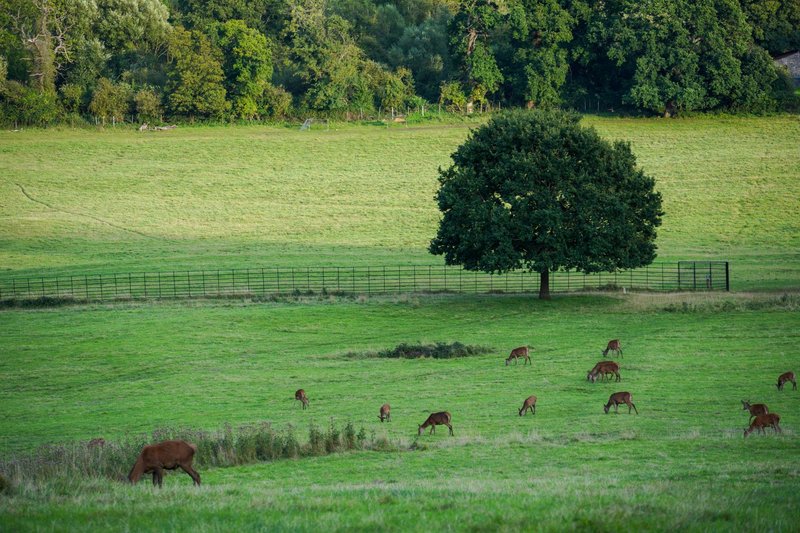
On land, primary consumers tend to be the animals built for grinding down tough plant fiber. Ruminants — deer, cattle, bison, goats — have a four-chambered stomach that lets them re-chew and re-digest grass to squeeze out every calorie, since raw grass is nutritionally stingy compared to meat. Rabbits and rodents go a different route, eating their own droppings once to run plant matter through their gut a second time. Insects like grasshoppers and caterpillars round out the group, and in sheer biomass, insects likely outweigh every large grazing mammal on the planet combined.
Aquatic Primary Consumers
In oceans and lakes, the base of the food chain is usually phytoplankton — microscopic algae too small to see without a microscope. The primary consumers that eat them are correspondingly small: zooplankton, krill, and the larval stages of many fish species. Krill alone form swarms so dense they’re visible from satellites, and a single blue whale — despite being the largest animal that has ever lived — survives almost entirely on this pinky-nail-sized crustacean. Manatees are a rare large-bodied exception, grazing on seagrass beds and eating up to 10% of their body weight in vegetation daily.
Specialized Feeders
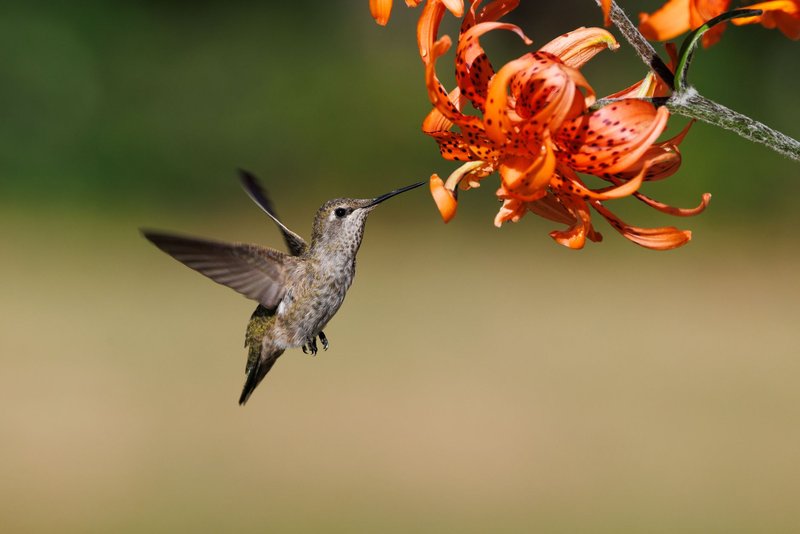
Some primary consumers have narrowed in on one specific part of a plant:
- Nectarivores (hummingbirds, many bats, honeyeaters) drink nectar and double as pollinators in the process
- Granivores (finches, many rodents) specialize in seeds, often stashing more than they eat and inadvertently planting forests
- Frugivores (fruit bats, toucans) eat fruit and disperse the seeds elsewhere through their droppings
These specialists matter beyond their own diet — a lot of plant reproduction depends on the primary consumer that eats it also spreading it around.
Primary vs. Secondary vs. Tertiary Consumers
The three consumer levels get mixed up constantly, mostly because “consumer” sounds like it should mean “predator.” Here’s how they actually break down:
| Primary Consumer | Secondary Consumer | Tertiary Consumer | |
|---|---|---|---|
| Trophic level | 2nd | 3rd | 4th |
| Diet | Producers only (plants, algae) | Primary consumers | Secondary consumers (sometimes primary too) |
| Common label | Herbivore | Carnivore or omnivore | Apex or near-apex predator |
| Example | Grasshopper | Frog (eats the grasshopper) | Snake or hawk (eats the frog) |
| Population size | Largest among consumers | Smaller than primary | Smallest of the three |
Note the overlap in the middle: a fox that eats both rabbits and berries is a secondary consumer for one meal and a primary consumer for the other. Ecologists classify by role in a given interaction, not by species identity — one animal can occupy more than one trophic level depending on what’s on its plate that day.
Specialized Feeding Strategies
Beyond habitat, it’s worth separating primary consumers by how they extract energy from plants, since the strategy shapes the whole animal:
- Grazers crop low-growing vegetation continuously (bison, geese, sea urchins scraping algae off rock)
- Browsers target leaves, twigs, and bark higher off the ground (giraffes, deer, some tortoises)
- Filter feeders strain phytoplankton or algae directly from water (many zooplankton species, some tadpoles)
The distinction matters ecologically: grazers keep grasslands from turning into scrubland, and their disappearance from an ecosystem tends to trigger a fast shift in plant cover within a few growing seasons.
FAQ
Are humans primary consumers? Only situationally. A human eating a salad is, in that moment, functioning as a primary consumer. But because most human diets include meat, dairy, or fish, ecologists typically classify people as omnivores that operate across multiple trophic levels rather than assigning a single fixed level.
Are decomposers the same as primary consumers? No. Decomposers — fungi, bacteria, earthworms — break down dead organic matter from any trophic level, not just producers. They’re usually placed in their own category, sometimes called detritivores, because they recycle energy and nutrients back into the soil rather than passing it up the food chain the way consumers do.
Can an animal be a primary consumer and a secondary consumer at the same time? Yes, and it’s common. Omnivores like bears, raccoons, and many fish shift trophic roles meal to meal depending on whether they’re eating plants or other animals.
Do primary consumers only eat whole plants? No. Nectar, seeds, fruit, algae, and phytoplankton all count as producer material, so any organism eating those is still a primary consumer even if it never touches a leaf.
Quick Quiz
-
A grasshopper eats grass, and a bird eats the grasshopper. What trophic level is the grasshopper? Answer: Second — it’s a primary consumer.
-
True or false: primary consumers are always larger than the producers they eat. Answer: False — zooplankton eating phytoplankton is one of many exceptions.
-
Which of these is NOT a primary consumer: rabbit, krill, wolf, grasshopper? Answer: Wolf — it eats other animals, making it a secondary or tertiary consumer.
Primary consumers rarely get the spotlight that predators do, but pull them out of any food chain and the structure above them has nothing left to stand on. According to the National Geographic Society, consumers as a group can only exist because producers first convert sunlight into stored energy — primary consumers are simply the organisms positioned to cash that energy in first. Understanding where a species sits on that ladder is the fastest way to understand how an entire ecosystem holds together.