Table of Contents
- TLDR
- Why Slovenia Has So Many Caves
- Postojna Cave
- Škocjan Caves
- Predjama Castle Cave
- Vilenica Cave
- Križna Jama
- Pekel Cave
- Which Cave Fits You
- See Two Caves in One Day
- Practical Details at a Glance
TLDR
If you’re seeing exactly one cave, make it Škocjan — the underground canyon is the kind of scale photos don’t fix. If you want the easy, reliable, kid-proof option, Postojna wins on convenience: a train takes you in, and you’re back at the gift shop within 90 minutes. Want a cave with zero crowds and a boat ride through actual underground lakes? That’s Križna Jama, and you’ll need to book weeks ahead because groups are capped small.
Everything else in this guide is for the traveler who’s already done Postojna once, has a rental car, and wants to know what’s actually worth the detour.
Why Slovenia Has So Many Caves
Roughly 40% of Slovenia sits on karst — limestone bedrock that rainwater slowly dissolves into sinkholes, underground rivers, and cave systems over tens of thousands of years. The word “karst” itself comes from the Kras plateau in southwestern Slovenia, which is why geologists worldwide use a Slovenian place name to describe this kind of terrain, as Britannica explains. More than 14,000 caves have been mapped in the country, though fewer than a dozen are set up for visitors.
That last part matters. Most of Slovenia’s caves are wild — no lighting, no railings, no ticket booth — and off-limits without a caving guide and gear. The six below are the ones you can actually walk (or float) into.
Postojna Cave
Who it’s for: first-timers, families with young kids, anyone with one free hour who doesn’t want to think too hard about logistics.
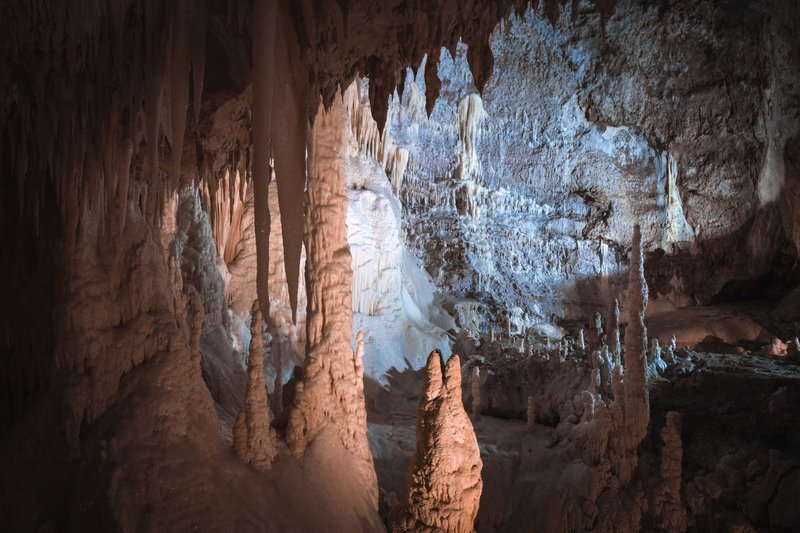
Postojna is the cave most people picture when they hear “caves in Slovenia,” and it earned that spot the practical way: an electric train carries you 3.5 km into the mountain before you ever have to walk. From there it’s about 1.5 km on foot through chambers hung with pale stalactites, past a formation locals call the Brilliant for the way it catches light. The whole visit runs about 90 minutes, and the cave holds steady at 10°C year-round, so bring a layer even in August.
The other reason to come here: the olm. Postojna’s vivarium keeps live specimens of Proteus anguinus, a blind, cave-dwelling salamander that can survive without food for over a decade and was, for centuries, mistaken by locals for a baby dragon washed out by floodwater. The species is listed as vulnerable by the IUCN Red List, and Postojna’s population is the most accessible place on Earth to see one in person.
Tickets run roughly €28–35 depending on season, and a combo ticket with Predjama Castle saves you money if you’re doing both — which, given they’re nine kilometers apart, you should.
Škocjan Caves
Who it’s for: anyone who wants the actual “whoa” moment, doesn’t mind stairs, and cares that a place has UNESCO backing.
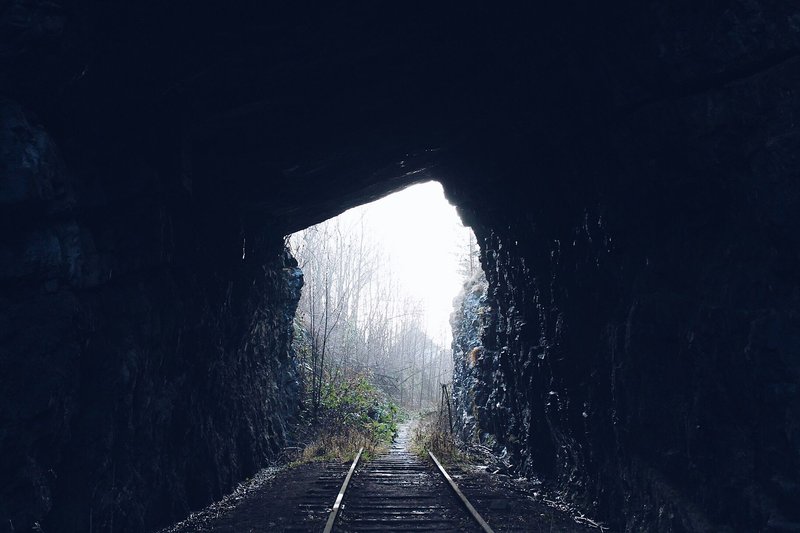
Škocjan doesn’t have a train, and that’s the point. You walk across a suspended bridge 45 meters above the Reka River as it roars through the largest known underground canyon in the world, then climb out through a collapsed doline the size of a football stadium. It’s inscribed on the UNESCO World Heritage list for exactly this — a functioning underground river system on a scale that photographs consistently undersell.
Budget more time here than Postojna. The full tour runs 2.5 to 3 hours with close to a thousand steps, though a shorter route exits earlier if you’re pressed or not up for the climb. Full-price adult entry lands around €44 in high season, which stings next to Postojna, but you’re paying for terrain nobody engineered a train around.
Wear real shoes. The path is wet stone, not polished tourist walkway, and Škocjan doesn’t pretend otherwise.
Predjama Castle Cave
Who it’s for: anyone doing Postojna anyway, photographers, and people who like their history with a side of secret passage.
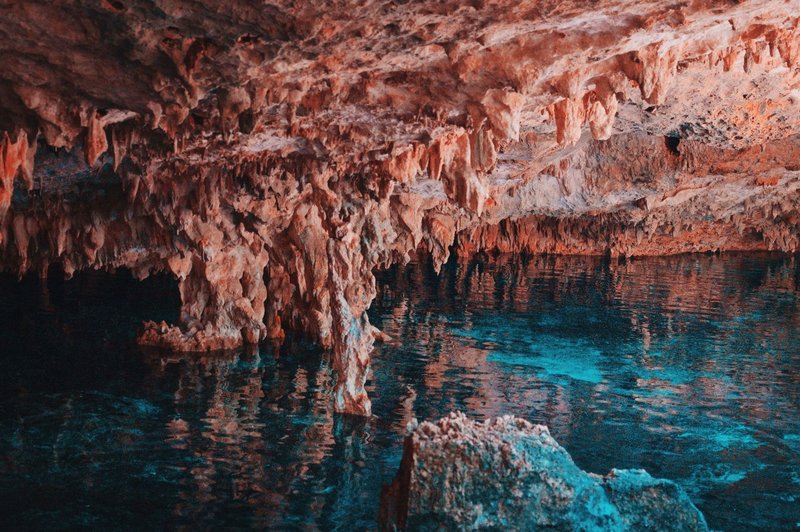
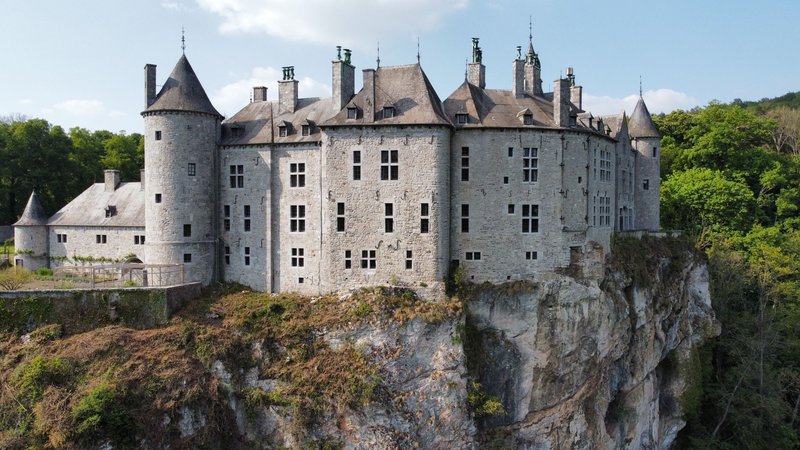
Predjama isn’t really a standalone cave visit — it’s a 16th-century castle built directly into a cave mouth halfway up a 123-meter cliff, and the cave system behind it (the Proteus Cave, named for the same salamander found at Postojna) runs deeper than most visitors realize. The castle tour covers the fortress itself in about an hour; a separate, limited-capacity guided tour takes you into the cave tunnels the castle’s most famous owner, the robber baron Erazem Lueger, reportedly used to slip past a year-long siege and keep his kitchen stocked.
Book the cave portion in advance if you want it — group sizes are small and it sells out in summer. If you’re only doing the castle, walk-up tickets are usually fine.
It sits about 9 km from Postojna Cave, roughly 60 km (under an hour) from Ljubljana, making it the easiest add-on in this entire list.
Vilenica Cave
Who it’s for: history-minded travelers, anyone road-tripping toward Trieste, people actively trying to avoid a tour bus.
Vilenica has a claim none of the others can touch: it’s the oldest show cave in Europe, with paying visitors recorded as early as 1633, according to Slovenia’s national tourist board. Tourists were walking these passages by candlelight nearly two centuries before anyone thought to string up electric lights in Postojna.
It’s small compared to the big two, and that’s the appeal — no train, no crowds, just a genuinely old cave near the village of Lokev on the Karst plateau, a short detour if you’re heading toward Trieste or the Slovenian coast. Guided tours run on a fixed schedule (Sundays and holidays through the warmer months, groups by arrangement otherwise), so check the timetable before you drive out.
Križna Jama
Who it’s for: the traveler who wants a cave experience nobody else on their feed has, and doesn’t mind planning ahead.
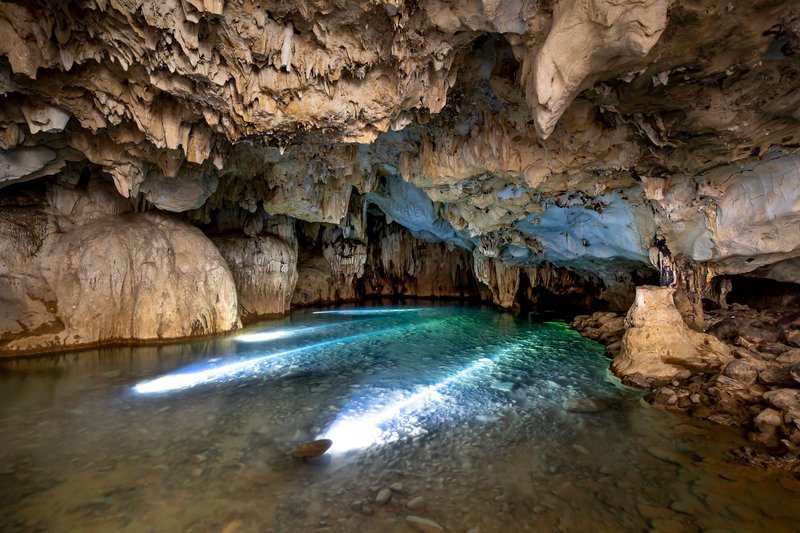
Križna Jama is the outlier here: you tour part of it by boat. A short version paddles across the first of 22 underground lakes and back; a longer, harder tour continues over rock to the second lake for a fuller sense of the cave’s scale. Either way, group sizes are capped small and tours book out, especially on weekends — plan a few weeks ahead in summer.
The cave is also one of Europe’s richest sources of cave bear (Ursus spelaeus) remains, with bones from animals that used the passages as a den long before the last ice age ended. It’s a genuinely strange thing to see lit up mid-tour: a fossil bed, underwater, in a cave you just paddled into.
Bring cash — Križna Jama doesn’t take cards, and the standard adult ticket runs €12–14 depending on season.
Pekel Cave
Who it’s for: anyone based near Celje or northern Slovenia, budget travelers, day-trippers who want a cave without a two-hour drive from Ljubljana.
Pekel — “Hell” — gets its name from an entrance rock formation that, from the right angle, looks unmistakably like a devil’s head. Inside, it’s less dramatic and more genuinely fun: a roughly 1,200-meter guided route that climbs from a lower “Water Cave” past a four-meter underground waterfall, the tallest known in Slovenia, up into a drier upper section. One stretch is called the Silent Gallery, where the cave’s geometry swallows even the sound of the water running through the rest of the system.
It’s the cheapest cave on this list at around €8 for adults, and the least visited by international tourists, mostly because it sits near Celje rather than on the well-worn Ljubljana–coast corridor. If you’re already in that part of the country, there’s no reason to skip it.
Which Cave Fits You
Skip the guesswork with a quick filter:
- Traveling with young kids or limited mobility: Postojna. The train does the heavy lifting.
- Want the single most impressive cave, full stop: Škocjan, if you can handle the stairs.
- Doing a Postojna day trip anyway: add Predjama — it’s ten minutes away and doubles as a castle visit.
- Want to dodge every tour bus in the country: Vilenica or Pekel.
- Willing to book ahead for something genuinely different: Križna Jama’s boat tour.
- Short on time, need one cave near Ljubljana: Postojna or Križna Jama, both under an hour away.
- Have a full day and a rental car: pair Škocjan with Vilenica — they’re 20 minutes apart near Divača.
See Two Caves in One Day
The classic pairing is Postojna and Predjama, and it works because they’re nine kilometers apart: cave in the morning, castle and cave tunnels after lunch, back in Ljubljana by dinner. Combo tickets covering both exist specifically because so many people do this exact route.
The less obvious pairing, if you’re staying closer to the coast, is Škocjan and Vilenica. Both sit near Divača, roughly 20 minutes apart, so you can do Škocjan’s full 2.5–3 hour route in the morning and still catch an afternoon Vilenica tour before continuing toward Trieste or Piran. Just check Vilenica’s schedule first — it doesn’t run tours daily like the bigger sites.
Križna Jama and Pekel don’t pair well with anything else on this list; they’re each roughly an hour from Ljubljana in different directions, so treat them as their own day trip rather than an add-on.
Practical Details at a Glance
| Cave | Price (adult) | Tour length | Distance from Ljubljana | Cave temp |
|---|---|---|---|---|
| Postojna Cave | ~€28–35 | ~90 min | ~53 km (50 min) | 10°C |
| Škocjan Caves | ~€44 | 2.5–3 hrs | ~65 km (1 hr) | 12°C |
| Predjama Castle Cave | ~€38–42 (combo w/ Postojna) | ~60 min (cave) + 60 min (castle) | ~60 km (55 min) | similar to Postojna |
| Vilenica Cave | ~€10 | ~45–60 min | ~100 km (1 hr 15 min) | cool, stable year-round |
| Križna Jama | ~€12–14 | 1 hr (short) / longer for extended tour | ~50 km (50 min) | cool, near-constant |
| Pekel Cave | ~€8 | ~60 min | ~80 km (1 hr 10 min) | cool, stable year-round |
Prices and tour lengths shift by season — book directly through each site’s official page before you drive out, especially for Predjama’s cave tunnels and Križna Jama’s boat tours, both of which cap group sizes and sell out in summer.
None of these caves need a headlamp or a permit — that’s a different kind of trip, for a different kind of traveler. What they need is a jacket, real shoes, and enough time budgeted that you’re not sprinting the return drive to Ljubljana in the dark.