Table of Contents
- Niger’s Only True Endemic Species
- Why Niger Has Almost No Endemics
- The Aïr Mountains: Niger’s Closest Thing to a Biodiversity Hotspot
- Native and Near-Endemic Mammals Worth Knowing
- Birds, Reptiles, and Fish: The Categories Everyone Skips
- Conservation Status at a Glance
TLDR
Niger has exactly one confirmed endemic species: Rhyncosia airica, a legume found only in the Aïr Mountains. Everything else you’ll see on “endemic species of Niger” lists — addax, dama gazelle, West African giraffe — is native or near-endemic, not endemic. Those are still worth knowing, and this post covers them by group, with an IUCN status table and the Aïr Mountains explained as the country’s one real biodiversity hotspot.
Niger’s Only True Endemic Species
Most lists calling themselves “endemic species of Niger” are actually lists of endangered or native species. That’s a meaningful mix-up, not pedantry. Endemic means a species exists nowhere else on Earth, full stop. Native means it occurs naturally in a place, alongside plenty of other places. Endangered is a conservation status that has nothing to do with geographic range at all — a species can be endangered and found across five countries, or common and endemic to one mountain.
Run that filter over Niger’s wildlife and the list gets very short. As far as documented flora and fauna go, Niger has one confirmed endemic: Rhyncosia airica, a legume in the Fabaceae family that grows only in the rocky wadis of the Aïr Mountains, in the country’s north-central Agadez region. It’s not a species you’ll find on postcards or safari brochures — it’s a low-growing plant known mainly from botanical surveys — but it’s the answer if the question is genuinely “what exists in Niger and nowhere else.”
Nearly everything else associated with Niger’s wildlife identity — the addax, the dama gazelle, the West African giraffe — ranges across multiple countries. They’re native to Niger. Some are found nowhere in greater numbers than in Niger. None of them are endemic to it.
Why Niger Has Almost No Endemics
Endemism usually comes from isolation: an island, a mountain range cut off by lowland, a lake system with no outlet. Isolation is what lets a population diverge long enough to become its own thing.
Niger’s terrain works against that. Roughly 80% of the country sits within the Sahara and Sahel, an open, connected biome that runs uninterrupted across Mali, Chad, Algeria, Libya, and Nigeria. A gazelle or a grass species adapted to Sahelian scrubland in Niger faces no real barrier to also living in the exact same scrubland fifty miles into Mali. There’s nothing pinning a population in place long enough for genetic isolation to take hold, so nothing pushes speciation. The UNEP biodiversity data for Niger reflects this directly: the country’s species inventories are dominated by wide-ranging Sahelo-Saharan taxa shared with its neighbors, not by narrow-range specialists.
The one exception is exactly where you’d expect it: elevation. The Aïr Mountains rise sharply out of the surrounding desert, reaching over 2,000 meters at their highest points. That’s enough vertical relief to create a genuinely different, semi-isolated environment — which is why the country’s only confirmed endemic turns up there and nowhere else in Niger’s flat expanses.
The Aïr Mountains: Niger’s Closest Thing to a Biodiversity Hotspot
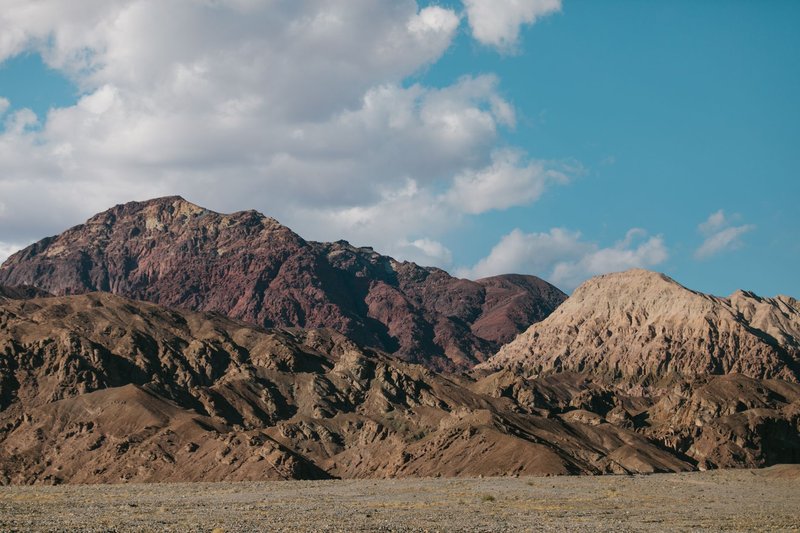
If Niger has a biodiversity hotspot, this is it. The Aïr Massif and the neighboring Ténéré desert together form one of the largest protected area complexes in Africa, recognized by UNESCO for a reason that surprises most people: the mountains function as a refuge for species that belong to a much wetter, greener Sahara.
Roughly 6,000 to 10,000 years ago, during what’s known as the African Humid Period, the Sahara supported lakes, savanna, and Mediterranean-type vegetation. As the region dried out, most of that plant and animal life either died off or retreated. In the Aïr’s higher wadis — where altitude traps a little more moisture and shade — pockets of that older ecosystem hung on. Botanists have documented relict Mediterranean flora surviving at elevation here, essentially marooned by ten millennia of desertification happening around them at lower altitude.
That’s the ecological mechanism behind Rhyncosia airica and behind the Aïr’s outsized importance relative to its size. It’s also why the massif supports the country’s healthiest population of Barbary sheep, an animal that needs the kind of rocky, broken terrain the surrounding lowland desert simply doesn’t offer.
Native and Near-Endemic Mammals Worth Knowing
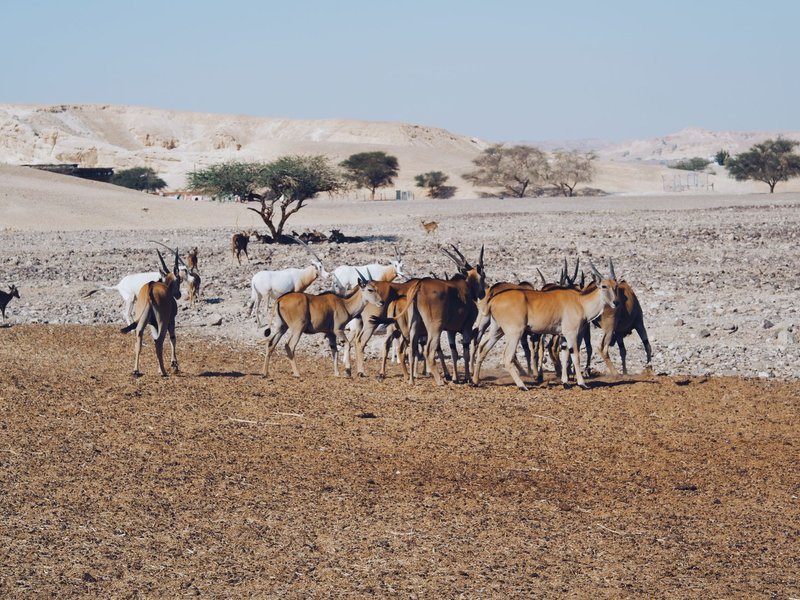
None of these are endemic to Niger. All of them are why Niger matters disproportionately to Sahelo-Saharan conservation — several now depend on the country for their last significant wild populations.
Addax (Addax nasomaculatus). A spiral-horned antelope built for true desert living — it can go essentially its whole life without drinking free-standing water, pulling what it needs from plants. The Termit Massif region in southeastern Niger holds one of the last wild populations left anywhere; global numbers are now estimated in the low hundreds.
Dama gazelle (Nanger dama). The tallest gazelle species, with a reddish-and-white coat that makes it easy to pick out against the desert scrub. Like the addax, its remaining wild stronghold sits in and around the Termit–Tin Toumma reserve — a 97,000-square-kilometer protected area, one of the largest in Africa, created specifically because this pocket of Niger still held both species when they’d already vanished from most of their historic range.
Saharan cheetah (Acinonyx jubatus hecki). A subspecies adapted to true desert rather than savanna, paler-coated and more nocturnal than the cheetahs most people picture. It exists at extremely low density across a fragmented range spanning Niger, Algeria, Mali, and Chad — camera-trap surveys in Termit have been among the few reliable confirmations that a breeding population still holds on there.
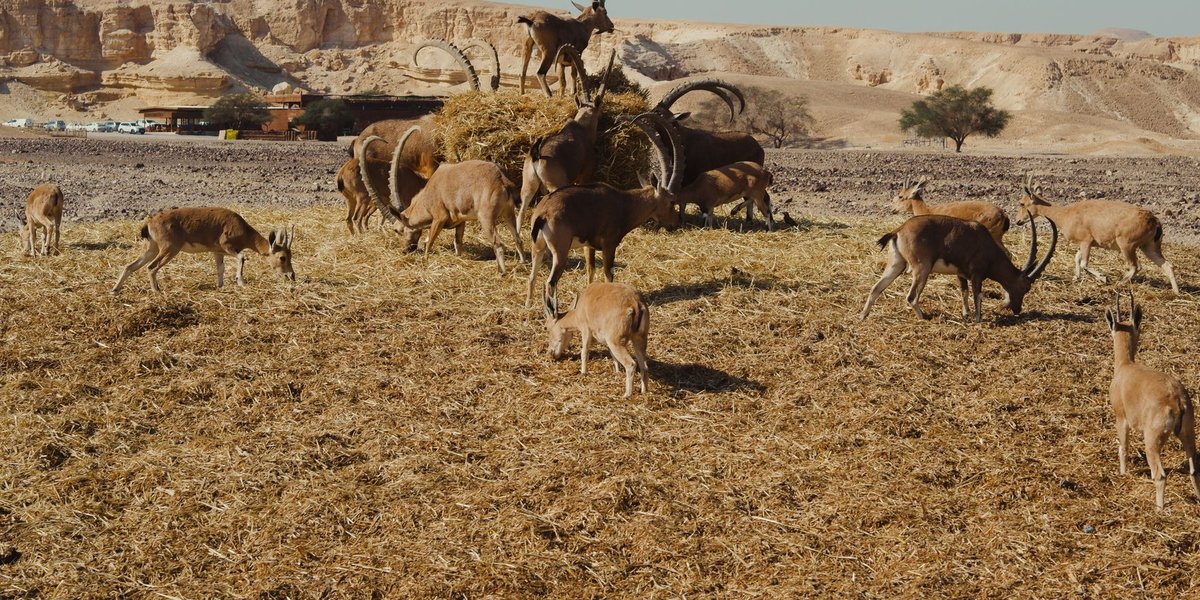
Barbary sheep, or aoudad (Ammotragus lervia). A stocky, shaggy-maned wild sheep built for cliffs and scree, found in Niger mainly in the Aïr and Termit massifs. It’s the species that most directly explains why mountainous terrain matters here — flat desert can’t support an animal that relies on vertical rock to escape predators.
West African giraffe (Giraffa camelopardalis peralta). This is the one genuinely remarkable Niger wildlife story, and it doesn’t need embellishment. By the mid-1990s, hunting and habitat loss had reduced the entire subspecies to roughly 50 individuals, all in the “Giraffe Zone” near Kouré, southeast of Niamey — meaning the last wild West African giraffes on the planet existed in one small stretch of Niger and nowhere else. A community-led protection program reversed that: the population has recovered to several hundred animals, still living entirely within Niger, still the only wild West African giraffes anywhere on Earth. That’s about as close as a non-endemic species gets to functioning like one.
Birds, Reptiles, and Fish: The Categories Everyone Skips
Search results on this topic stop at mammals almost without exception, which leaves a real gap. The honest answer for the other groups is less exciting but worth stating plainly: no bird, reptile, fish, or invertebrate species is currently confirmed as endemic to Niger.
Birds follow the same logic as mammals — the Sahel’s open geography lets species like the Nubian bustard and Egyptian vulture range freely across borders, so Niger hosts important populations without hosting anything unique to it. The BirdLife DataZone country factsheet for Niger lists no bird species as endemic, only species of regional conservation concern shared with neighboring Sahelian states. Nearby Nigeria, by contrast, does support endemic bird species, which underscores that Niger’s lack of avian endemics is not simply a matter of being part of the Sahel, but something about its specific terrain.
Reptiles and fish are similar for a different reason: they’re comparatively understudied here. Niger’s fish fauna is tied almost entirely to the Niger River basin, a system it shares with nine other countries, which structurally rules out endemism for anything that isn’t landlocked in an isolated pool. Reptile surveys across the Sahara-Sahel region remain thin enough that a genuinely Niger-only species could exist and simply not be documented yet — but nothing currently meets that bar.
Conservation Status at a Glance
| Species | Scientific Name | Category | Status |
|---|---|---|---|
| Aïr rhyncosia | Rhyncosia airica | Plant (endemic) | Not formally assessed |
| Addax | Addax nasomaculatus | Mammal | Critically Endangered |
| Dama gazelle | Nanger dama | Mammal | Critically Endangered |
| Saharan cheetah | Acinonyx jubatus hecki | Mammal (subspecies) | Critically Endangered (regional) |
| Barbary sheep | Ammotragus lervia | Mammal | Vulnerable |
| West African giraffe | Giraffa camelopardalis peralta | Mammal (subspecies) | Vulnerable |
Status assessments follow the IUCN Red List framework, cross-referenced against country-level conservation priorities documented by UNDP’s BIOFIN program in Niger. Worth noting: the near-endemic mammals on this list carry far more urgent conservation status than Niger’s one confirmed endemic plant, which simply hasn’t been assessed yet — a reminder that “endemic” and “at risk” are, again, two different questions.
Niger’s real story isn’t a long list of species found nowhere else. It’s a country that happens to sit at the last stronghold for several animals that are running out of anywhere else to go — which, if you’re weighing what actually deserves attention, might matter more than endemism ever would.