Most people picture Poland as coal country, and for a long stretch of the 20th century that wasn’t wrong. But the ground underneath Poland does a lot more than burn. It grows gem-grade topaz in Lower Silesia, hosts one of the biggest sulfur deposits ever found, and quietly makes the country the world’s number-two silver producer — a fact that surprises even people who follow mining. Poland’s minerals split into two very different stories: the collector’s story of colorful crystals pulled from Sudetes hillsides, and the industrial story of copper, silver, and salt moving through global supply chains. Both are worth knowing, and they overlap more than you’d think.
Table of Contents
- TL;DR
- Sudetes and Lower Silesia: gemstone country
- Kraków region: amethyst, chalcedony, and salt
- Świętokrzyskie Mountains: the old ground
- The economic heavyweights: copper, silver, sulfur, and salt
- Baltic amber, Poland’s other signature mineral
- Can you legally collect minerals in Poland?
- Safety notes for rockhounders
- Where to see it all in person
TL;DR
Poland’s mineral wealth breaks into two camps. For collectors, the Sudetes region in Lower Silesia is the destination — topaz, beryl, tourmaline, and agate turn up in old quarry spoil and stream gravel. For scale, KGHM’s copper-silver operations in the southwest make Poland the world’s second-largest silver producer, behind only Mexico. Add the Wieliczka Salt Mine near Kraków — nearly 300 kilometers of tunnels mined continuously for over 700 years — and one of the planet’s largest native sulfur deposits in the Carpathian Foredeep, and you’ve got a country whose geology punches well above its size on the map.
Sudetes and Lower Silesia: gemstone country
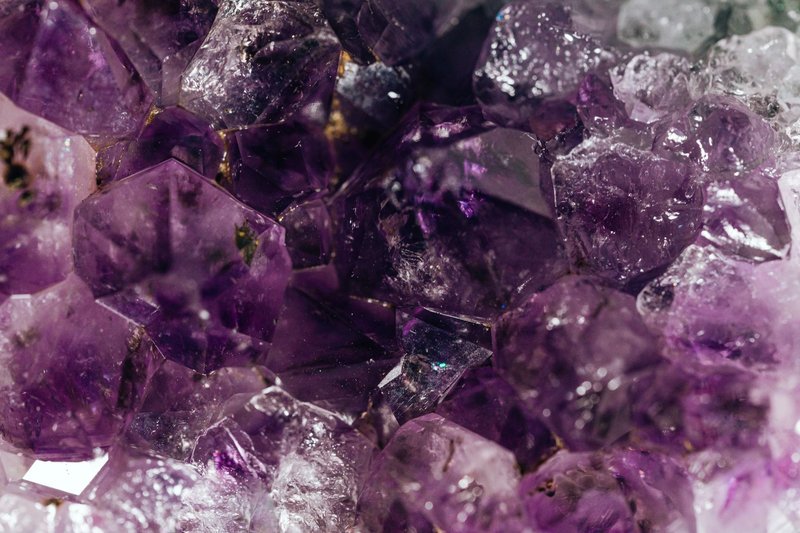
If you’re chasing color, this is where you go. The Sudetes mountain range running along Poland’s southwestern border with the Czech Republic is the most geologically varied stretch of the country, and it shows in what turns up there: topaz, beryl, aquamarine, corundum, garnet, and tourmaline, most of it in old post-volcanic and pegmatite deposits that have been worked, on and off, since medieval times.
Tourmaline from the region tends toward opaque black crystals, though pink rubellite specimens do surface. Sapphires once came out of the Giant Mountains (Karkonosze) in enough quantity to matter to jewelers — that supply has thinned to almost nothing today, but the deep blue color that made them desirable is still visible in museum pieces. Polish topaz, when it’s gem-quality, is prized for clarity rather than size; it’s not a stone that produces showpieces so much as clean, well-formed crystals.
The town of Złoty Stok, once a medieval gold-mining center, is a good example of how these regions layer history on top of geology — gold drew miners there centuries before anyone cared about the arsenic minerals sitting alongside it (more on that below).
Kraków region: amethyst, chalcedony, and salt
South and east of the Sudetes, the hills around Kraków run a different chemistry. Around Rudno, Alwernia, and Krzeszowice, weathered volcanic rock has produced pockets of amethyst and chalcedony, along with locally distinctive banded agates that collectors specifically hunt for by village name rather than just “Polish agate.” It’s a smaller, quieter collecting scene than the Sudetes, but it sits close enough to Kraków that it’s an easy day trip if you’re already in the area for Wieliczka.
Świętokrzyskie Mountains: the old ground
The Świętokrzyskie (Holy Cross) Mountains in central Poland are among the oldest exposed mountain ranges in Europe, shaped first by the Caledonian orogeny and reworked later during the Hercynian period. Geologically, this region rivals the Sudetes for diversity — close to 40 mineral species have been documented here, including calcite, galena, barite, pyrite, and the copper minerals malachite and azurite, many sitting in hydrothermal veins tied to old copper and silver workings that date back to at least the 13th century.
The Miedzianka Mountain site, now recognized as a geological heritage location, is the clearest window into that mining history — the Teresa Adit there has been studied specifically for how it preserves centuries-old extraction techniques alongside the ore itself, according to a peer-reviewed case study in the journal Minerals. The region is also a fossil hotspot: the Zachełmie tetrapod footprints, dated to roughly 395 million years old, rank among the earliest evidence of four-legged animals moving onto land anywhere on Earth.
The economic heavyweights: copper, silver, sulfur, and salt
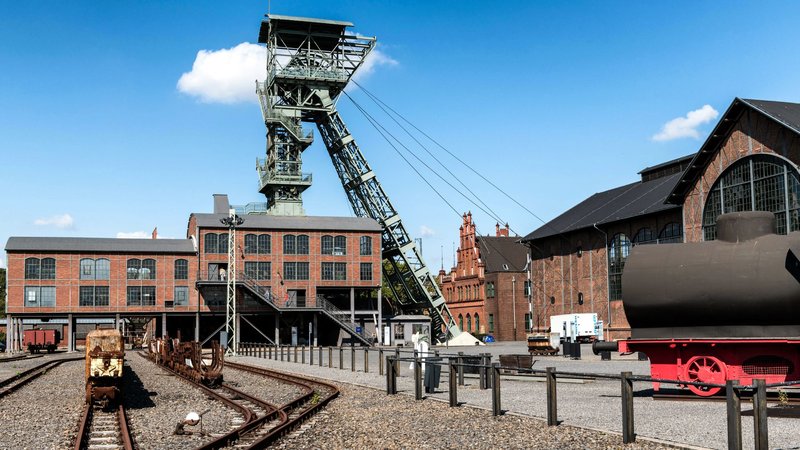
This is where Poland stops being a rockhound’s side quest and becomes a genuine player in global mineral markets. The country’s copper and zinc-lead deposits sit within the Zechstein basin — among the largest sulfide ore systems in the world — concentrated in Lower Silesia and worked almost entirely by KGHM Polska Miedź, a state-linked mining giant that runs three major underground mines: Lubin, Rudna, and Polkowice-Sieroszowice.
Silver comes out of those same copper ores as a byproduct, refined at the Głogów smelter, which has processed precious metals from copper concentrate since 1993. The volume is enough to make Poland the world’s second-largest silver producer, trailing only Mexico’s Fresnillo. On copper alone Poland ranks further down the list globally, but it still supplies a substantial share of Europe’s refined copper.
Then there’s sulfur. The Carpathian Foredeep, running along Poland’s southeastern border, contains what was once considered the largest native sulfur deposit ever discovered — for decades sulfur was one of Poland’s top nonmetal exports, mined at places like Tarnobrzeg before cheaper recovery methods elsewhere in the world eroded the market.
And salt. Poland’s rock salt resources are staggering on paper — estimated at more than 80 billion tons, concentrated in the Kujawy region (around 52 billion tons alone), with more in Pomerania and the Carpathian Monocline. Most of that will never be mined; it’s simply how much salt sits under the country. The Polish Geological Institute tracks these reserves as part of the national resource inventory that guides where future extraction can happen.
Baltic amber, Poland’s other signature mineral
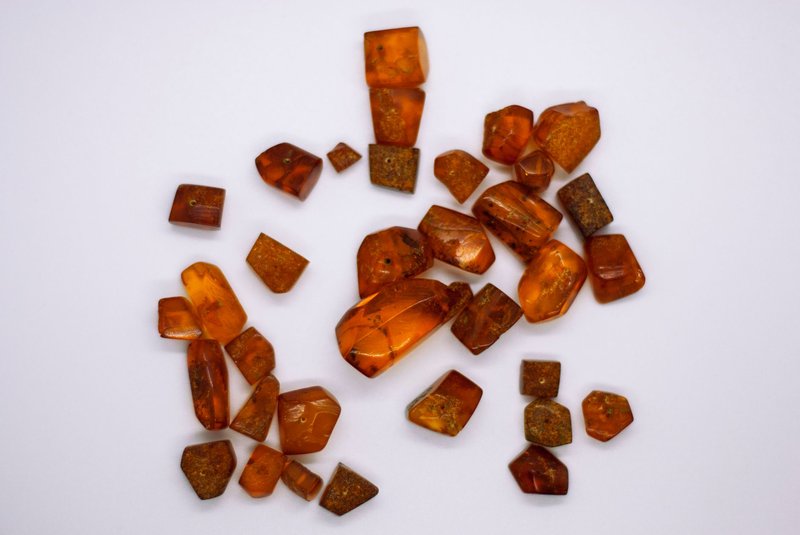
Amber isn’t technically a mineral — it’s fossilized tree resin — but no list of what Poland pulls from the ground is honest without it. Poland’s Baltic coast holds an estimated 12,000 tons of recoverable amber, with the Mozdżanowo deposit standing out for producing an unusually high share — around 60 percent — of clear, transparent material rather than the cloudy or opaque amber more common elsewhere along the coast. Gdańsk has been Europe’s amber trading hub for centuries, and it still is; workshops there turn rough amber into jewelry using techniques passed down through generations of cutters.
Can you legally collect minerals in Poland?
The honest answer is: it depends where, and it’s more restrictive than casual collectors assume. Poland’s Geological and Mining Law governs exploration and extraction of mineral deposits, and while it’s aimed primarily at commercial operations, it overlaps with nature conservation law in ways that matter to hobbyists. Protected areas — national parks, nature reserves, and designated geological heritage sites like parts of the Świętokrzyskie range — generally prohibit removing rock or mineral specimens, full stop, regardless of intent.
Active or licensed mine sites are off-limits without permission, for obvious safety and legal-liability reasons. Where collecting is realistic is on private quarry spoil heaps (with the landowner’s permission), stream gravels outside protected zones, and a handful of sites that explicitly welcome amateur collectors. If you’re planning a serious collecting trip, the practical move is to check with local geological clubs or the regional office of the State Geological Institute before you start swinging a hammer — the rules vary enough by site that guessing wrong is easy.
Safety notes for rockhounders
Some of the more interesting finds in Poland come with real hazards attached. Around Złoty Stok, arsenopyrite — an iron-arsenic sulfide — is common in old mine tailings and is toxic if it’s eroded into dust or heated, which makes casual handling and definitely casual grinding or polishing a bad idea. In the Kletno area, secondary uranium minerals like autunite and torbernite still show up in old mine workings, leftovers from Cold War-era uranium extraction; they’re visually striking (autunite fluoresces a vivid yellow-green under UV light) but radioactive enough that serious collectors handle them with the same caution as any other radioactive specimen — short exposure times, no ingestion risk, no long-term storage near where people sleep.
Neither of these should scare you off collecting in the region. They should just tell you which specimens need gloves, ventilation, and a little research before they go in your pocket.
Where to see it all in person
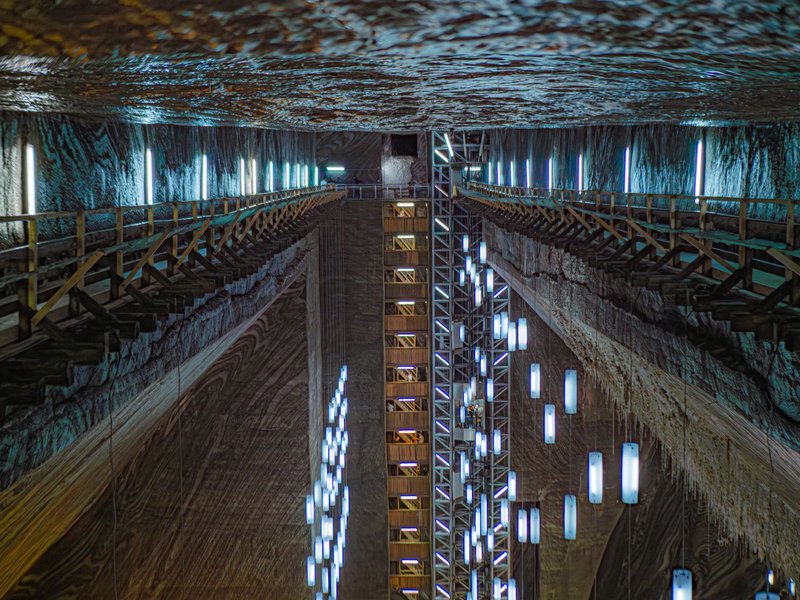
You don’t need a hammer and a permit to appreciate Polish minerals — some of the best examples are already on public display. The Wieliczka Salt Mine near Kraków is the obvious starting point: a UNESCO World Heritage Site with nearly 300 kilometers of tunnels across nine levels, mined continuously from the 13th century until 1996. Beyond the salt itself, the mine is famous for chapels and sculptures carved directly into rock salt by miners over generations, including an entire underground cathedral.
For a broader mineral collection, the Geological Museum of the Polish Geological Institute in Warsaw and the mineralogical museums attached to AGH University of Science and Technology and Wrocław University in the Sudetes region both hold specimen collections that cover everything from Lower Silesian gemstones to the copper ores that keep KGHM running. If you’re already in Sudetes territory chasing agate and topaz, pairing a collecting day with a museum visit fills in what the rock in your hand actually represents — geologically and historically both.
Poland’s minerals don’t announce themselves the way a volcano or a canyon does. You have to go looking, whether that’s a quarry spoil heap in Lower Silesia or a KGHM production report. But the country has quietly built one of Europe’s more interesting mineral profiles — gem-grade crystals, industrial-scale copper and silver, and salt tunnels seven centuries in the digging.