Search “famous people from Eswatini” and you get DJs, actors, and a king. Pantheon’s country rankings and FamousBirthdays’ card grid run the same names — Richard E. Grant, Uncle Waffles, Sobhuza II — and not one scientist among them. Type “scientists born in Eswatini” directly into Google and you get the same recycled celebrity roundups, none of which mention a single lab coat.
They exist anyway. The list is short, because Eswatini’s population sits just over 1.2 million and its research infrastructure is modest by any global measure. But the people on it did work that holds up: a chemist who ran a university and helped launch a worldwide network for women in science, a doctor who broke into politics decades before it was common, researchers building the country’s first real climate and water-quality data, and two teenagers who out-engineered adults at an international science fair using cardboard boxes and cow manure.
The short version: Lydia Makhubu is the country’s defining scientific figure — a medicinal chemist, university vice-chancellor, and founding president of the Third World Organization for Women in Science. Below her sit a handful of working researchers and one improbable teenage duo, each in a field the “famous Swazis” lists never bothered to check: chemistry, climate science, water testing, and agricultural engineering.
Table of Contents
- Lydia Makhubu: The Chemist Who Ran a University and a Global Network
- Fanny Friedman: The Doctor Who Became the First Female Senator
- Wisdom Dlamini: Building Eswatini’s Climate Data From Scratch
- Thabile Ndlovu: Testing the Water Nobody Else Was Testing
- Sakhiwe Shongwe and Bonkhe Mahlalela: Teenagers With a Science Fair Prize
- At a Glance: Field, Institution, Achievement
- A Small Country’s Long Odds
Lydia Makhubu: The Chemist Who Ran a University and a Global Network

Lydia Makhubu was born in 1937 at the Usuthu Mission, where both of her parents worked as teachers and her father also served as an orderly in local health clinics. That early exposure to medicine pointed her toward becoming a doctor. Chemistry pulled her the rest of the way.
She earned a B.Sc. from Pius XII College in neighboring Lesotho in 1963, then used a Canadian Commonwealth scholarship to get an M.Sc. in organic chemistry from the University of Alberta in 1967. In 1973, she completed a Ph.D. in medicinal chemistry at the University of Toronto — becoming the first Swazi woman to hold a doctorate in any field.
She went straight into a lecturing post at the University of Eswatini (then the University of Swaziland) that same year and rose to Vice-Chancellor by 1988. Her research never drifted far from home: she spent decades studying the chemistry of medicinal plants used in traditional Swazi healing, treating a knowledge system most Western-trained chemists dismissed outright as a legitimate subject for lab analysis.
Her influence reached well past campus. She became the founding president of the Third World Organization for Women in Science (now OWSD) and the first woman to chair the executive committee of the Association of Commonwealth Universities. The McArthur Foundation and UNESCO both recognized her work — a Comenius Medal in 1998 followed a McArthur Foundation grant in 1993 — and five universities across three countries awarded her honorary degrees. When she died in July 2021, OWSD’s tribute credited her with opening doors for a generation of women scientists across the developing world who never met her but built careers on the institutions she helped establish.
Fanny Friedman: The Doctor Who Became the First Female Senator
Fanny Friedman was born on June 21, 1926, in Swaziland, and built two separate careers most people don’t manage in one lifetime: medicine and politics.
She practiced as a doctor in a country that, for most of the 20th century, had a severe shortage of trained physicians — rural clinics often meant one doctor covering territory that would be split among a dozen in a wealthier nation. That clinical grounding fed directly into her second act. In 1987, Friedman became the first woman in Eswatini’s history to hold a ministerial post and the country’s first female Senator, serving until 1993.
She doesn’t fit neatly into a “scientist” box the way a lab researcher does, but her medical training is exactly the kind of STEM background that generic celebrity lists skip past entirely in favor of easier-to-photograph public figures.
Wisdom Dlamini: Building Eswatini’s Climate Data From Scratch

Wisdom Dlamini’s career traces the shape of a country building its own scientific infrastructure in real time. He earned a B.Sc. from the University of Eswatini in 1998, an M.Sc. from the University of Zimbabwe in 2002, and a Ph.D. in Environmental Science from the University of South Africa in 2016 — with an MBA from the Management College of Southern Africa slotted in along the way.
Before returning to academia, he directed Nature Conservation and National Parks for the Eswatini National Trust Commission. Since 2017, he’s been a Senior Lecturer at the University of Eswatini and coordinates its Centre for Climate Change and Sustainability Research, working across climate adaptation, ecological modeling, machine learning applied to land-cover data, and natural hazard analysis.
His technical work earned international recognition few Swazi scientists get: outstanding-research honors in DigitalGlobe’s inaugural Worldview-2 Satellite 8-Band Global Research Challenge, and a fellowship with the Global Observation of Forest and Land Cover Dynamics (GOFC-GOLD) initiative, which tracks deforestation and land-use change using satellite data. In a country where flood and drought risk keep climbing, that’s not academic trivia — it’s the data infrastructure policymakers will eventually have to use.
Thabile Ndlovu: Testing the Water Nobody Else Was Testing
Thabile Ndlovu started out as a natural products chemist. Her Ph.D. research on the electrochemical analysis of water pollutants redirected her toward environmental science, and she now heads the Chemistry Department at the University of Eswatini.
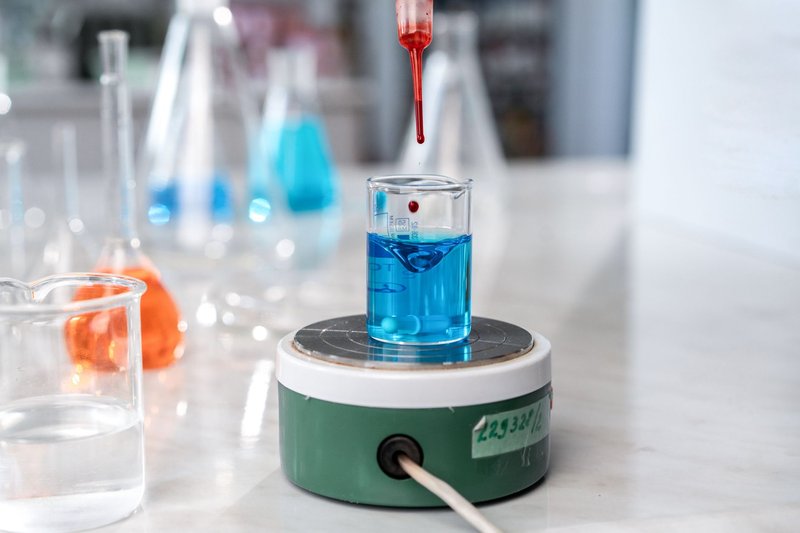
Her lab’s current focus is unglamorous and overdue: monitoring heavy metals and natural organic matter — the compounds left behind when plant and animal material decomposes in water sources — across the country’s water supply. Before her department received a shipment of analytical equipment through the nonprofit Seeding Labs’ Instrumental Access program in 2020, Eswatini had no coordinated national baseline for water contamination data. Ndlovu’s project is trying to build one, sample by sample, with an eye toward scaling it nationwide.
It’s the kind of research that never makes a “famous people” list because it doesn’t produce a name anyone recognizes — just cleaner water, eventually, for people who never hear her name attached to it.
Sakhiwe Shongwe and Bonkhe Mahlalela: Teenagers With a Science Fair Prize
In 2012, two 14-year-olds from opposite corners of the country — Sakhiwe Shongwe of Siteki and Bonkhe Mahlalela of Simunye — won Scientific American’s inaugural Science in Action award, a category within the Google Science Fair reserved for projects that make a measurable difference for a community.
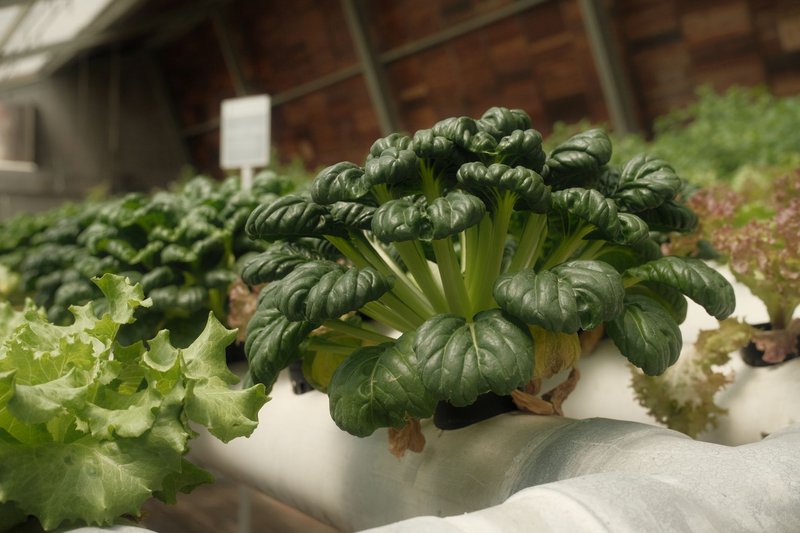
Their project: a stripped-down hydroponics system built for subsistence farmers who couldn’t afford commercial setups or reliable soil. Instead of nutrient-dosed water tanks and grow lights, they used old cardboard boxes and sawdust or grasses as a growing medium, with mature chicken or cow manure standing in for fertilizer. The design let farmers grow significantly larger yields in a fraction of the space, without the input costs that put real hydroponics out of reach for rural households.
The win came with a $50,000 prize and a year of mentorship, and Scientific American’s coverage sent both boys to Google’s California headquarters to compete in the Google Science Fair’s 13-to-14 age category against entries from far better-resourced schools. Neither has the name recognition of a Pantheon profile. Both did applied agricultural engineering before either could legally drive.
At a Glance: Field, Institution, Achievement
| Name | Field | Institution | Key Achievement |
|---|---|---|---|
| Lydia Makhubu | Medicinal chemistry | University of Eswatini | First Swazi woman with a doctorate; founding president, Third World Organization for Women in Science |
| Fanny Friedman | Medicine / public health | Private practice, Eswatini | First female Senator and first woman government minister in Eswatini |
| Wisdom Dlamini | Environmental & geospatial science | University of Eswatini | Coordinator, Centre for Climate Change and Sustainability Research |
| Thabile Ndlovu | Analytical & environmental chemistry | University of Eswatini | Leading the country’s first national water-quality monitoring effort |
| Sakhiwe Shongwe & Bonkhe Mahlalela | Agricultural engineering | Independent (Siteki / Simunye) | Winners, Scientific American Science in Action Award, 2012 |
A Small Country’s Long Odds
Eswatini has one real public university system, a population smaller than many single American cities, and a national research budget that has to stretch across every field at once, not just science. That’s the honest context for a scientists born in Eswatini list that tops out around five names instead of twenty-five. Padding it with athletes who once minored in biology or musicians who took a chemistry elective would be exactly the kind of dishonest filler that got this topic ignored by every other site in the first place.
What the list does show is a pattern worth noticing: nearly every name on it traces back to the University of Eswatini in some form, whether as the place someone got their start, the place they came back to teach, or both. Give Ndlovu’s water-monitoring project or Dlamini’s climate research center another decade of funding, and this list gets longer without needing to get any looser.