Table of Contents
- TLDR
- The Endemic Question, Answered Honestly
- Two Islands in One: Coastal Belt vs. Topside
- Nauru’s Native and Naturalized Plants at a Glance
- What These Plants Are Actually Used For
- Mining Took the Interior. Can It Come Back?
TLDR
Nauru has no confirmed endemic vascular plants — nothing that evolved there and exists nowhere else. That surprises people searching for a tidy list of “Nauru-only” species, because plenty of sites imply otherwise. What Nauru does have is a small, tough native and naturalized flora concentrated in a narrow coastal belt: coconut palm, pandanus, beach naupaka, tamanu, noni, and two long-established frangipani species. The island’s mined-out interior, known locally as Topside, tells the other half of the story — a century of phosphate extraction stripped it down to bare limestone pinnacles, and native plants are only now creeping back in, slowly and unevenly.
The Endemic Question, Answered Honestly
Search “endemic plants of Nauru” and you’ll get contradictory answers. Some pages list dozens of supposedly unique species. Others say the number is zero. The zero crowd has the science on its side.
The most rigorous survey of the island’s plant life, The Flora of Nauru — compiled by botanists R.R. Thaman, F.R. Fosberg, H.I. Manner, and D.C. Hassall for the Smithsonian’s Atoll Research Bulletin — recorded roughly 493 plant species on the island. Of those, only about 59 are considered possibly indigenous. None qualify as endemic under the strict definition: a species found nowhere else on Earth. One Phyllanthus specimen has occasionally been floated as a possible Nauru endemic, but the botanical record treats that as unresolved rather than confirmed.
The confusion makes sense once you understand why. Nauru is a single raised coral island, 21 square kilometers, sitting alone in the Pacific with no sister islands nearby. That kind of isolation is exactly the recipe that produces endemism elsewhere — the Galápagos, Hawaii, Madagascar. But Nauru is too small, too young geologically, and too heavily disturbed by human settlement for that evolutionary process to have run its course. What looks like a missing answer is actually the answer: the island’s flora is native and naturalized, not endemic, and that’s a meaningfully different (and still interesting) story.
Two Islands in One: Coastal Belt vs. Topside
Nauru’s vegetation splits cleanly into two zones, and almost everything about the island’s plant life traces back to which zone you’re standing in.
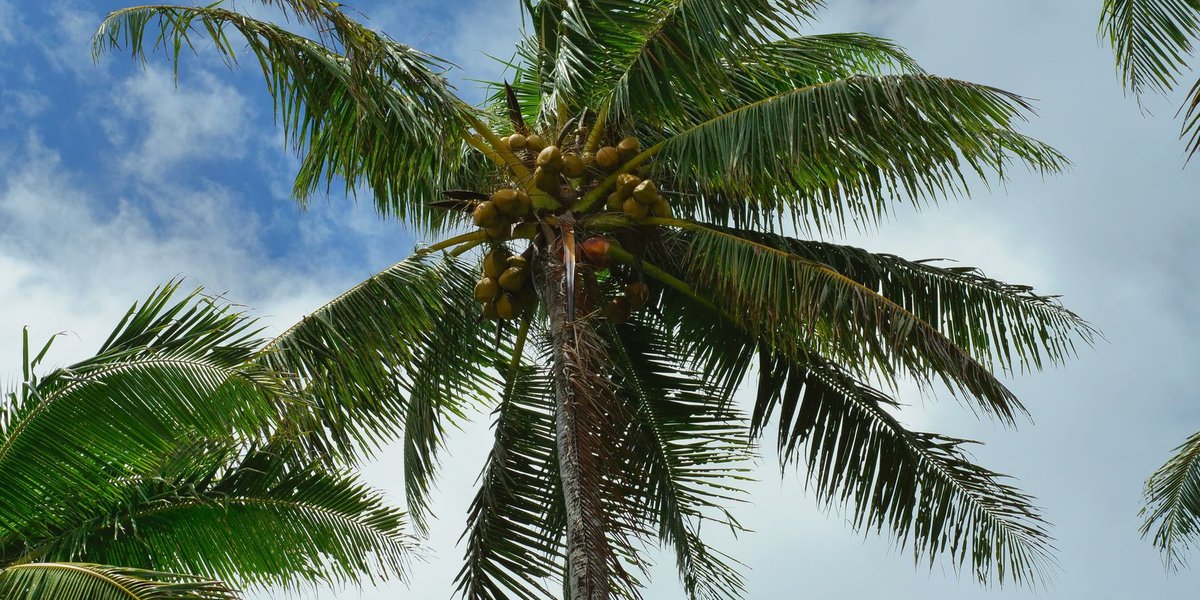
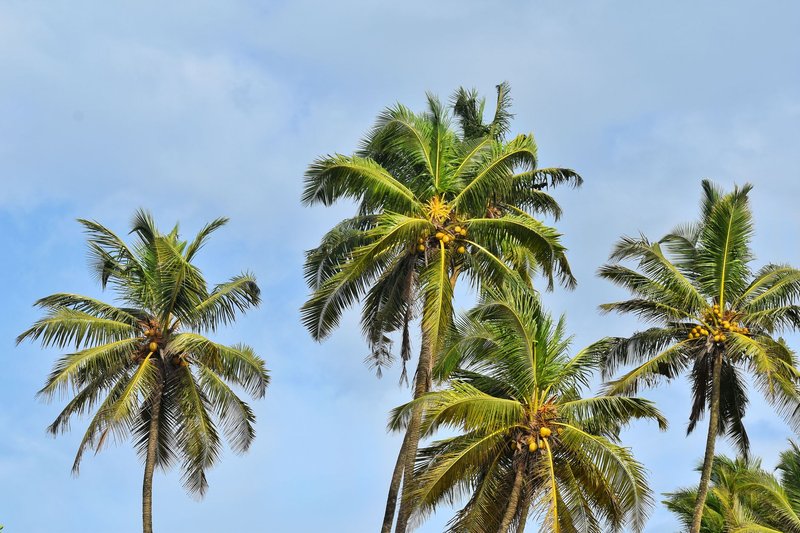
The coastal belt is a narrow ring, rarely more than a few hundred meters wide, wrapping the island’s edge. It’s where nearly all of Nauru’s 10,000-plus residents live, and it’s the only part of the island with soil fertile enough to support dense vegetation without intervention. Coconut palms form the visual backbone here, mixed with pandanus, breadfruit, banana, and a scatter of pantropical strand species that show up on beaches from Fiji to the Marshall Islands.
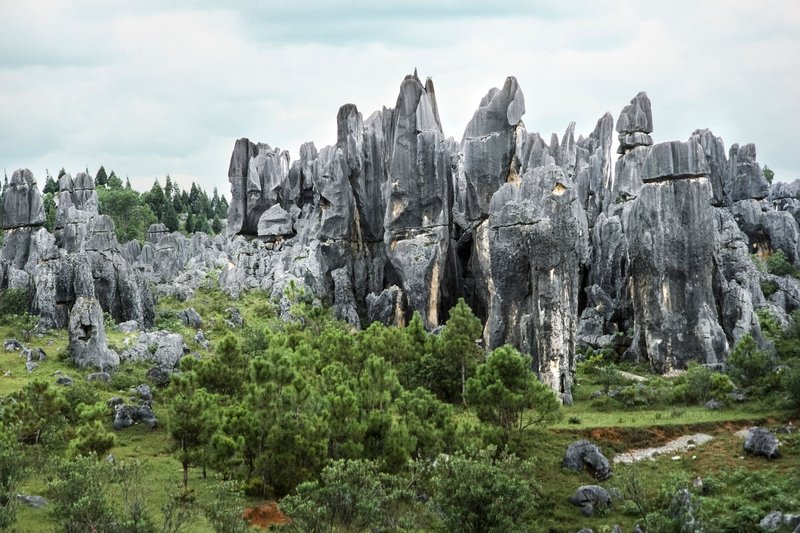
Topside is everything else — the elevated plateau that makes up roughly 80% of Nauru’s total land area. For most of the 20th century, this was where phosphate companies dug down through the limestone to extract rock formed from millennia of seabird guano. What’s left is a moonscape of jagged coral pinnacles with almost no soil between them. Vegetation here isn’t absent, but it’s thin, stunted, and slow to establish, clinging to whatever pockets of substrate survived the excavation.
That split — a green, livable coast ringing a hollowed-out, largely unusable core — is the single fact that explains most of what grows where on Nauru today.
Nauru’s Native and Naturalized Plants at a Glance
| Common Name | Scientific Name | Status | Habitat |
|---|---|---|---|
| Coconut palm | Cocos nucifera | Naturalized, culturally dominant | Coastal belt |
| Pandanus / screwpine | Pandanus tectorius | Native, widespread across the Pacific | Coastal belt, disturbed ground |
| Beach naupaka | Scaevola taccada | Native, pantropical strand species | Coastal fringe |
| Tahitian noni | Morinda citrifolia | Native, pantropical | Coastal belt |
| Tamanu | Calophyllum inophyllum | Native, pantropical strand species | Coastal belt |
| Beach gardenia | Guettarda speciosa | Native, pantropical strand species | Coastal belt |
| Premna | Premna obtusifolia | Native, pantropical strand species | Coastal belt |
| Nauru frangipani | Plumeria rubra and P. obtusa | Introduced, long-naturalized | Villages, coastal belt |
| Macaranga | Macaranga carolinensis | Native | Coastal belt, limestone edges |
| Hopbush | Dodonaea viscosa | Native, early colonizer | Topside recovery zones |
| Strangler fig | Ficus prolixa | Native | Topside remnants |
| Disputed near-endemic | Phyllanthus sp. | Status unresolved | Coastal belt |
A note on that last row: it’s included precisely because the uncertainty is the honest, current state of the science, not an oversight.
What These Plants Are Actually Used For
The coconut palm does what it does everywhere in the Pacific — food, drink, oil, thatch, rope fiber — and on an island this small and this dependent on imports, that versatility isn’t a novelty, it’s infrastructure. Pandanus works the same way in miniature: the fibrous leaves get woven into mats and roofing, and the fruit shows up in traditional Nauruan food preparations even though it takes real effort to process.
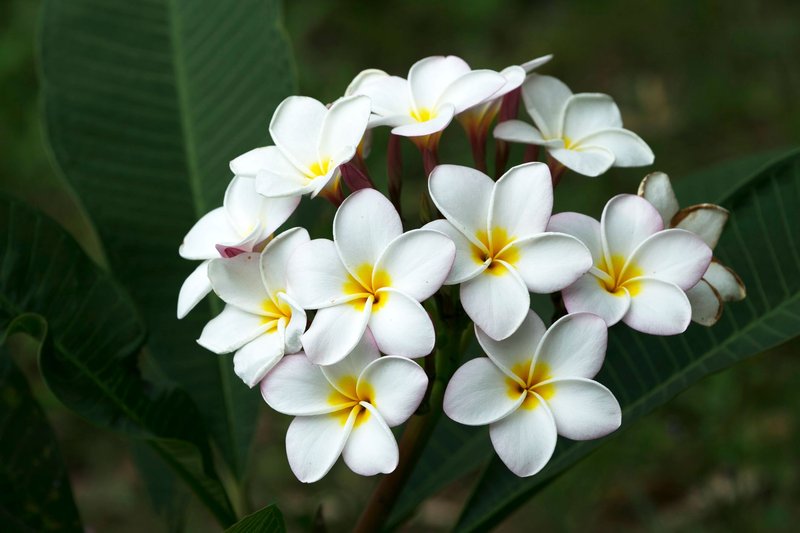
Frangipani earns its cultural weight differently. Both Plumeria species have flourished on Nauru since their introduction, and their blossoms are threaded into garlands worn for ceremonies and everyday adornment alike — the scent is recognizable enough that it functions almost as a shared island signal. Traditional use also extends the tree past decoration: leaves warmed and mixed with coconut oil have been applied as a folk remedy for fever, a practice consistent with broader Pacific and Southeast Asian frangipani ethnobotany.
Pandanus carries a heavier ethnobotanical record across the region generally, with documented traditional applications spanning food, fiber, and folk medicine in Pacific and South Asian communities — Nauru’s use of the plant sits within that much older regional tradition rather than apart from it.
Mining Took the Interior. Can It Come Back?
Nauru’s vegetation didn’t get degraded gradually. It happened fast, and the cause is not subtle: nearly a century of open-cast phosphate mining stripped Topside down to bedrock. By 2005, an estimated 100 million tonnes of phosphate rock had been removed from the plateau, and the resulting damage left over 80% of the island’s total land area effectively unusable for agriculture or habitation.
Recovery has been slow enough that researchers describe it in decades, not years. A long-running ecological study published in the journal Ecology tracked how mined land regenerates and found that hardy natives like Dodonaea viscosa (hopbush) and Ficus prolixa (strangler fig), along with strand species such as Scaevola taccada, do eventually recolonize disturbed ground — but they arrive stunted and sparse compared to their growth in undisturbed coastal forest, and the process is markedly slower than natural succession on comparable Pacific islands.
That hasn’t stopped organized attempts to speed things along. Modern rehabilitation efforts, including the Nauru Restoration Generation initiative, combine land-use planning with local communities, farmer training in sustainable land management, and tree nurseries built specifically to grow native seedlings for replanting across Topside. Progress is incremental — you don’t undo a century of quarrying with a few seasons of planting — but it marks the first sustained push to treat Nauru’s interior as recoverable habitat rather than a permanent write-off.
The takeaway for anyone digging into Nauru’s plant life: skip the search for endemic species that were never there, and pay attention instead to a native flora that’s unusually concentrated, genuinely under pressure, and — on Topside, at least — still being fought for one seedling at a time.