Mozambique’s plant checklist includes at least 235 species found nowhere else on the planet, according to the most complete survey of the country’s flora ever assembled. That’s a striking number for a country whose flora spent decades under-collected and under-published — botanists are still describing new endemic species from its mountains almost every year.
Most of what gets written about this belongs to one dense academic paper, the kind with IUCN assessment tables and Latin binomials stacked six to a page. It’s the definitive source, but it’s not exactly a starting point for someone who just wants to know what these plants actually look like and where you’d have to go to find one. This is that starting point: twelve species that exist only within Mozambique’s borders, why they ended up that way, and what’s putting them at risk.
Table of Contents
- Why Mozambique Has So Many Plants Found Nowhere Else
- 1. Icuria dunensis — the coastal dune forest giant
- 2. Micklethwaitia carvalhoi — the other lone legume
- 3. Baptorhachis foliacea — a grass in a genus of one
- 4. Gyrodoma hispida — a daisy family orphan
- 5. Emicocarpus fissifolius — the Maputo Bay sand specialist
- 6. Encephalartos chimanimaniensis — the cycad collectors erased
- 7. Synsepalum chimanimani — a miracle-fruit relative in the foothills
- 8. Aloe chimanimaniensis — the mountain’s medicine aloe
- 9. Aloe decurva — one aloe, one mountain
- 10. Crotalaria namuliensis — a pea family discovery from Namuli
- 11. Helixanthera schizocalyx — a mistletoe hiding in the canopy
- 12. Euphorbia unicornis — the succulent nobody profiles
- What’s Actually Threatening This Flora
Why Mozambique Has So Many Plants Found Nowhere Else
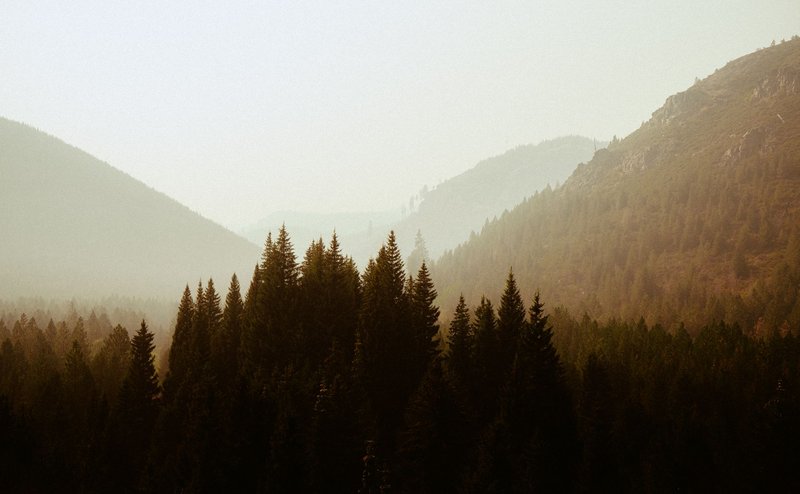
Endemism this concentrated doesn’t happen by accident. It happens when a landscape gets cut into isolated pieces and each piece keeps evolving on its own. Mozambique has four such pieces, known formally as centers of endemism, and together they account for roughly 69% of the country’s endemic plant taxa, according to the PhytoKeys survey published via PubMed Central.
The Rovuma Centre runs along the northern coast through Cabo Delgado, Nampula, and Zambézia provinces, where fragmented pockets of dry dune forest have been evolving in isolation from each other for so long that neighboring patches sometimes carry different endemic species entirely. The Maputaland Centre, at the southern end of the country, is built around sand forest — a scrubby, nutrient-poor habitat that turns out to be one of the richest in the region for plants that grow nowhere else. Then there are the two mountain blocks: Chimanimani-Nyanga, straddling the Zimbabwe border, and Mulanje-Namuli-Ribaue, straddling Malawi, where isolated granite peaks act like islands in a sea of lowland habitat unsuitable for the species that live near their summits.
Five plant genera exist only in Mozambique and nowhere else on Earth — not just the species, the entire genus: Baptorhachis, Emicocarpus, Gyrodoma, Icuria, and Micklethwaitia. That’s an unusually high number of strict-endemic genera for a country this size, and it’s a big part of why botanists keep coming back.
1. Icuria dunensis — the coastal dune forest giant {#1-icuria-dunensis}
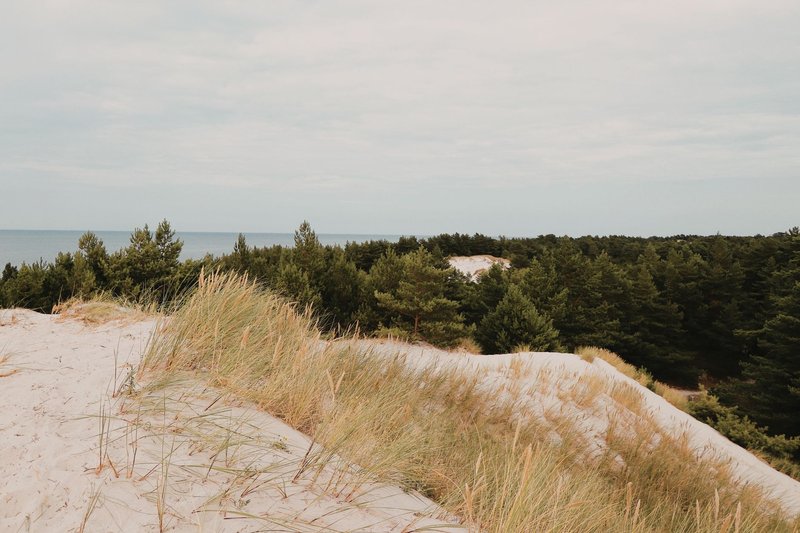
Icuria is a genus with exactly one member, and that member forms entire forests. Known locally as ncuri, Icuria dunensis grows as a locally dominant canopy tree in the ancient dune forests of Cabo Delgado province — stretches of coastline where this single legume species can make up a large share of the trees you’d see overhead. It’s the kind of tree that defines a habitat type; ecologists call the forest it forms Icuria Coastal Dry Forest.
That dominance is also its vulnerability. The same dunes that support Icuria forest sit on some of the world’s largest natural gas reserves, and the sand itself is mineral-rich enough to draw mining interest. Between heavy mineral sand extraction, forest clearance tied to the region’s LNG development, and overharvesting for wood and bark, the IUCN lists Icuria dunensis as Endangered.
2. Micklethwaitia carvalhoi — the other lone legume {#2-micklethwaitia-carvalhoi}
Micklethwaitia is the second monotypic legume genus on this list, and it shares Icuria’s neighborhood: the coastal dry forests of northern Mozambique, within the Rovuma Centre. Like Icuria, it grows as a locally dominant tree rather than a scattered understory species, which means whole patches of forest can be defined by its presence. The two genera were named just decades apart, and both illustrate something particular about this stretch of coast — its forest fragments are old and isolated enough that entire genera, not just species, evolved nowhere else.
3. Baptorhachis foliacea — a grass in a genus of one {#3-baptorhachis-foliacea}
Not every endemic is a showy flowering tree. Baptorhachis foliacea is a grass — the only species in its genus, and the only place on Earth it grows is Mozambique. Grasses rarely get the spotlight in endemism write-ups because they don’t photograph as dramatically as a cycad or an aloe, but genus-level endemism in a grass is just as rare taxonomically as it is in anything showier. Its low profile in both senses — ground-level habit and public awareness — makes it one of the least documented entries on this list, which is itself telling: a lot of Mozambique’s flora hasn’t been closely studied at all.
4. Gyrodoma hispida — a daisy family orphan {#4-gyrodoma-hispida}
Gyrodoma hispida is the sole species in its genus and belongs to Asteraceae, the daisy and sunflower family — one of the largest plant families on the planet, with tens of thousands of species worldwide. That a genus this isolated could emerge from a family this enormous says something about how much local pressure it takes to split a lineage off entirely on its own: somewhere in Mozambique, a population of daisy relatives diverged so completely from its relatives elsewhere in Africa that taxonomists gave it its own genus.
5. Emicocarpus fissifolius — the Maputo Bay sand specialist {#5-emicocarpus-fissifolius}
The fifth of Mozambique’s strict-endemic genera, Emicocarpus belongs to Apocynaceae — the dogbane family, which also includes milkweeds and oleanders — and its single species grows in the sandy soils around Maputo Bay, within the Maputaland Centre. That habitat, coastal sand under intense and growing pressure from Maputo’s urban sprawl, is a reminder that endemism doesn’t require remote wilderness. Some of Mozambique’s rarest plants live within sight of its capital.
6. Encephalartos chimanimaniensis — the cycad collectors erased {#6-encephalartos-chimanimaniensis}
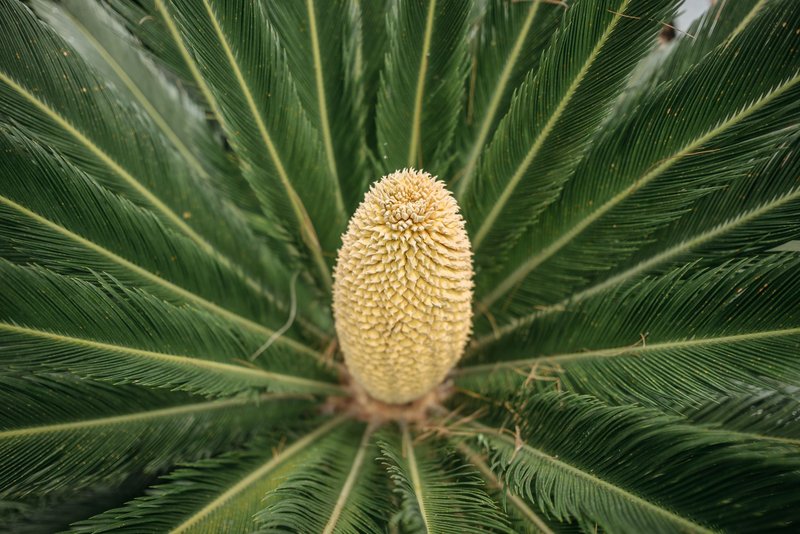
Cycads are living fossils — a plant lineage that predates flowering plants by tens of millions of years — and the Chimanimani cycad clings to cliffs and steep rocky slopes in the Chimanimani Mountains at elevations between 1,200 and 1,800 meters, straddling the Zimbabwe border. It was rare from the moment it was documented, known from a single site.
That rarity made it a target. Cycads are among the most heavily poached plant groups in the world because collectors will pay serious money for a wild specimen, and recent field surveys of Encephalartos chimanimaniensis haven’t been able to locate any individuals left in habitat. The species now appears to survive only in cultivation — a wild population wiped out not by habitat loss, but by people going in and taking the plants.
7. Synsepalum chimanimani — a miracle-fruit relative in the foothills {#7-synsepalum-chimanimani}
This small tree belongs to Sapotaceae, the same family as the famous West African miracle berry, and grows in the forests of the southern Chimanimani foothills on both the Mozambique and Zimbabwe sides of the border. It was only formally described in 2019, in a paper that doubled as an argument for why the Chimanimani range deserves far more botanical attention than it’s gotten — the mountains have produced new-to-science species at a rate that suggests there’s more still uncatalogued.
8. Aloe chimanimaniensis — the mountain’s medicine aloe {#8-aloe-chimanimaniensis}
Among the more than 75 endemic species recorded from the Chimanimani-Nyanga highlands, Aloe chimanimaniensis stands out as one used locally for medicinal purposes, part of a long regional tradition of aloe-based remedies. Manica Province, which contains the Mozambican side of the Chimanimani range, holds more near-endemic plant taxa than anywhere else in the country — a byproduct of the cross-border highlands it shares with Zimbabwe.
9. Aloe decurva — one aloe, one mountain {#9-aloe-decurva}
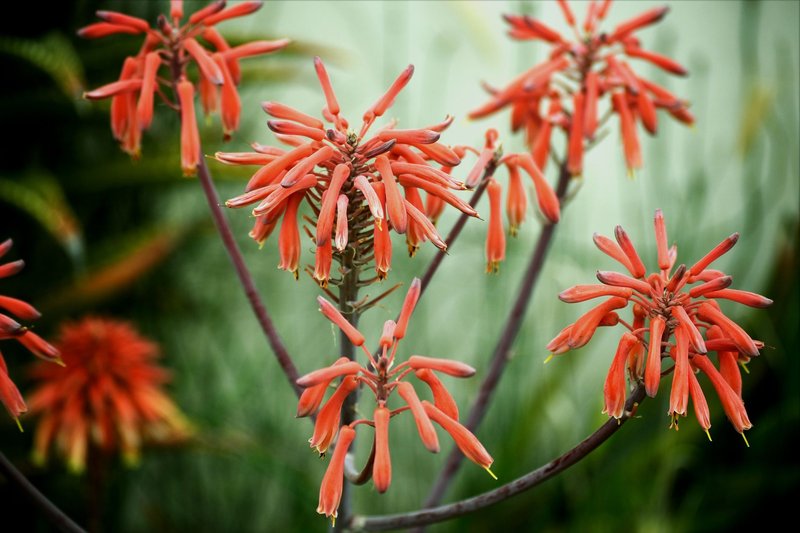
Commonly called the Mount Zembe aloe, Aloe decurva grows on the steep slopes of a single mountain in Manica Province, between roughly 800 and 1,100 meters, and nowhere else. It forms solitary rosettes of dull green, reddish-tinged leaves edged with orange-tipped teeth, and sends up unbranched flower spikes — packed with bright red-to-orange blooms — that can stretch nearly a meter tall. The IUCN lists it as Critically Endangered, the direct consequence of a range so narrow it fits on a single slope.
10. Crotalaria namuliensis — a pea family discovery from Namuli {#10-crotalaria-namuliensis}
Mount Namuli, the tallest peak in the Mulanje-Namuli-Ribaue center of endemism, holds more than 530 recorded plant taxa, at least 16 of which are known only from the mountain itself. Crotalaria namuliensis, a member of the pea family, is one of them — formally described in a Kew Bulletin survey of the mountain’s flora that also turned up dozens of new records for Mozambique and species previously assumed to be restricted to Mount Mulanje across the border in Malawi.
11. Helixanthera schizocalyx — a mistletoe hiding in the canopy {#11-helixanthera-schizocalyx}
Mistletoes have an image problem — most people know them as parasites, not standouts — but Helixanthera schizocalyx earned its own species description from the same Mount Namuli fieldwork that turned up Crotalaria namuliensis. As a hemi-parasitic shrub, it roots into the branches of host trees in Namuli’s montane forest rather than growing from the ground, which is part of why species like it go unnoticed for so long: nobody’s looking up into the canopy of a mountain most visitors never climb.
12. Euphorbia unicornis — the succulent nobody profiles {#12-euphorbia-unicornis}
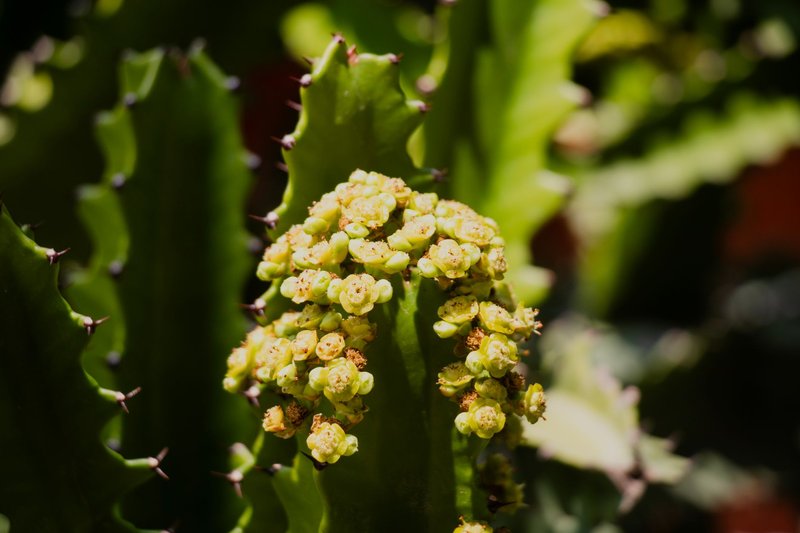
Euphorbiaceae is the third-richest plant family for endemism in Mozambique, after the legumes and grasses, and Euphorbia unicornis is one of its endemic representatives — a succulent species that, like most of the country’s euphorbias, gets almost no coverage outside specialist botanical literature despite belonging to a genus famous worldwide for its odd, cactus-mimicking forms. It’s a fair stand-in for how much of Mozambique’s endemic flora still is: recorded, assessed, and otherwise invisible.
What’s Actually Threatening This Flora
Less than a quarter of Mozambique’s plant species have ever been formally assessed for extinction risk, which means the real threat picture is probably worse than the numbers show. Of the endemic taxa that have been evaluated, just over half come back threatened — 57% among the strict endemics specifically — and another chunk are classified Data Deficient, meaning nobody has enough information to say either way.
The threats aren’t hypothetical. Icuria dunensis sits on coastal dunes that overlap with mineral sand mining claims and Cabo Delgado’s gas development corridor. Aloe decurva survives on one mountain’s worth of habitat, full stop — a single landslide, fire, or road cut could reach a meaningful share of the entire wild population. And Encephalartos chimanimaniensis shows what the fastest-moving threat looks like: it wasn’t logged or paved over, it was collected out of existence by people who wanted a rare cycad in a private garden.
Conservation groups are responding — Kew’s seed conservation work in Mozambique banks seed from threatened endemics as an insurance policy against exactly this kind of loss, and the IUCN Red List assessments that flag species like Icuria dunensis and Aloe decurva are what make that triage possible in the first place. But the gap is real: a country with 235-plus endemic species and less than 25% of its flora assessed is, by definition, still discovering what it’s losing.